Main contractor
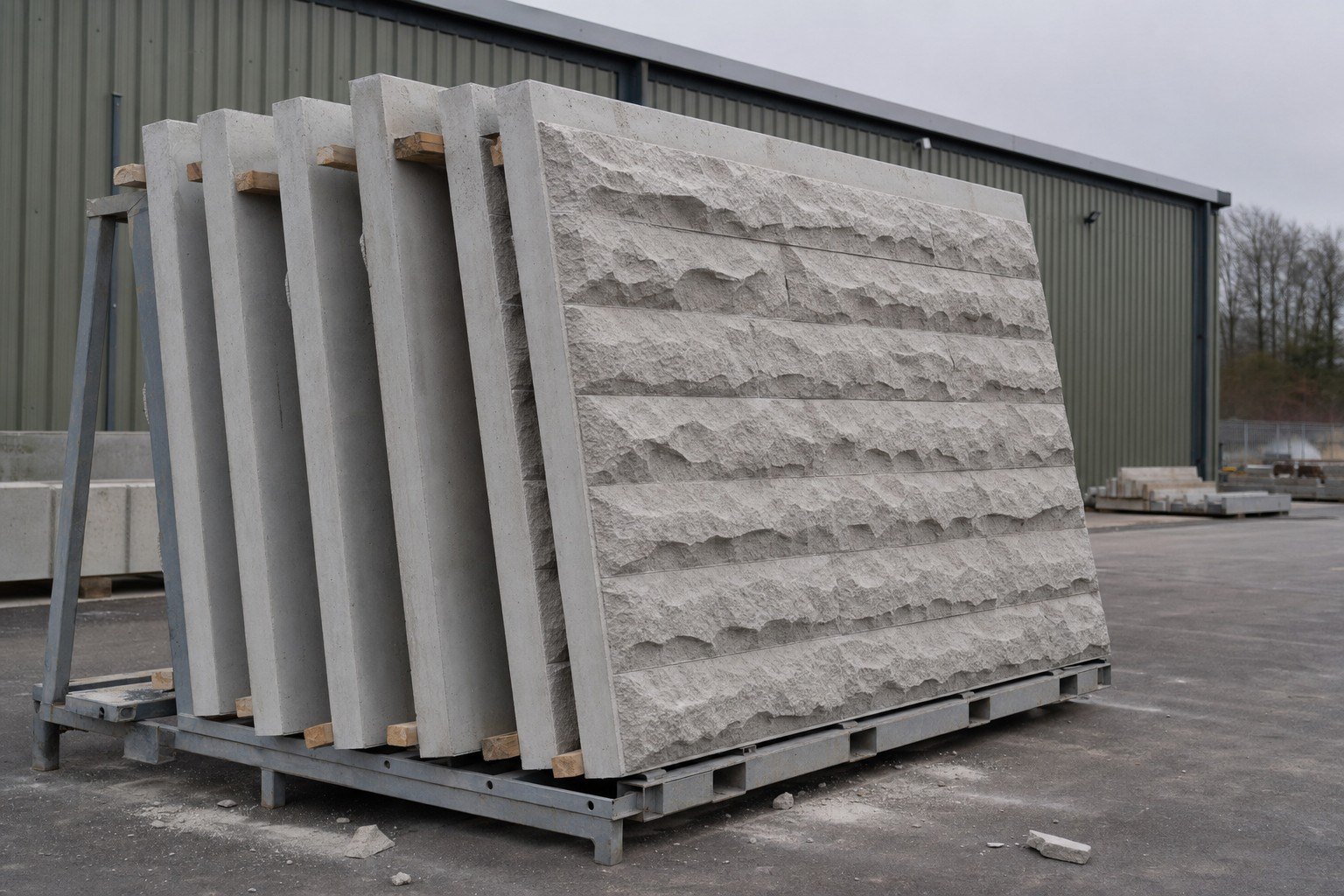
A board-marked elevation cast in four lifts
Sawn board grain on an in-situ wall, four lifts from one liner, and a release agent that had to be tested before anything was poured.
Read the jobExample project
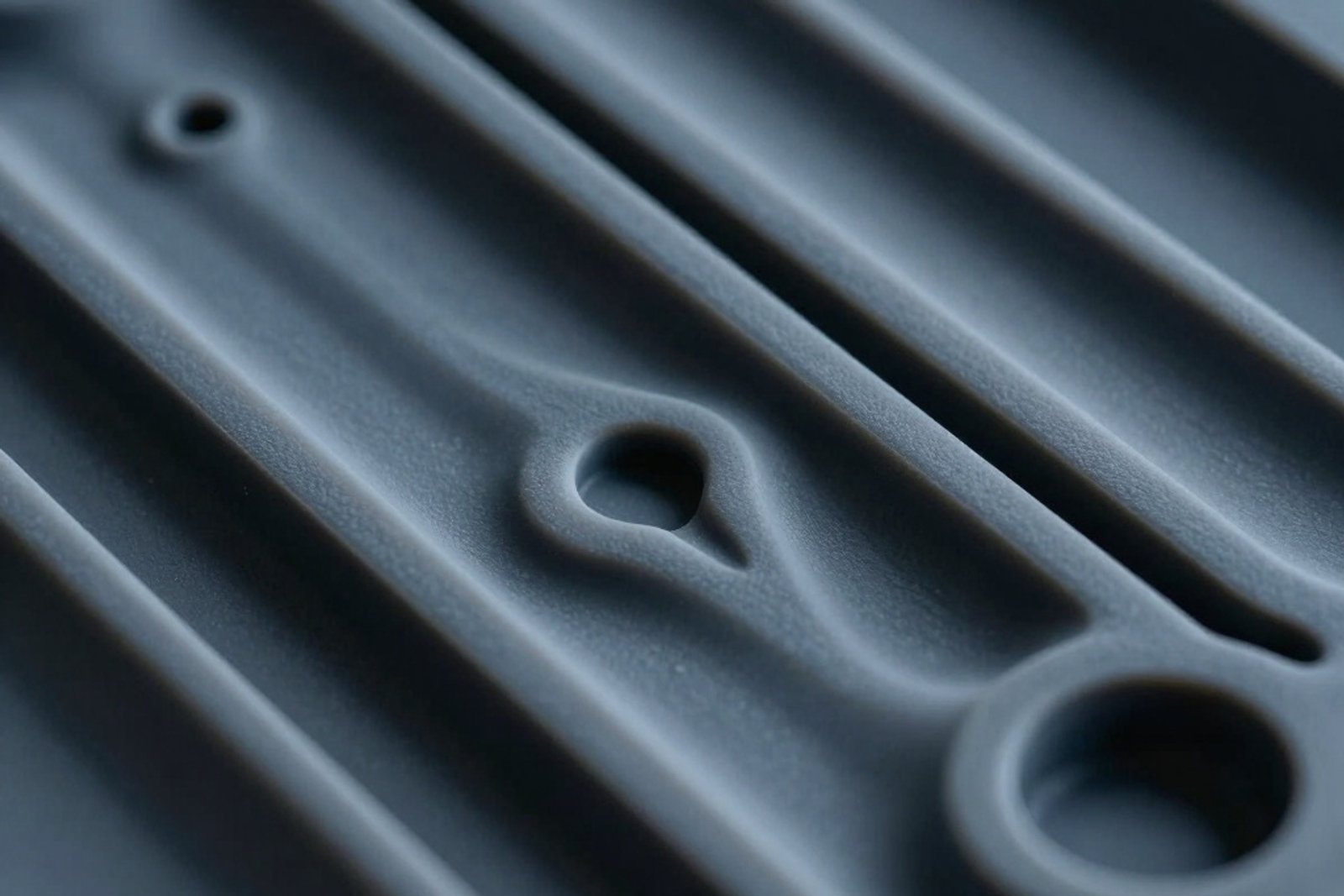
Two details that look trivial on a drawing. A chamfered reveal that has to strip without taking the arris with it, and a rebate that has to line up bay after bay.
The brief
A civils contractor was casting a long in-situ wall in bays. The detail called for a chamfered reveal at each bay junction and a rebate along one run to take services later. Both details were drawn in two lines on a section and neither of them was trivial to cast.
They had already tried timber fillets. The chamfers were coming out with spalled and ragged arrises, and the rebate was drifting relative to the bay above.
The difficulty
A chamfer on green concrete is a thin wedge of material with an unforgiving geometry, and everything that goes wrong with it goes wrong during stripping. A rigid fillet grips, so the arris comes away with the fillet or spalls along its length. So it looked ragged on their first bays, and it is not a workmanship problem.
An elastomeric insert solves the release and introduces a new problem. The insert is clamped inside formwork and loaded by the head of concrete. Too soft and it compresses, so the reveal loses its line and the chamfer varies down the pour. Too hard and it behaves like the timber fillet it replaced. The hardness has to be chosen for that specific loading rather than picked off a chart.
The rebate had a separate and duller failure. It was being set out by measurement in each bay, and small errors accumulated down a long wall, so by the time the services came through the rebate was not where the drawing said it was.
How we did it
We set the insert hardness for the pour height and the clamping arrangement they were actually using, at the hard end of what still releases a green arris. The trade-off is deliberate and it is written into the specification, and the reasoning is set out on the materials page.
The rebate insert was made with a locating feature that registers against the formwork panel rather than against a mark on the last pour. Set-out then comes off the panel, which is jigged, instead of accumulating down the wall.
A small change to the insert section means the insert deflects away from the concrete as the formwork comes off, so the chamfer is released rather than dragged. This is the change that stopped the spalling.
The first bay was treated as the trial and looked at properly before the inserts were made for the rest of the run. One bay is a cheap place to find out that a hardness is wrong.
The numbers
Same rate, same division as the rest of this site.
The inserts and strips came to about 3 square metres of moulding face across the run. At an indicative £350 per square metre that is £1,050. Across around sixty pours of wall, casting roughly 180 square metres of detailed face, that is about £5.83 per square metre, being £350 divided by sixty.
A number that small is not the argument for the tooling. The argument is that a spalled chamfer on an exposed civils wall is either accepted, patched or cut out, and all three of those cost more than the inserts on a wall of this length. The tooling is cheap. Making good is not.
All of the arithmetic below runs at the same indicative rate of £350 per square metre of liner, from published figures from PERI UK and RECKLI. It is a market figure carried here so the division can be checked, and the liner calculator will run it on your own rate instead.
Every money figure on this page is indicative. It is taken either from the illustrative two year duty cycle used across all five TCI sites or from published third-party pricing, and it is shown so the arithmetic can be checked. None of it is a quotation, and all of it must be replaced with TCI figures before launch.
Where it got to
The services and the reference material this project drew on.
More jobs
Main contractor
Sawn board grain on an in-situ wall, four lifts from one liner, and a release agent that had to be tested before anything was poured.
Read the jobPrecast manufacturer
Forty millimetres of relief, tight returns, and a face that had to still be casting the same panel at pour one hundred.
Read the jobHousebuilder
Semi-dry units struck green, six profiles in one family, and arrises that had to survive being handled at their weakest.
Read the jobSimilar job?
Send a photograph of the arris and tell us the pour height. Those two things usually separate a fillet problem from a strike problem.