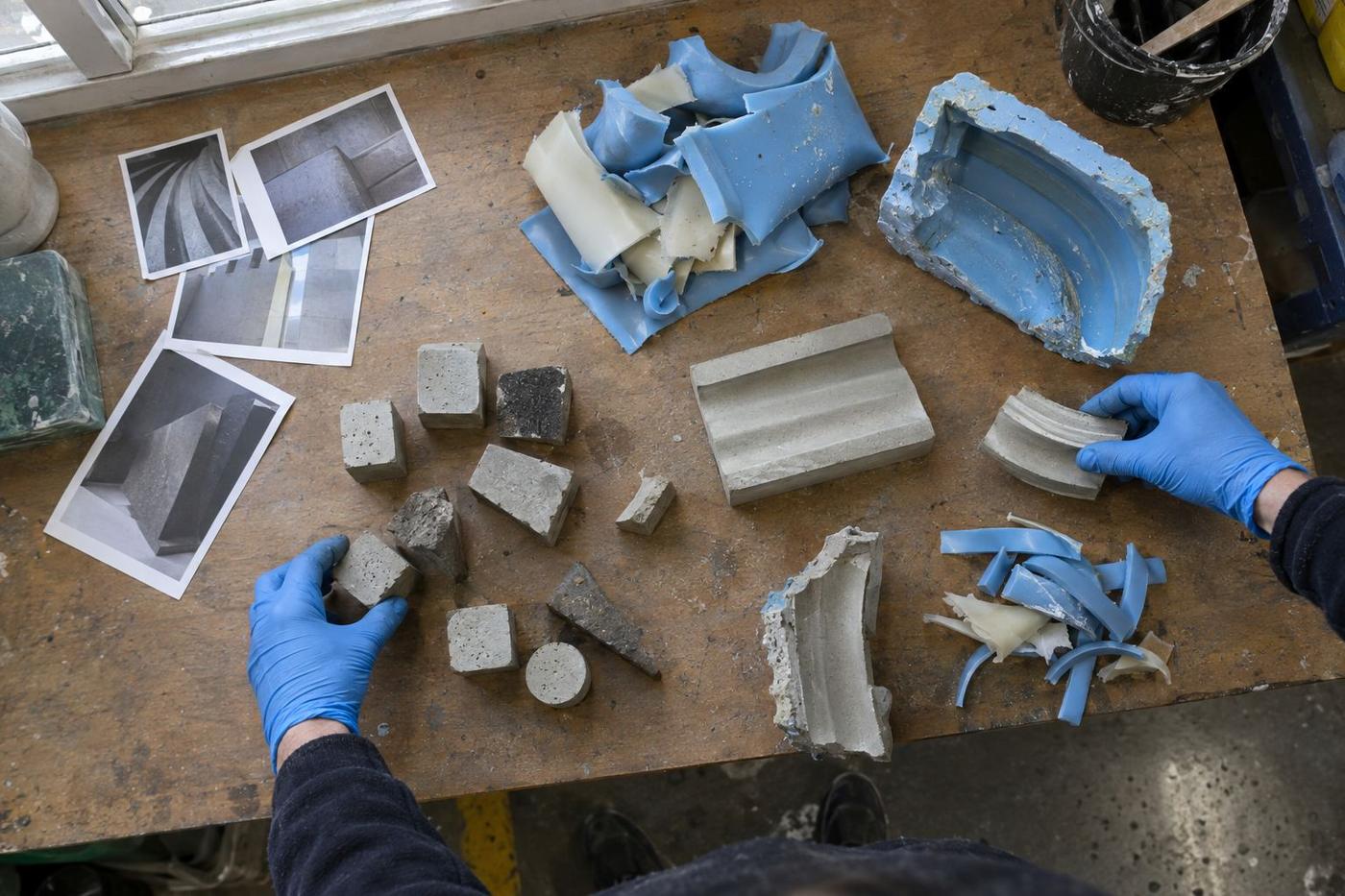
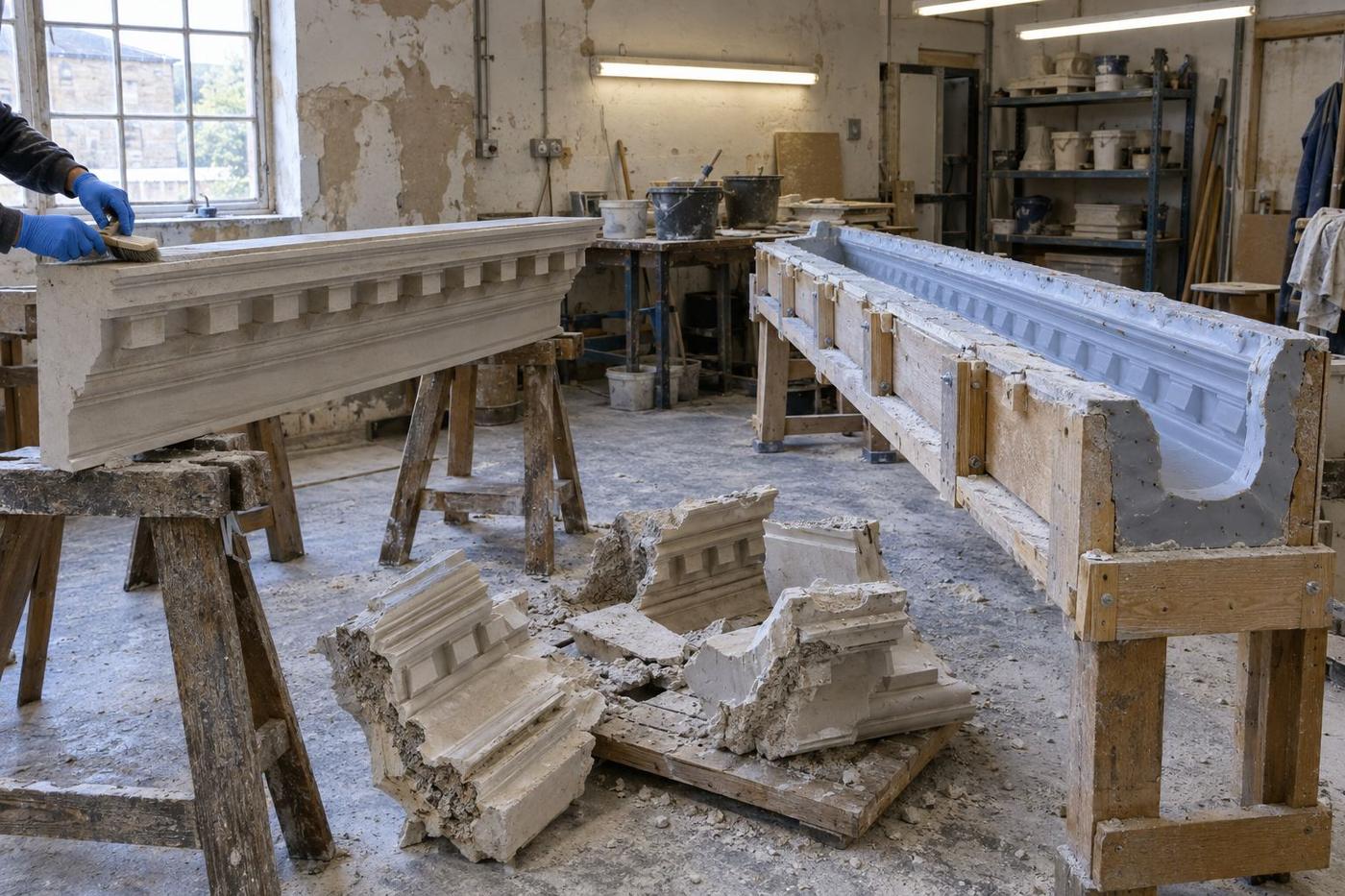
A Cotswold heritage yard's cornice moulding restoration
One surviving cornice section, seven failed. A silicone mould from the survivor, then cast stone reproductions blended to match the neighbouring originals.
Read the recordTCI Construction · Projects
We keep records of jobs we're proud of and jobs we learned from. Some of both are collected here — anonymised, but honest about what happened and what we'd do the same or differently.
Why we anonymise
We don't publish customer names or logos on this website. There are three reasons. First, most of our customers are quiet about their supply chain and prefer it that way. Second, listing customer logos on a supplier website is a marketing shortcut that says more about the supplier than the customer. Third, some of the most useful project records are the ones where things went slightly wrong and we learned from them — and no one wants their name attached to that write-up.
What you'll find on each project record instead is enough context to understand what the job was, what the technical challenge was, how we approached it, and what happened. If you'd like to talk to any of the customers as a reference, we'll ask them and put you in touch — but the story stays in their hands, not ours.
All twelve
One surviving cornice section, seven failed. A silicone mould from the survivor, then cast stone reproductions blended to match the neighbouring originals.
Read the record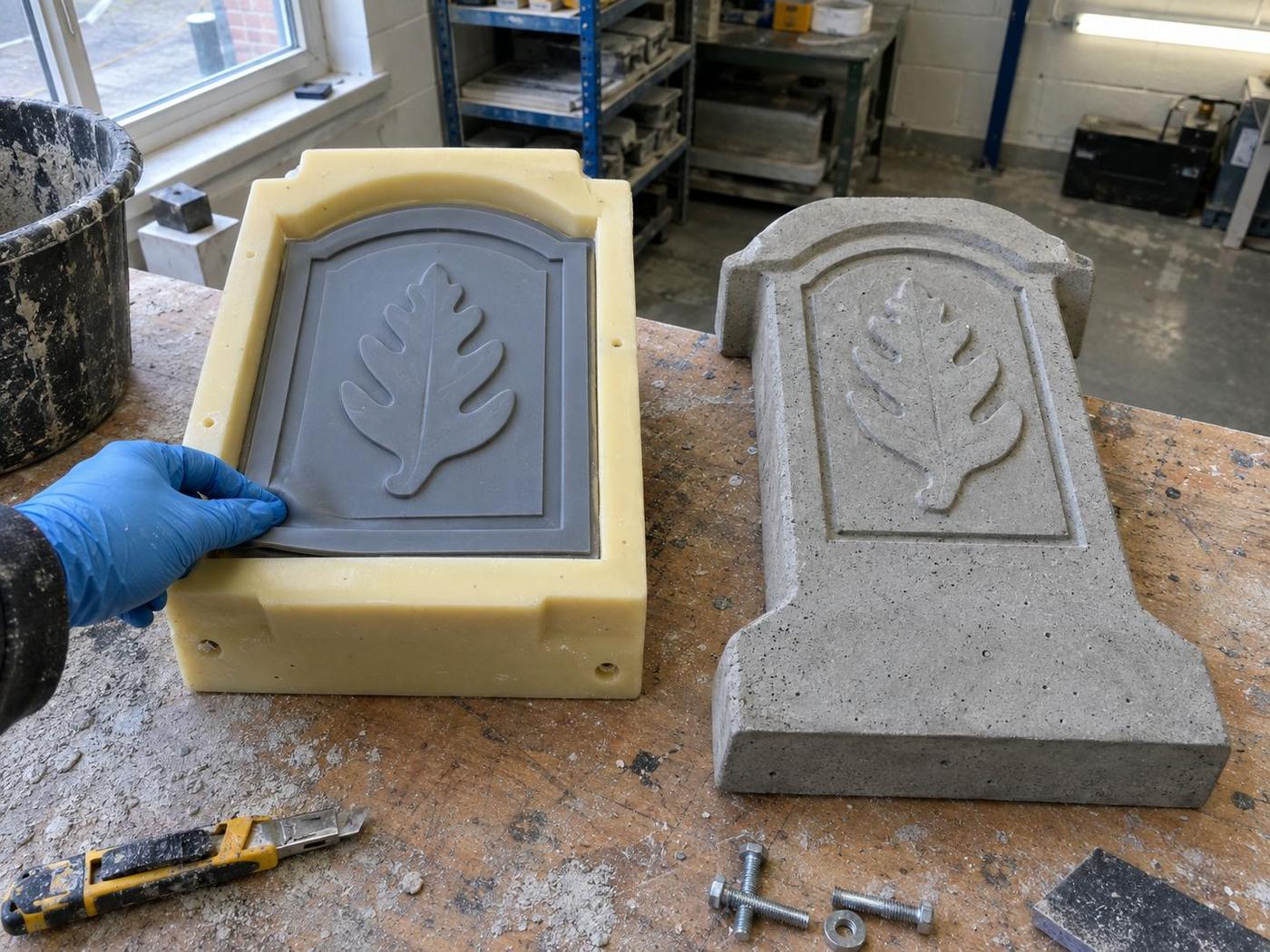
A repeat bench-end line needed formliners that carried the customer's moulded logo without pushing the whole tool into silicone. Two-material tool with a silicone logo insert set into a polyurethane surround.
Read the record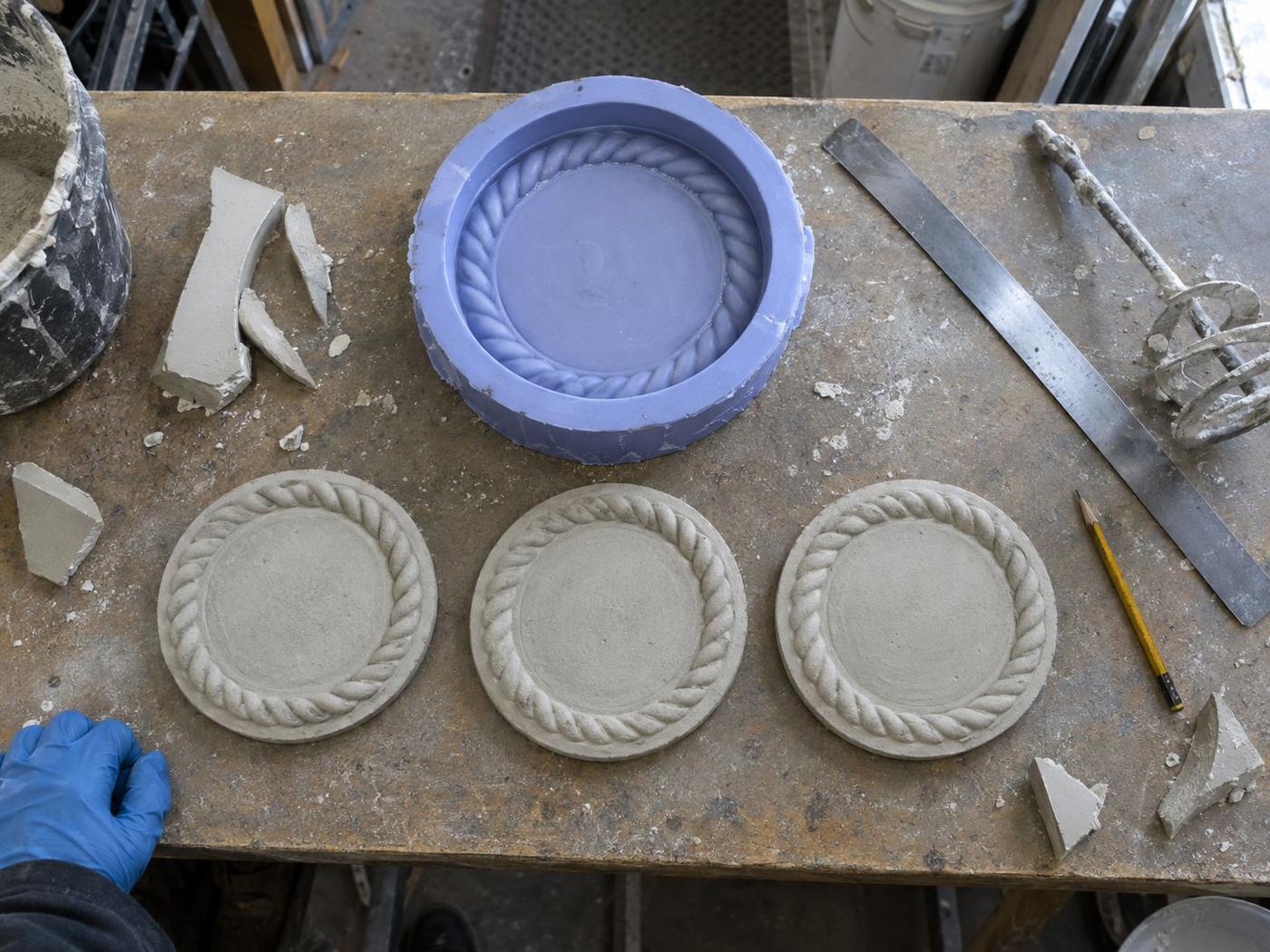
A GRC manufacturer's architect wanted rope-effect cladding across a residential façade. Three sample rounds off a trial mould got the visual right before the matched production set was built.
Read the record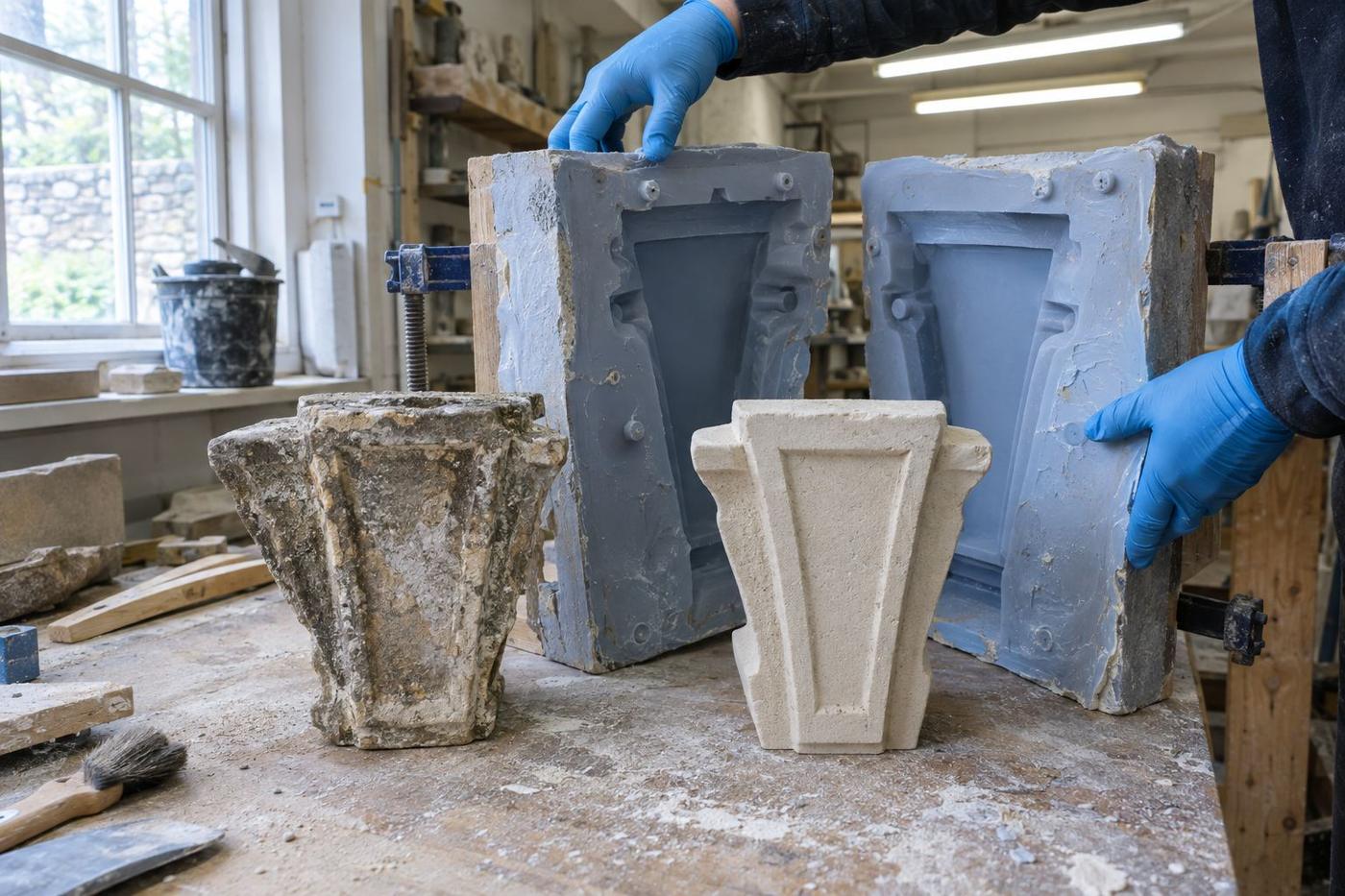
A cast-stone workshop needed to reproduce a Georgian keystone from a surviving example on a listed doorway. Two-part silicone mould with the split placed on the return so the finished piece shows no parting mark on the visible face.
Read the record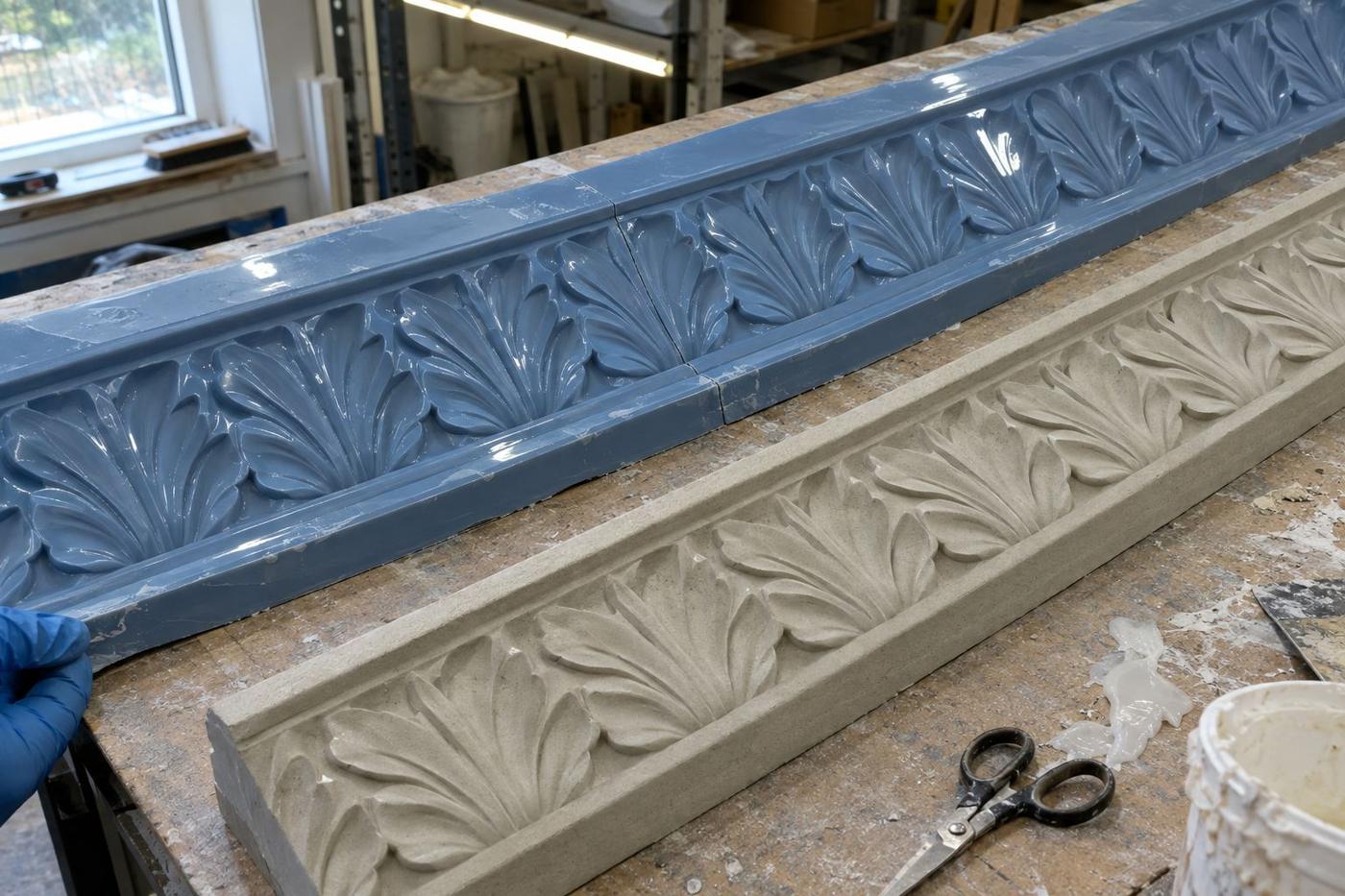
Bespoke leaf-relief cornice cast in GRC and running as a continuous band across an elevation. Spliced silicone tooling with joints placed on shadow gaps so the cornice reads unbroken.
Read the record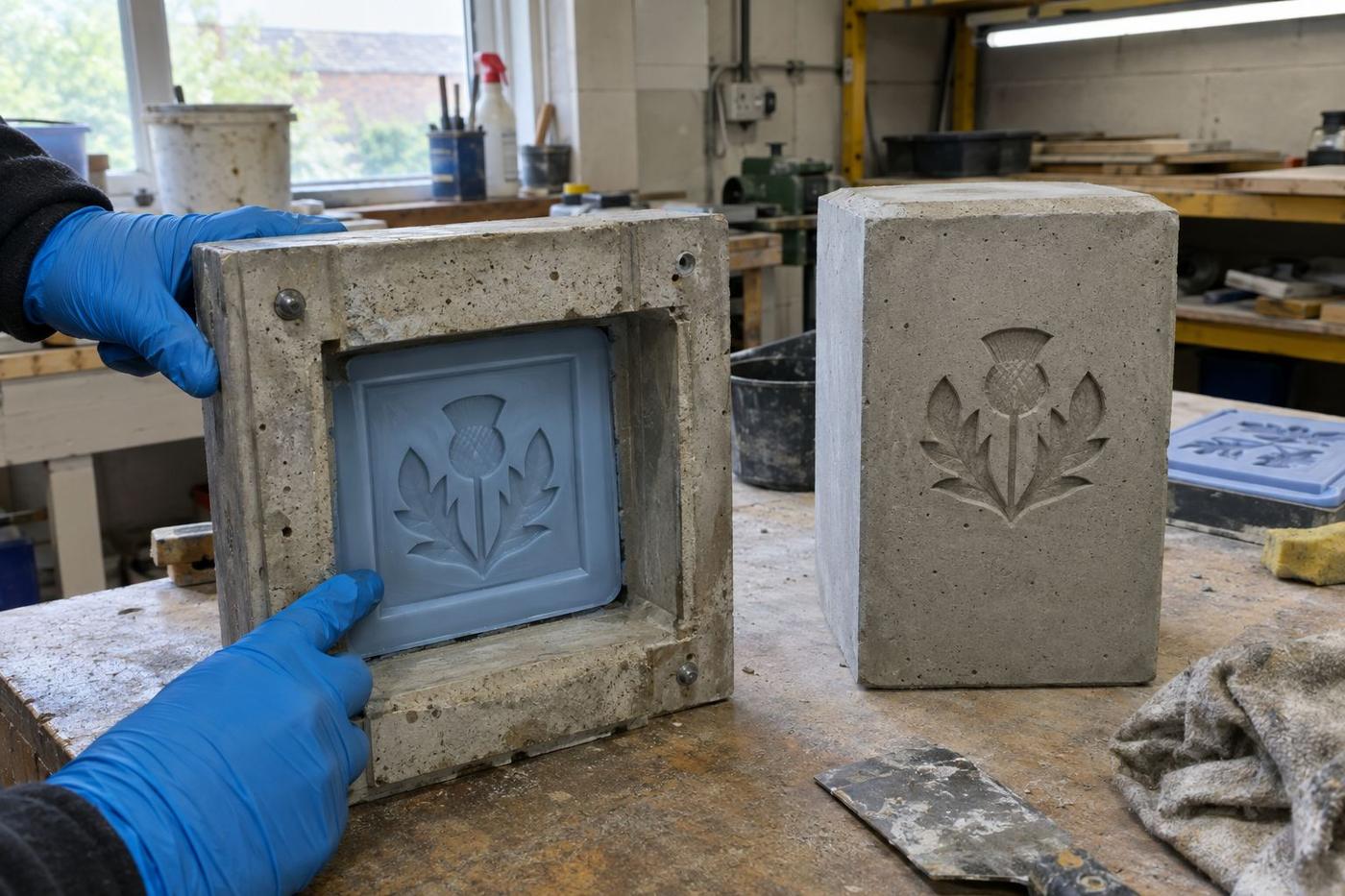
A bespoke bollard for a city public realm scheme with a cast-in civic emblem on two faces. Silicone tooling to hold the emblem sharp across the visible run.
Read the record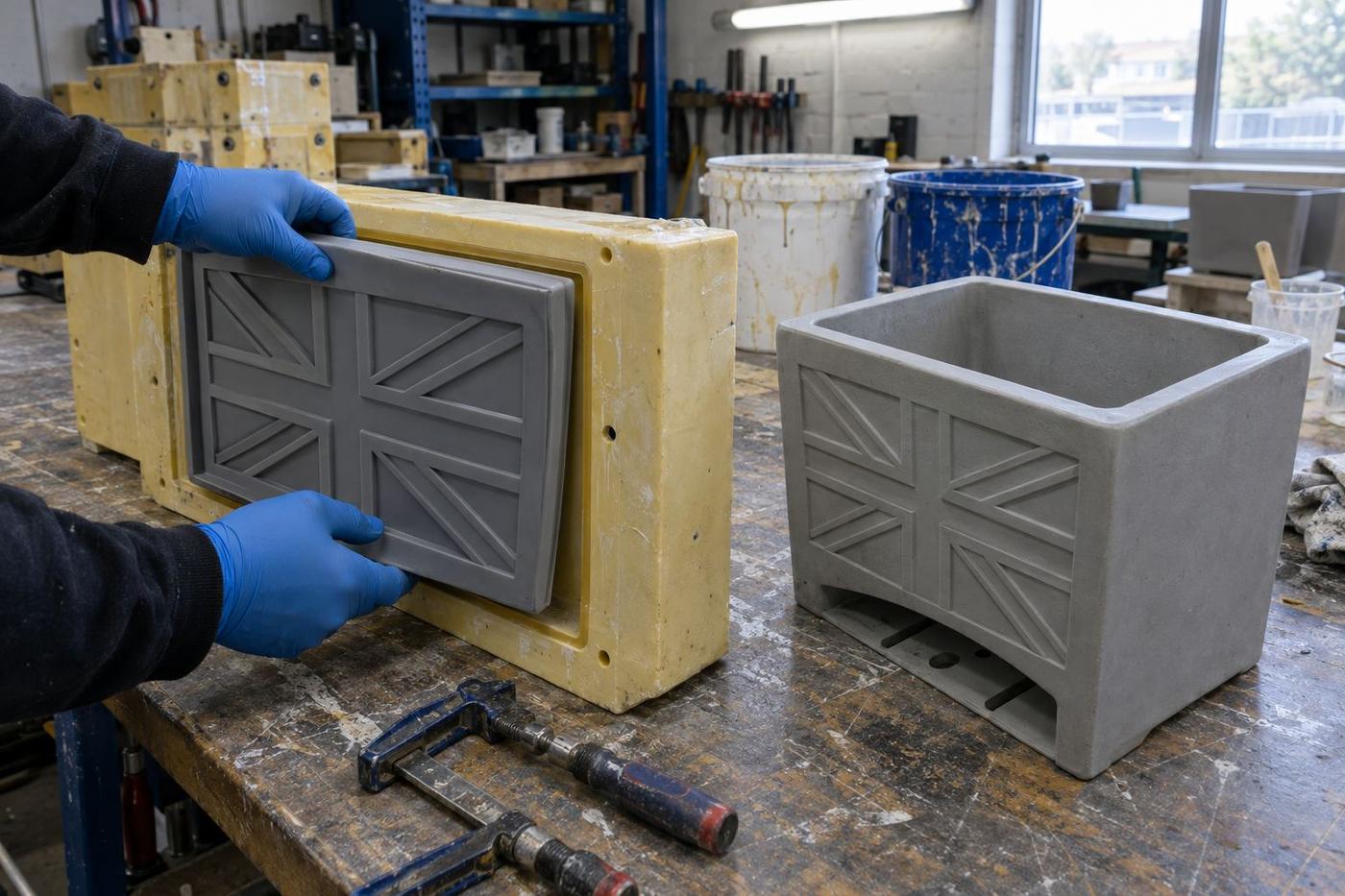
A seasonal decorative planter with a Union Jack embossed on all four faces. Silicone tooling for the flag detail, polyurethane surround for the bulk of the planter, cast-in drainage in the base.
Read the record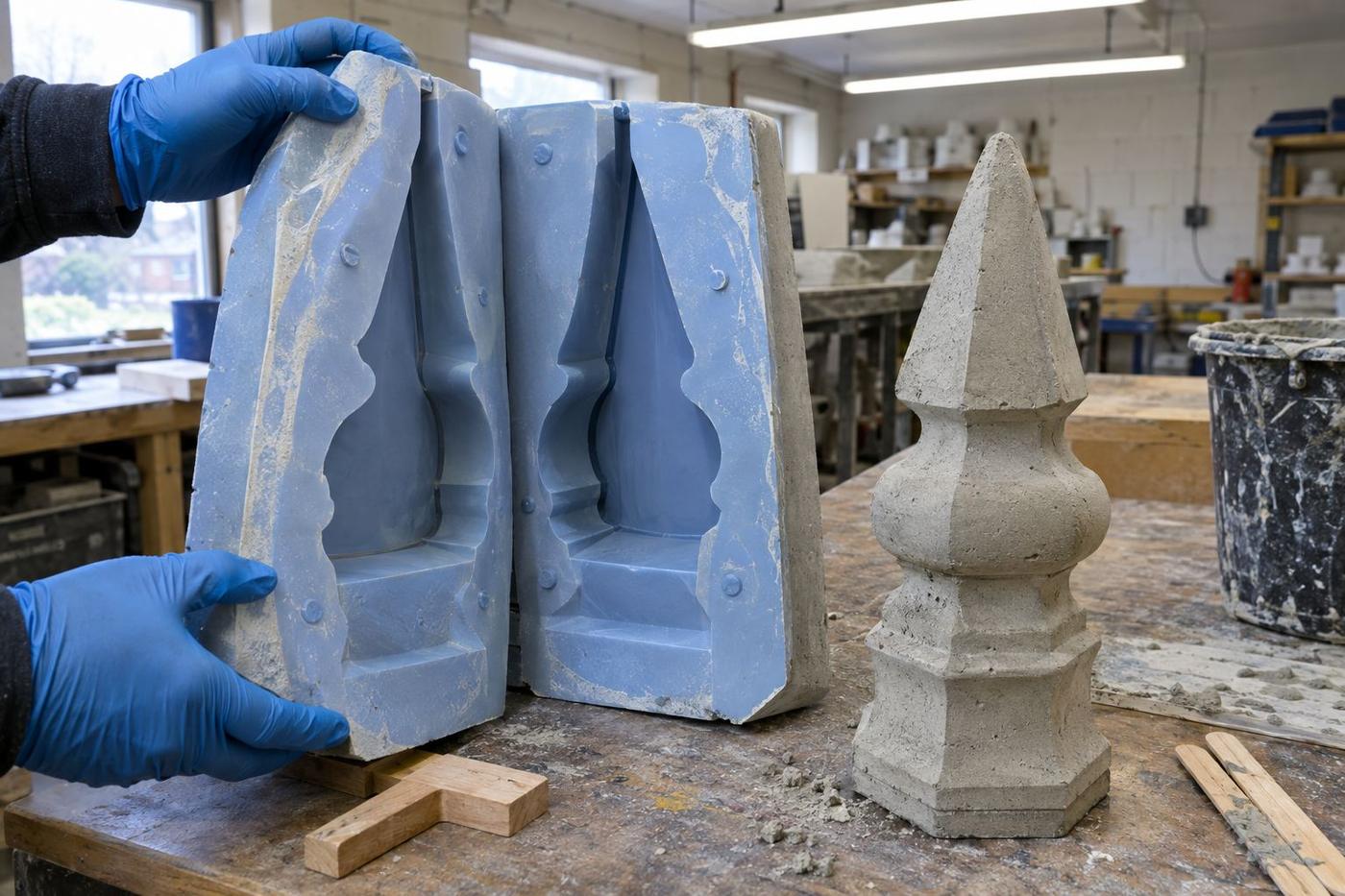
A parish church needed to reinstate a finial that had fallen from the east tower during a storm. One surviving finial on the west tower gave us the pattern. Silicone bench mould, matched lime concrete casting.
Read the record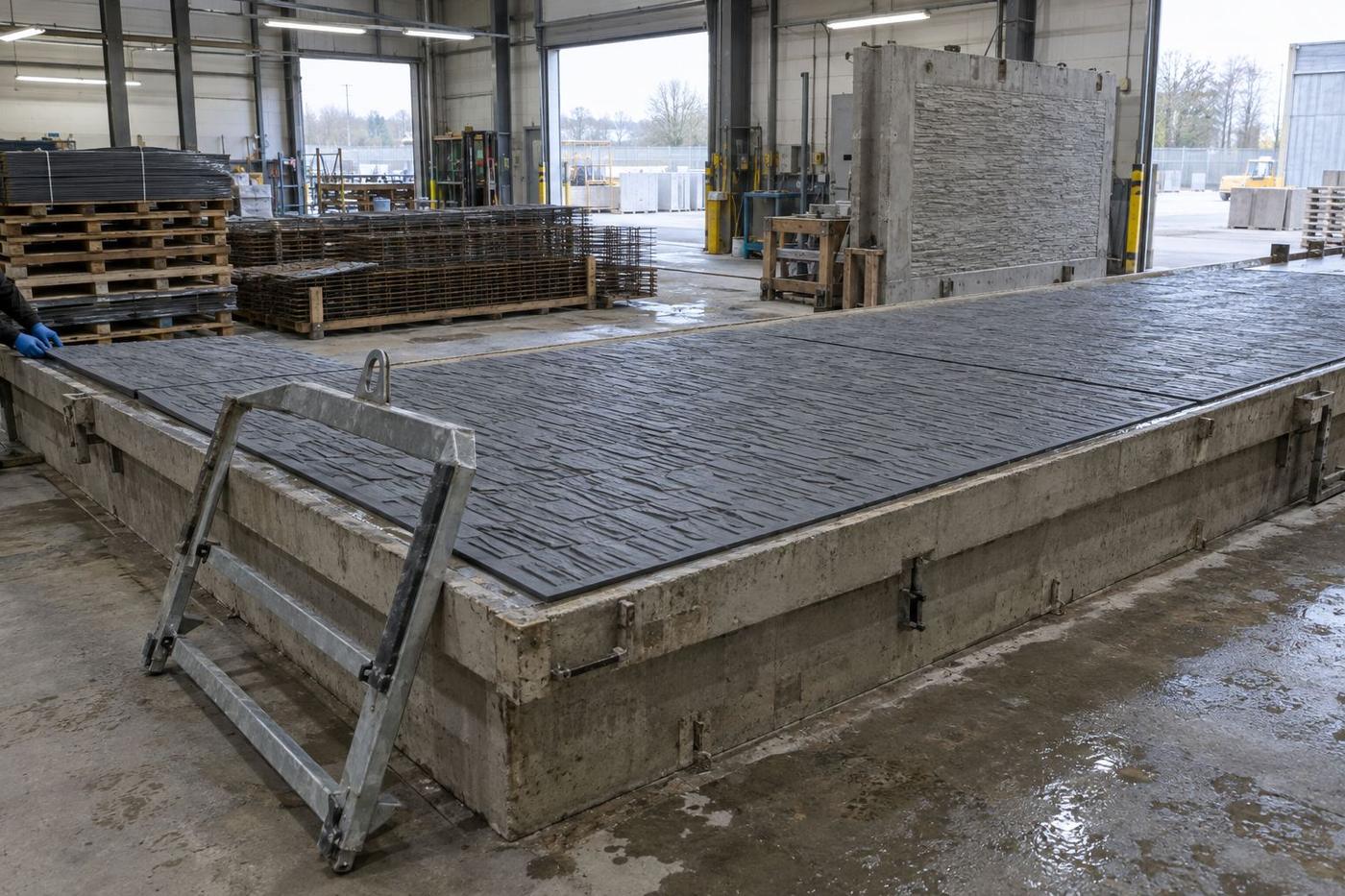
A residential precast programme needed a textured formliner across a run of large wall panels. Silicone tooling spliced at the panel joints, sized for the yard's standard bed, delivered with a lifting frame.
Read the record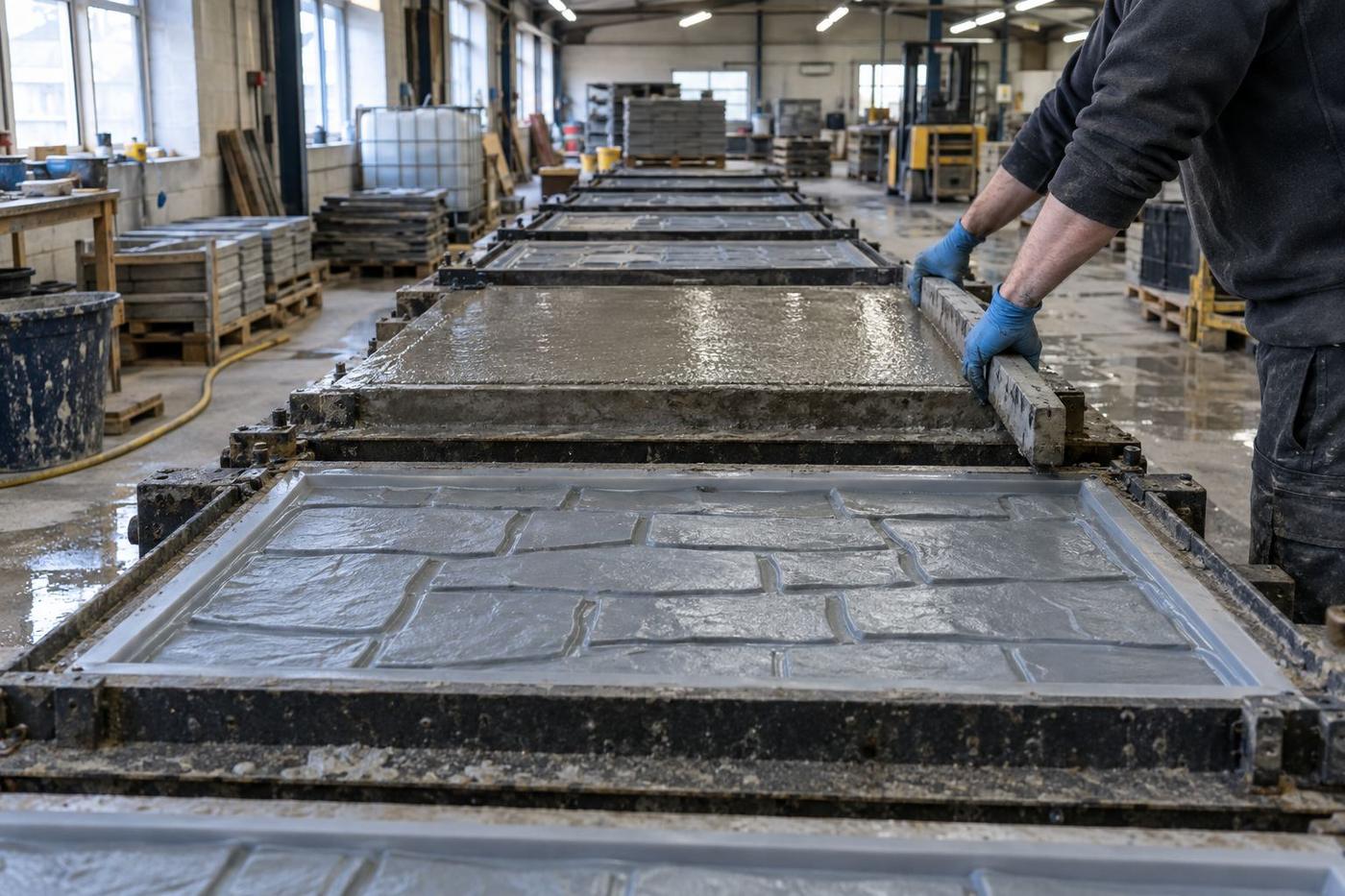
A city public square had a bespoke paving relief specified by the landscape architect. Silicone tooling designed to fill, screed, strip and clean quickly across a run of several hundred slabs.
Read the record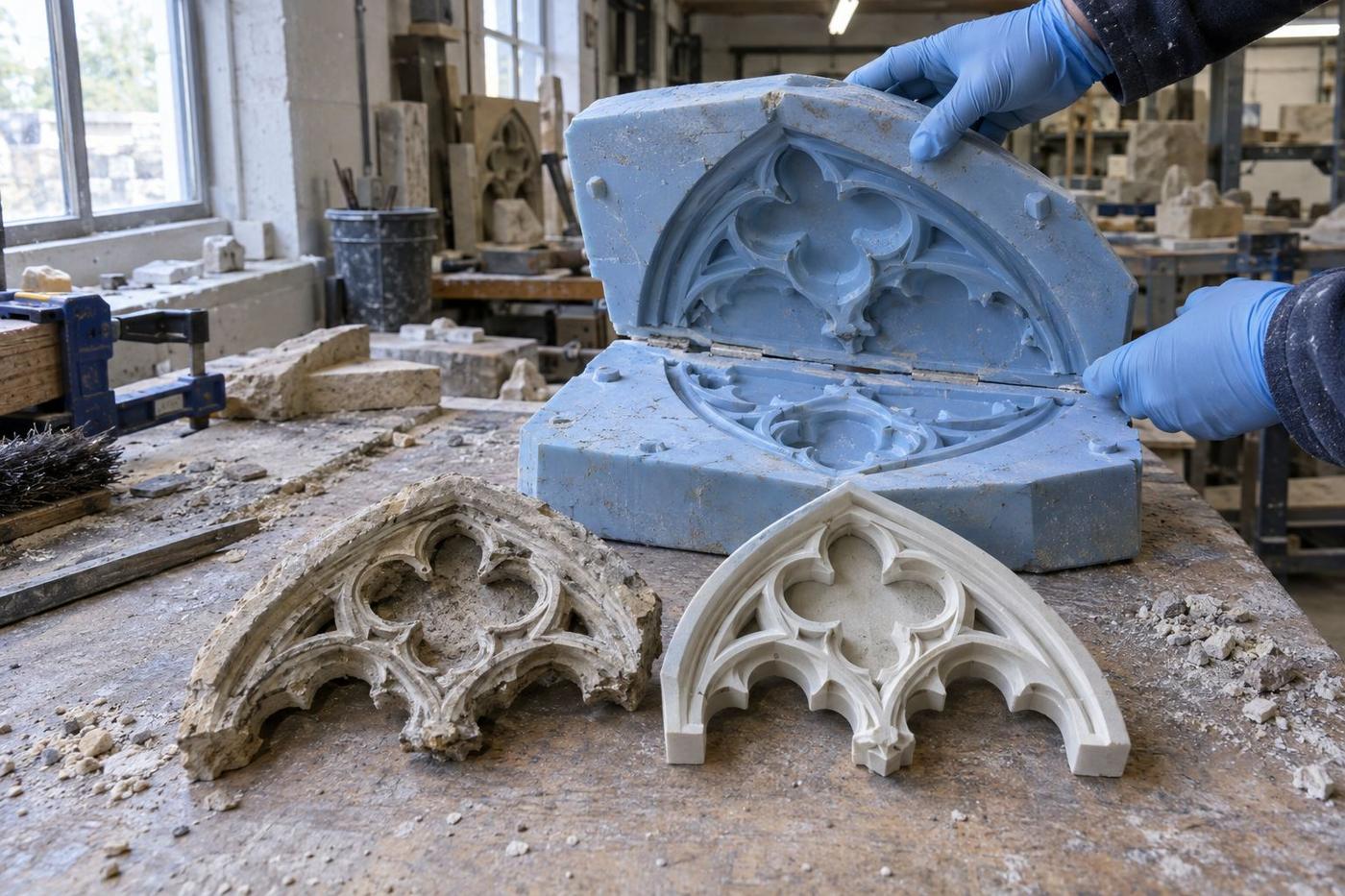
Two lights of a Victorian Gothic window had lost their tracery to frost. One matching light survived. A split silicone mould from the survivor gave the mason's yard a clean route to matched cast-stone replacements.
Read the record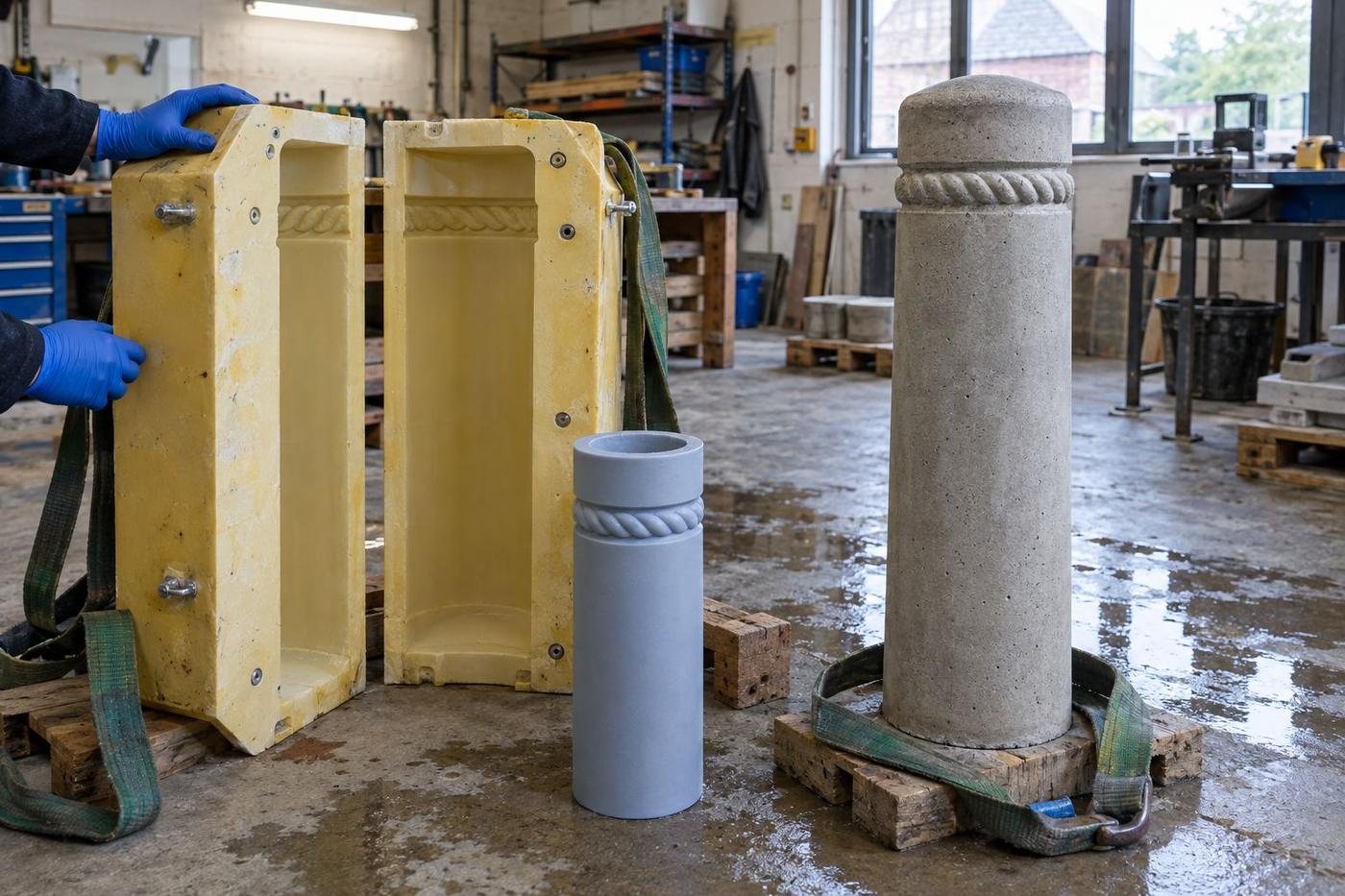
A landscape architect wanted a mooring-post-inspired bollard with a rope relief band for a marina frontage. A split polyurethane mould with a silicone relief insert gave the precaster a dense, salt-tolerant cast every time.
Read the recordRead a job like this
If you have a job coming up and want to see whether we've done anything like it before, the fastest route is to skim the twelve records and open the ones that look closest. Each is written to answer three questions: what was the technical challenge, how did we approach it, and what happened.
If your job doesn't obviously match any of the twelve, ring us anyway. Most of what we do doesn't fit neatly into a project write-up — the records represent maybe a tenth of what comes through the workshop. The best way to check whether your job is a fit is a five-minute conversation.
Related
At a glance
Planning liners across a wall
Swipe to see the whole diagram
Get in touch
One photograph tells us what surface you're chasing, and one line about the mix tells us what silicone or polyurethane will survive it.
Real people, a real workshop
No call centre and no middlemen. When you contact TCI Construction, you speak to the team who design, build and check your mould.


 Thomas LaneManaging Director
 George PrestonDesign & Project Manager
 Kelly BallingerHead of Partnerships
 Jim AndertonProduction Manager
 TheodoreEmployee Welfare