TCI Construction
Concrete moulds and formliners
that survive a working yard.
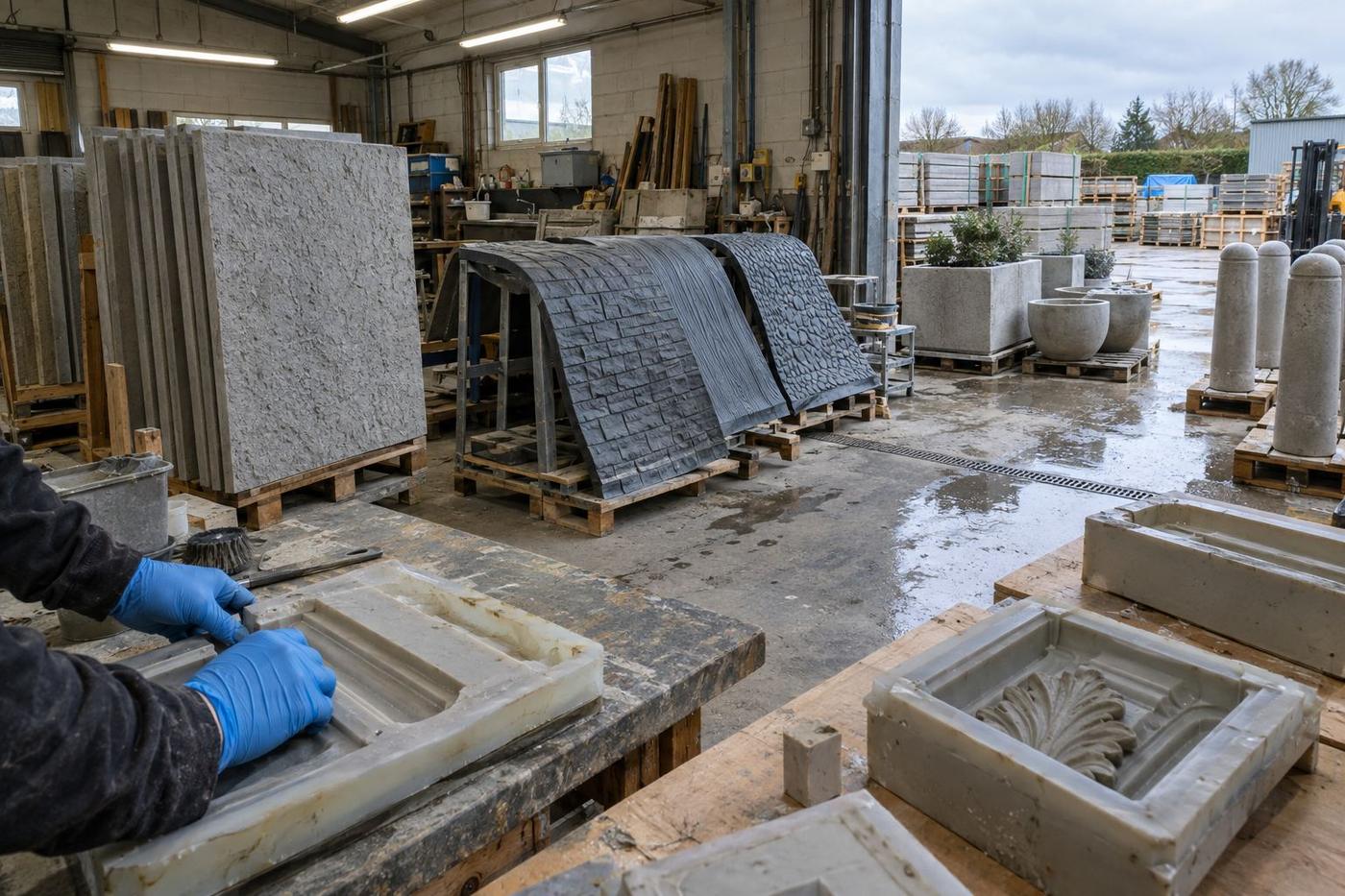
Silicone and polyurethane moulds, formliners and pattern tooling for precast concrete, GRC, architectural cladding, cast stone and heritage restoration. Specified around your mix and your strike sequence, not around a catalogue texture.
Who we are
Nobody buys a formliner. They buy the two-hundredth panel looking like the first.
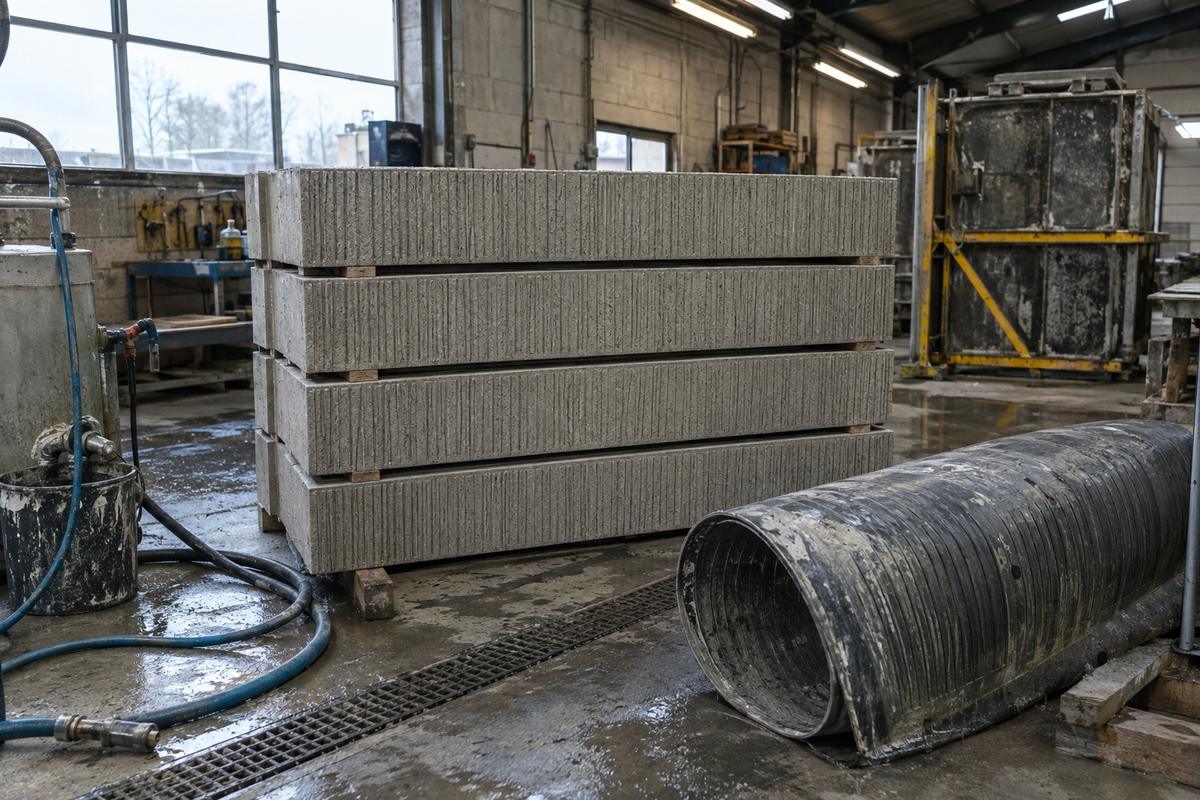
A silicone or polyurethane mould for concrete has to survive release agent, alkaline pours, being hosed off, being stacked, and being rushed back onto the bed. We build tooling around your mix and your strike sequence, not around what a catalogue said the texture should be.
Four shapes of work
Texture, unit, thin shell, replacement.
Four kinds of tooling come through this division — surface formliners, three-dimensional unit moulds, thin-shell GRC tooling, and one-off replacements for heritage jobs.
Formliners
Surface tooling — wood grain, stone, brick, custom relief. Silicone or polyurethane, sized to your bed and your panel joints.
Unit moulds
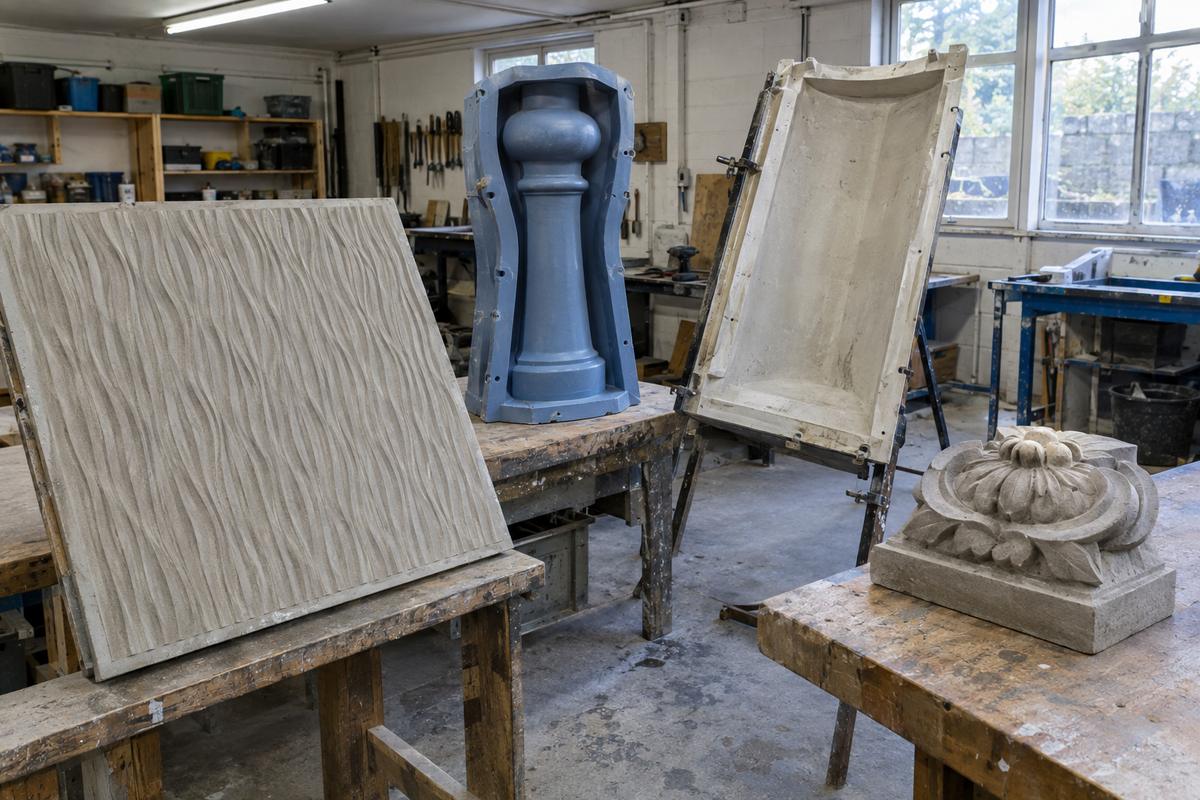
Three-dimensional single-panel tools. Balustrades, copings, capstones, bench ends, bollards, keystones.
GRC tooling
Thin-shell moulds for glass-reinforced concrete cladding, cornices and lightweight architectural elements.
Restoration
One-off silicone rebuilding a lost feature on a listed elevation. Repeated exactly, from a single surviving sample.
Where our tooling goes
Eight applications, one workshop.
Different jobs, but the same four questions underneath: what surface, what mix, how many pours, how it's handled.
Precast concrete
Formliners and unit moulds for panel yards running structural and architectural precast.
GRC cladding
Thin-shell tooling for cornices, spandrels and lightweight façade panels.
Cast stone
Sharp-edged moulds for keystones, cills, quoins and dressed-stone reproductions.
Heritage restoration
Rebuilding a lost detail from a single surviving section, in situ or on the bench.
Landscape & street furniture
Bench ends, planters, bollards, paving relief, public realm bespoke.
Decorative concrete
Small-format decorative pieces, garden ornament, bespoke retail props.
How we work
Six commitments with every order, from a single mould upwards.
A response the same working day
Every enquiry gets a human reply the same day it lands. If we need longer to price it properly, we'll tell you why and when to expect the number.
Tooling and unit cost, itemised
Two lines on the quote. What the tool costs to build, and what each part costs once it's running. Nothing rolled up to look cheap on order one.
Written material spec, every job
The mould leaves with a document that says what it's made of, what it's rated to, and what it isn't for. Fine to hand straight to an architect.
UK design, UK moulding capability
Design and development in the UK. Manufacturing capability in the UK, with some higher volume placed with partners where that's the right answer.
A single point of contact
One engineer runs your job. Not a queue, not a portal-only conversation. You have their name and their direct line.
No minimum for the first tool
A single formliner or one-off restoration mould is a real order. We won't push you into volume tooling before it's the right economics.
From the workshop
Pattern, pour, demould, repeat.
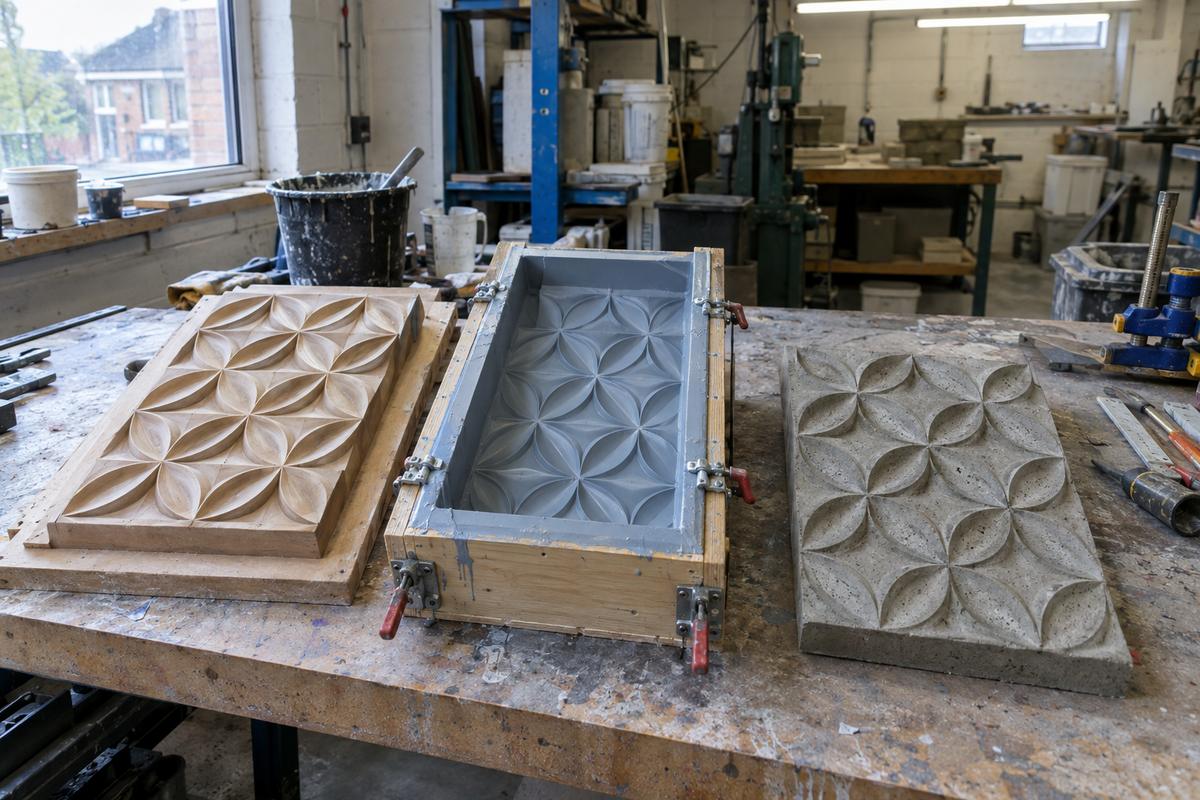
Every tool starts as a pattern we can put in front of you. Silicone or polyurethane is poured against it, cased for your bed, and checked before it leaves.
Then it goes to work in a yard like yours. The one-stop shop page explains the whole chain, and our quality page explains the paperwork that travels with it.
The group
Where TCI Construction sits.
TCI Construction is one of four divisions in TCI Group. Concrete, cast stone, GRC and restoration work come through here. Silicone moulds for other applications go to the right specialist team.
At a glance
The idea in a picture.
Where the formliner sits
Swipe to see the whole diagram
FAQs
Questions we hear before your first order.
Do your moulds survive alkaline concrete?
Yes. We spec silicones and polyurethanes that hold up to portland cement pH without degrading. We'll ask about your mix so the right grade goes on the bed.
Can you match an existing elevation?
Yes. Send us a photograph, a squeeze, or in listed cases a section of the original. We'll rebuild it as a mould that can be run repeatedly.
What's the biggest formliner you can make?
Larger than a standard bed. Formliners get spliced routinely; we'll design the seams to fall where the panel joint already is, so they don't read on the finished face.
How many pulls will a formliner do?
Depends on mix, release, and how well it's handled. Well-treated silicone formliners on a normal precast programme reliably run into three figures. Polyurethane formliners often further, on the right mixes.
Silicone or polyurethane?
Polyurethane is the workhorse for concrete — tougher, longer-lived on straightforward relief. Silicone earns its keep on fine detail and undercuts. We'll say which one your job needs, and why.
Get in touch
Send us a photograph of the panel or the elevation.
One photograph tells us what surface you're chasing, and one line about the mix tells us what silicone or polyurethane will survive it.
Real people, a real workshop
You deal with the people who make it.
No call centre and no middlemen. When you contact TCI Construction, you speak to the team who design, build and check your mould.
- A real Warwickshire workshopUnit 15, Waterloo Park, Bidford-on-Avon, Alcester B50 4JG.
- Real people on the phoneCall the team on 01789 224228, Monday to Friday.
- The same team on every jobDesign, production and aftercare come from the people you see here.
- Part of TCI GroupFive specialist brands, one engineering team. Visit TCI Group.


 Thomas LaneManaging Director
 George PrestonDesign & Project Manager
 Kelly BallingerHead of Partnerships
 Jim AndertonProduction Manager
 TheodoreEmployee Welfare