Copings and cappings
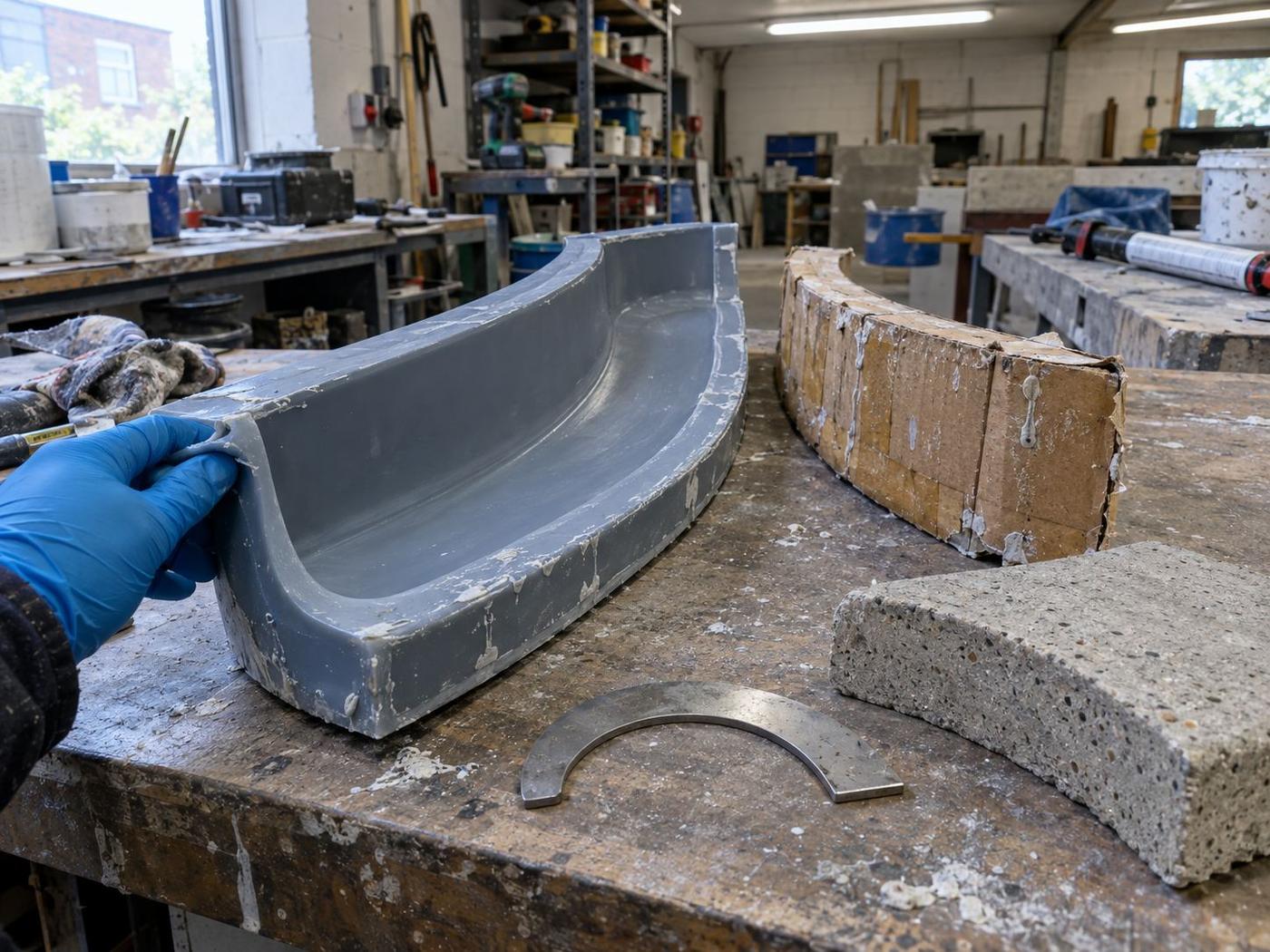
Straight and curved copings, pier caps, wall cappings with drips and throatings. Polyurethane for straight runs; silicone where the drip creates an undercut.
For hard landscape contractors · Specials and site-fit units
Hard landscape contractors come to us for the specials — the curved coping, the step nosing to match an existing flight, the retaining unit on a radius. Tooling that lets you or your precaster cast what the site needs.
What matters to you
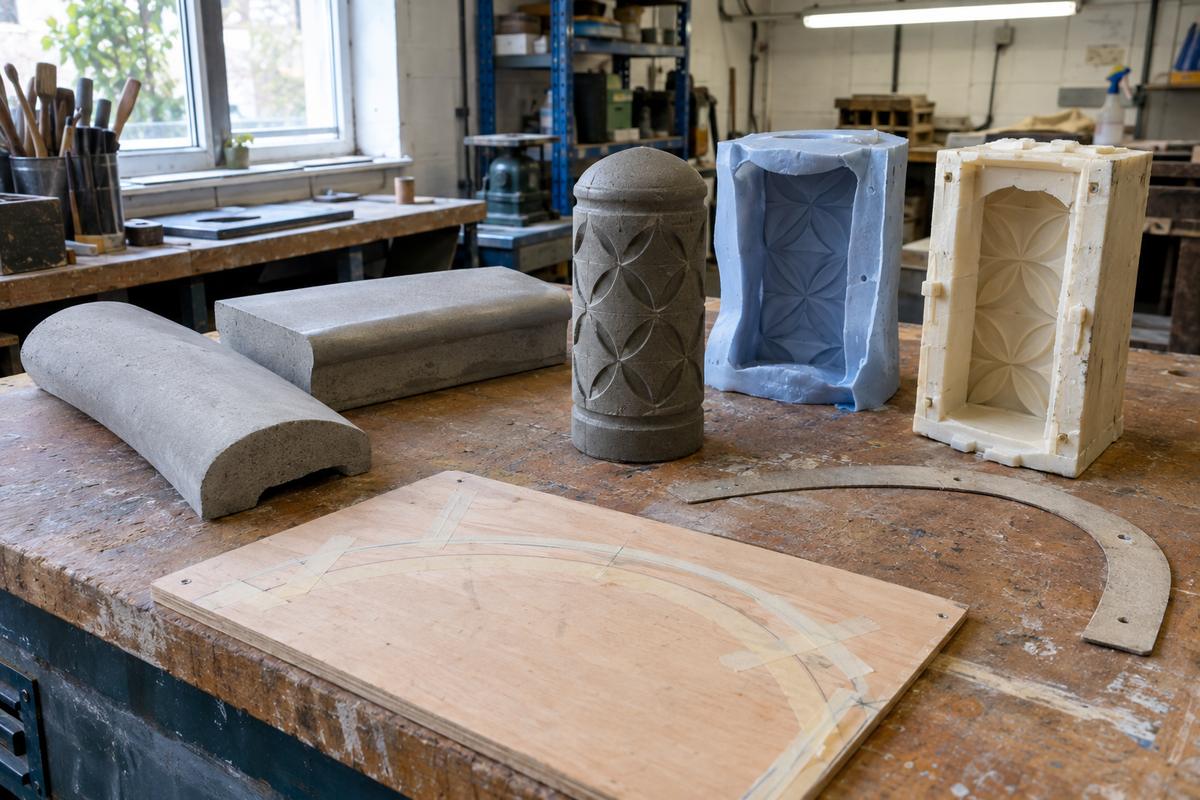
The piece has to fit the site first time. A curved coping with the wrong radius, a step unit with the wrong going, is a return trip and a programme slip. We work from your setting-out, not from an idealised drawing, and we'll ask the awkward questions about tolerances on the existing structure.
Short runs are the norm. Twelve curved copings, thirty step nosings, eight bespoke bollards. We don't treat that as a nuisance; we pick the tooling route that makes sense at that quantity — often a simpler, cheaper tool than a precast yard would need.
It has to match what's there. On refurbishment work, the new piece sits next to the old. Matching an existing coping profile or step nosing is usually a squeeze, a profile gauge and a pattern — not a design exercise.
How your work looks
Straight and curved copings, pier caps, wall cappings with drips and throatings. Polyurethane for straight runs; silicone where the drip creates an undercut.
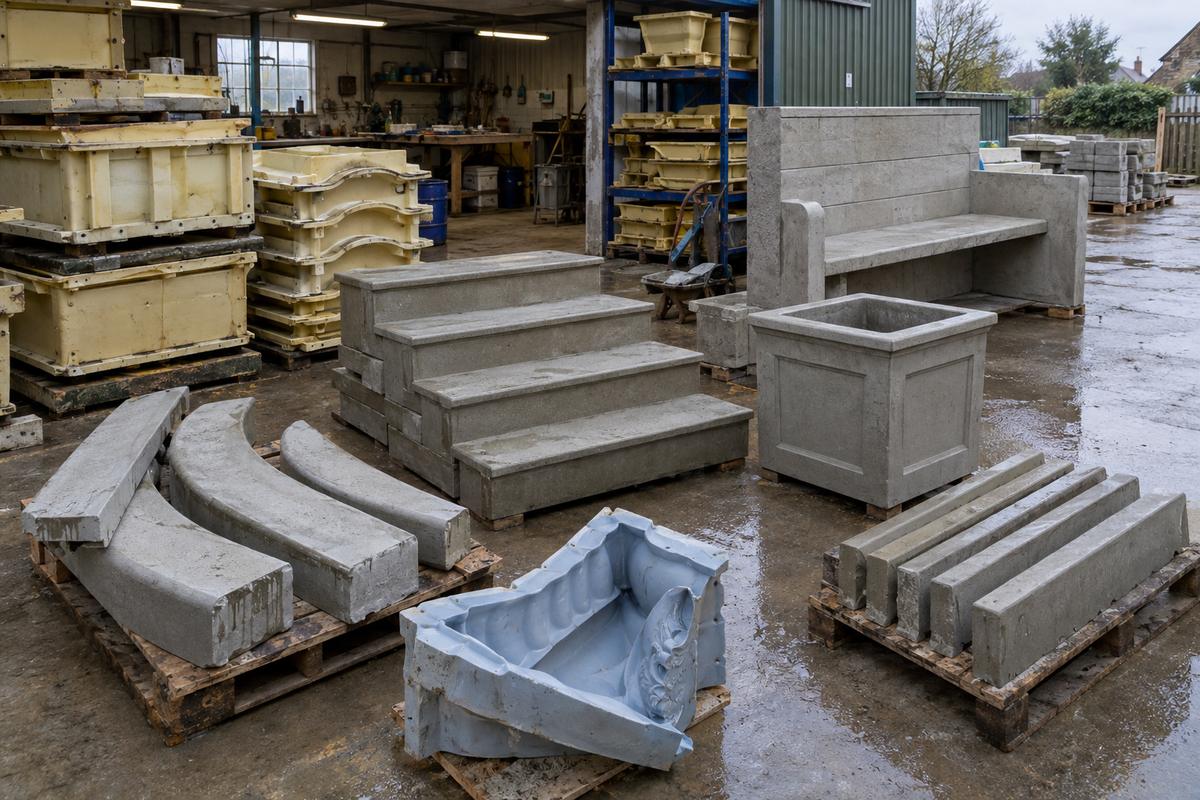
Step units, nosings, kerbs, edging to match an existing flight or a new design.
Retaining units on a radius, planters, bench seats built into walls, one-off site specials.
Services that fit
How the first conversation goes
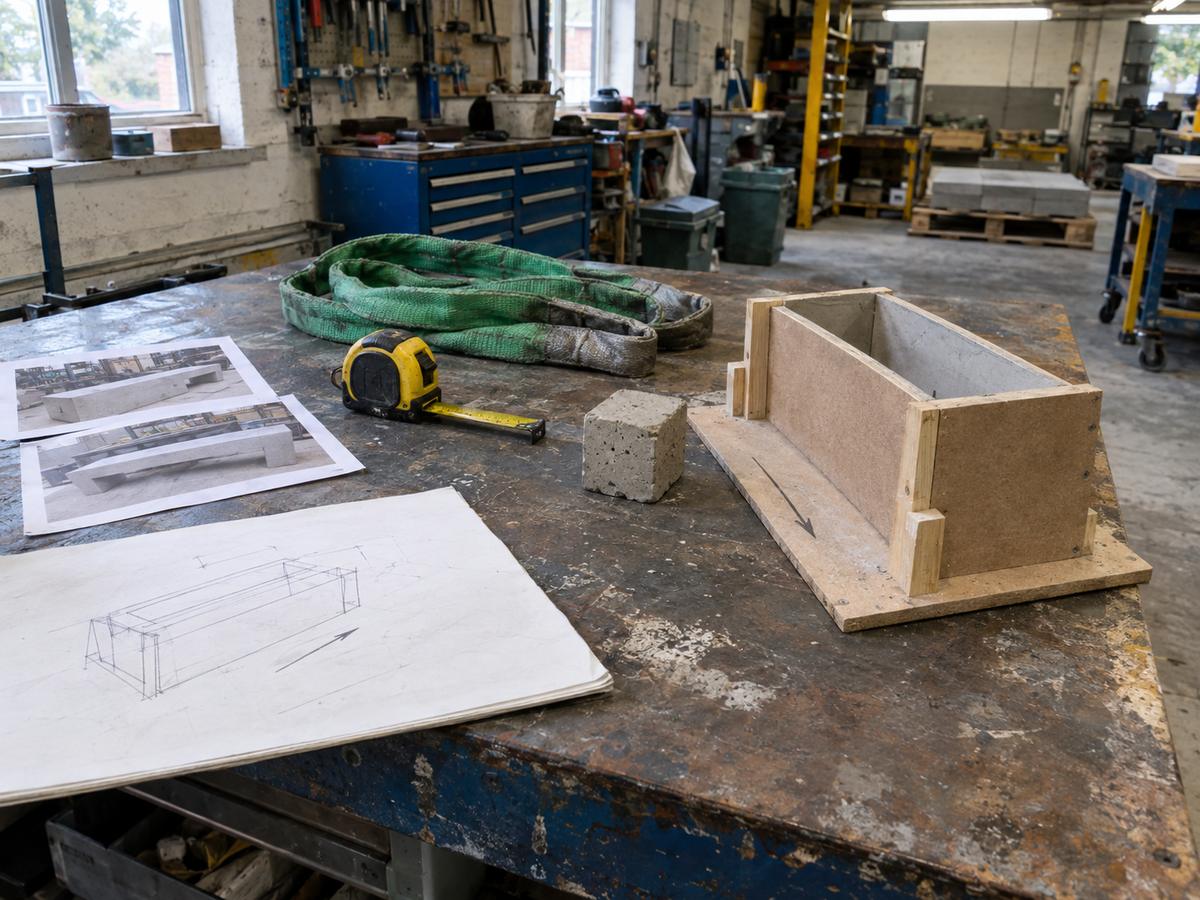
Tell us the piece, the quantity and the site. A photograph of what's there, a drawing or sketch of what's needed, and whether you're casting yourself or buying from a precaster.
If you're casting yourself, we'll ask about your set-up — pour area, vibration, how you'll lift the units — so the mould suits your yard, not a factory.
We come back the same working day with a route and an honest rough number. If a timber or polystyrene one-off would be more sensible for your quantity, we'll say so.
FAQs
Yes. A profile gauge reading or a short offcut is ideal. A good photograph with a tape in shot will get us started.
Sometimes. It depends on complexity and finish. For simple pieces a one-off timber mould may be cheaper; for curved or detailed pieces, a silicone or polyurethane tool usually wins even at twelve.
Yes. Many contractors cast specials in a covered corner of their own yard. We'll build the mould to suit hand-filling and simple vibration.
Yes. Give us the radius and the arc length per unit. We'll build the pattern to suit.
We'll recommend one that suits the mould material and your mix, and write the release regime into the handling note.
Get in touch
One photograph tells us what surface you're chasing, and one line about the mix tells us what silicone or polyurethane will survive it.
Real people, a real workshop
No call centre and no middlemen. When you contact TCI Construction, you speak to the team who design, build and check your mould.


 Thomas LaneManaging Director
 George PrestonDesign & Project Manager
 Kelly BallingerHead of Partnerships
 Jim AndertonProduction Manager
 TheodoreEmployee Welfare