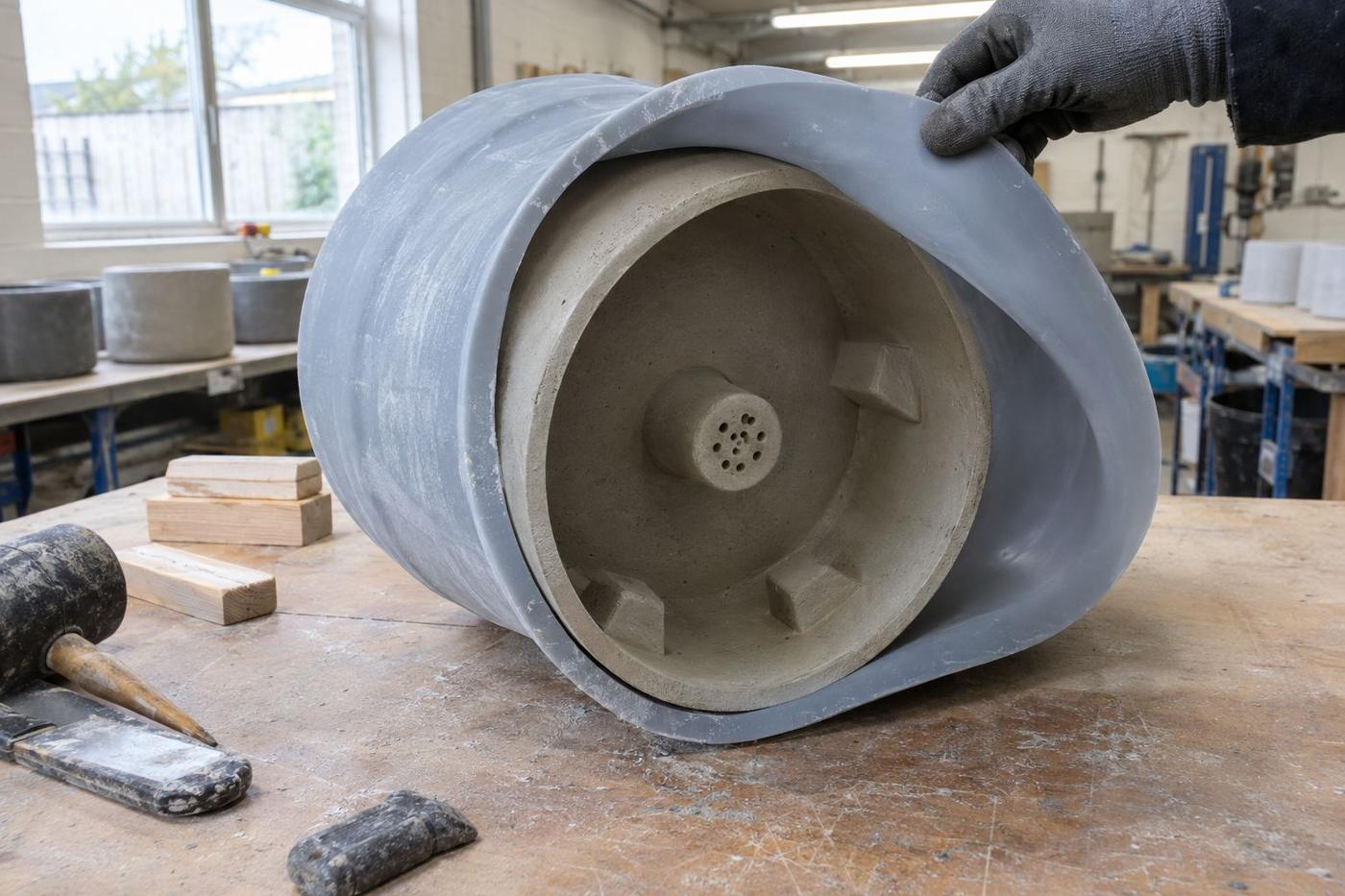
You're drilling drainage after casting
Every drilled hole is a step, a potential crack, a drift of concrete dust across the piece. Cast-in drainage removes the step and the risk.
Planters & vessels · Tooling
Silicone moulds for concrete planters and vessels — with drainage holes, base feet and wall thickness designed into the tool. You lift the finished piece out ready to sell, not ready to drill.
When it fits
Every drilled hole is a step, a potential crack, a drift of concrete dust across the piece. Cast-in drainage removes the step and the risk.
Rubber or cast feet stuck on after moulding is a persistent quality problem. Moulding the feet into the base means they're always aligned and never fall off.
A wall that's thin in one place fractures in transit. A mould designed with the wall thickness controlled — internal core, external mould — gives you consistent pieces every pour.
The mould pays for itself against post-cast time and reject rate faster than most makers expect.
The choice
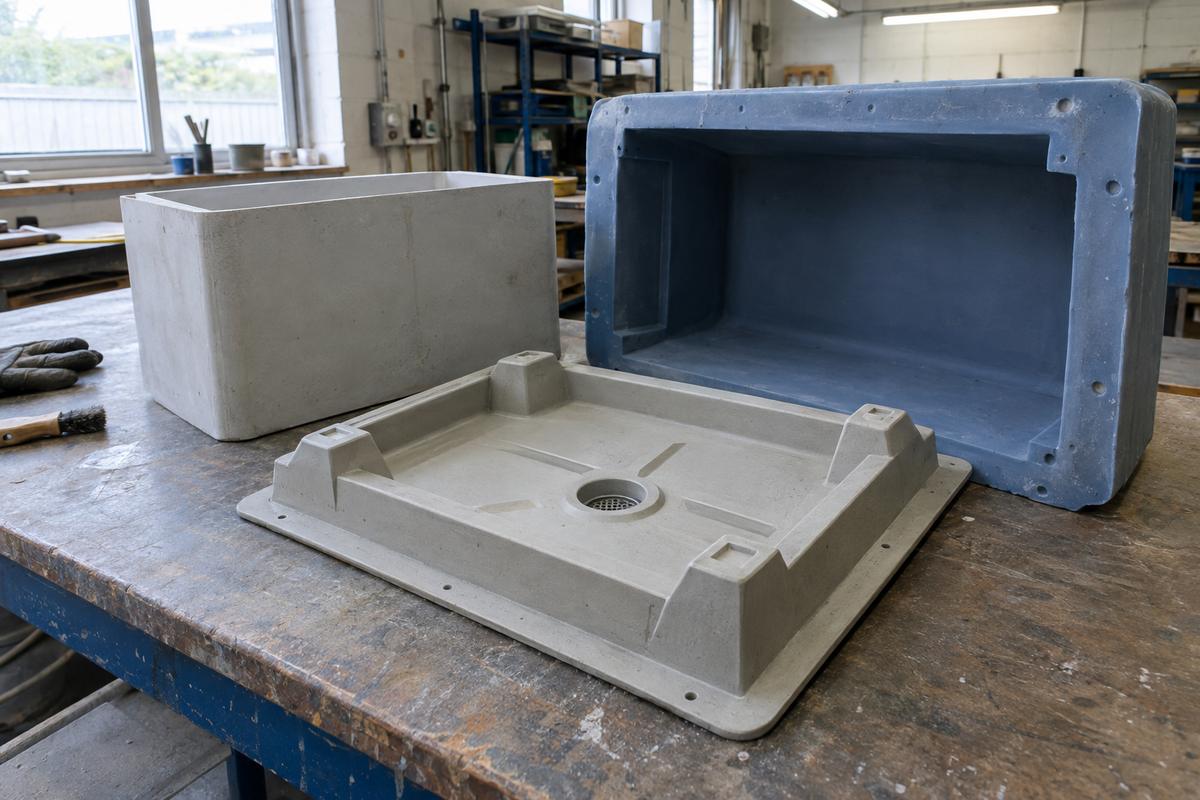
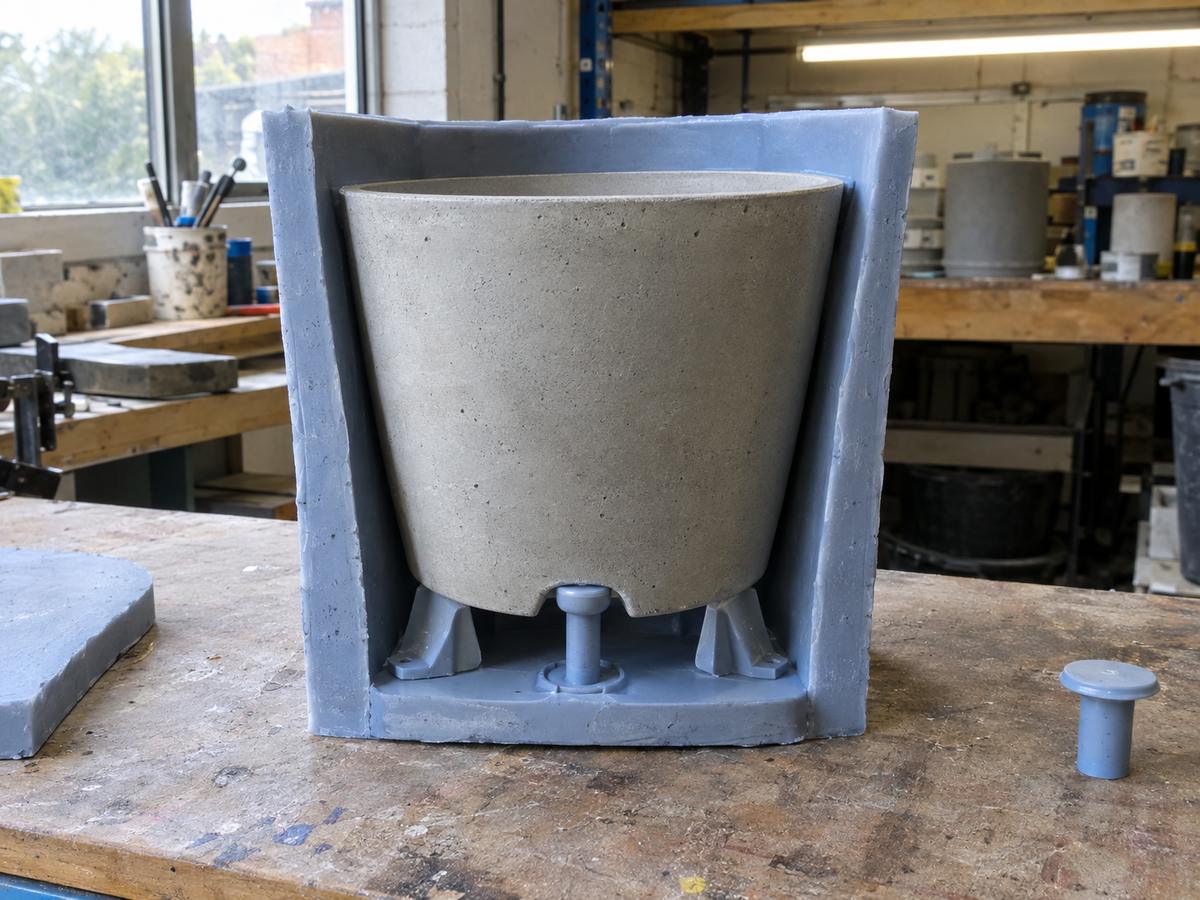
A planter mould is usually a three-piece silicone: outer mould, inner core (which forms the cavity), and a base plate that carries the drainage plug and the feet. The outer and inner meet at a designed clearance that gives you an even wall thickness right around the piece.
The drainage plug is silicone with a rigid stem, sat in the base plate. It flexes for release without jamming. The base feet are external features cast into the base plate mould, so they're always in the same position on every piece.
For decorative outer texture, the outer mould carries the relief. For a plain planter, the outer is smooth silicone off a polished master. Either way, we photograph the master before the mould is poured so you can confirm the surface before we commit.
What we need
Rough sizes, wall thickness you want, drainage layout, feet count and size.
Plain, pigmented, GRC-inspired thin mix. Affects silicone grade.
Determines material grade and whether one mould is enough.
Sealed, waxed, painted after cast? Some finishes are easier to apply on a specific mould finish.
The honest bit
The trickiest planter mould is one where the outer geometry has a subtle taper — wider at the top than at the base, or vice versa. A mould that peels correctly on the first ten pours can start to grip on the twentieth if the release regime drifts. We'll tell you exactly what release to use, and we'll build a slight bit of margin into the taper if the geometry allows.
Concrete for planters is often coloured or pigmented. Some pigments and admixtures shorten silicone life. If your mix is unusual, tell us — we'd rather spec the right grade at the start than have you back with a tired mould after fifty pours.
There are shapes we won't quote for a planter mould. A vase with a very narrow neck and a wide belly, for example, can't be moulded as a single piece — it would have to be split, and the split line would show on a pigmented concrete piece. We'd rather redesign the shape slightly than sell you a tool with a permanent visible seam.
Drill down
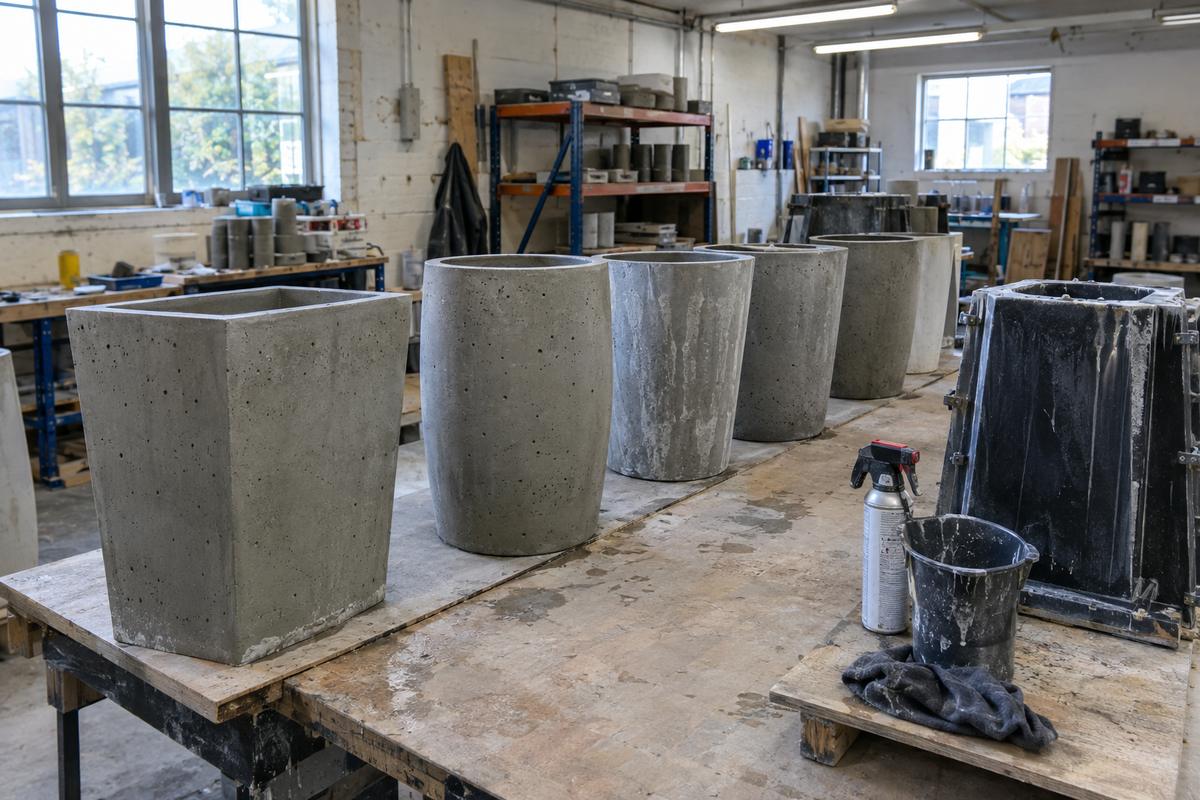
Each one has its own page with the detail we'd normally cover on the first call.
Related
Get in touch
One photograph tells us what surface you're chasing, and one line about the mix tells us what silicone or polyurethane will survive it.
Real people, a real workshop
No call centre and no middlemen. When you contact TCI Construction, you speak to the team who design, build and check your mould.


 Thomas LaneManaging Director
 George PrestonDesign & Project Manager
 Kelly BallingerHead of Partnerships
 Jim AndertonProduction Manager
 TheodoreEmployee Welfare