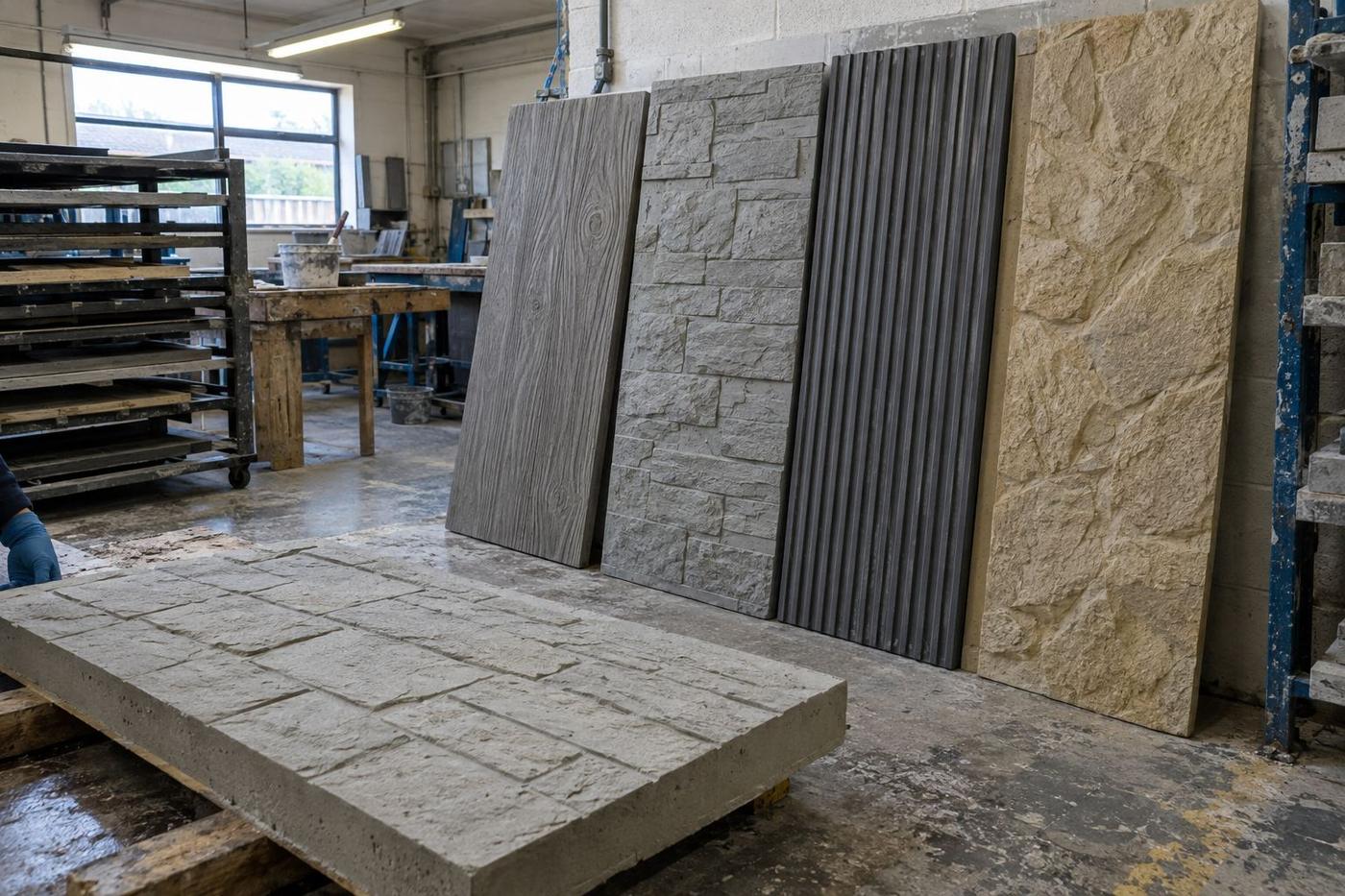
You want a specific finish
Wood grain from a particular timber, a stone texture matched to a nearby elevation, a brick or ashlar pattern that reads properly at distance. A stock formliner won't get you there. A custom one will.
Formliners · Surface tooling for precast
Custom silicone and polyurethane formliners — wood grain, stone, brick, ribbed, ashlar, bespoke relief. Sized to your bed, spliced at the panel joint, released cleanly the fiftieth time as well as the first.
When it fits
Four situations where a custom formliner earns its cost quickly.
Wood grain from a particular timber, a stone texture matched to a nearby elevation, a brick or ashlar pattern that reads properly at distance. A stock formliner won't get you there. A custom one will.
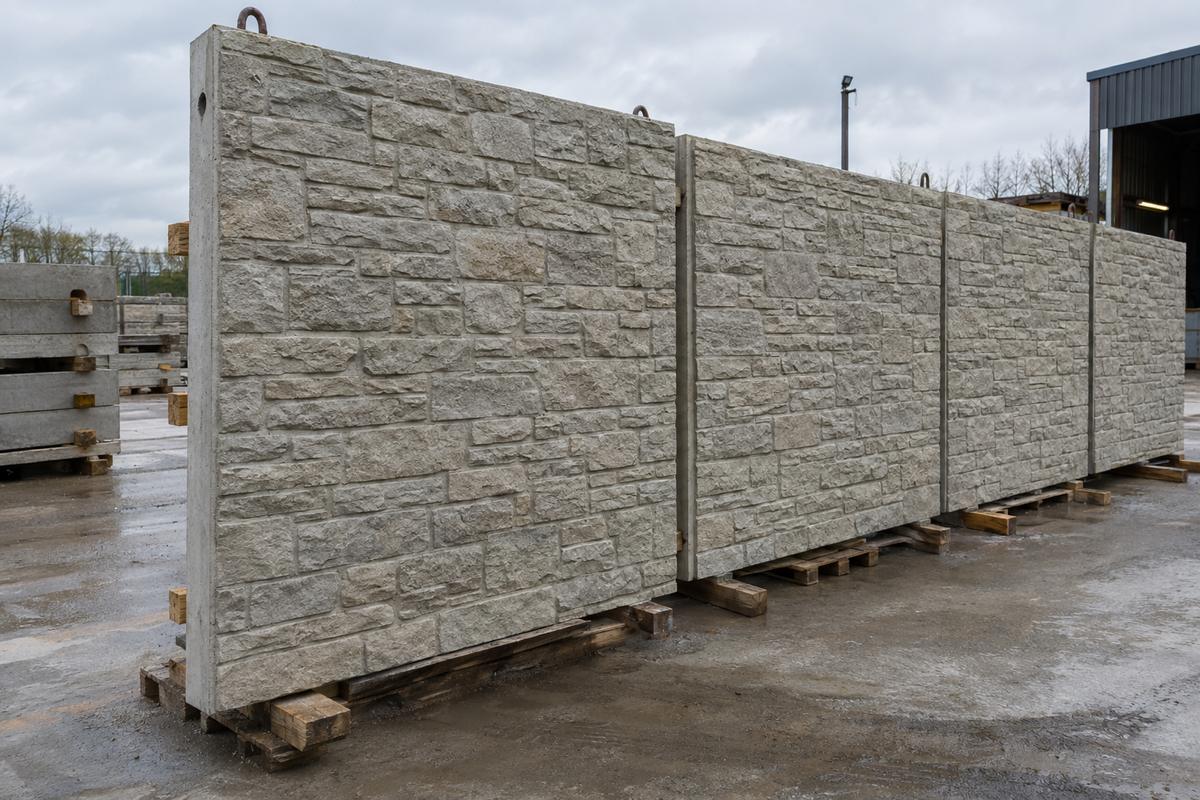
If the texture continues from panel to panel, the formliner has to be spliced so the joint falls where the panel joint already is. That has to be designed in — it can't be improvised on the bed.
One-off silicone lining works for a single feature panel. A run of a hundred or more panels needs polyurethane or a purpose-built silicone with the right release regime around it.
Whether it's oversized, an odd corner or a curved bed, the formliner is made to fit. A stock roll will always leave you cutting on the bed, and the seams will read.
The choice
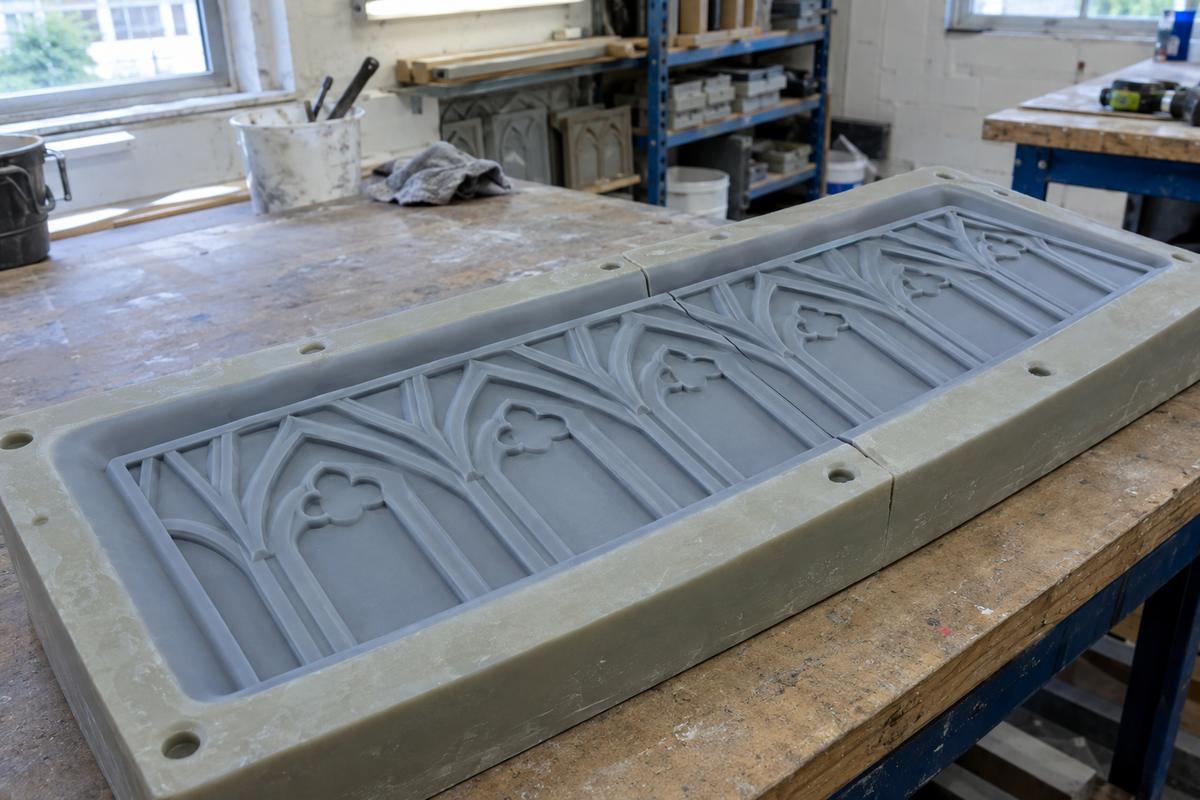
Formliners come in two flavours. Silicone captures fine detail beautifully and releases well without much release agent. Polyurethane is tougher, has a longer working life on straightforward relief, and takes more of a beating in the yard. For most standard textures on a normal precast programme, polyurethane is the workhorse. For fine architectural detail, or where undercuts are involved, silicone earns its keep.
The right answer is often both — a silicone insert for the detail area, sat inside a polyurethane surround. We'll tell you which combination fits your job, and why.
The splice matters as much as the texture. A badly-placed splice reads on the panel face forever. We design the splice positions on the drawing, before the mould is poured, and we tell you where they'll land so you can confirm they sit on the panel joint.
What we need
Whether that's the timber, the stone, the neighbouring elevation, or a hand-drawn pattern. One photograph tells us more than a paragraph.
The bed size, the panel size, and where the panel joints fall. That's what determines splice positions.
Plain OPC, GGBS blend, self-compacting, GRC. We don't need the exact proportions, but we need to know what the silicone or polyurethane is going to meet.
Fifty panels, two hundred, a rolling programme? The right material grade depends on it.
The honest bit
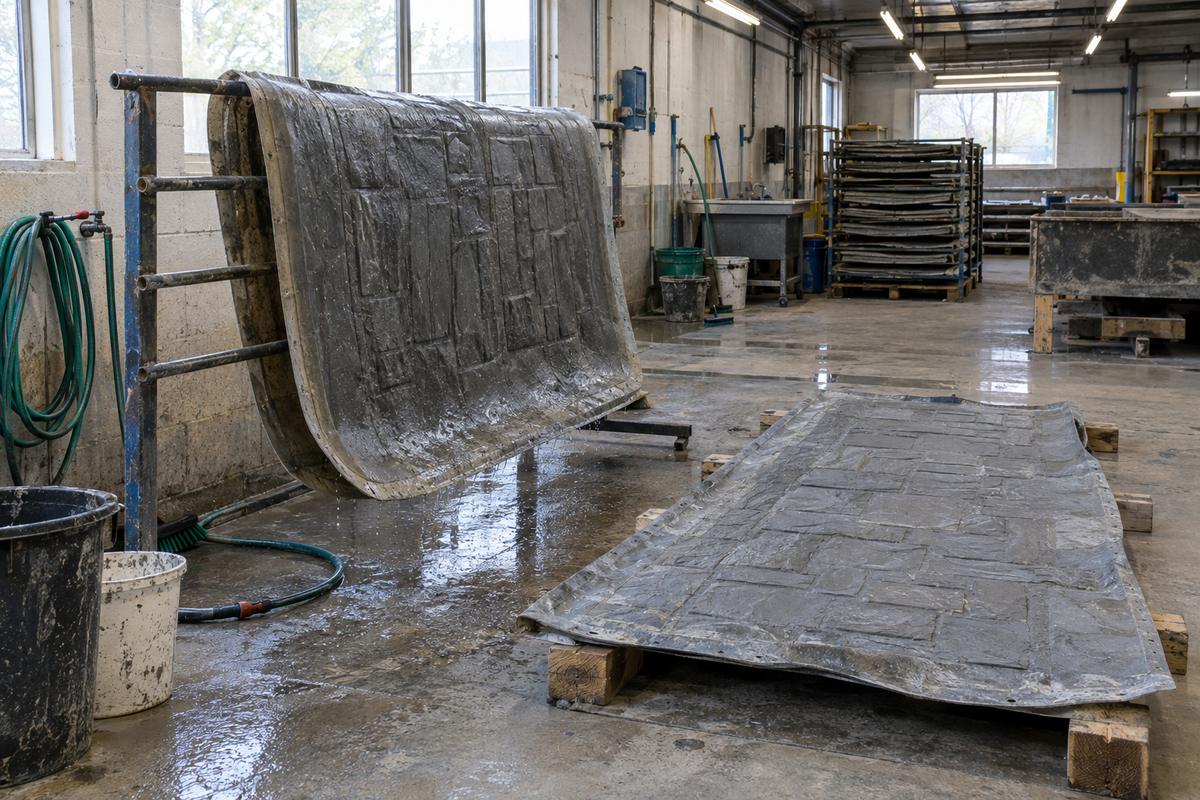
A formliner does not last forever. On a normal precast programme, well-treated silicone formliners reliably run into three figures of pours. Polyurethane on straightforward relief often further. Anyone quoting you five hundred pours as a guarantee is guessing.
How the formliner is handled matters as much as how it's made. A formliner that's stacked wet, released with an aggressive solvent, or hosed off with high-pressure water at close range will fail early. We'll write a short handling note into the delivery so your yard knows what the tool is expecting.
There's no advantage in over-specifying. A silicone grade rated for a chemistry you're not running is just money spent on a rating you don't need. We'll spec the grade that fits your mix, not the most expensive grade in the range.
Drill down
Each one has its own page with the detail we'd normally cover on the first call.
Related
At a glance
Where the formliner sits
Swipe to see the whole diagram
Get in touch
One photograph tells us what surface you're chasing, and one line about the mix tells us what silicone or polyurethane will survive it.
Real people, a real workshop
No call centre and no middlemen. When you contact TCI Construction, you speak to the team who design, build and check your mould.


 Thomas LaneManaging Director
 George PrestonDesign & Project Manager
 Kelly BallingerHead of Partnerships
 Jim AndertonProduction Manager
 TheodoreEmployee Welfare