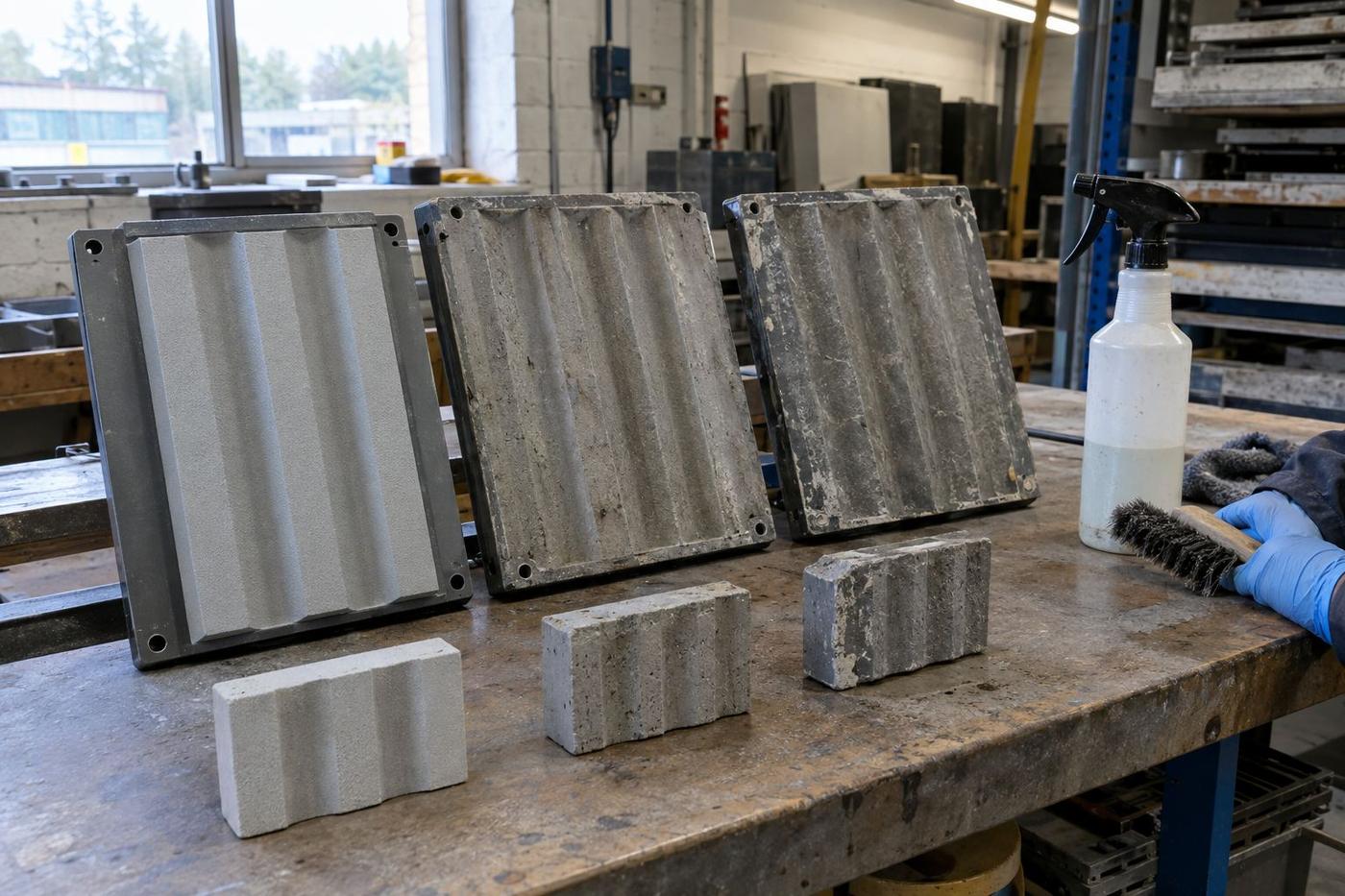
Mix chemistry
Standard OPC mixes are the friendliest. GGBS blends, high pigment loads, some accelerators and some retarders are less friendly. GRC face-mixes vary widely. Tell us what you're pouring and we can spec accordingly.
Knowledge · Buyer's guide
There's no magic pour-count number. What you get out of a formliner depends on your mix, your release, your handling, and your storage. Here's how to think about it honestly.
The honest bit first
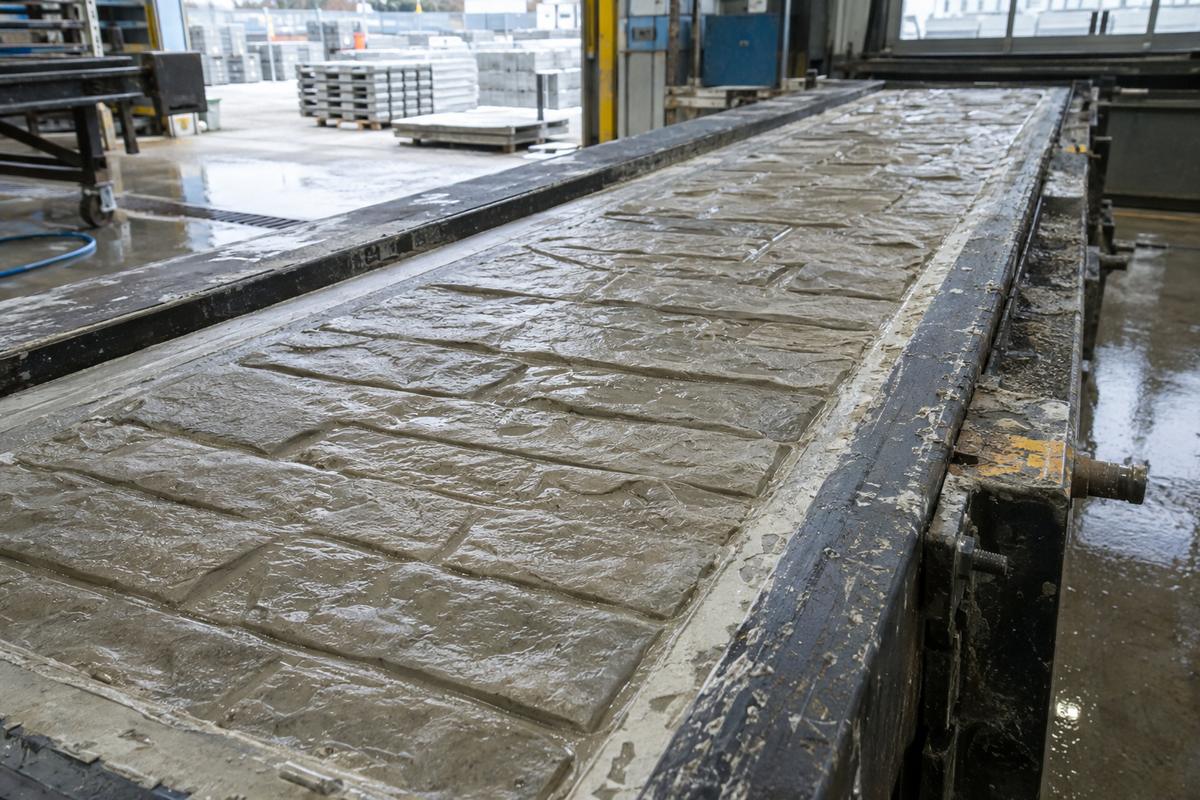
You'll see marketing that says "500 pours guaranteed" or "1,000 uses." Those numbers are best-case, on a specific mix, with specific release, in specific handling conditions, and they don't reliably transfer to your yard.
What we do instead is give you an honest range for your job — based on what you're pouring, how you're releasing, and how the tool will be handled — and we tell you which of those four variables is likely to move the range up or down.
The four variables
Standard OPC mixes are the friendliest. GGBS blends, high pigment loads, some accelerators and some retarders are less friendly. GRC face-mixes vary widely. Tell us what you're pouring and we can spec accordingly.
The right release, applied consistently, extends life significantly. The wrong release — or the right release applied inconsistently — shortens it fast. Chemical release compatibility matters, and it's not always intuitive.
Vacuum-lifted, hosed down, stacked in a shaded rack: long life. Forklifted with the tines under the mould face, hosed with hot water, stacked in direct sun: short life. Handling is often the single biggest variable.
A cool, shaded, dry storage regime between pours extends life. Outdoor storage in the sun, or a hot store that cycles the mould through big temperature swings, shortens it. If the tool has weeks between pours, this matters.
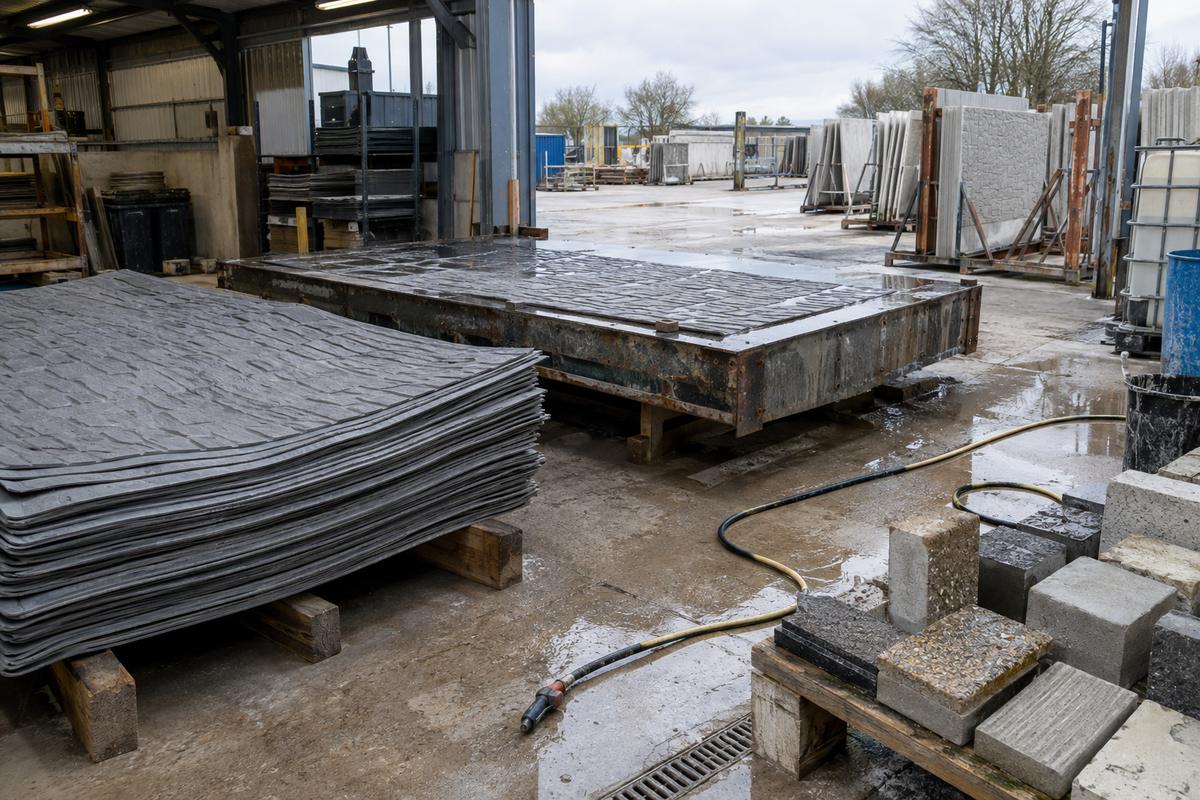
Rough ranges
Polyurethane formliner on OPC precast with a compatible release, sensible handling and reasonable storage. Well into three figures per pour is achievable — sometimes considerably more. The upper end is where the tool eventually fails from fatigue rather than damage.
Silicone formliner on the same conditions. Similar territory, sometimes a bit less if the relief has fine detail that wears first, sometimes more if the polyurethane would have failed on the detail earlier. On heritage-detail silicone the range is wider.
Either material on aggressive mixes or careless handling. Ranges shorten. Halving of expected life on a poorly-managed programme is common. Which is why we ask about your setup before quoting.
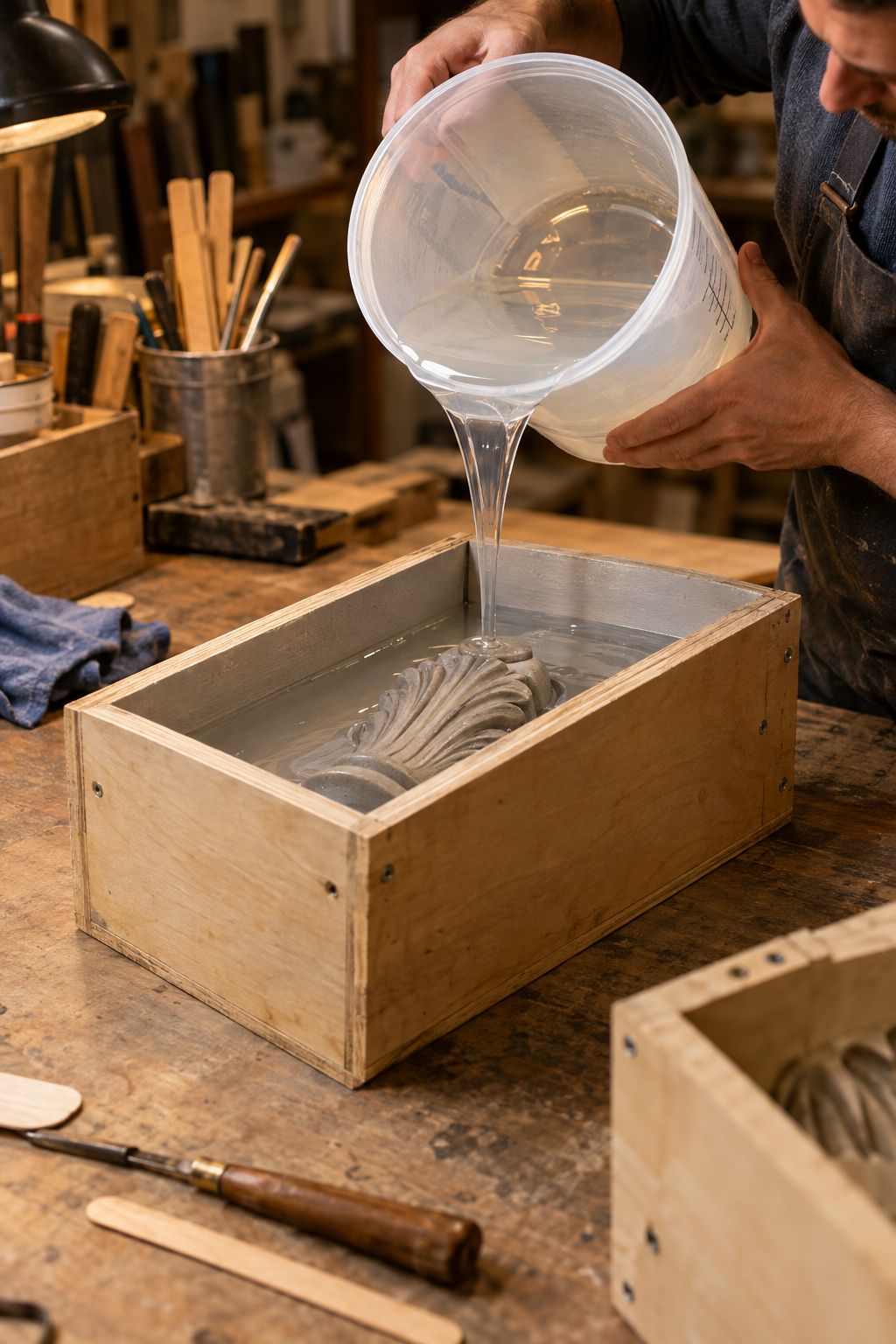
How to extend it
Right release agent, applied at consistent thickness, given the right dwell before the pour. This single change often adds 30–50% to formliner life on a poorly-run yard.
Vacuum lifters or lifting frames designed for the tool. Never lift a formliner by the corners or by inserting fingers under the face. Damage from careless lifting is one of the top failure modes we see.
Hot water accelerates silicone and polyurethane ageing. Wire brushes scratch the face. Cold water and a nylon brush after every pour, no more.
Direct sunlight and heat cycling both age the mould material. A covered rack in a cool part of the yard is worth the shelf space.
When it fails
Watch for the face going matte or losing sheen — that's the surface starting to craze. Watch for the relief starting to blur at the edges. Watch for small pinholes or bubbles appearing where the tool used to release cleanly.
Order the replacement early. The drawing, the pattern and the material spec stay on our file for exactly this reason. A replacement can be built in weeks; a failed tool that stops your programme costs you far more than the mould did.
At a glance
Where the formliner sits
Swipe to see the whole diagram
FAQs
For a critical programme with a tight delivery date, yes. The delta on a second tool ordered with the first is small; the risk of running out mid-programme is large.
Rarely economically. Once silicone or polyurethane has aged to end-of-life, a fresh tool is almost always cheaper and better than trying to rescue it.
Set concrete on the mould face is very hard to remove without damage. Clean immediately after every pour. If concrete does set, ring us before you try aggressive chemical removal.
Yes. A pour is a pour whether the panel comes out perfectly or not. If your fail rate is high, that's shortening the mould life just as fast as successful pours.
Sometimes marginally. But it's usually not worth compromising the panel spec for a small mould-life gain. The right release regime is a bigger lever.
Get in touch
One photograph tells us what surface you're chasing, and one line about the mix tells us what silicone or polyurethane will survive it.
Real people, a real workshop
No call centre and no middlemen. When you contact TCI Construction, you speak to the team who design, build and check your mould.


 Thomas LaneManaging Director
 George PrestonDesign & Project Manager
 Kelly BallingerHead of Partnerships
 Jim AndertonProduction Manager
 TheodoreEmployee Welfare