A standard catalogue liner won't fit your bed
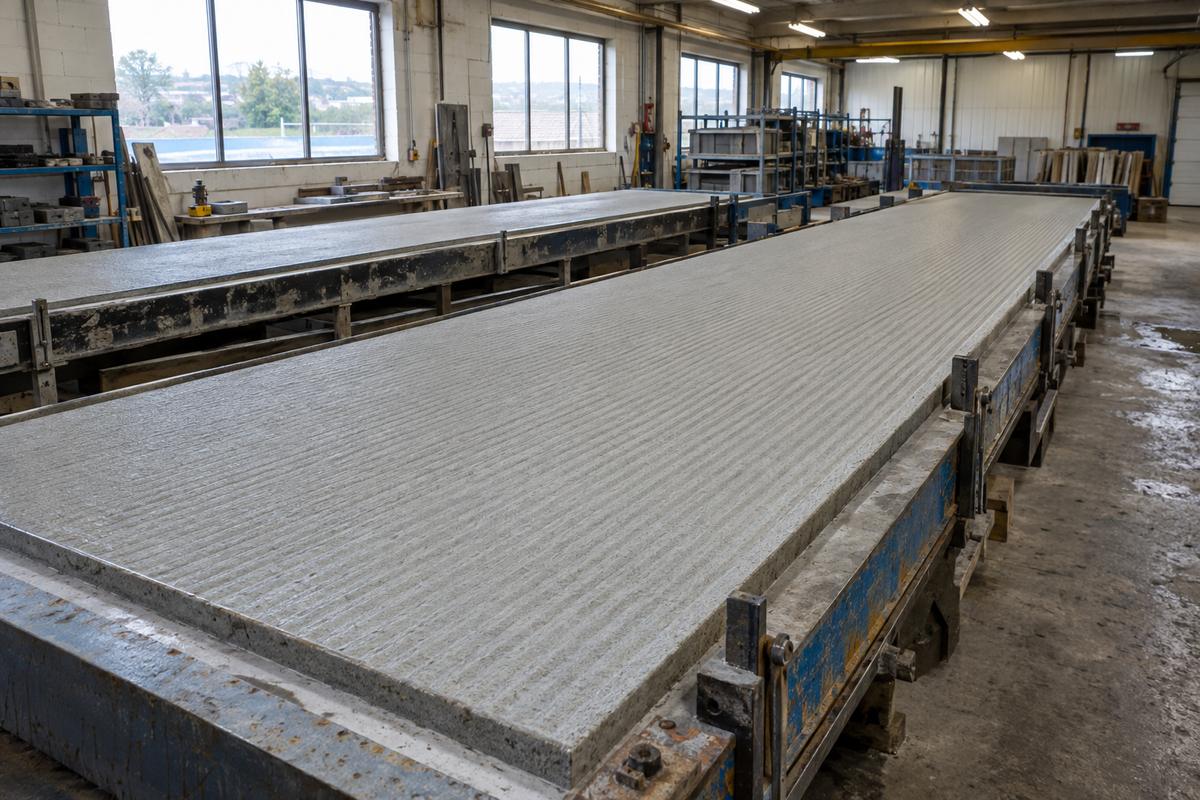
Catalogue rolls come in fixed widths. If your bed is bigger, you're stuck with a visible seam. We build the formliner to your dimension in one piece — or spliced where you tell us.
Textures · Standard relief
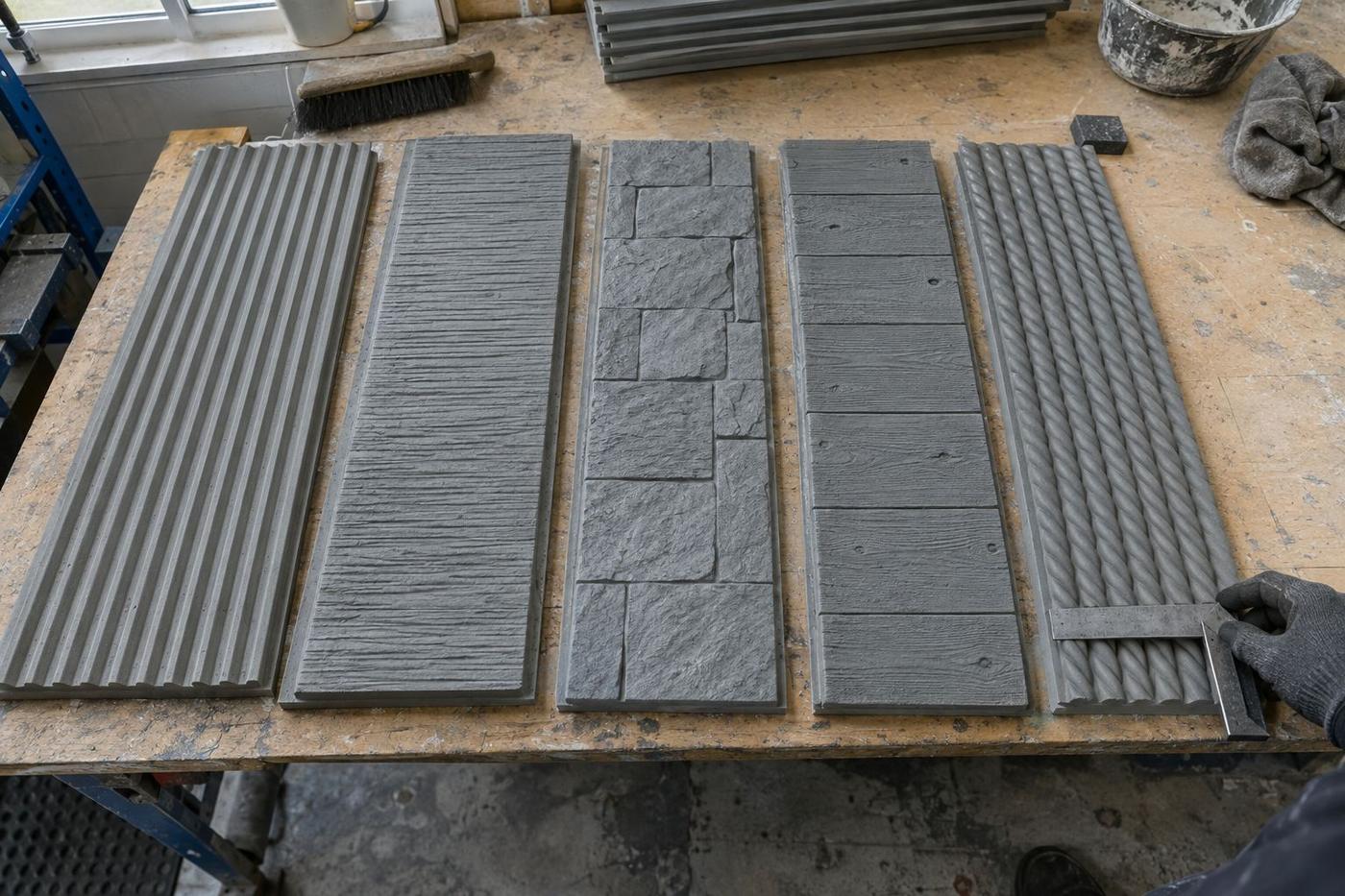
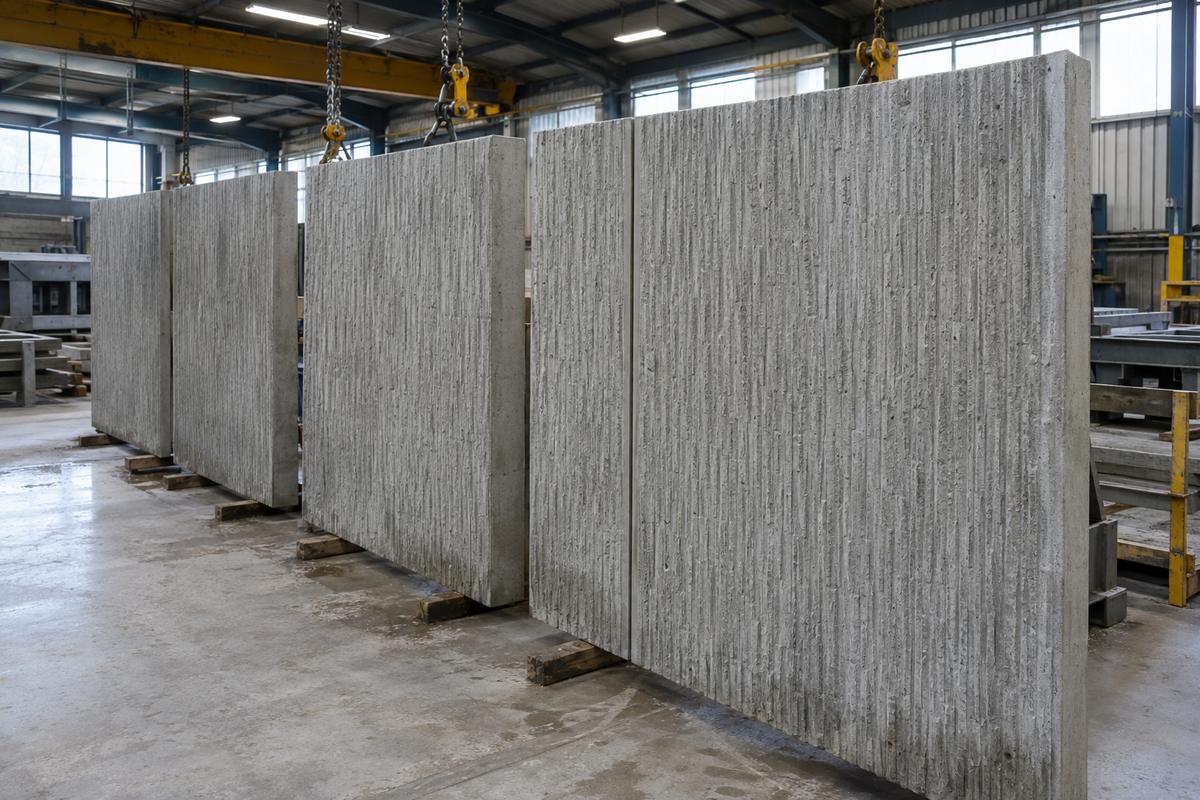
Ribbed, striated, board-mark, rope, ashlar — the textures precast producers reach for most, made to your bed dimension with the splice on the panel joint rather than the middle of the face.
When it fits
Catalogue rolls come in fixed widths. If your bed is bigger, you're stuck with a visible seam. We build the formliner to your dimension in one piece — or spliced where you tell us.
A programme running on parallel beds needs matched tooling. Sequential catalogue rolls are rarely a match; a built-to-order set is.
Rib pitch, rib depth, rope diameter, board width — we make them what your architect specified, not what a supplier's stock happened to be.
A stock roll is a consumable. A properly built formliner is an asset that runs a real programme and gets replaced against its own drawing when it retires.
The choice
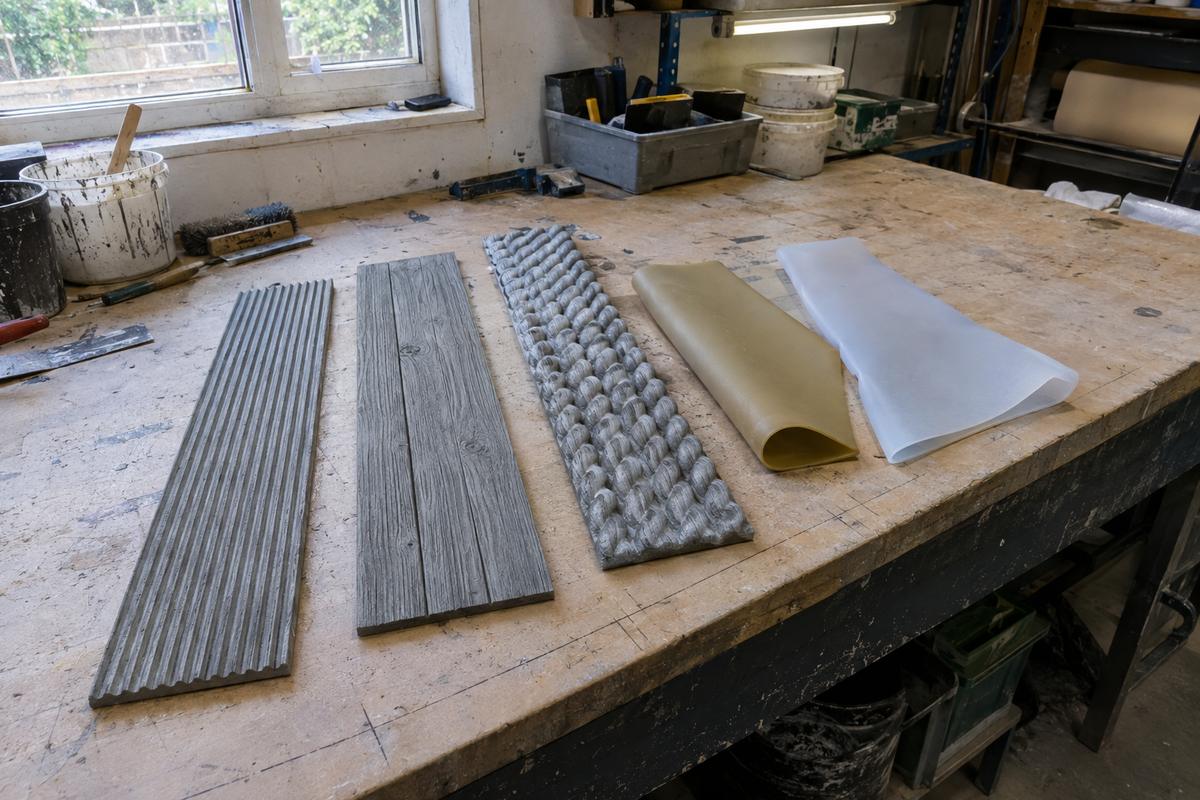
The pattern is machined from a tooling board for standard relief textures — a ribbed pattern, a board-mark pattern, a rope pattern. That gives us a sharp, repeatable master. We then pour polyurethane or silicone against it. For ordinary rib and board relief, polyurethane is the workhorse. For rope, for fine striation, or for anything with even a mild undercut, silicone.
Splice positions are drawn onto the layout before we pour. Ribbed and striated textures can splice cleanly if the rib registers across the joint; rope and organic patterns need the splice tucked into a panel joint so the pattern break disappears.
The formliner comes with a face-down handling frame. Precast yards get to lift and reposition it without the polyurethane dragging on the bed.
What we need
Rib (pitch and depth), board-mark (width, orientation), rope (diameter and pitch), striation (spacing).
So we can set splices at the right positions.
Determines whether polyurethane or silicone, and which grade.
So we can spec the material grade for the working life you need.
The honest bit
Polyurethane textured formliners on plain rib or board-mark reliably run well into the hundreds of pours if handled sensibly. Silicone on finer relief is often shorter-lived but produces a cleaner face — the choice is a texture decision, not a durability one.
A splice always leaves a small vertical line. On a well-designed formliner it falls on a panel joint and disappears. On a poorly-planned one it falls mid-face and reads forever. We tell you where the splice will land before we pour so you can confirm.
Drill down
Each one has its own page with the detail we'd normally cover on the first call.
Related
At a glance
Where the formliner sits
Swipe to see the whole diagram
Get in touch
One photograph tells us what surface you're chasing, and one line about the mix tells us what silicone or polyurethane will survive it.
Real people, a real workshop
No call centre and no middlemen. When you contact TCI Construction, you speak to the team who design, build and check your mould.


 Thomas LaneManaging Director
 George PrestonDesign & Project Manager
 Kelly BallingerHead of Partnerships
 Jim AndertonProduction Manager
 TheodoreEmployee Welfare