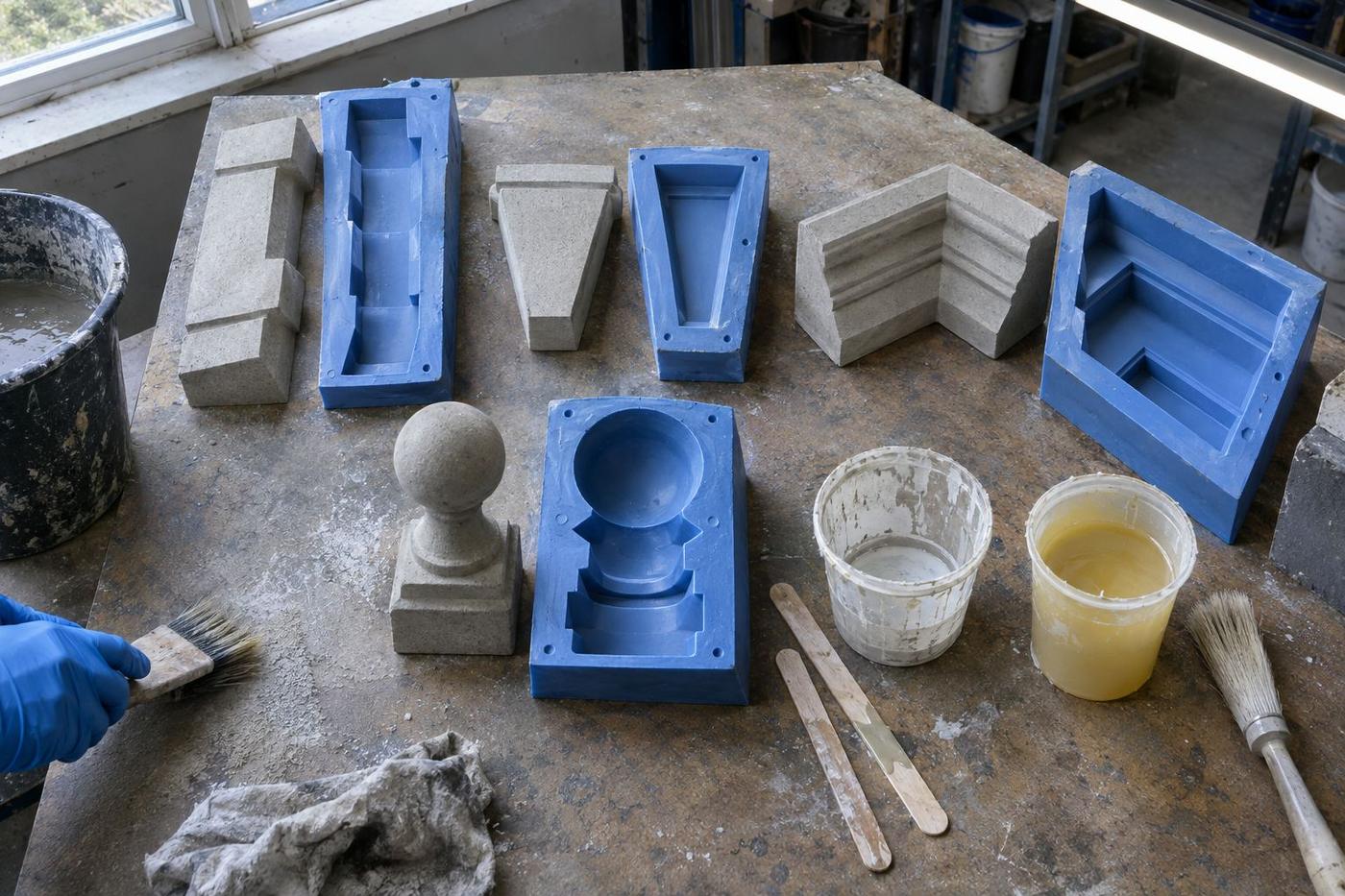
The arris is the visual
A Georgian cill, a keystone, a quoin — the visual is the sharpness of the edge. A soft arris makes the whole piece look wrong. Silicone tooling of the right hardness holds it.
Cast stone · Dressed-stone moulds
Silicone and polyurethane tooling for keystones, cills, quoins, string courses, finials and Georgian dressed-stone reproductions. Sharp arris on demould, clean face without the tool picking up bench dust.
When it fits
A Georgian cill, a keystone, a quoin — the visual is the sharpness of the edge. A soft arris makes the whole piece look wrong. Silicone tooling of the right hardness holds it.
A cast-stone workshop rebuilding a lost cill or a broken keystone needs a mould that reproduces the original geometry exactly. Send us the sample, we'll rebuild the mould.
Cill runs, quoin runs, string courses. The same shape repeated dozens of times. The tool has to demould cleanly every time, or the line stops.
Cast stone often has a specific face texture — light broach, fine rubbed, honed. The mould has to release without picking up the texture and dulling it over the run.
The choice
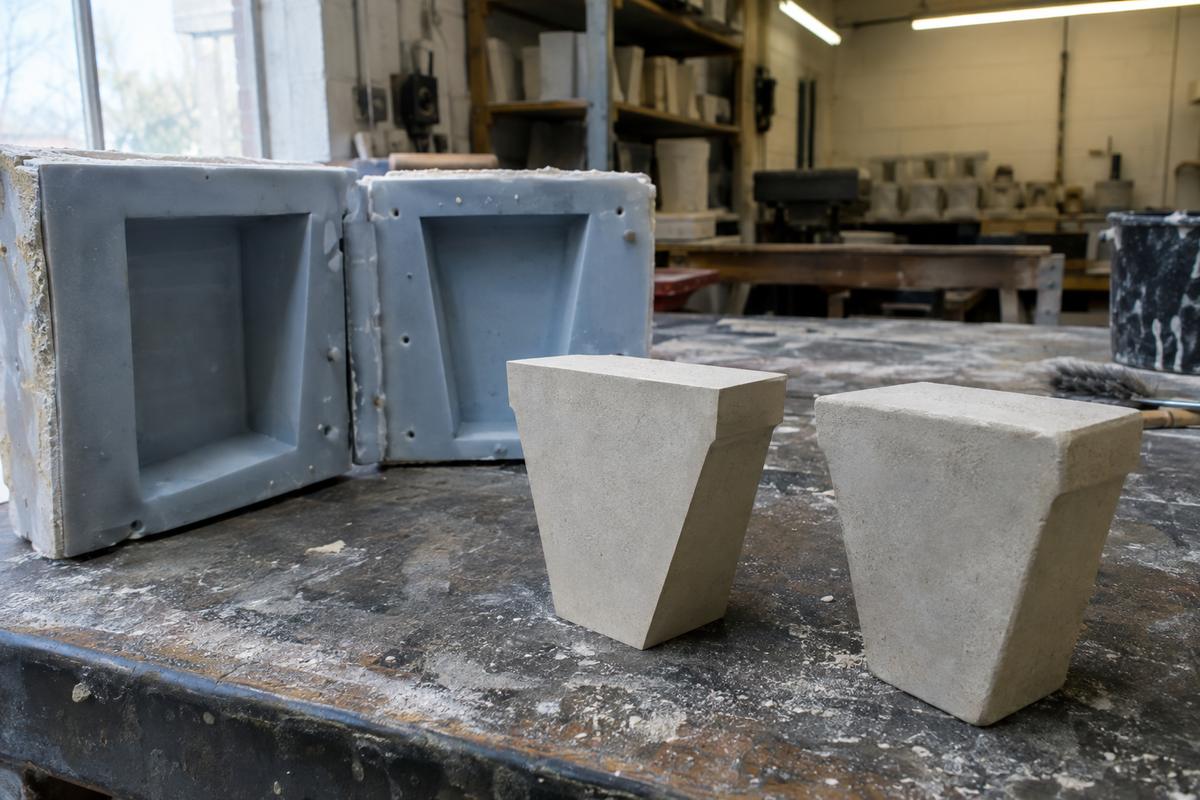
For cast-stone work we lean towards silicone with a firmer shore hardness than we'd use on a heritage silicone insert. The trade-off is deliberate: firmer silicone holds the arris longer, at the cost of being slightly less forgiving on complex undercuts. On most cast-stone pieces the geometry is straightforward enough that a firmer silicone is the right call.
For simple repeating pieces — long cill runs, straight string courses — polyurethane may be the more economical answer, especially where you're running the same shape for months at a time.
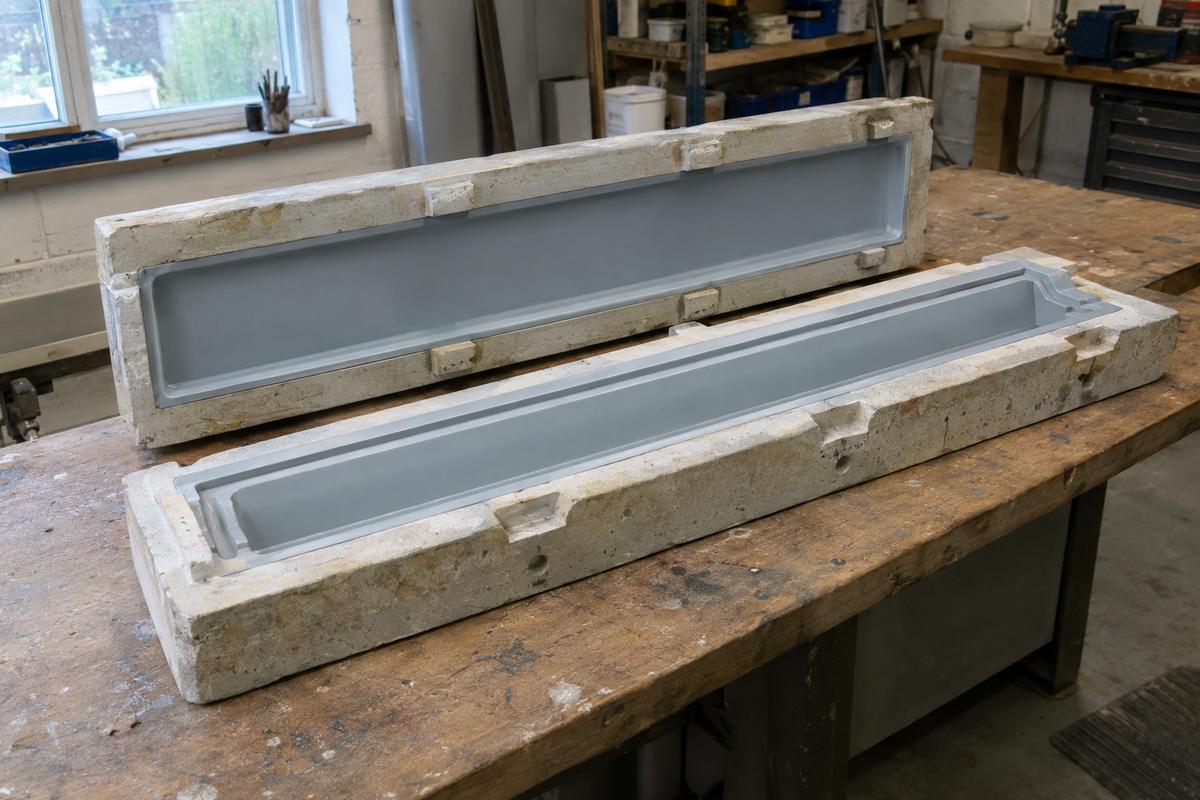
The mould is always two-part or three-part on cast-stone pieces, with the split line planned so the parting mark falls where the finished piece won't be inspected closely. On a Georgian cill that's usually the back or the underside. On a keystone it's the return, not the face.
What we need
A dimensioned drawing is ideal. A pencil rubbing of the original moulding profile is also useful, especially for listed replication.
Rubbed, honed, broached, tooled. Determines the release regime the mould is built around.
A run of two hundred cills a month is a different tool from twelve keystones a year.
Rebar in a cast-stone piece changes how the mould is filled and demoulded.
The honest bit
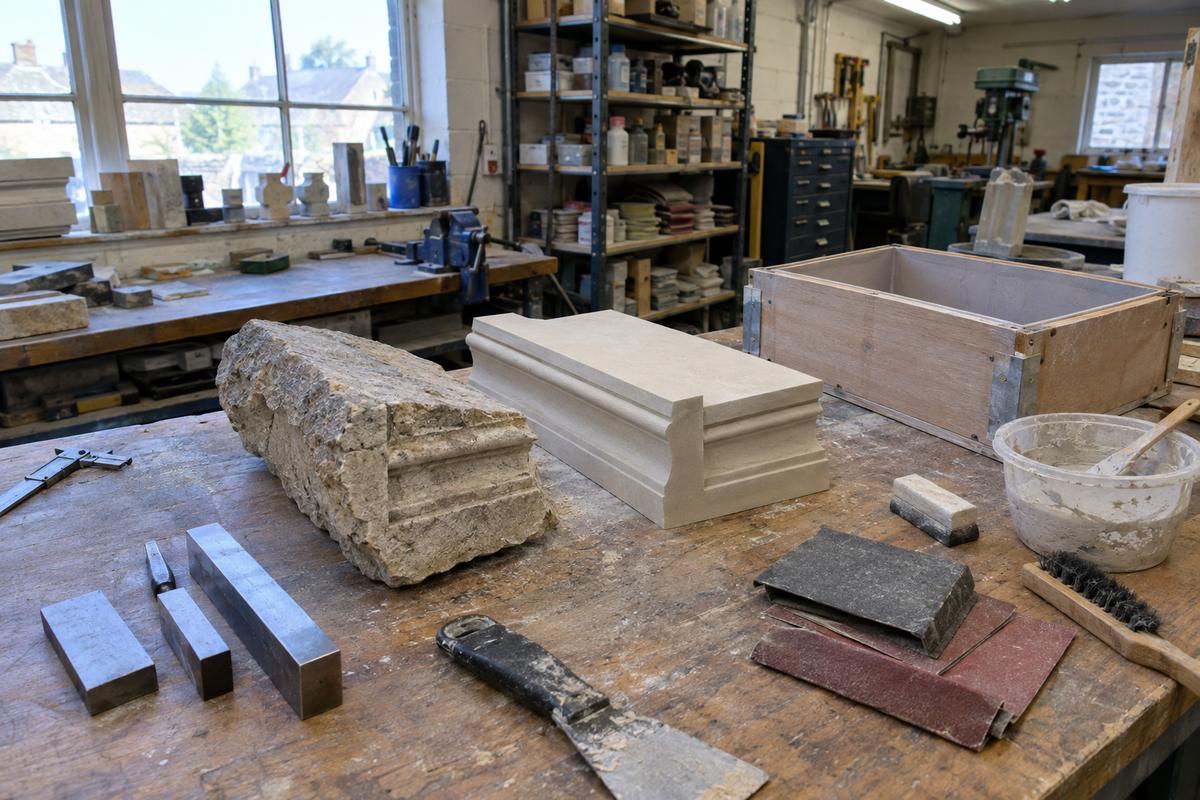
The pattern is where the mould's success is decided. A pattern that's not quite square, or that has a soft arris to start with, produces a mould that will never quite give you what you want. We spend proper time on the pattern before we pour the silicone against it.
For heritage replication, we often ask you to send us the surviving section of the original so we can pattern from it directly. It's the fastest route to a mould that reproduces the shape faithfully, and it avoids a round of interpretation drawings.
Cast-stone moulds on a hot pour will thermally cycle. Over a long run that will slowly relax the silicone. We spec silicones rated for the peak temperature you're running, and we tell you when to expect the tool to need replacement based on the pour count and the mix.
Drill down
Each one has its own page with the detail we'd normally cover on the first call.
Related
At a glance
How a two-part mould fits together
Swipe to see the whole diagram
From sample to finished cast
Swipe to see the whole diagram
Get in touch
One photograph tells us what surface you're chasing, and one line about the mix tells us what silicone or polyurethane will survive it.
Real people, a real workshop
No call centre and no middlemen. When you contact TCI Construction, you speak to the team who design, build and check your mould.


 Thomas LaneManaging Director
 George PrestonDesign & Project Manager
 Kelly BallingerHead of Partnerships
 Jim AndertonProduction Manager
 TheodoreEmployee Welfare