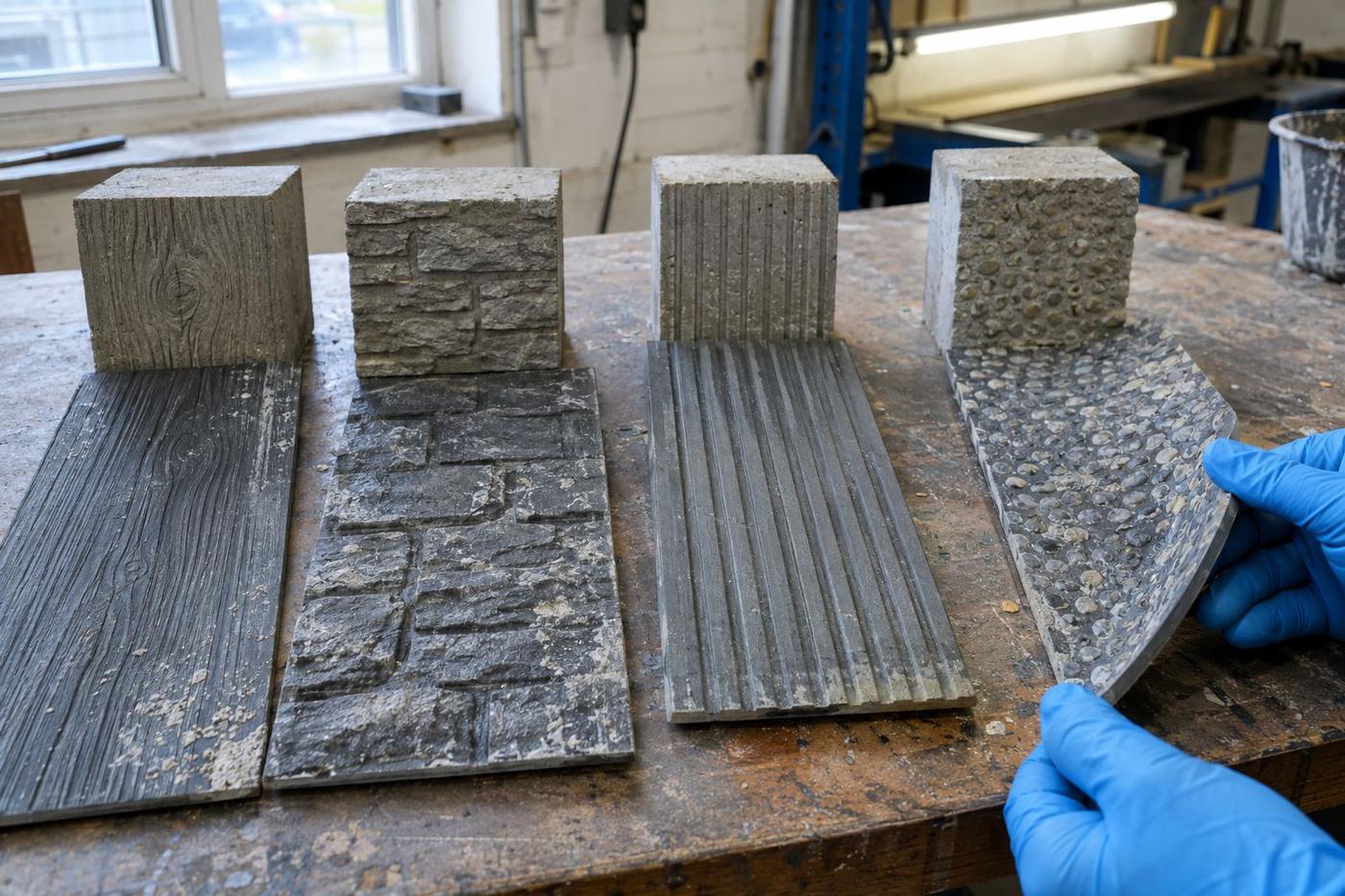
Plain OPC, vibrated
The baseline. Polyurethane is the workhorse here on anything without fine detail or undercut. Silicone where the relief demands it.
Knowledge · Materials guide
The texture is what the architect sees. The mix is what the formliner has to survive. This guide walks through how each common mix type changes the material we'd reach for.
Start here
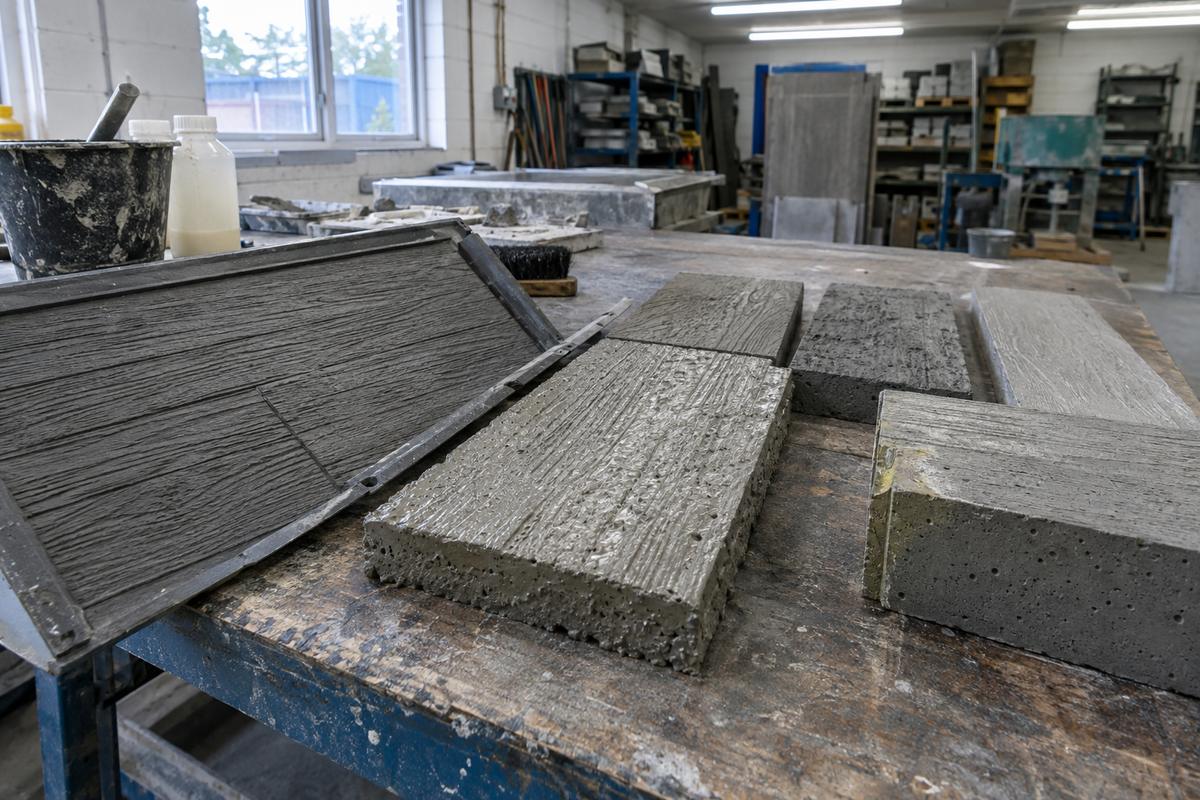
Most formliner conversations start with the texture and end with the price. The mix gets mentioned in passing. But the mix is what sits against the liner for hours, what the release agent has to cope with, and what determines how the surface wears pour after pour.
Two formliners with the same texture can have very different working lives on two different mixes. That's why we ask about your mix on the first call, even if it's just a line.
Mix by mix
The baseline. Polyurethane is the workhorse here on anything without fine detail or undercut. Silicone where the relief demands it.
Slower early strength means longer dwell time on the liner. Not usually a problem for material choice, but it does affect strike timing and how the release film holds up.
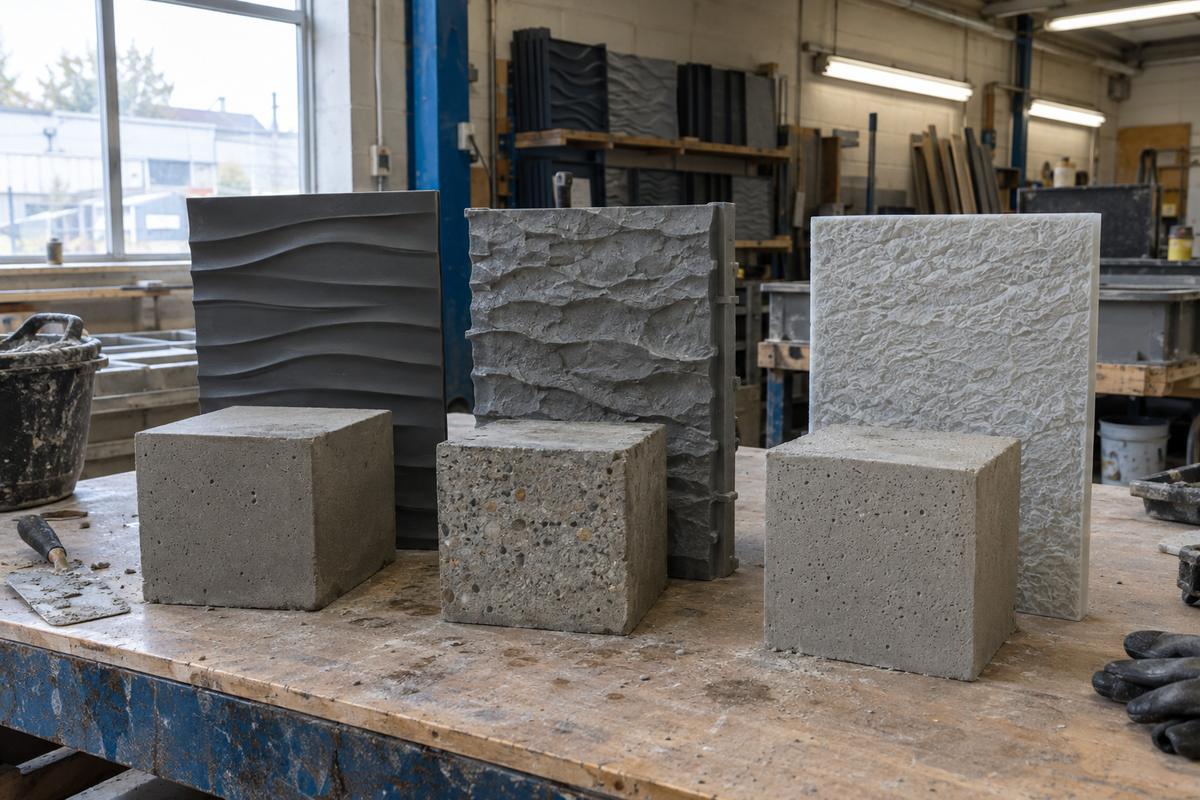
Flows into every detail, which is great for fidelity and hard on liners with thin walls or sharp arrises. We thicken sections and soften arrises that won't survive.
High cement content, fine aggregate, sprayed. Silicone usually earns its keep here because it doesn't pick up spray pattern and releases thin shells without cracking corners.
Some pigments and admixtures shorten polyurethane life. If your mix is unusual, tell us — silicone often lasts longer despite costing more up front.
Release
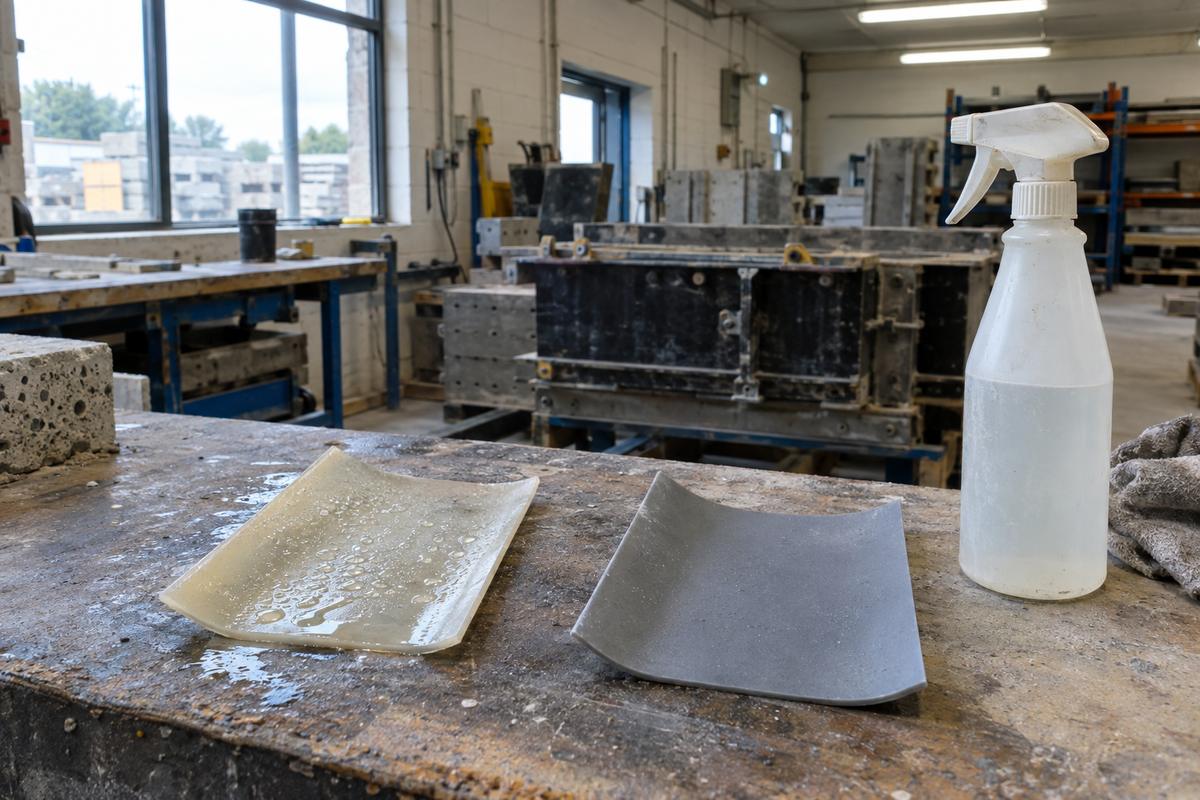
A formliner and its release agent are a pair. Solvent-based releases that suit steel formwork can attack some elastomers. Water-based chemical releases are usually kinder to both silicone and polyurethane.
We'll ask what you use now. If it's compatible, we'll keep it — changing a yard's release regime has knock-on costs. If it isn't, we'll say which family would suit and why.
The handling note that leaves with every liner includes the release regime we designed it around.
What to tell us
OPC, blend, or white cement. White cement mixes often have a higher fines content.
Vibrated, self-compacting, sprayed or hand-packed.
Anything beyond a standard plasticiser — especially retarders and heavy pigment loads.
Brand or family. It changes the grade more often than people think.
At a glance
Where the formliner sits
Swipe to see the whole diagram
FAQs
Usually not a different material, but accelerated winter mixes shorten dwell time and can change how the release film behaves. Tell us if your mix changes seasonally.
Often, yes, if both are within the material's comfort zone. We'd spec for the harsher of the two.
Surface retarders for exposed aggregate can interact with some polyurethanes. We'll check compatibility before we pour.
Get in touch
One photograph tells us what surface you're chasing, and one line about the mix tells us what silicone or polyurethane will survive it.
Real people, a real workshop
No call centre and no middlemen. When you contact TCI Construction, you speak to the team who design, build and check your mould.


 Thomas LaneManaging Director
 George PrestonDesign & Project Manager
 Kelly BallingerHead of Partnerships
 Jim AndertonProduction Manager
 TheodoreEmployee Welfare