The original detail is failing
A cornice is spalling, a finial has been lost, a string course has broken away. You need matched replacements. Silicone moulding is the route to a matched reproduction.
Heritage · Restoration moulds
Silicone moulds taken from surviving cornices, finials, string courses, keystones and capstones — in situ on listed elevations, or in our Warwickshire workshop from a section you send us. One is enough to make the mould that makes the next hundred.
When it fits
A cornice is spalling, a finial has been lost, a string course has broken away. You need matched replacements. Silicone moulding is the route to a matched reproduction.
A parapet has one intact section and three failed ones. The intact one is the pattern. The mould is taken from it, then used to make replacements for the failures.
Listed status means the reproduction has to match the original. Silicone captures the tooling marks, the weathering pattern, the arris — everything that makes the reproduction convincing.
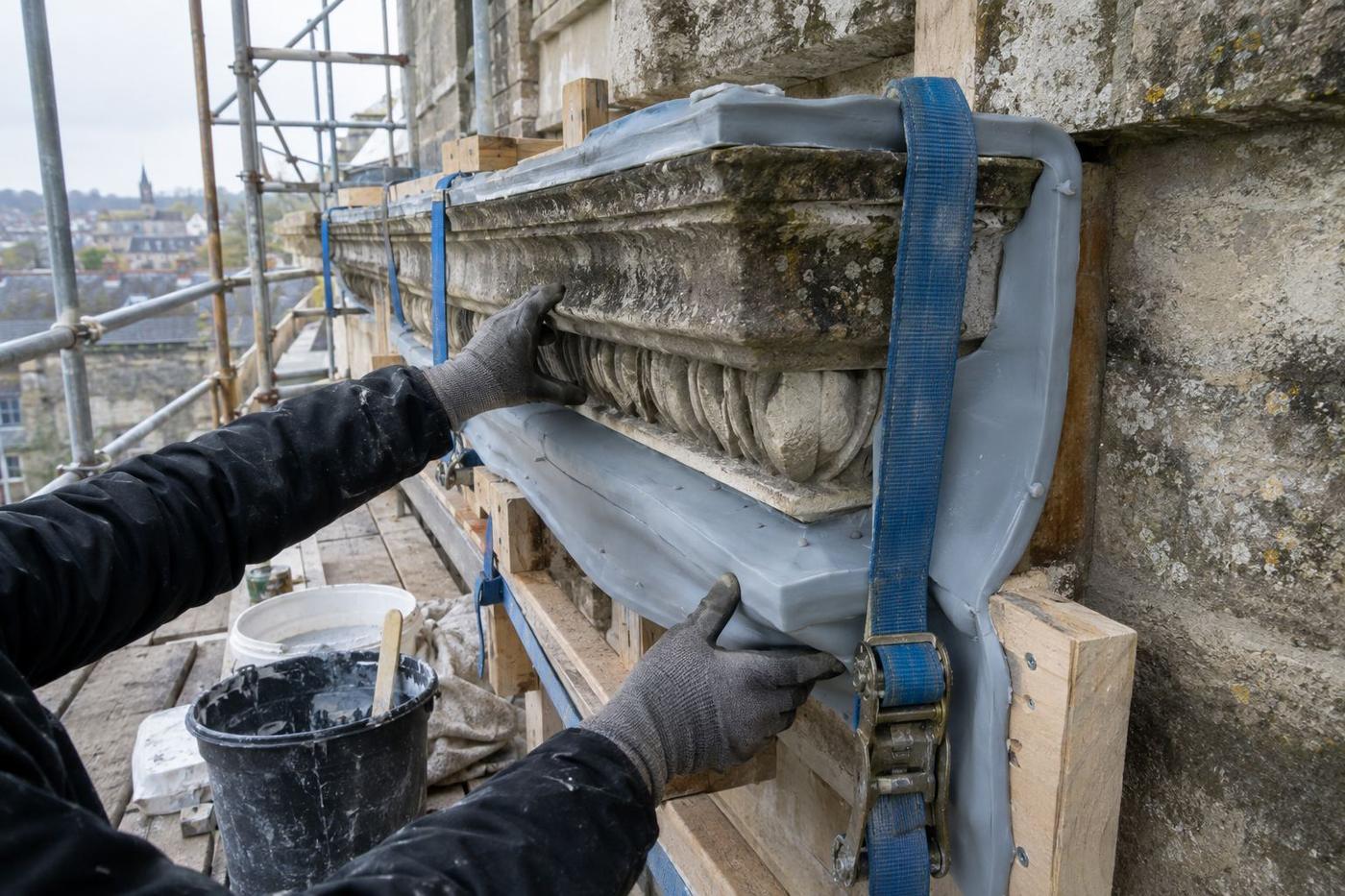
A cornice attached to the building has to be moulded in situ. Brush-on silicone with a rigid mother mould does that.
The choice
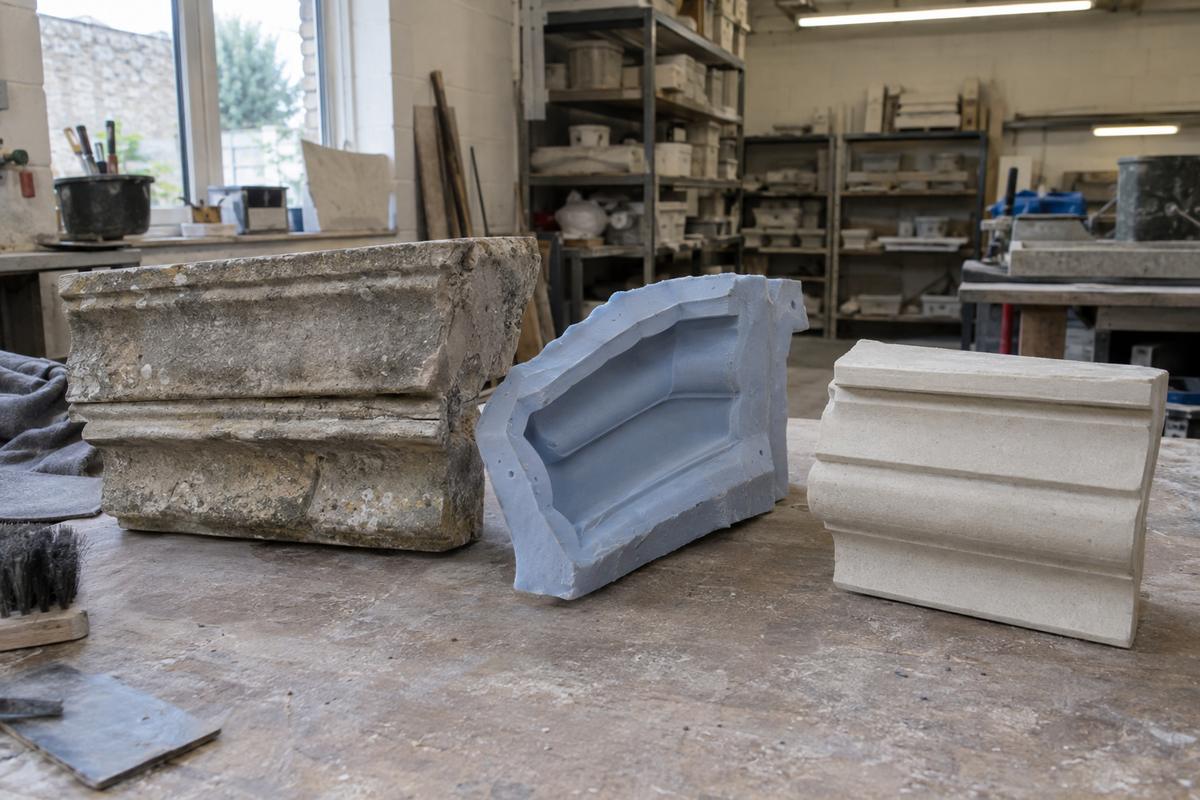
If the section can come to the workshop, we bench-mould it — that's a two-part or brush-on silicone mould built around the piece, backed with a rigid mother mould that keeps the silicone in shape when it comes off the original. This is the cleanest route, gives the best detail capture, and lets us take the time to make sure the mould is right.
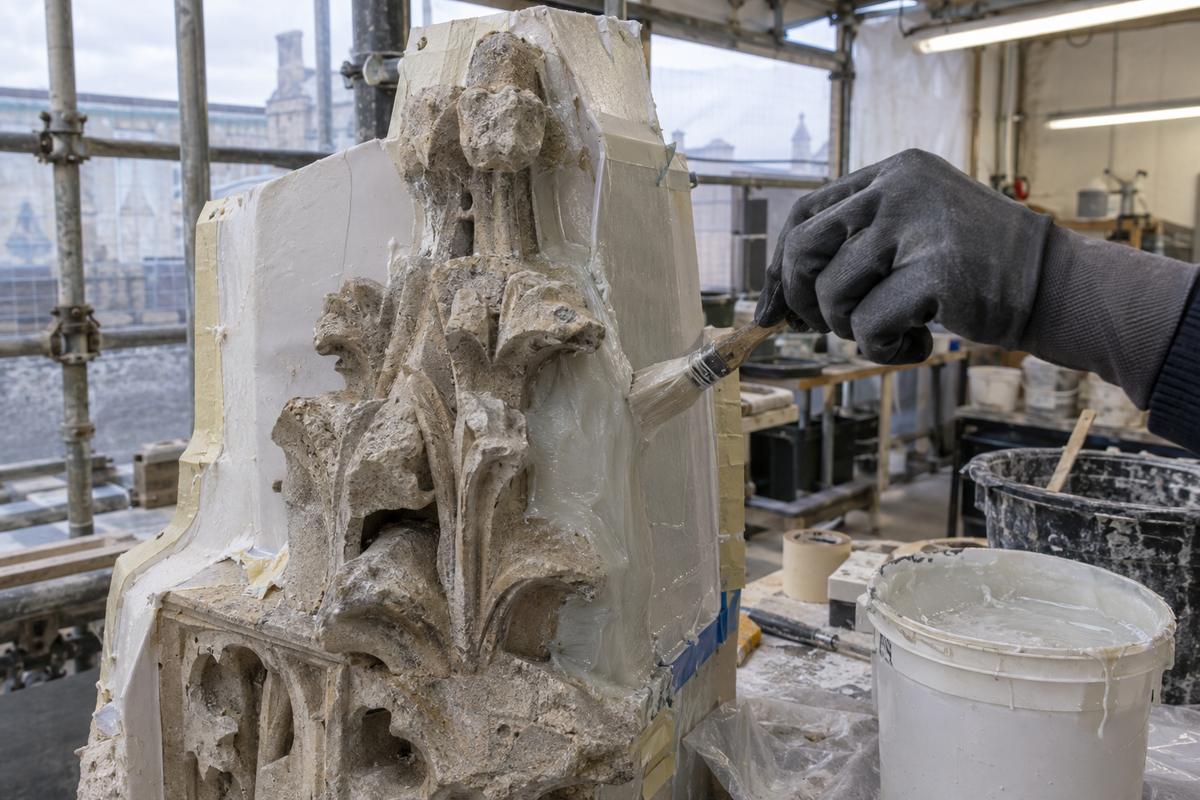
If the section can't come off the building, we mould it in situ. A brush-on silicone is applied to the surviving detail in layers, thickened so it stays where it's put, and jacketed with a rigid backing before it comes off. That's a specialist job — we've done it enough times to know how to protect the original and how to leave nothing behind.
Either way, the silicone captures the weathering, the tool marks and the tiny asymmetries that make a reproduction convincing. A drawing-based reproduction always looks slightly wrong. A silicone mould from the original does not.
What we need
So we can see what needs replacing and what we're moulding from.
Height, access equipment, working hours. Determines how the in-situ mould is built.
One finial, ten cornice sections, a full parapet run. Determines silicone grade.
Some listed jobs come with specific reproduction methodology. We work to it.
The honest bit
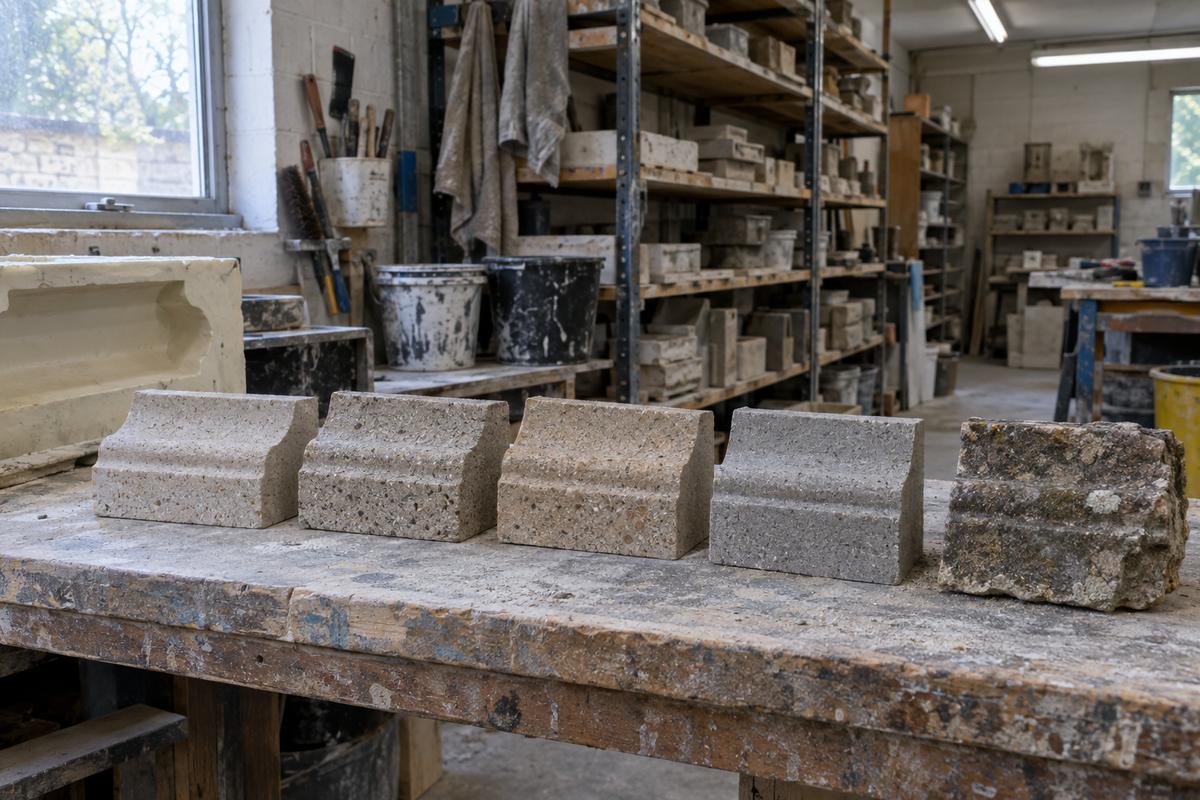
A silicone mould taken from a surviving section is only as good as what you cast into it. The silicone captures the geometry — the concrete or GRC mix you use afterwards has to be chosen for weathering behaviour that matches the original stone, or the reproductions will read as newer than the survivors within a few years.
That's often a conversation with the conservation officer or the specifying architect. We're happy to be in that conversation — we know silicone, we know GRC and cast-stone mixes, and we can help translate between them.
In-situ moulding takes longer than bench moulding. We can't rush the cure without risking the original. If the programme is tight, we'd rather flag it early and agree a realistic date than promise a fast turnaround and fail on it.
Drill down
Each one has its own page with the detail we'd normally cover on the first call.
Related
At a glance
How a two-part mould fits together
Swipe to see the whole diagram
Get in touch
One photograph tells us what surface you're chasing, and one line about the mix tells us what silicone or polyurethane will survive it.
Real people, a real workshop
No call centre and no middlemen. When you contact TCI Construction, you speak to the team who design, build and check your mould.


 Thomas LaneManaging Director
 George PrestonDesign & Project Manager
 Kelly BallingerHead of Partnerships
 Jim AndertonProduction Manager
 TheodoreEmployee Welfare