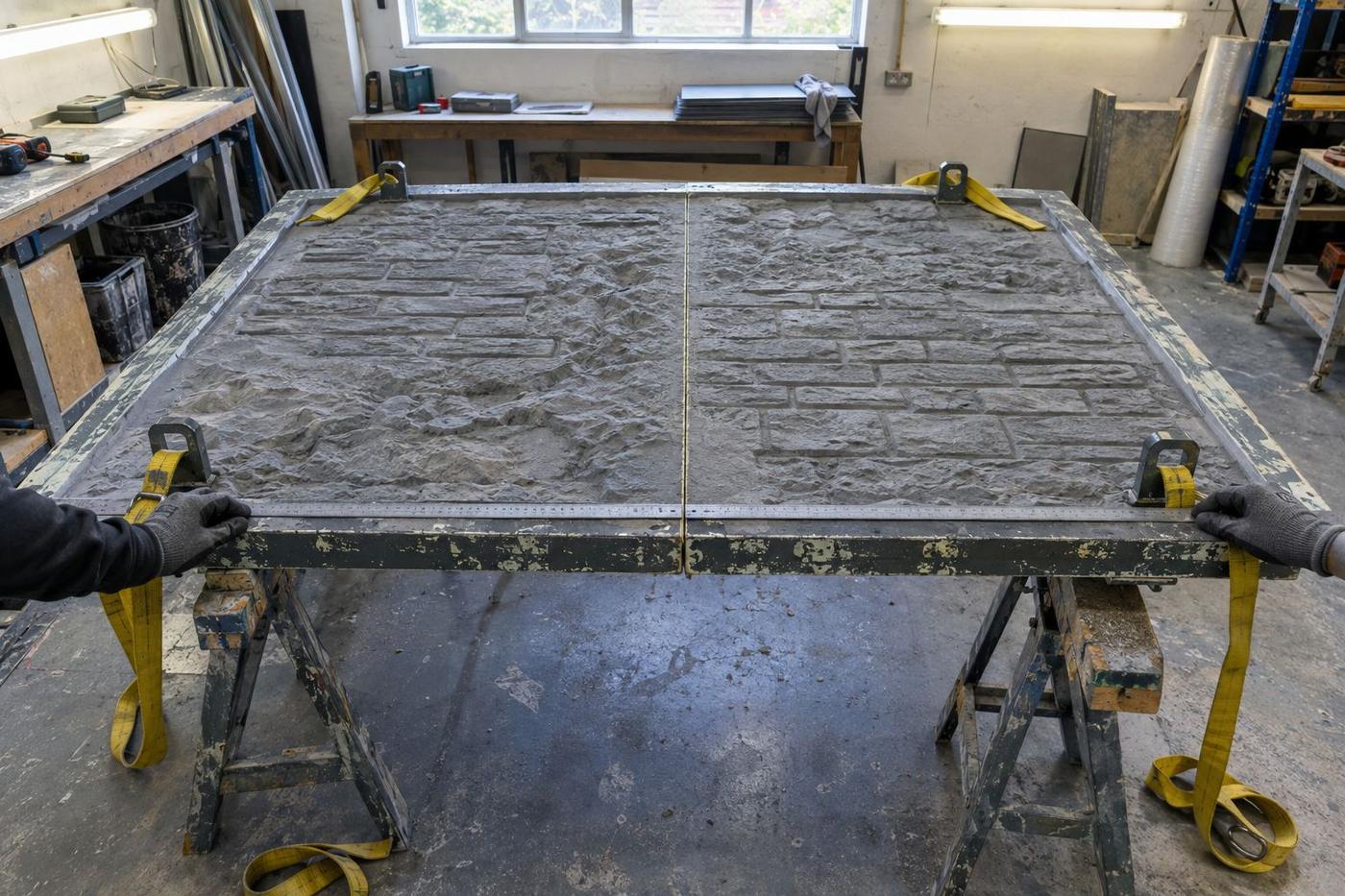
The panel is bigger than a standard bed
Long-span cladding, tall façade panels, big architectural units. The formliner has to be built oversized, spliced correctly.
Large format · Splice-planned
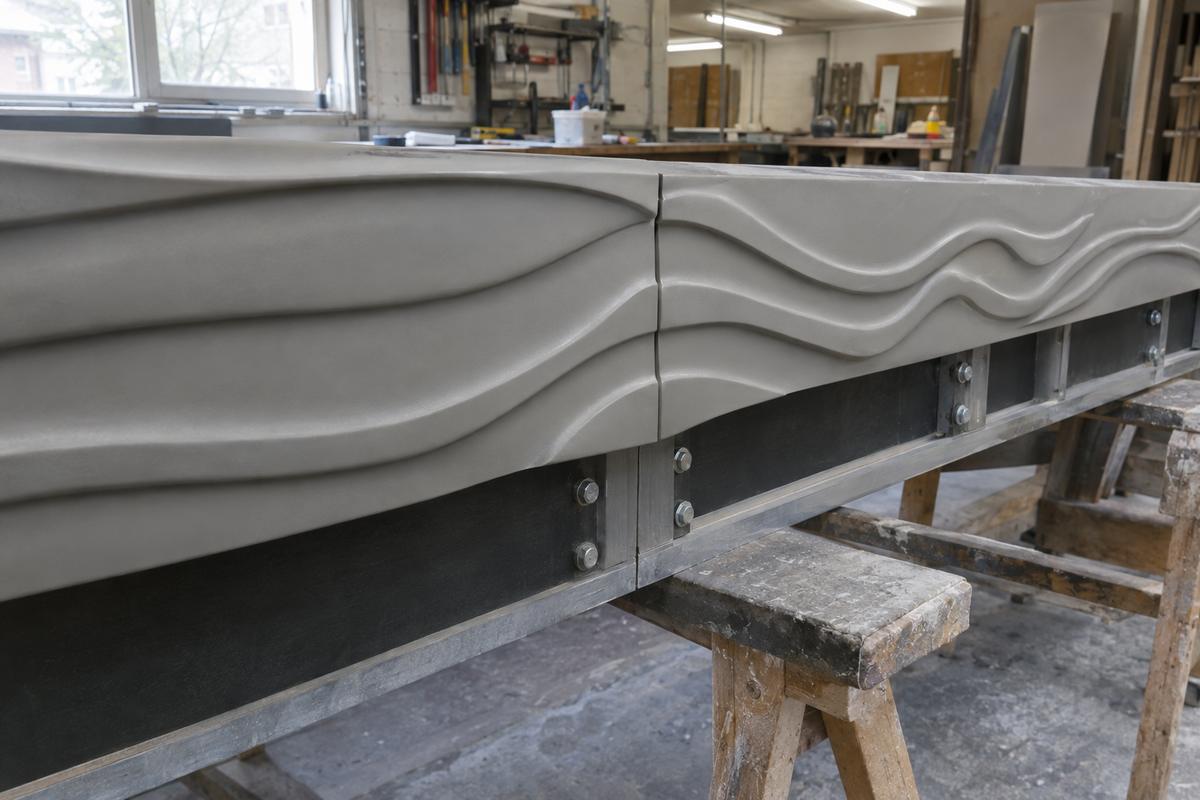
Oversized formliners and large-format panel moulds — spliced at the panel joint, backed with rigid frames, and designed with the lifting points and the store rack in mind from the pattern stage.
When it fits
Long-span cladding, tall façade panels, big architectural units. The formliner has to be built oversized, spliced correctly.
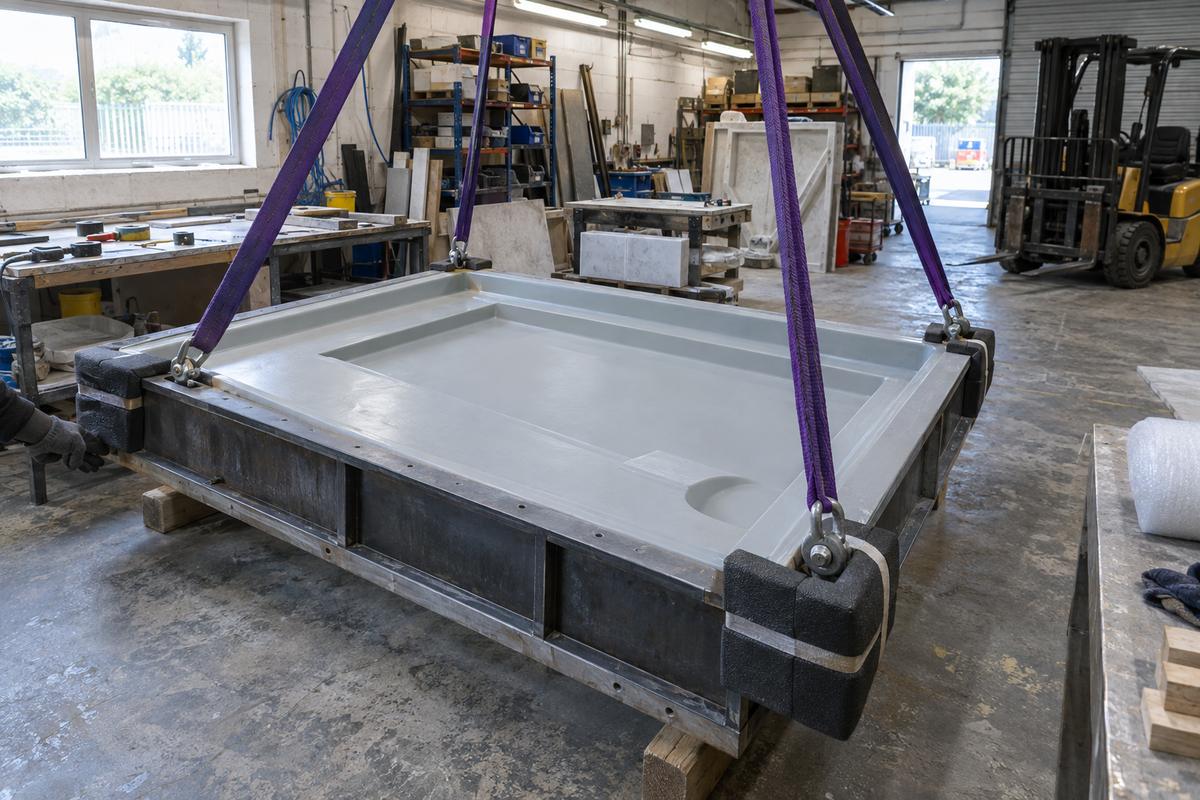
Anything you can't slide, drag or manhandle needs lifting points designed into the backing frame.
If it moves between beds it needs to be rigid enough to move without distortion.
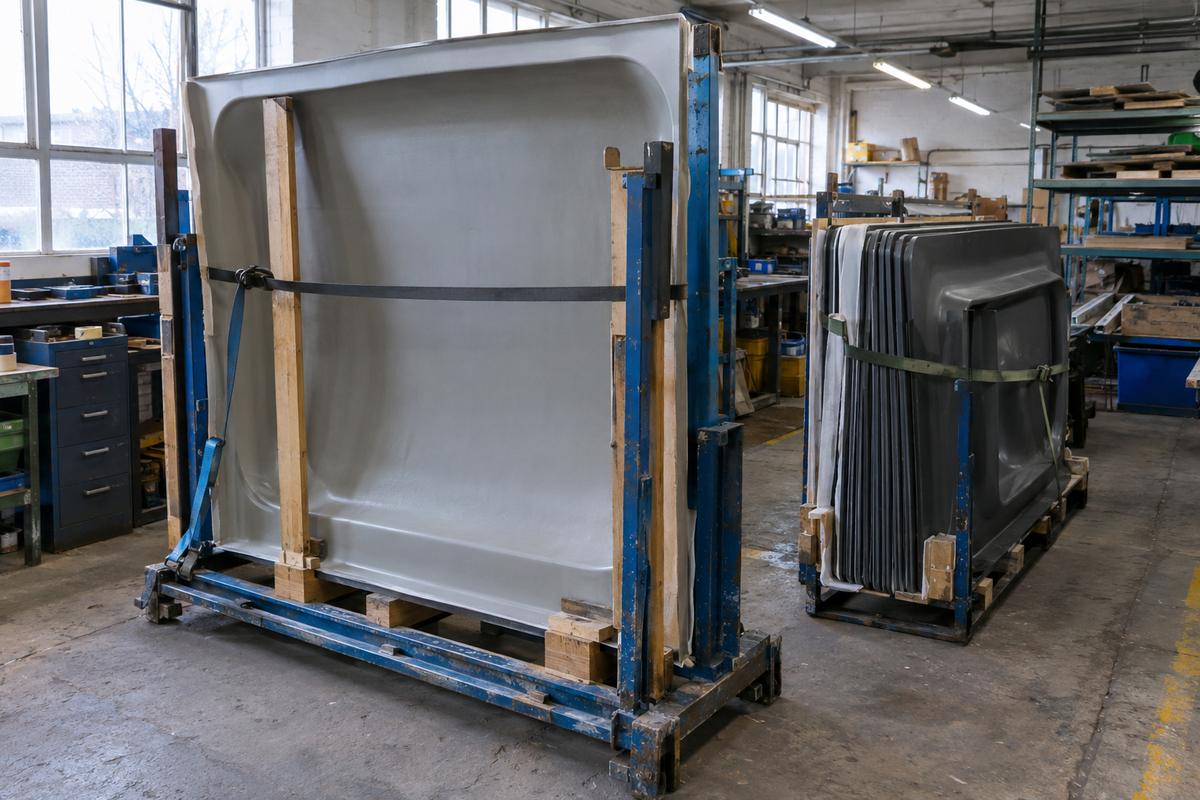
Large moulds have to stack, hang, or fold. That's decided at design stage, not at delivery.
The choice
Large-format work is where the mould stops being just silicone and becomes a system: the silicone face, the rigid backing, the splice arrangement, the lifting points and the store method. Any one of those getting the wrong answer means the tool won't live its projected life.
Splices happen where the panel joints already fall. That's not always possible if the panel design has continuous relief across the joint, in which case we'll ghost the splice into a designed detail — a shadow gap, a chamfer, a pattern feature — that reads as intended rather than as accidental.
For handling, we build lifting eyes into the backing frame at points that don't stress the silicone. The tool comes with a photograph of the correct lifting sequence so a new yard hand knows how to move it without folding it.
What we need
Overall panel dimensions, joint layout, and where the tool will sit.
Cranes, vacuum lifters, forklifts. Determines lifting eye positions.
Vertical rack, horizontal stack, hanging. Affects backing frame design.
One panel a fortnight or ten a week — determines how much the mould travels and how rigid the backing needs to be.
The honest bit
The commonest cause of premature failure on large-format tools is handling damage, not wear. A crease from a badly-placed sling, a knock on the corner from a forklift tine, a fold from being stored on the wrong side — these are what shorten life on oversized tooling.
That's why we spend proper time at the design stage on how the tool moves and stores, and why we come to first-delivery with a walk-through of the handling sequence. It costs us an afternoon and it can add years to the tool's life.
The rigid backing frame is a real piece of the cost. It's tempting to skimp on it to keep the quote down, and it always regrets. If you're deciding between a slightly cheaper flimsier backing and a properly-engineered one, the properly-engineered one is the right answer every time.
Drill down
Each one has its own page with the detail we'd normally cover on the first call.
Related
At a glance
Planning liners across a wall
Swipe to see the whole diagram
Get in touch
One photograph tells us what surface you're chasing, and one line about the mix tells us what silicone or polyurethane will survive it.
Real people, a real workshop
No call centre and no middlemen. When you contact TCI Construction, you speak to the team who design, build and check your mould.


 Thomas LaneManaging Director
 George PrestonDesign & Project Manager
 Kelly BallingerHead of Partnerships
 Jim AndertonProduction Manager
 TheodoreEmployee Welfare