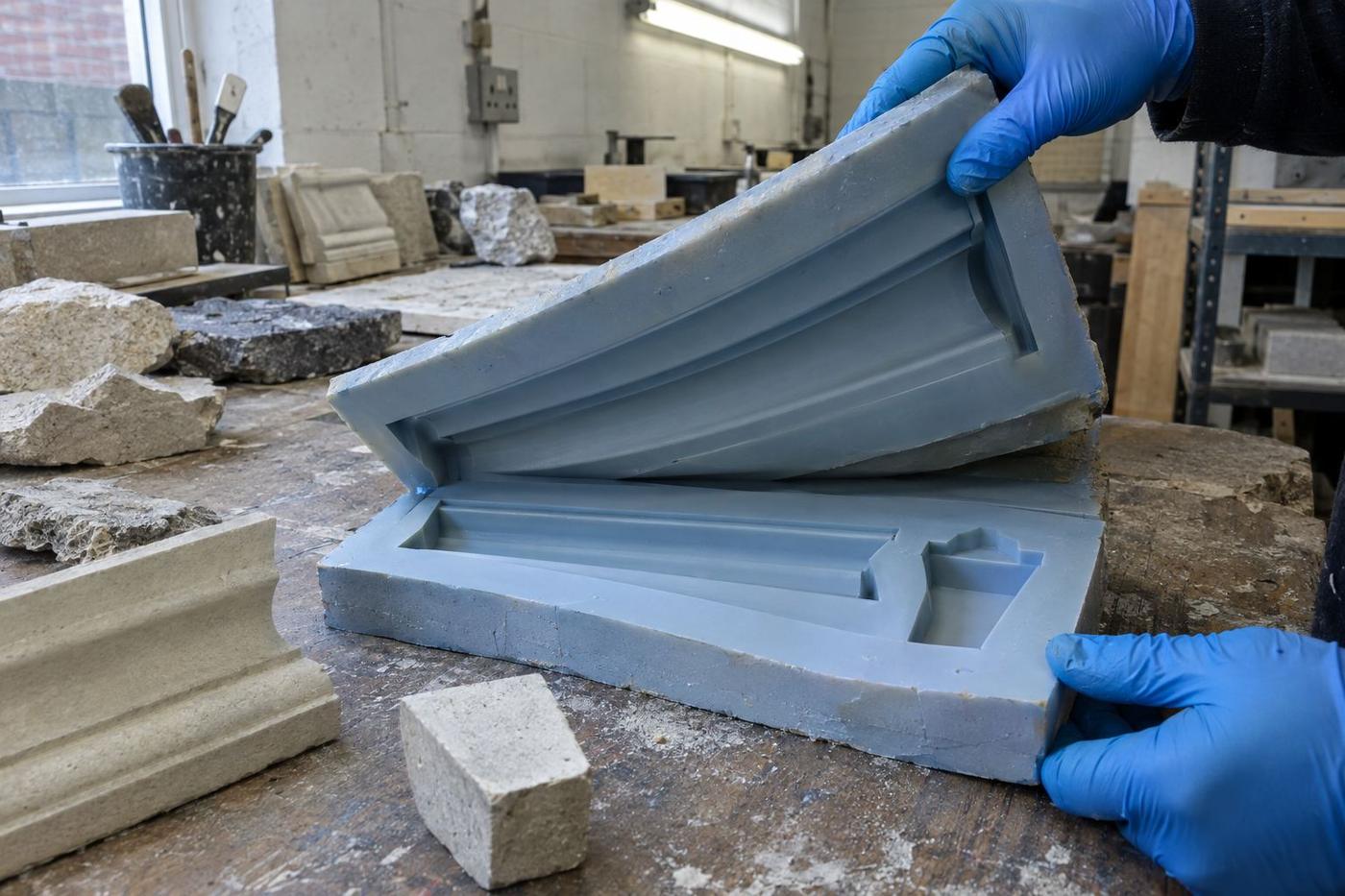
Repeat runs of dressed pieces
Cill runs, quoin runs, string courses. The same shape repeated dozens of times. Firmer silicone for the arris, polyurethane sometimes for very long runs on simple sections.
For cast-stone workshops · Georgian dressed-stone specialists
Cills, keystones, quoins, string courses, finials and Georgian dressed-stone reproductions. Silicone tooling of the right hardness to hold a sharp arris, with the split lines placed where the finished piece is never inspected closely.
What matters to you
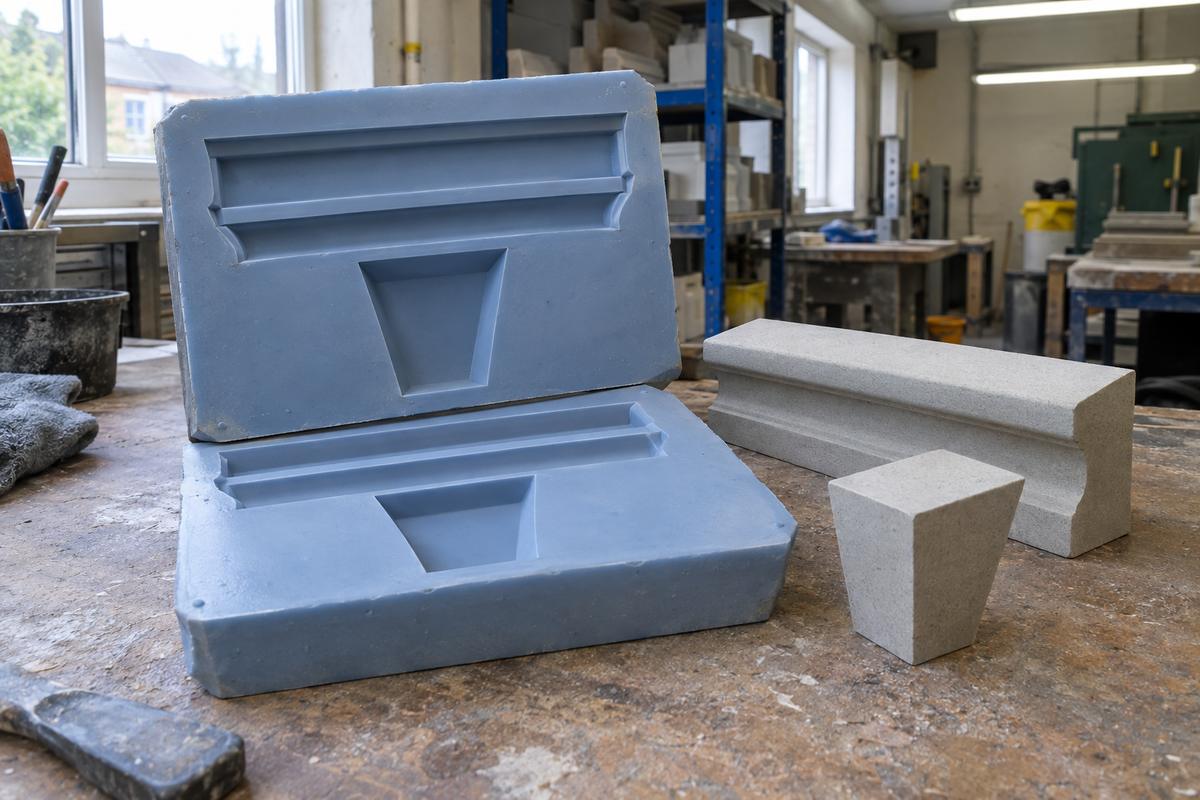
Silicone hardness chosen for the arris. Cast-stone pieces live and die by the sharpness of the edge. Firmer silicone holds the arris longer at the cost of some flex; softer silicone flexes past undercuts at the cost of arris life. Choosing the right point on the curve for your pieces is the first job.
Split lines placed where the parting mark falls out of sight. On a cill that's usually the back or the underside. On a keystone it's the return. On a quoin it's the internal face. Never on the visible face.
Pattern accuracy. A pattern that's soft, out of square, or slightly wrong in the profile gives you moulds that are all subtly wrong forever. We spend proper time on the pattern before committing to the silicone.
Replacement matching. Cast-stone workshops run programmes for years. Replacement moulds have to match, so the batch cast last year and the batch cast this year look like one production. Drawing, pattern and material spec stay on our file.
How your work looks
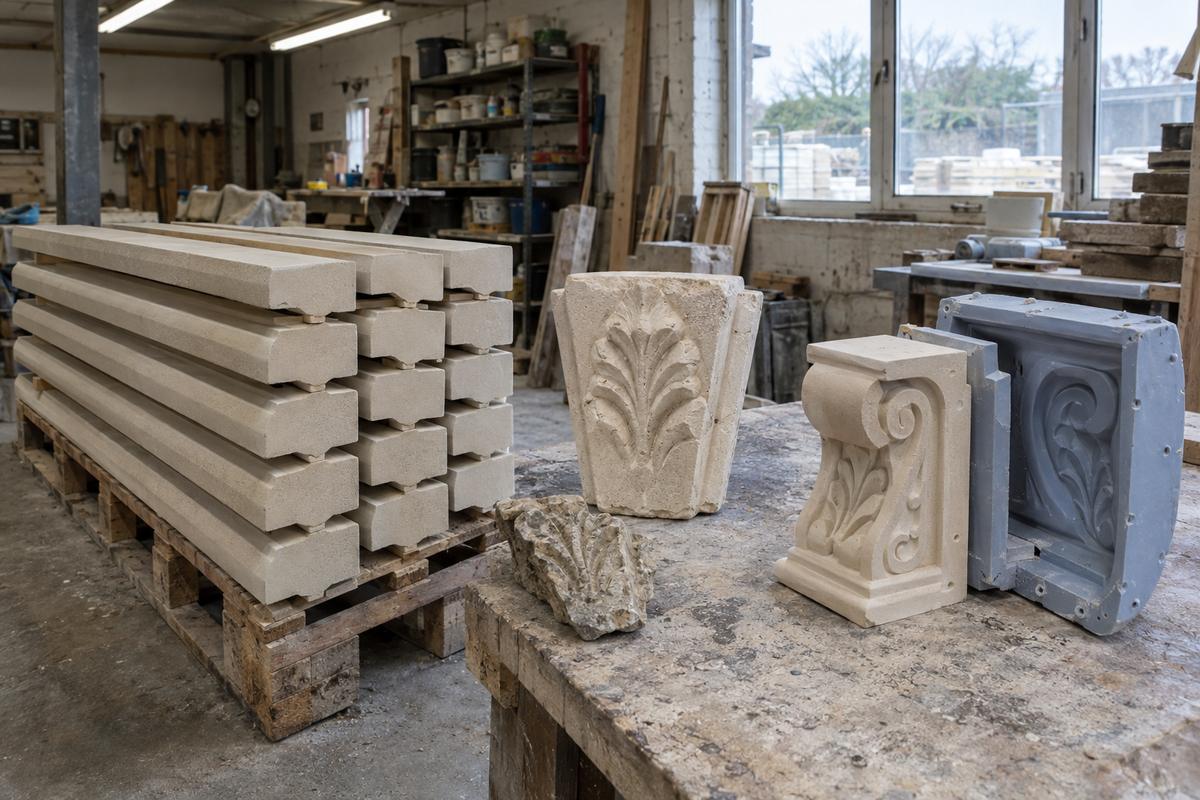
Cill runs, quoin runs, string courses. The same shape repeated dozens of times. Firmer silicone for the arris, polyurethane sometimes for very long runs on simple sections.
A single Georgian keystone or finial for a listed reinstatement. Silicone from a surviving sample, pattern rebuilt where necessary.
A designer-specified cast-stone piece that doesn't exist yet. Pattern from a drawing, sample cast for approval, then the mould.
Services that fit
How the first conversation goes
A drawing or a rubbing of the profile, a photograph of the finished face texture, and a rough weekly piece count. That's enough to spec the mould.
For heritage reproductions, send us the surviving section — either physically or as clear photographs with a rule in shot. We can build the pattern from either.
We come back the same working day with a route recommendation, a silicone grade, and an honest rough number. If we think the profile needs adjusting to demould reliably, we'll show you what change and why.
At a glance
How a two-part mould fits together
Swipe to see the whole diagram
FAQs
Firmer than for decorative work, softer than for heavy industrial. The exact number depends on the piece — we'll say per job, and we'll explain why.
For a repeat cill or quoin section, well into three figures on plain OPC mixes. Coloured or pigmented mixes shorten it. We give a range per job.
Yes. Hand-rammed pieces need slightly softer silicone (more forgiving on demould) but with a firm mother mould to hold shape under ramming pressure.
Yes. Send us a sample of the piece and we'll pattern from it. The new mould will match the old one, so the run continues cleanly.
String courses are often cast in modular sections — 1 to 2 metre lengths — with the joint lines placed where they read as expansion joints or coursing breaks. We plan those with you.
Get in touch
One photograph tells us what surface you're chasing, and one line about the mix tells us what silicone or polyurethane will survive it.
Real people, a real workshop
No call centre and no middlemen. When you contact TCI Construction, you speak to the team who design, build and check your mould.


 Thomas LaneManaging Director
 George PrestonDesign & Project Manager
 Kelly BallingerHead of Partnerships
 Jim AndertonProduction Manager
 TheodoreEmployee Welfare