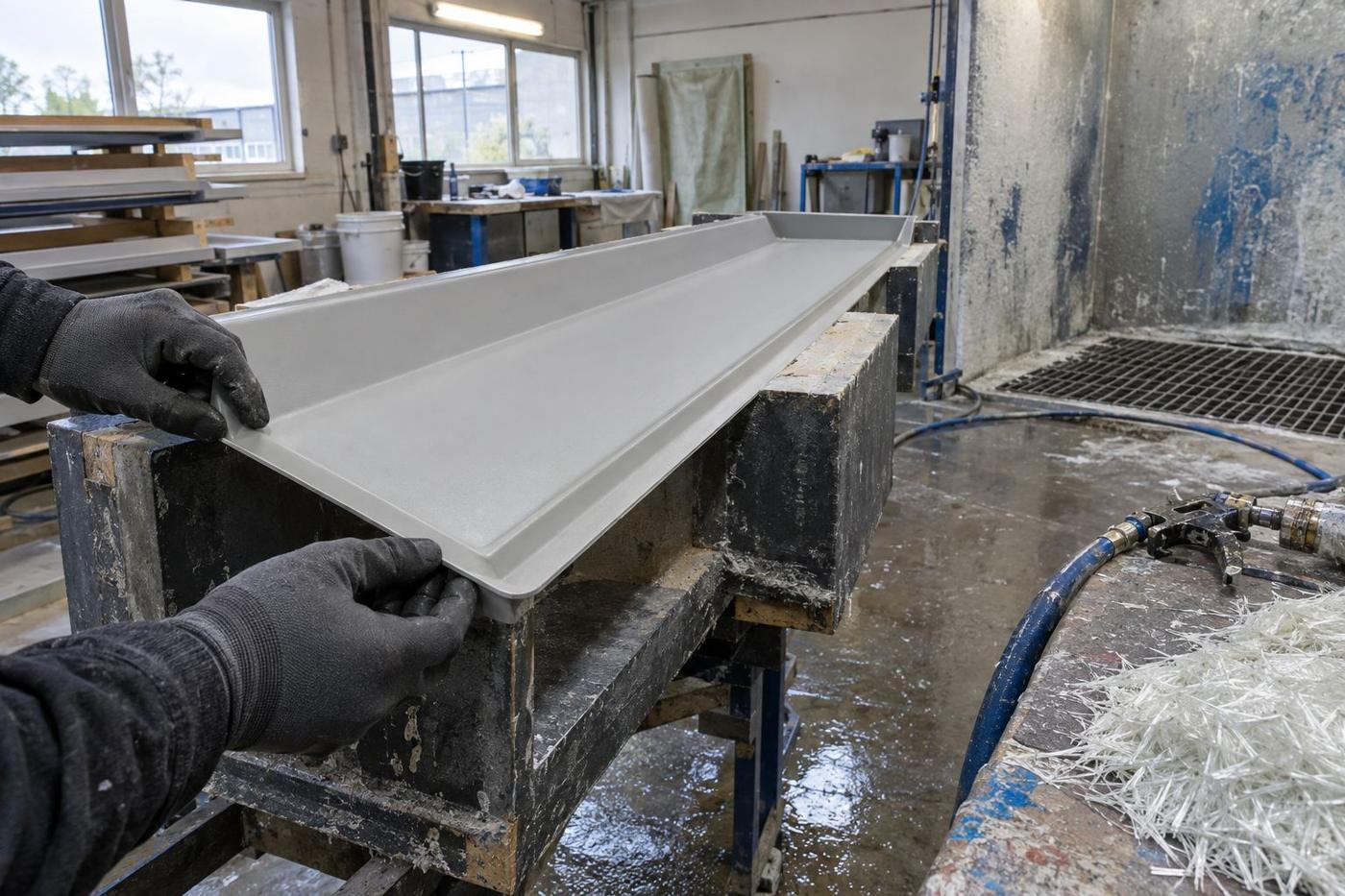
Weight is the constraint
Once a panel has to hang off a subframe rather than sit on a plinth, GRC is the sensible route. The mould is a thin-shell silicone rather than a heavy precast unit tool.
GRC · Thin-shell tooling
Thin-shell silicone tooling for glass-reinforced concrete cladding panels, cornices, spandrels and lightweight architectural elements. Built around your spray gun, your face-mix, and the way your team actually demoulds a thin panel without cracking a corner.
When it fits
Not every cladding job wants a heavy precast mould.
Once a panel has to hang off a subframe rather than sit on a plinth, GRC is the sensible route. The mould is a thin-shell silicone rather than a heavy precast unit tool.
A GRC face-mix goes on with a gun. The mould has to be built to withstand the spray, without picking up spray pattern in the surface.
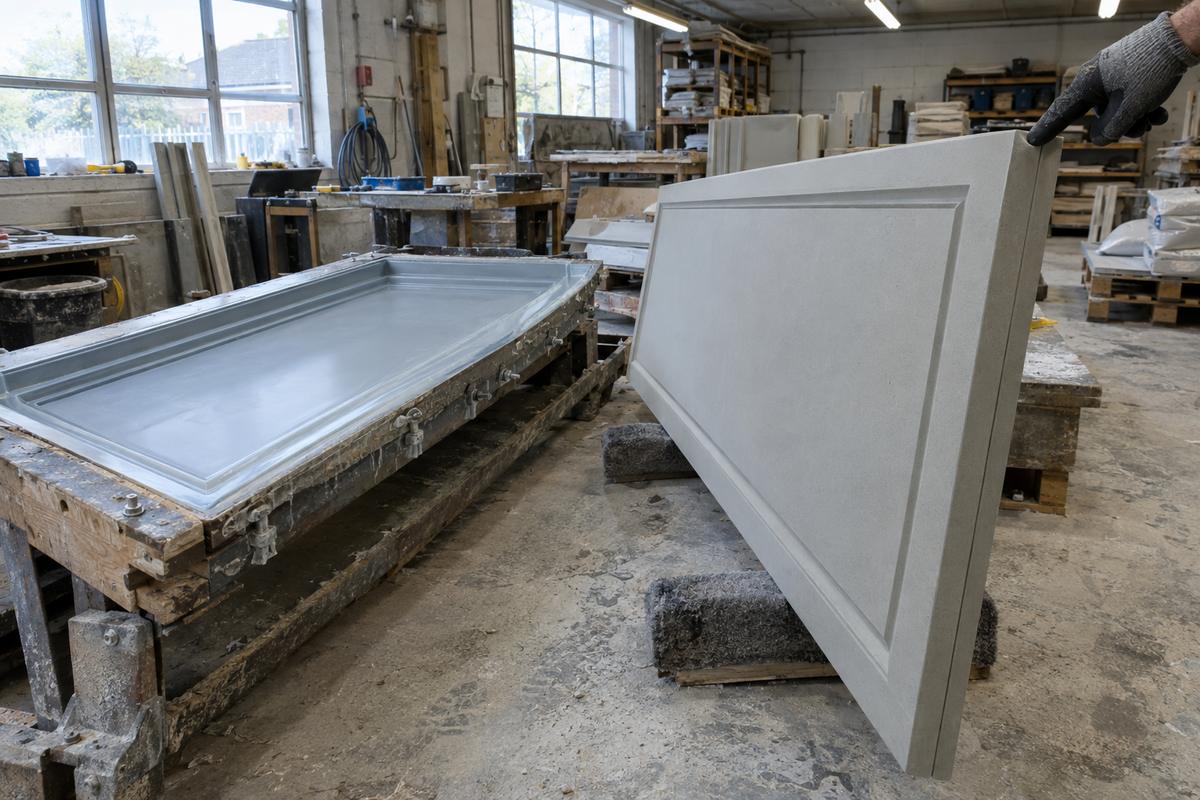
Cornices, string courses, panel returns, decorative spandrels. Silicone captures the profile cleanly and releases without violence.
GRC is often chosen for restoration work because it can be moulded from a surviving section and hung off a modern subframe. The silicone is what does the reproduction.
The choice
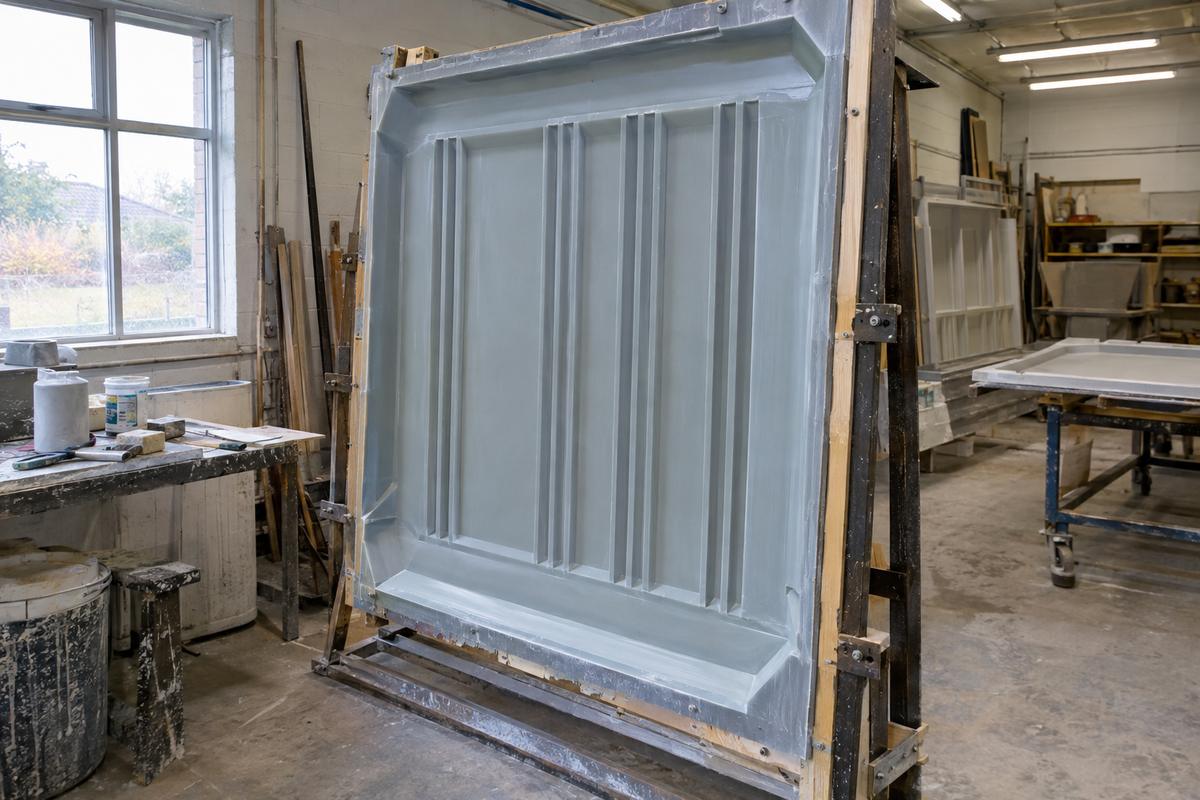
A GRC mould is a thin silicone lining sat in a rigid shell. The silicone is what your GRC face-mix meets. The shell is what holds the silicone in shape while you spray and while the panel cures. The shell can be timber, GRP, or a steel frame, depending on the panel size and your production frequency.
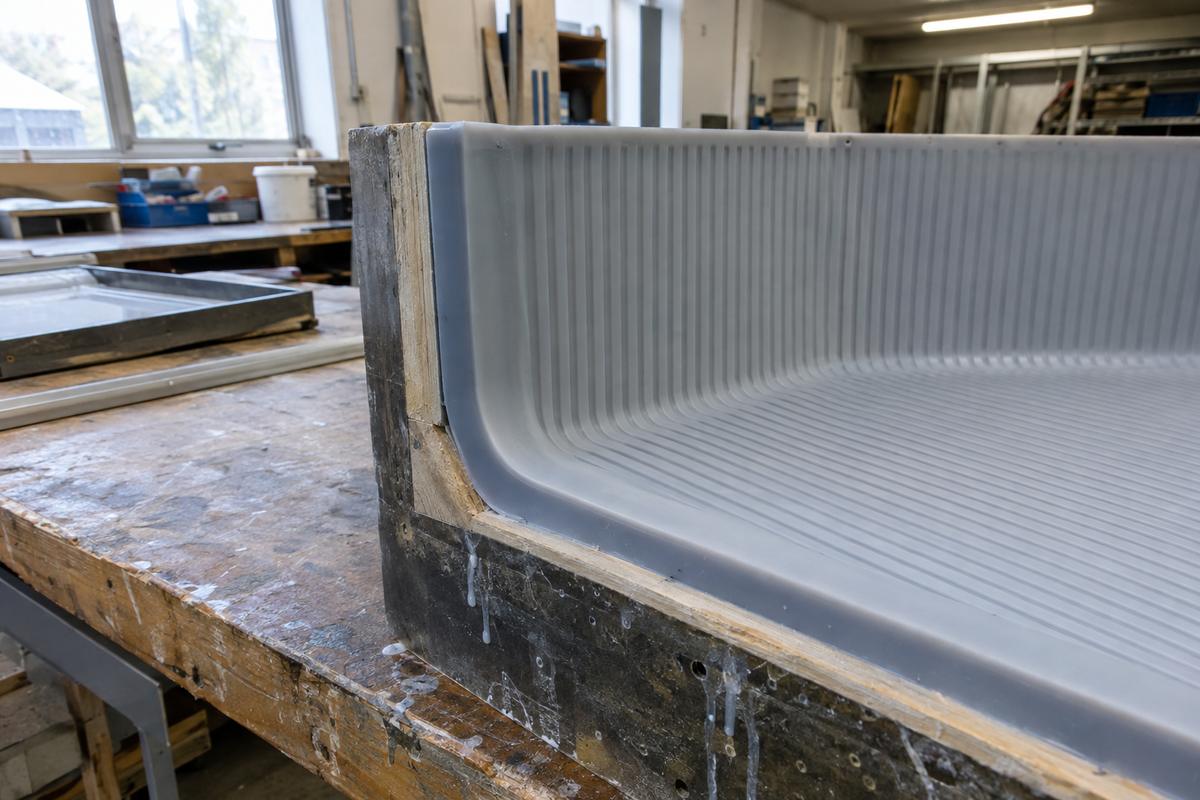
Silicone is chosen over polyurethane for GRC work in most cases because the face-mix contains alkalis that shorten polyurethane life, and because the fine relief that GRC is often used for benefits from silicone's detail capture. On simpler ribbed or grooved panels, polyurethane may still be the right answer.
Corners are the part of a GRC mould that gets damaged first. A thin panel with a sharp corner cracks in demoulding if the silicone tolerates any adhesion at the edge. We design in a slight radius at the corner and specify the release regime that goes with it.
What we need
A general arrangement showing panel size, thickness, returns, and any features that come to the front face.
What's in your face-mix — cement, sand grading, fibre type and dosage, admixtures. That's what the silicone will meet.
One panel a week has different silicone needs from twenty a week.
Vacuum lift, manual lift with formwork clamps, roll-out. Determines split lines and where we build in the return.
The honest bit
A GRC mould that isn't quite right costs you every panel. Because the panels are thin, a poor release, a missed corner, or a bit of silicone contamination in the mix will show up on the finished face. There's nowhere to hide it.
That's why we do first-panel approval on GRC work more carefully than on structural precast. We'd rather come to the yard for the first-off spray than have you find out on panel three that the corner returns need a bigger radius.
GRC silicone doesn't last as many pours as a formliner. The material is harder on the tool, the release regime is more delicate, and thin sections are more vulnerable to accidental damage. We'll give you an honest range at quote stage, and we'll keep the drawing and the pattern on file so replacements match.
Drill down
Each one has its own page with the detail we'd normally cover on the first call.
Related
At a glance
Planning liners across a wall
Swipe to see the whole diagram
Get in touch
One photograph tells us what surface you're chasing, and one line about the mix tells us what silicone or polyurethane will survive it.
Real people, a real workshop
No call centre and no middlemen. When you contact TCI Construction, you speak to the team who design, build and check your mould.


 Thomas LaneManaging Director
 George PrestonDesign & Project Manager
 Kelly BallingerHead of Partnerships
 Jim AndertonProduction Manager
 TheodoreEmployee Welfare