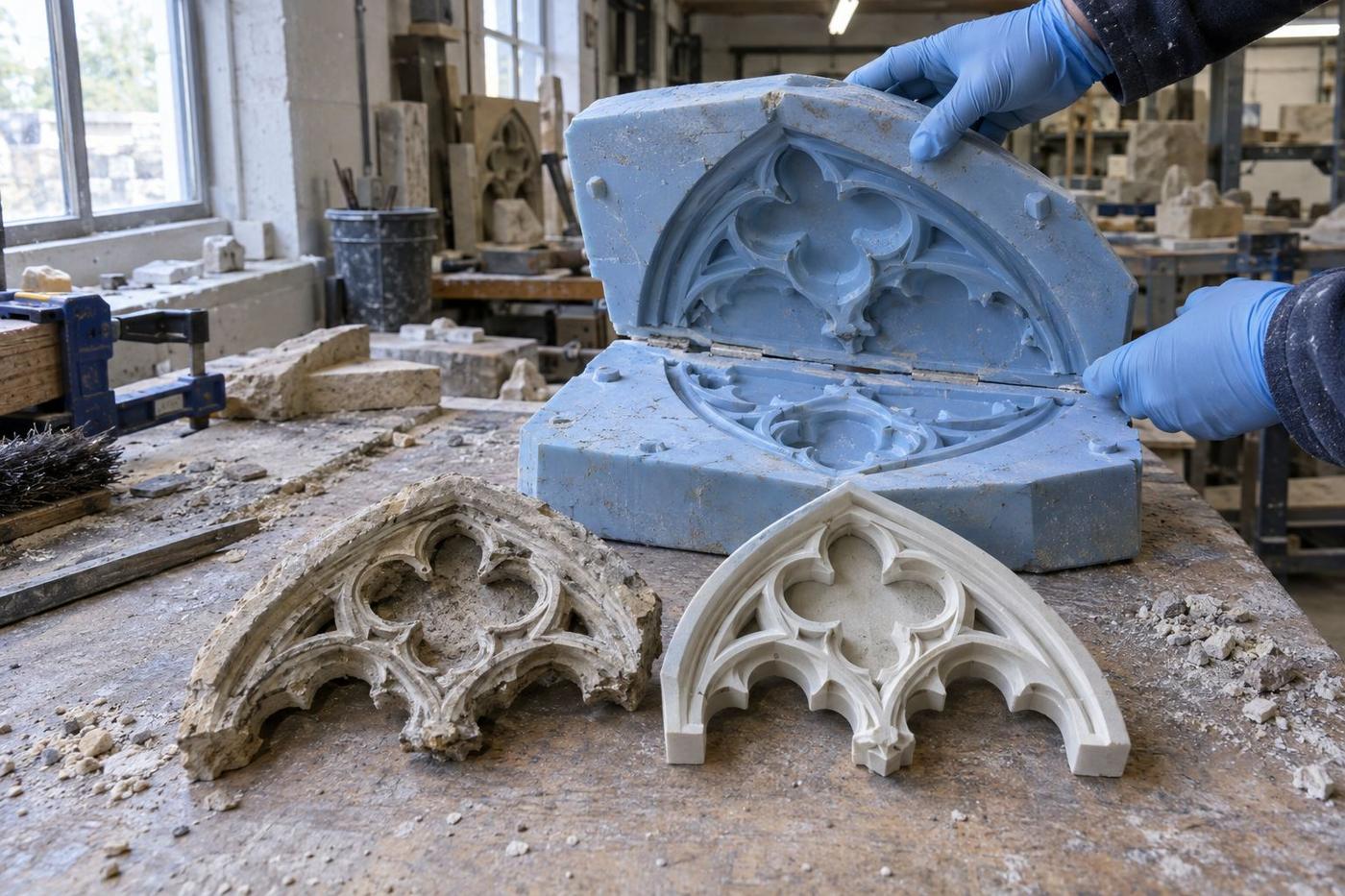
Agree the methodology
A one-page method statement covering in-situ moulding, split positions on the fillets, and trial casts approved on site.
Project record · Heritage window tracery
Two lights of a Victorian Gothic window had lost their tracery to frost. One matching light survived. A split silicone mould from the survivor gave the mason's yard a clean route to matched cast-stone replacements.
The brief
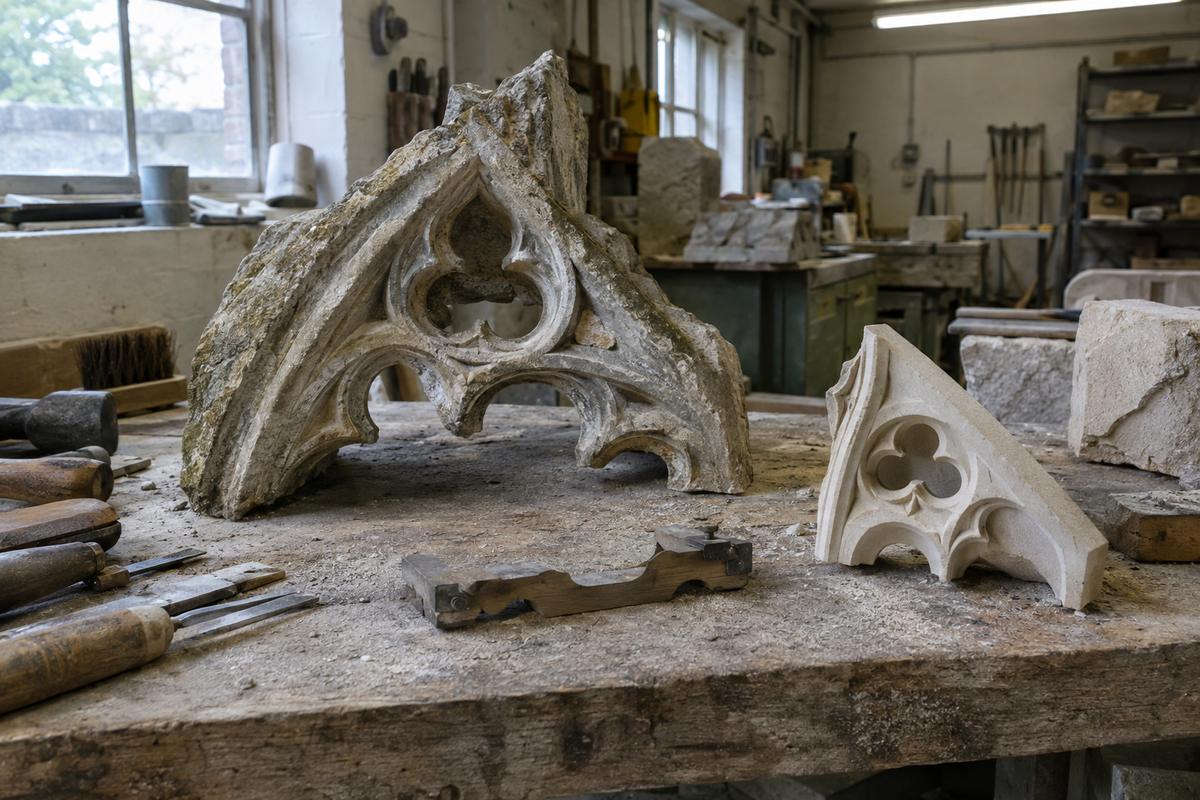
A heritage stonemasonry contractor was working on a listed parish church where frost had broken up the tracery in two lights of a three-light window. The third light survived with light surface loss. The conservation team were open to cast stone for the replacements provided they matched the survivor in profile and surface, and the contractor asked us to make the tooling.
The problem
Tracery is pierced on both faces with deep cusps and foils. A one-piece mould couldn't release it, and a crude split would leave witness lines across the very profiles the conservation officer would look at first.
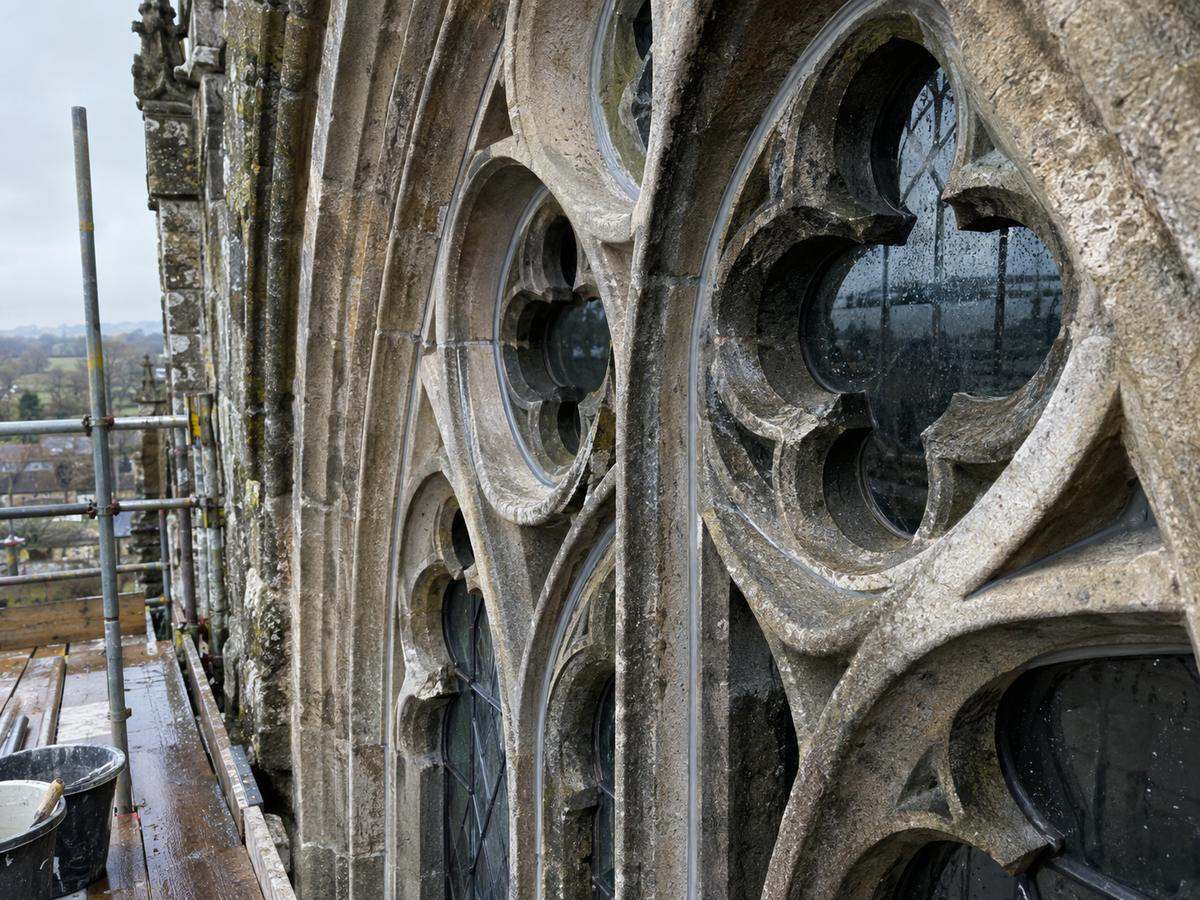
The surviving section also had to stay in the window. Removal was ruled out, so the mould had to be taken in situ, from a scaffold, on a cold elevation.
How we solved it
A one-page method statement covering in-situ moulding, split positions on the fillets, and trial casts approved on site.
Brush-applied silicone in layers over a barrier, with a GRP mother mould built in sections so it could be lifted off the tracery safely.
A plaster positive cast from the in-situ mould, lightly made good where surface loss was agreed to be restored.
A multi-part poured silicone mould from the pattern, with splits on the fillets and matched register keys.
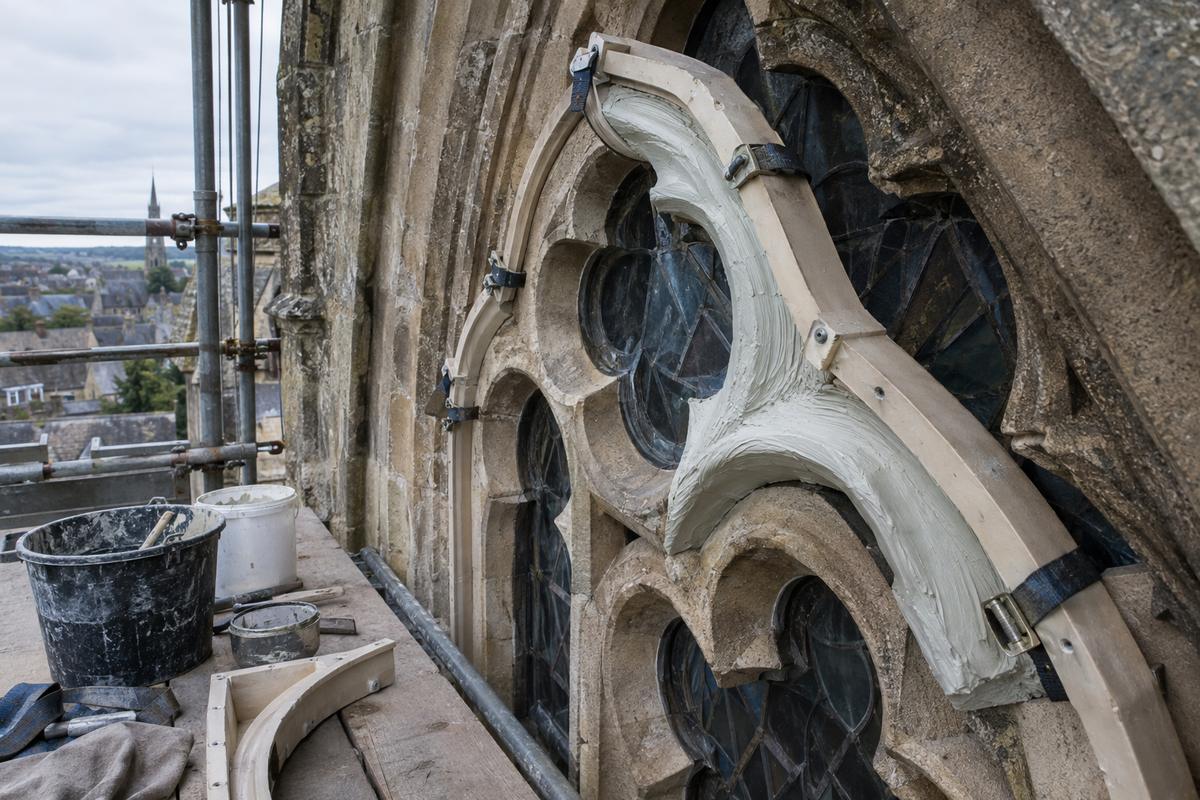
Two trial casts in different stone-matched blends taken to site and held in the window opening.
The outcome
The contractor cast the replacement tracery in the approved blend and installed both lights. The split lines fell on the fillets as planned and were dressed out by the mason in minutes. The production mould is archived against the church in case the survivor itself needs replacing in future.
Lessons
On pierced work, spend the time deciding split positions on the pattern with the mason in the room. The person who'll dress the casting knows exactly which edges are easy to clean up and which aren't.
At a glance
How a two-part mould fits together
Swipe to see the whole diagram
Get in touch
One photograph tells us what surface you're chasing, and one line about the mix tells us what silicone or polyurethane will survive it.
Real people, a real workshop
No call centre and no middlemen. When you contact TCI Construction, you speak to the team who design, build and check your mould.


 Thomas LaneManaging Director
 George PrestonDesign & Project Manager
 Kelly BallingerHead of Partnerships
 Jim AndertonProduction Manager
 TheodoreEmployee Welfare