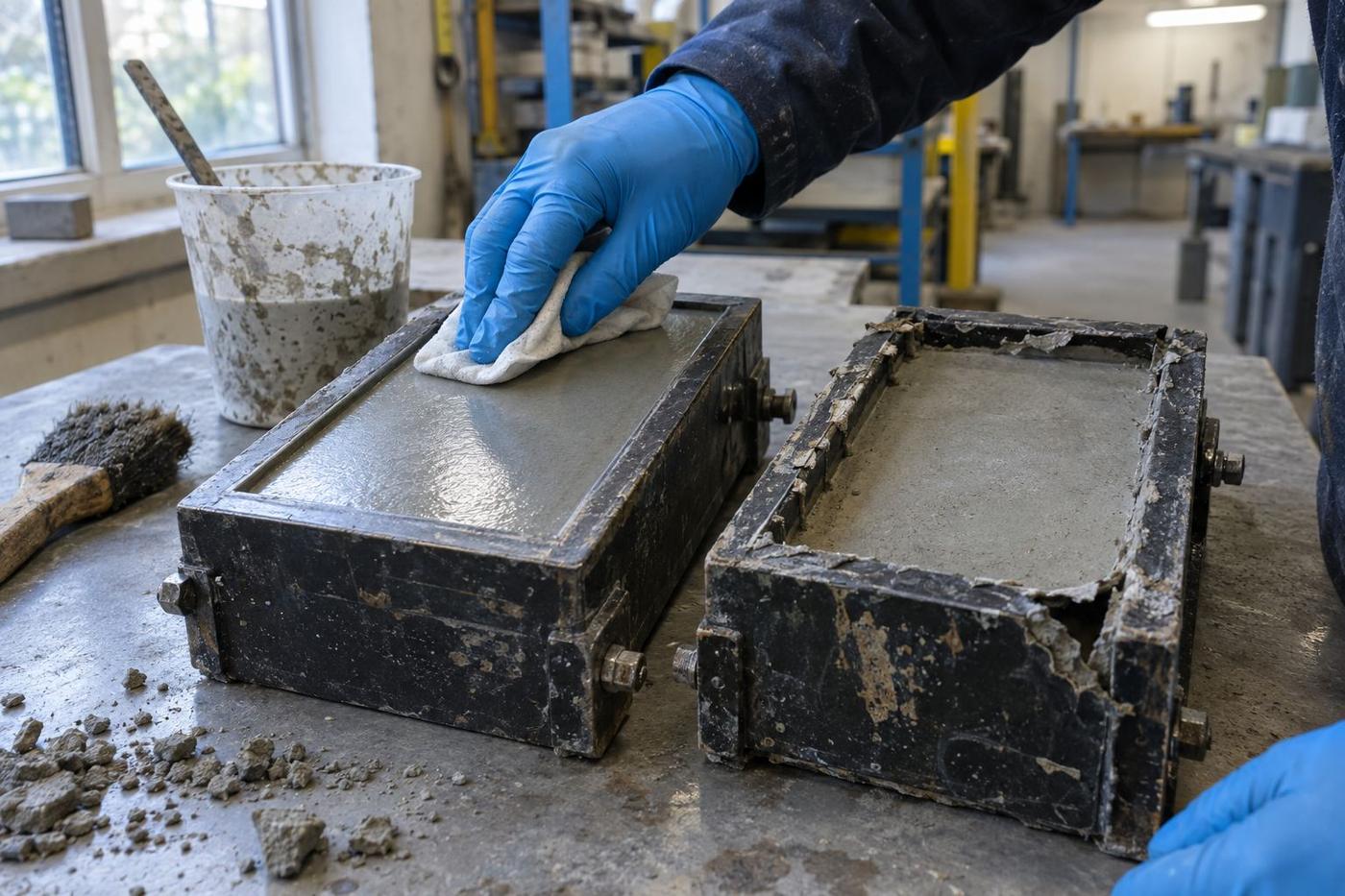
You've had tools fail early before
A previous mould died at forty pours when you expected two hundred. Something was off — the grade, the release, the handling, or all three. We'll help you unpick which.
Durability · Release regime
How we spec silicone and polyurethane against your mix, your release, your pour count and the way your yard actually works. A mould that outlives the programme costs a bit more than one that fails halfway.
When it fits
A previous mould died at forty pours when you expected two hundred. Something was off — the grade, the release, the handling, or all three. We'll help you unpick which.
GRC face-mixes, coloured concretes with certain pigments, self-compacting with plasticisers — these shorten life more than plain OPC. Spec has to acknowledge it.
A tool that has to run for two years on the same programme deserves a grade chosen for the total pour count, not just the first month.
Different operators using different amounts of different agents is a common cause of premature failure. Documented release is part of durability.
The choice
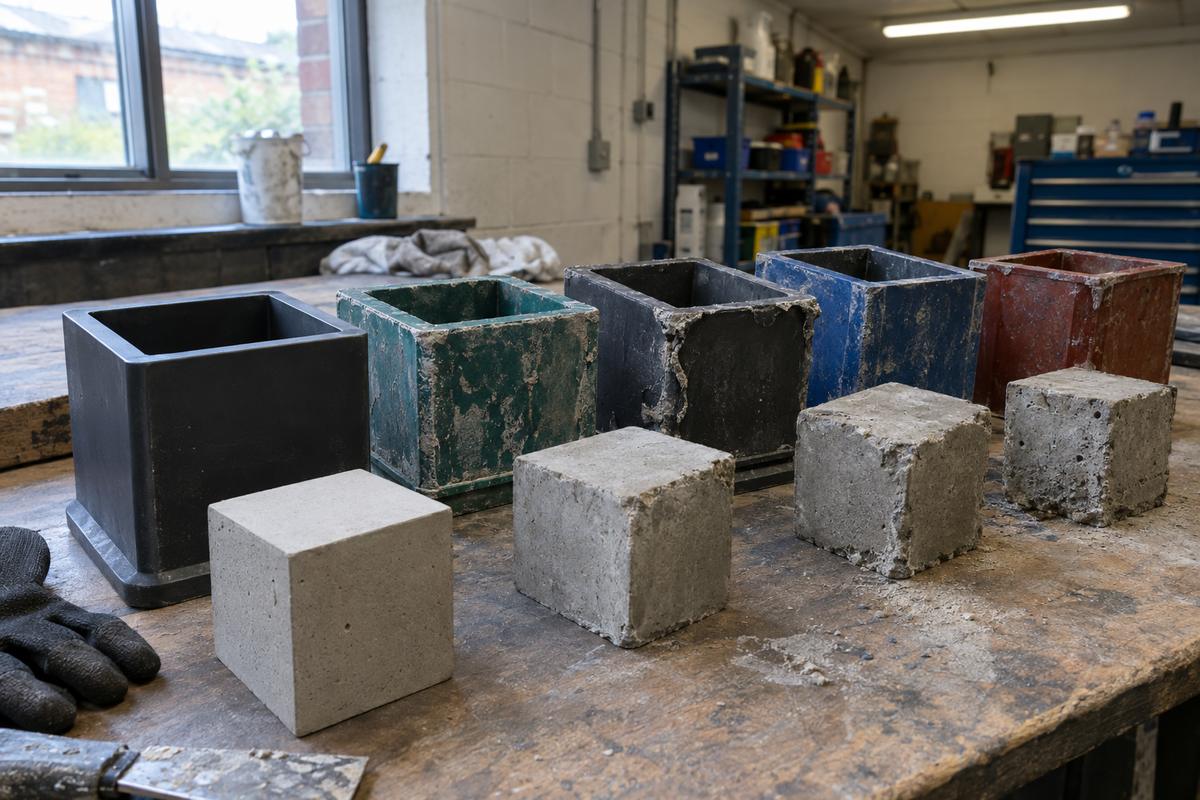
Concrete moulds don't fail from age. They fail from a combination of chemistry (alkalis, pigments, admixtures), thermal cycling (hot pours in cold moulds), mechanical damage (rough demoulding, dropped tools, aggressive hose-off) and release regime (wrong agent, too much, not enough, applied late).
The mould's grade is chosen to tolerate the chemistry and the thermal profile. The mother mould or backing frame is designed to reduce mechanical stress on the silicone. The release regime is documented in the delivery paperwork.
Nothing here is exotic. It's just deliberate. Most premature failures we see on other people's tools trace back to one or two of those factors being under-thought at spec stage.
What we need
Brand, type, how it's applied, how often. We check compatibility before we spec the silicone.
The chemistry the silicone will meet.
How long between pour and strip. Affects thermal cycling.
One trained operator or a rota? Determines how much release regime discipline the mould has to survive.
The honest bit
Anyone who quotes you a guaranteed pour count on a silicone or polyurethane mould is either guessing or covering themselves with terms so tight the guarantee is worthless. Real mould life is a range, not a number, and it depends on things you and we can only partly control.
What we can do is give you an honest expected range based on the mix, the release, the pour cycle and the handling — and then, once you're running, take feedback and adjust the spec on future moulds if reality diverges. That's how tool life gets extended over a programme.
There's a temptation to spec the most expensive grade in the range on the theory that longer life justifies it. It's usually not true. A mid-range grade that's right for your chemistry will typically outlive a top-tier grade that's over-spec'd for it, because durability comes from fit as much as from headline pour rating.
Drill down
Each one has its own page with the detail we'd normally cover on the first call.
Related
At a glance
Where the formliner sits
Swipe to see the whole diagram
Get in touch
One photograph tells us what surface you're chasing, and one line about the mix tells us what silicone or polyurethane will survive it.
Real people, a real workshop
No call centre and no middlemen. When you contact TCI Construction, you speak to the team who design, build and check your mould.


 Thomas LaneManaging Director
 George PrestonDesign & Project Manager
 Kelly BallingerHead of Partnerships
 Jim AndertonProduction Manager
 TheodoreEmployee Welfare