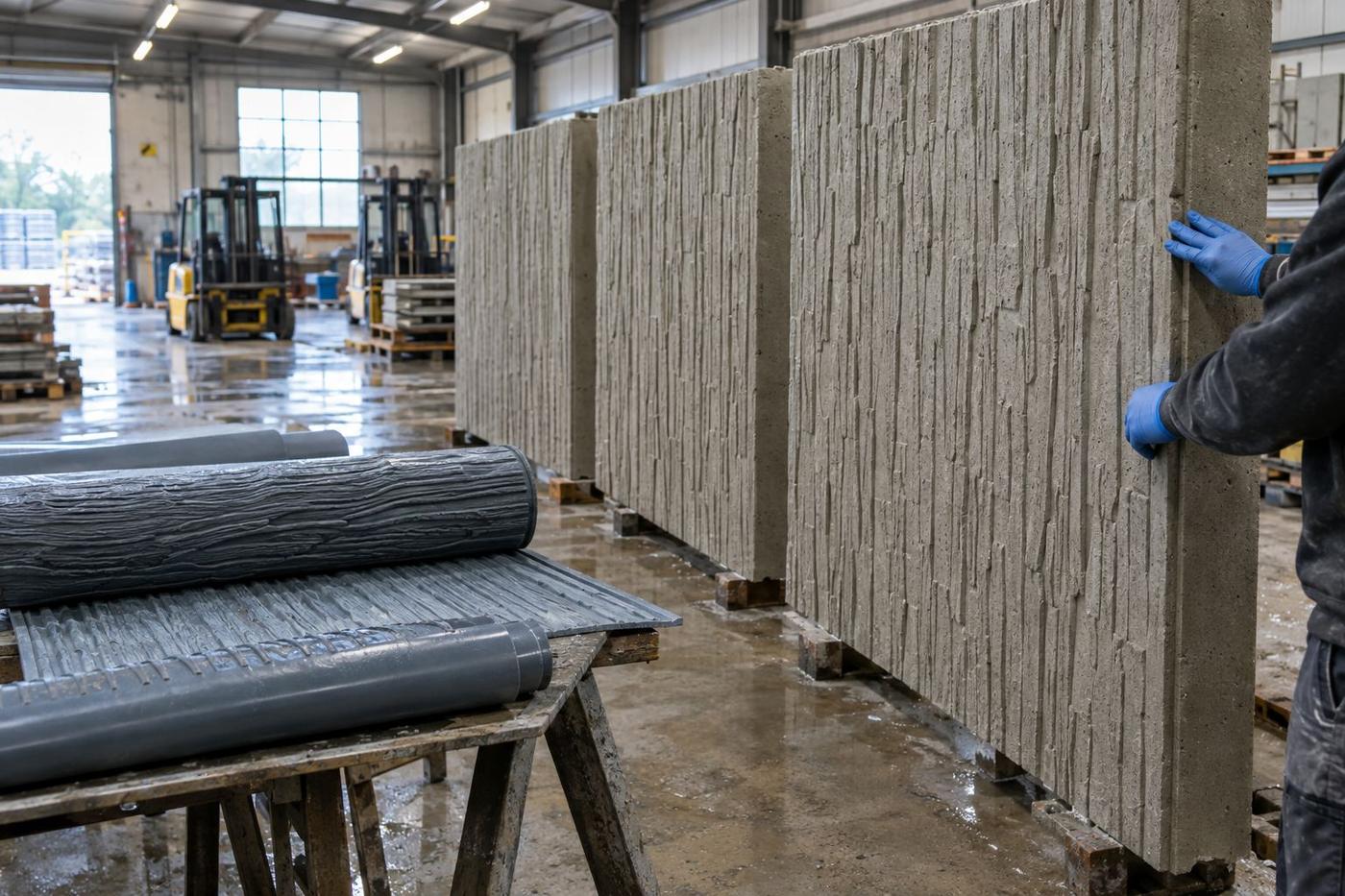
Pilot panel
One liner, one panel, full approval. This is where the texture, the mix and the release are proven together.
Knowledge · Production guide
The first panel proves the texture. The two-hundredth proves the tooling plan. This guide covers how to get from one to the other without the elevation drifting.
Start here
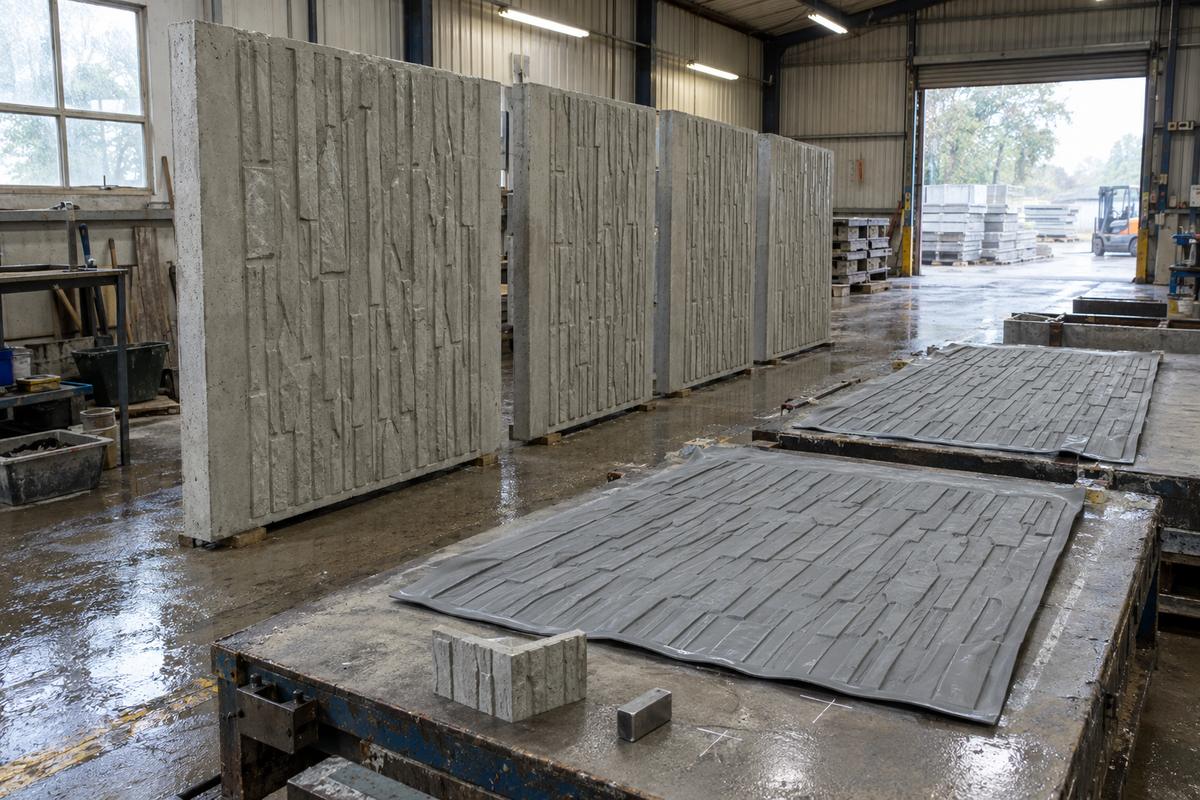
A single liner on a single bed can run a small programme. Once you add beds, shifts or a longer programme, the questions change: will the second liner match the first? What happens when the first one wears? Who checks?
The steps
One liner, one panel, full approval. This is where the texture, the mix and the release are proven together.
Once approved, the master pattern is frozen and archived. Every future liner is poured from it.
Additional liners for parallel beds are poured from the same pattern in the same material batch where possible.
Order replacements at around two thirds of expected life, so they arrive before the originals fail.
A retained sample panel in the yard gives everyone something to check new panels against.
Drift
Pattern drift — patterns rebuilt from a used liner rather than the original master. We never do this unless the master is lost.
Material drift — a different grade or supplier on a later liner. Our spec file stops that.
Wear drift — an old liner running alongside a new one. Retire the old one when the new one comes online, or keep them on separate elevations.
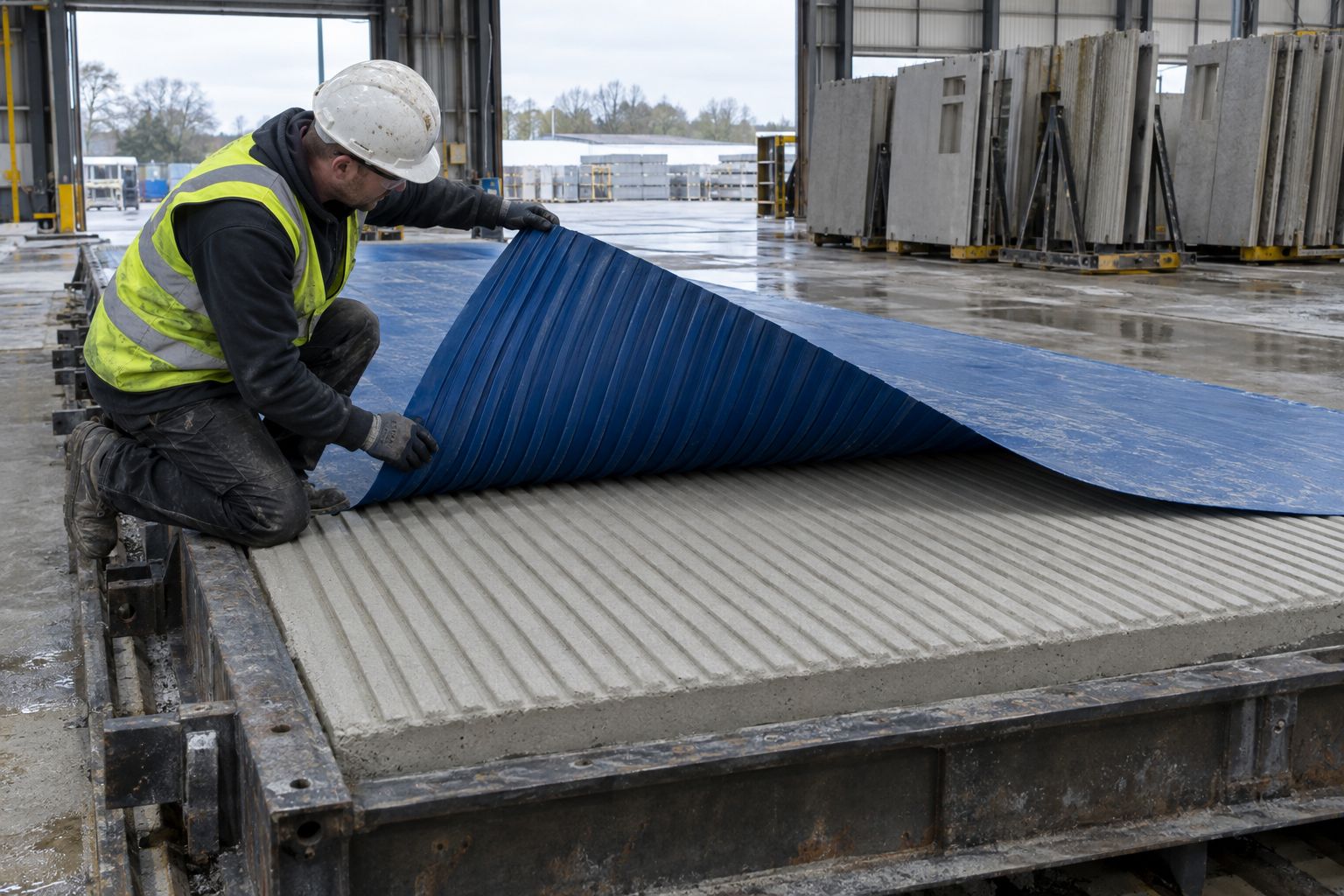
At a glance
Where the formliner sits
Swipe to see the whole diagram
FAQs
It depends on your strike cycle. Tell us panels per week and hours on the bed and we'll suggest a set size.
Yes. We pour the extra liner from the archived pattern.
If it's in good condition it can go into production. Many yards keep it as the reference.
Get in touch
One photograph tells us what surface you're chasing, and one line about the mix tells us what silicone or polyurethane will survive it.
Real people, a real workshop
No call centre and no middlemen. When you contact TCI Construction, you speak to the team who design, build and check your mould.


 Thomas LaneManaging Director
 George PrestonDesign & Project Manager
 Kelly BallingerHead of Partnerships
 Jim AndertonProduction Manager
 TheodoreEmployee Welfare