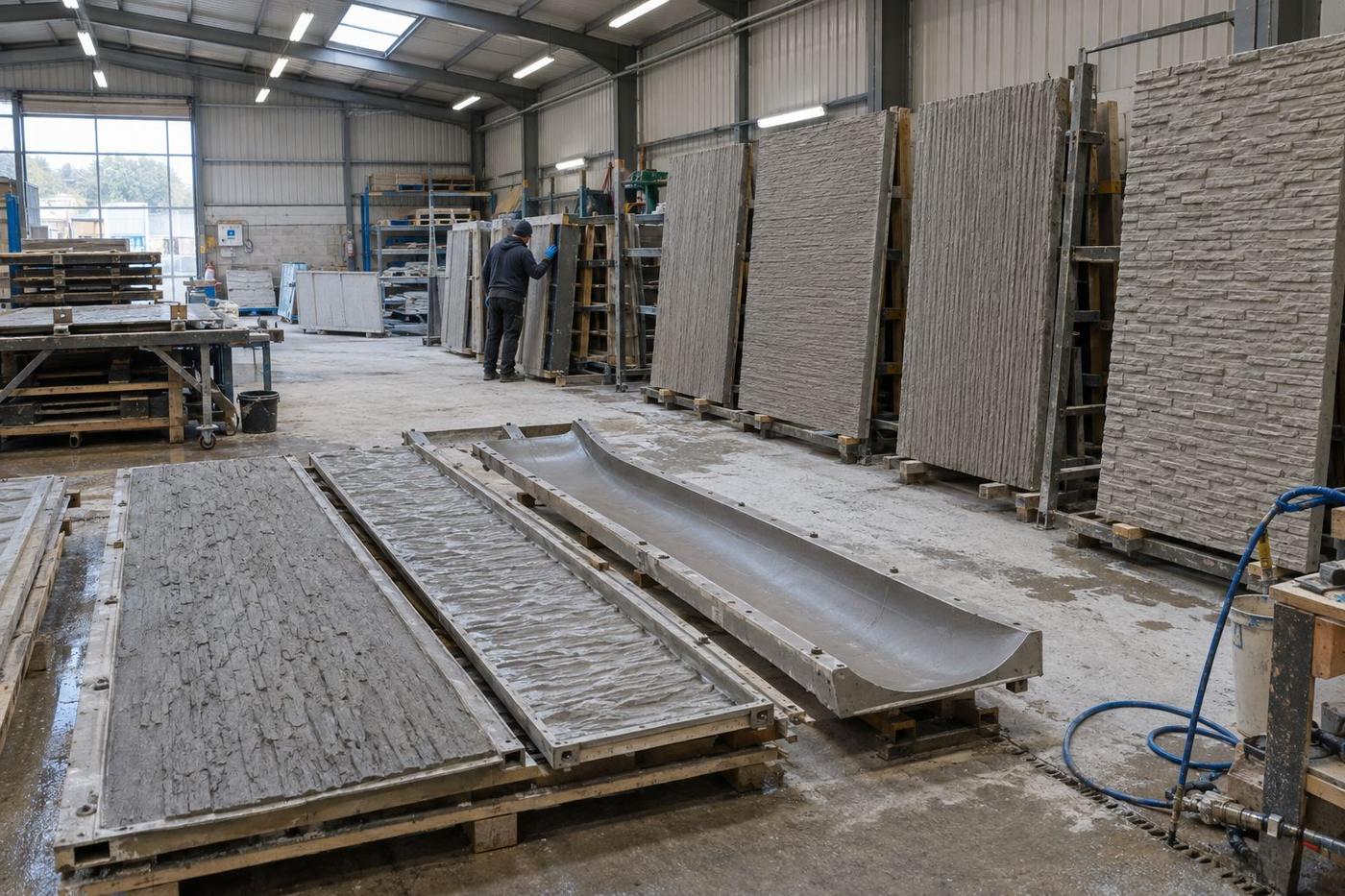
GRC thin-shell tooling
Silicone linings for sprayed GRC panels. Fine architectural relief, tight corners, panels that hang off a subframe. Silicone is the material; the shell around it is timber, GRP or steel depending on scale.
For cladding manufacturers · GRC and precast panel specialists
GRC thin-shell moulds, precast panel formliners, matched multi-panel sets and architect-signed bespoke reliefs. Every tool in a set from the same master, with the paperwork the architect and the specifier need to sign off.
What matters to you
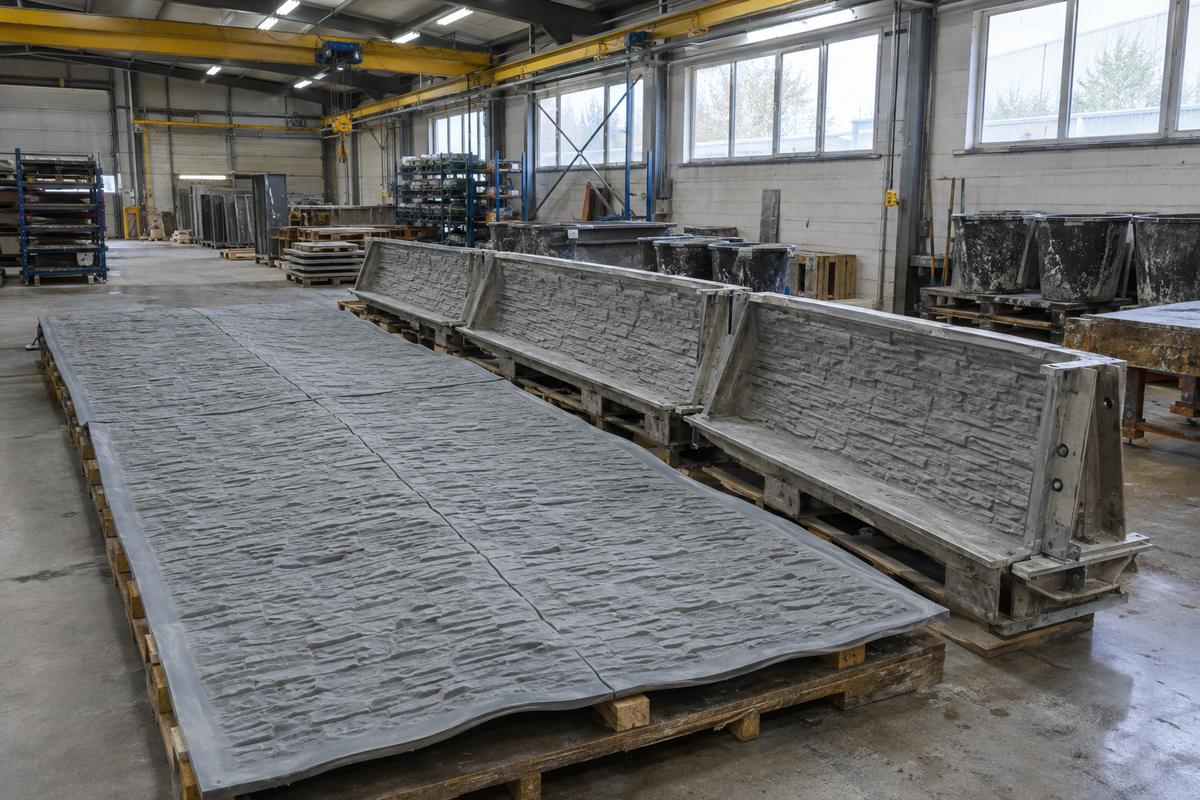
Every tool in a set poured against the same master pattern. That's the only way to keep the texture reading identically across a full elevation. Different masters, however well matched, will drift.
Splice positions co-ordinated across the set, so joint lines fall where the architect drew them, not where the mould happened to end.
Release regimes documented per tool, so a rota-changing yard team can maintain the same finish across every panel that comes through.
First-off approval with architect and client present, ideally in your yard, so the finish is agreed against the real material, not against a photograph.
How your work looks
Silicone linings for sprayed GRC panels. Fine architectural relief, tight corners, panels that hang off a subframe. Silicone is the material; the shell around it is timber, GRP or steel depending on scale.
A set of two, four or twelve moulds built together for a specific façade. Same master, same silicone batch where practical, splice positions co-ordinated on the drawing.
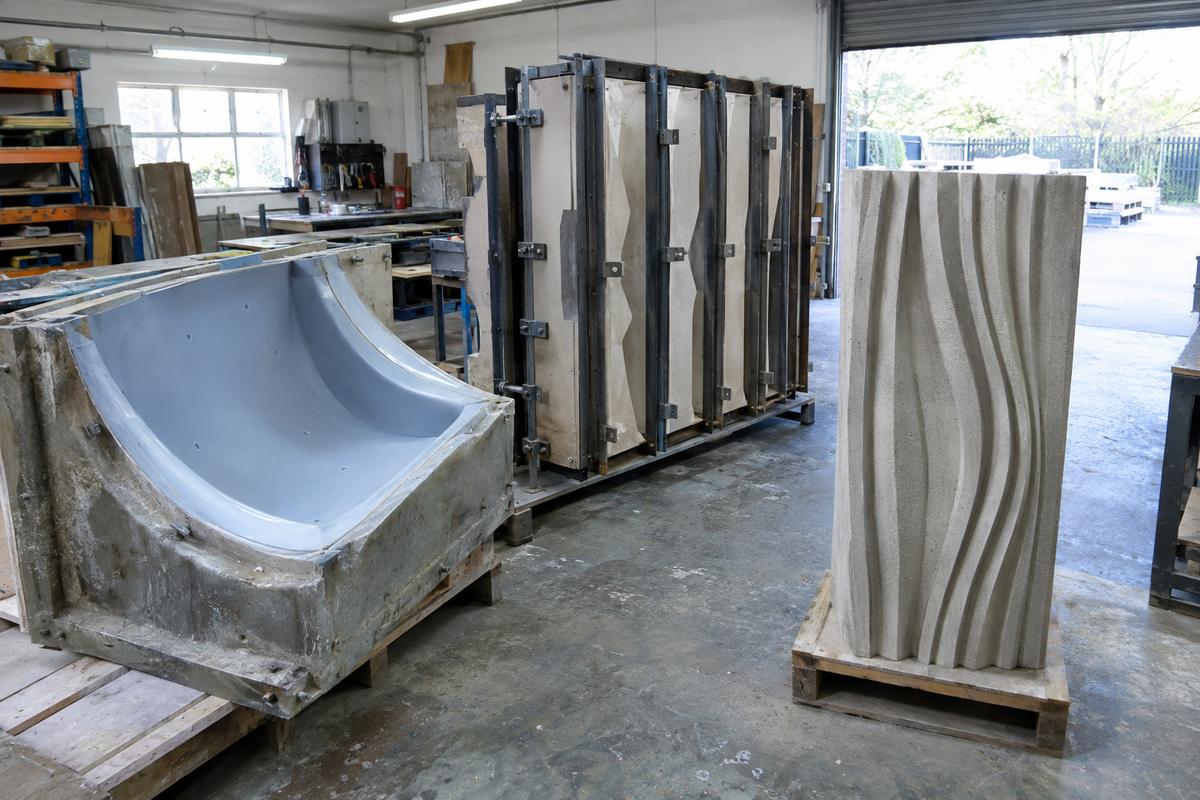
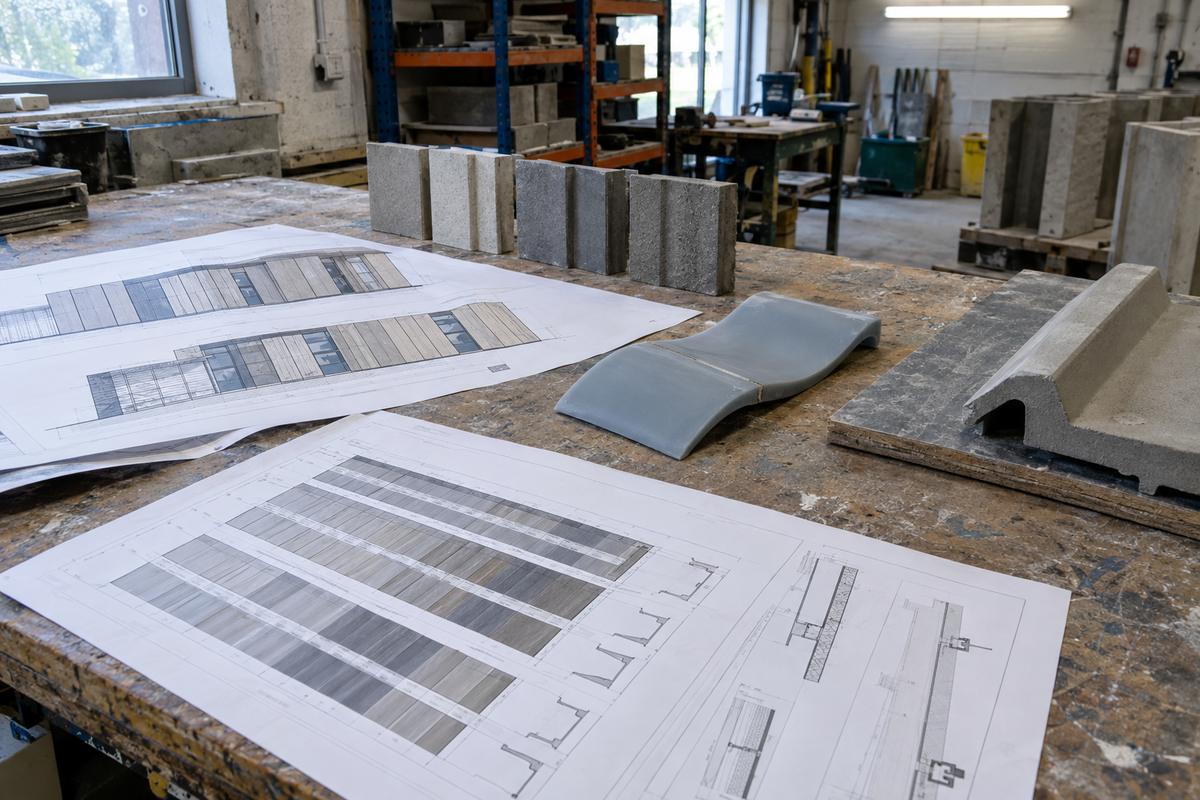
The architect has drawn the relief. We pattern it, mould it, and issue sample panels for sign-off before the full set is built. First-off approval is formal.
Services that fit
How the first conversation goes
Best case: we're in the conversation from concept stage with the architect. We can tell them early which reliefs will demould, which will need special release, and which will need reshaping to avoid a permanent visible splice. That saves a redraw later.
Common case: you have the architect's drawings and the panel schedule, and you'd like a quote and a pattern discussion. We start from the drawings.
Rescue case: another supplier's tool has failed early in the programme and you need matched replacements. Send us a sample panel and the failed tool and we'll rebuild a match.
At a glance
Planning liners across a wall
Swipe to see the whole diagram
FAQs
Yes. It's the fastest way to get a finish signed off. We'd rather be in the room than have the finish approved from a photograph.
Yes as standard. Every tool leaves with a technical sheet — silicone or polyurethane grade, temperature range, expected life for the specified pour count, release compatibility.
Tell us as early as possible. Small texture changes can sometimes be re-patterned; substantial changes usually need a new tool. We'll quote the delta honestly.
Yes. Send us a small offcut of the current tool or a cast sample, and we'll pattern from it so the new tool matches the current one.
Yes. Tell us the face-mix and the fibre type. We choose silicone grade around it so the tool tolerates the chemistry.
Get in touch
One photograph tells us what surface you're chasing, and one line about the mix tells us what silicone or polyurethane will survive it.
Real people, a real workshop
No call centre and no middlemen. When you contact TCI Construction, you speak to the team who design, build and check your mould.


 Thomas LaneManaging Director
 George PrestonDesign & Project Manager
 Kelly BallingerHead of Partnerships
 Jim AndertonProduction Manager
 TheodoreEmployee Welfare