Site visit with the conservation officer
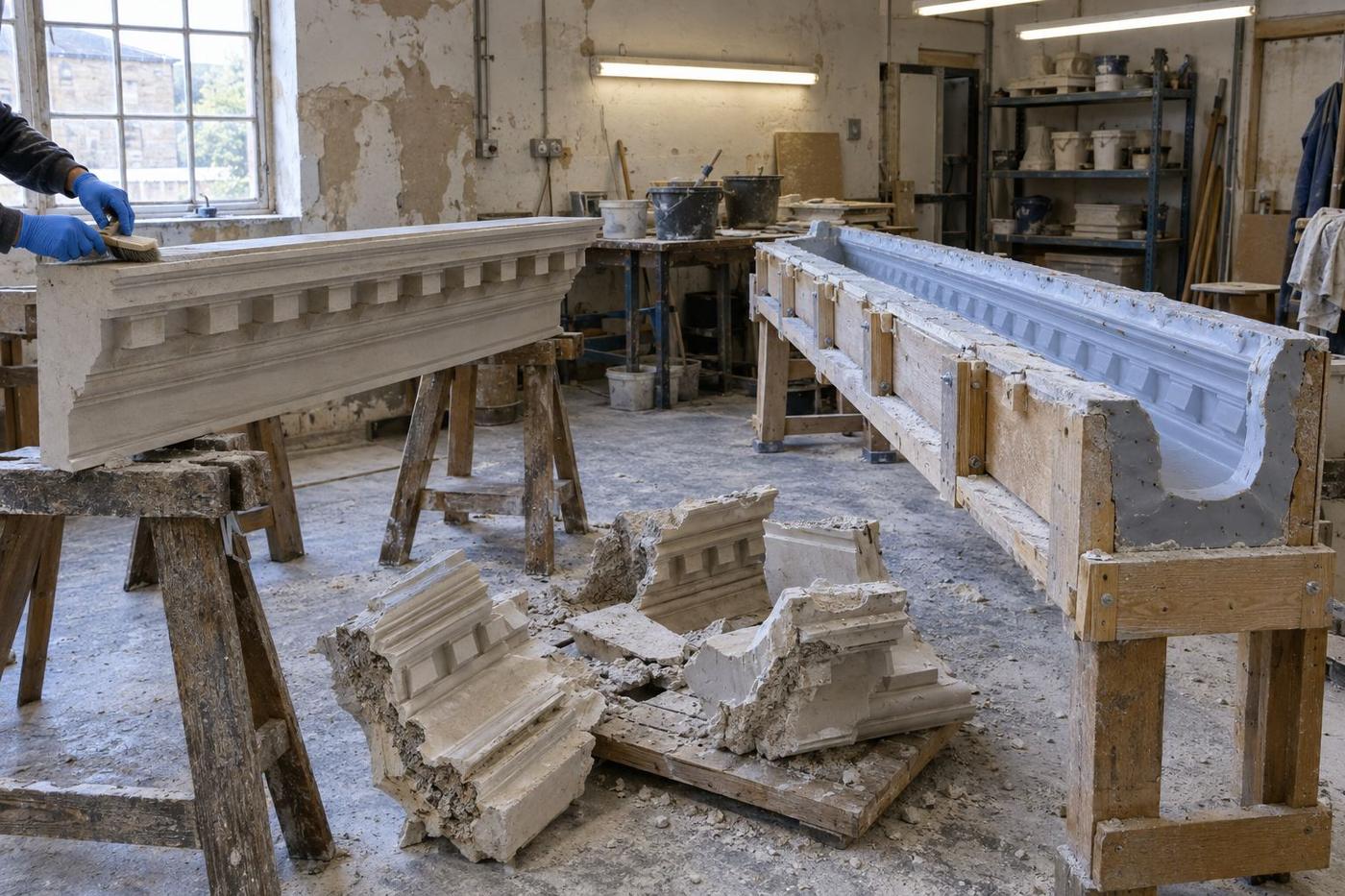
We joined the site visit and agreed a methodology in writing — silicone from the surviving section in situ, cast stone with matched aggregate for the reproductions, first-off approval on the elevation.
Project record · Heritage cornice restoration
One surviving cornice section, seven failed. A silicone mould from the survivor, then cast stone reproductions blended to match the neighbouring originals.
The brief
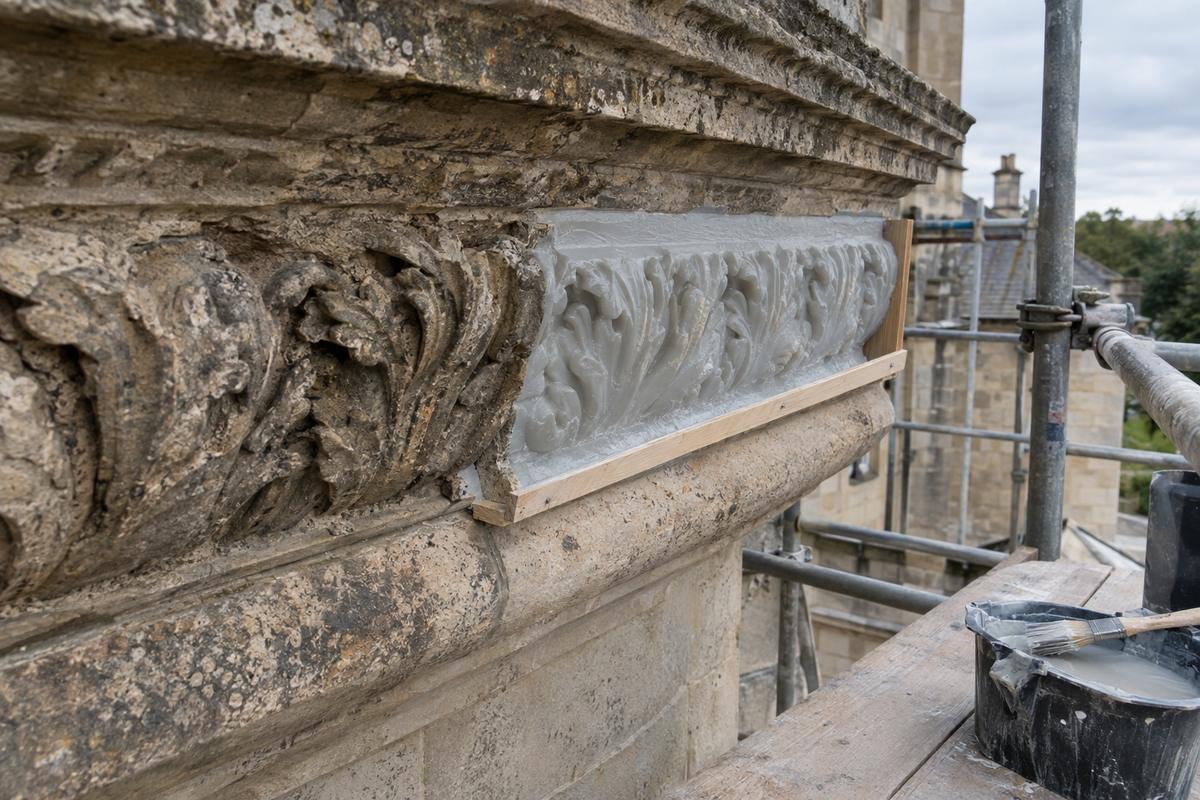
A Cotswold heritage yard had been asked by a listed building's conservation team to reinstate a run of Georgian cornice moulding. One eight-foot section survived intact on the west elevation; seven adjacent sections had spalled and dropped. The client's existing supplier had quoted a pattern-and-mould route from scaled drawings that the conservation officer wasn't happy with, and asked whether we could offer a direct-from-original route instead.
The problem
The scaled-drawing route would have produced a cornice that read perfectly in profile but wrong in texture. The surviving original had 250 years of weathering — subtle asymmetries, tool marks from the original mason, small drift in the leaf detail from one metre to the next. A drawing-based reproduction would have looked like a bright new stitched-in patch against the neighbouring survivors.
The listed building's conservation officer had rejected the first quote on that basis. She wanted the reproductions to be indistinguishable from the survivors from ground level, and continuous with them in the way they'd weather over the next 20 years.
How we solved it
We joined the site visit and agreed a methodology in writing — silicone from the surviving section in situ, cast stone with matched aggregate for the reproductions, first-off approval on the elevation.
Two days on scaffold applying brush-on silicone in layers, backed with a rigid mother mould. Original section left with no residue and no damage on inspection.
A small area of loss at one end of the surviving section was made good on the mould rather than on the original — a conservation-team decision made in advance.
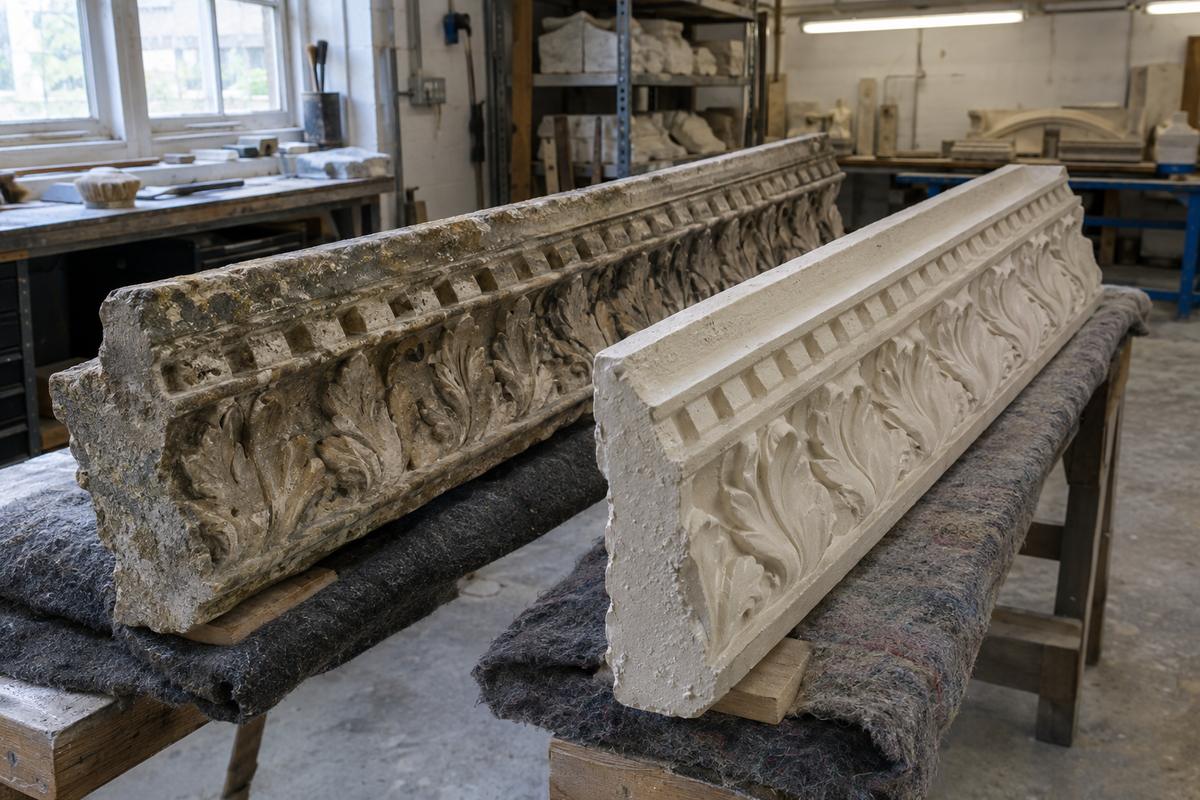
Three trial casts with three different aggregate blends, brought to site and held against the original in daylight, before the winning blend was agreed.
Cast to the winning blend, cured under bespoke conditions to match the weathering rate, inspected against the trial before dispatch to site.
The outcome
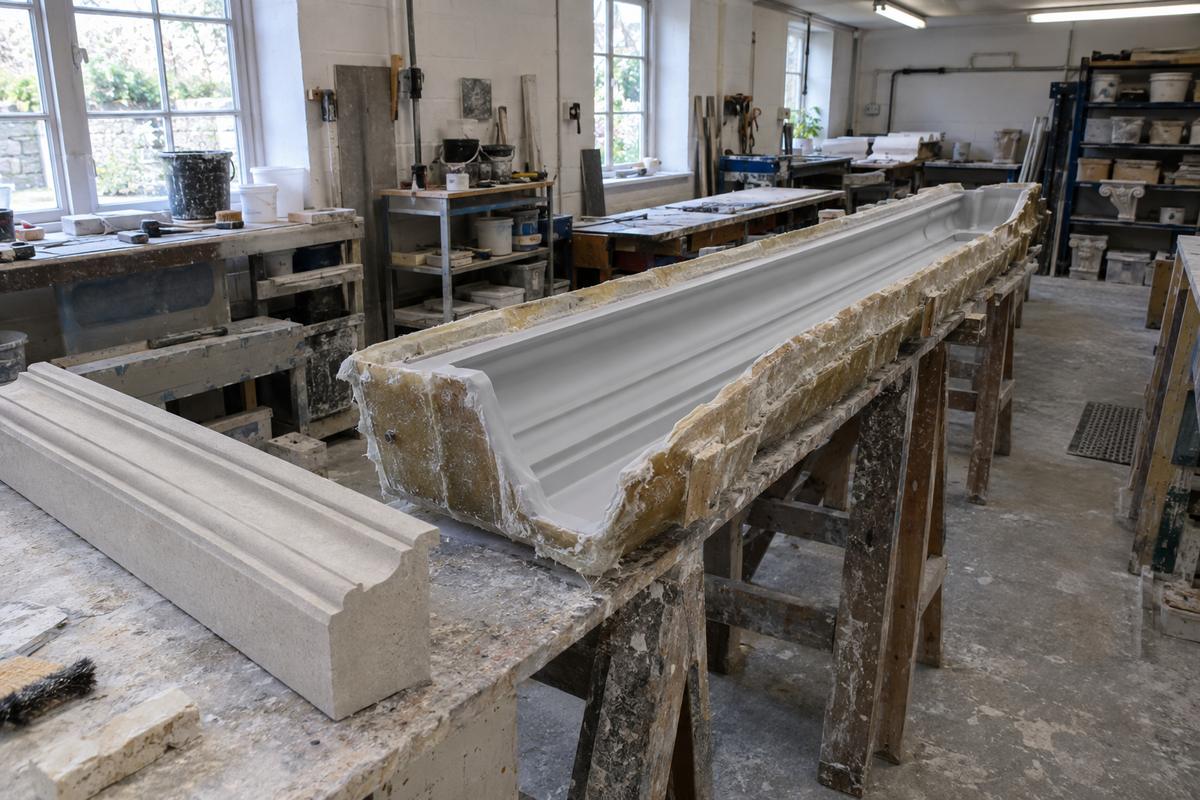
The reinstated cornice run was signed off by the conservation officer at first-off on the elevation. Six months on, the reproductions have started to weather in a way that's already reading as continuous with the neighbouring originals. The mould stays on our archive shelf against any future losses on the same elevation.
Lessons
Get the conservation officer on the first site visit, not the second. The methodology decisions she cares about are cheaper to agree in writing on site than to renegotiate after a tool has been quoted. On this job, joining the first visit saved a full round of pattern iteration.
At a glance
How a two-part mould fits together
Swipe to see the whole diagram
Get in touch
One photograph tells us what surface you're chasing, and one line about the mix tells us what silicone or polyurethane will survive it.
Real people, a real workshop
No call centre and no middlemen. When you contact TCI Construction, you speak to the team who design, build and check your mould.


 Thomas LaneManaging Director
 George PrestonDesign & Project Manager
 Kelly BallingerHead of Partnerships
 Jim AndertonProduction Manager
 TheodoreEmployee Welfare