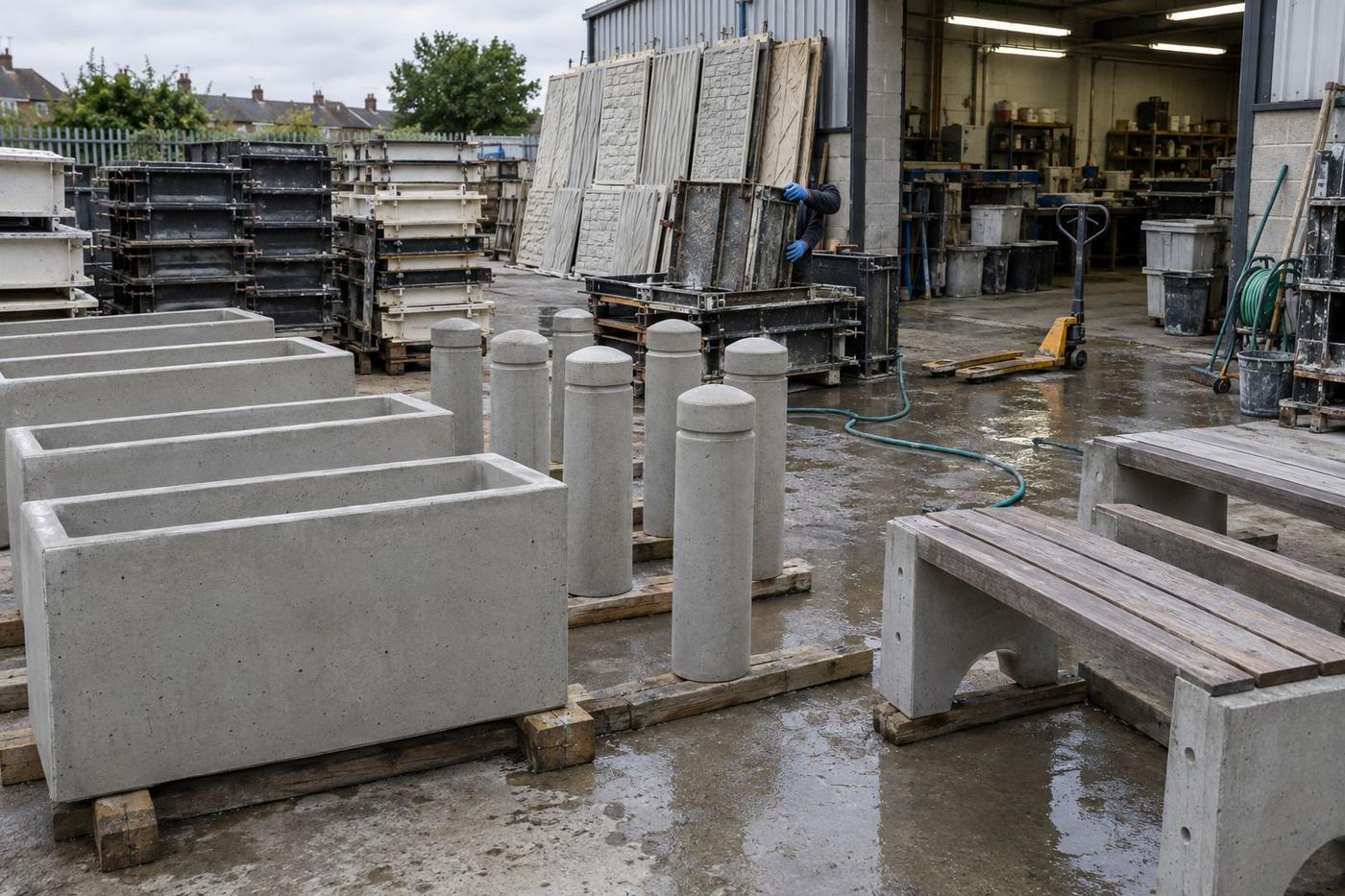
Repeat-line tooling for a standard product
Bench end, bollard or planter shape you ship regularly. Polyurethane in most cases; silicone where there's a moulded logo or feature detail. Built for the pour count in the programme.
For landscape yards · Bench ends, bollards, planters, paving
Bench ends, bollards, planters, paving relief and public-realm bespoke concrete. Repeat lines built for pour count and yard handling; civic pieces built for the visibility a plaza demands.
What matters to you
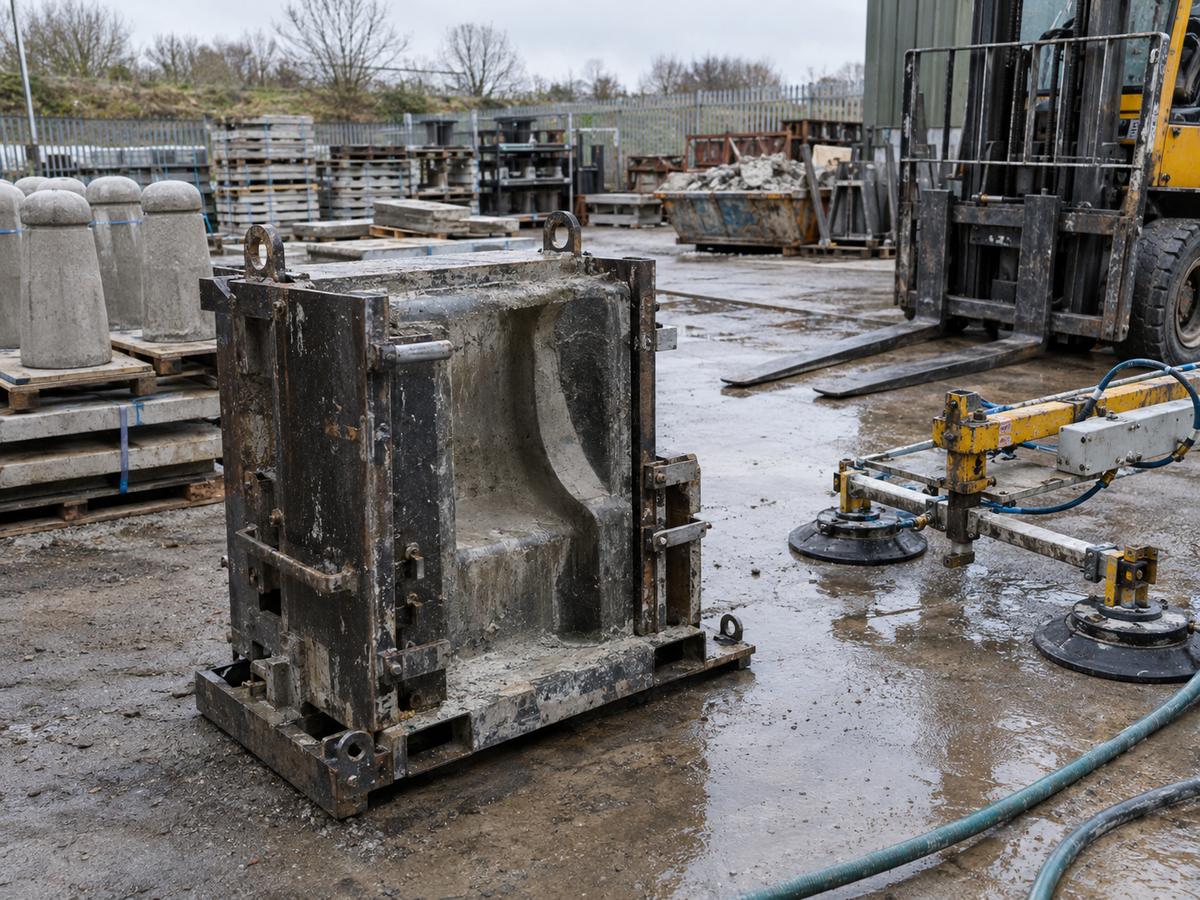
Survive yard handling. Landscape yards are rougher on tools than architectural precast yards. Pieces get vacuum-lifted, forklifted, stacked outside, hosed with cold water. The mould has to withstand that.
Cope with mix variation. Landscape mixes vary more than architectural mixes — fibre-reinforced for benches, plain for bollards, pigmented for feature planters. The tool has to tolerate the range you actually use.
Support fast stripping. Landscape programmes run pieces through quickly. Every extra minute per demould adds up across a hundred pieces. The mould is designed to release without fuss.
Look right on the piece that goes to a plaza. A civic bollard or feature planter is on public view for years. Small mould defects that would be tolerable on a hidden face are not tolerable here.
How your work looks
Bench end, bollard or planter shape you ship regularly. Polyurethane in most cases; silicone where there's a moulded logo or feature detail. Built for the pour count in the programme.
A public-realm scheme with a bespoke bollard, feature planter or paving relief. Higher visibility, lower quantity. Silicone for the detail.
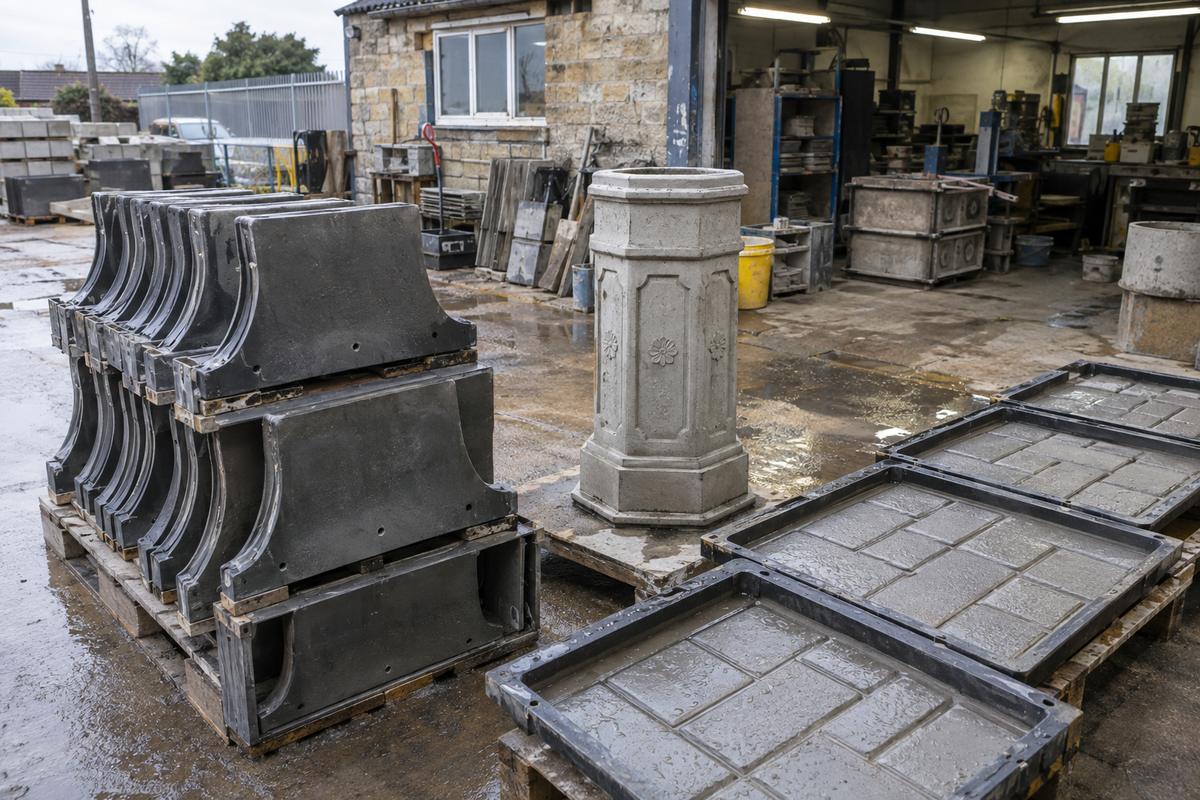
Shallow moulds with the relief cast into the base. Designed to fill, screed, strip and clean quickly, because paving programmes run a lot of pieces through the same tool.
Services that fit
How the first conversation goes
A photograph of the piece you want to make, or of the closest existing product. Rough annual quantity. The concrete mix you're pouring. Which handling equipment you have in the yard.
For civic bespoke, add the drawing from the landscape architect, and the delivery date the scheme is working to.
We come back with a route recommendation, a material shortlist, and an honest rough number. If we think the piece would be better as a two-part mould rather than a one-piece, or the other way round, we'll say so.
FAQs
We pattern the logo separately as a fine relief in silicone, then set it into the main polyurethane mould at the correct depth. That way the logo has silicone-level detail without the whole tool having to be silicone.
We can pattern from a physical sample you send us, and reproduce the shape in a mould that lets you make it in-house. There's no IP issue with a shape that's already on the market, but check your own legal position first.
For a proper paving programme, yes. The mould pays for itself in reduced defect rate and faster strip cycles across the run. For a one-off scheme of a hundred slabs, a lower-cost single-use route may be more sensible.
Some pigments do. We ask what you're pigmenting with and, if it's known to be aggressive, we spec a silicone grade that stands up to it. Never a surprise.
Sometimes. If two lines share the same base shape with different logos or features, we can build the main tool once with interchangeable inserts. Worth asking about at quote stage.
Get in touch
One photograph tells us what surface you're chasing, and one line about the mix tells us what silicone or polyurethane will survive it.
Real people, a real workshop
No call centre and no middlemen. When you contact TCI Construction, you speak to the team who design, build and check your mould.


 Thomas LaneManaging Director
 George PrestonDesign & Project Manager
 Kelly BallingerHead of Partnerships
 Jim AndertonProduction Manager
 TheodoreEmployee Welfare