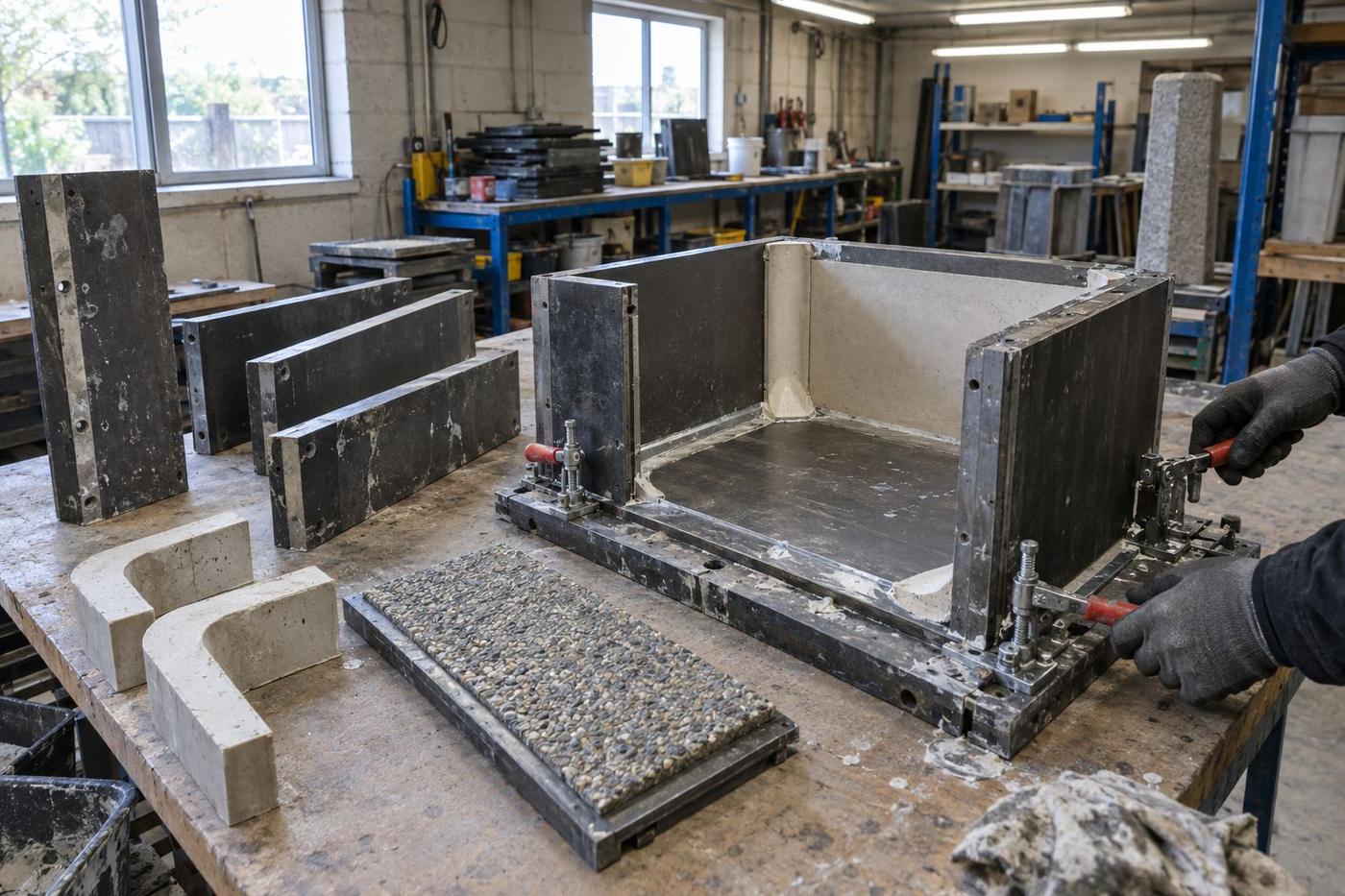
It's a three-dimensional piece
Copings, capstones, balustrade sections, bollards, bench ends. Anything where the concrete has to be shaped on more than one face.
Precast · Unit moulds
Three-dimensional unit moulds for balustrades, copings, capstones, bench ends, bollards and structural precast — designed to lift off cleanly and stack in the yard between pours.
When it fits
Formliners give you a face. Unit moulds give you the whole shape.
Copings, capstones, balustrade sections, bollards, bench ends. Anything where the concrete has to be shaped on more than one face.
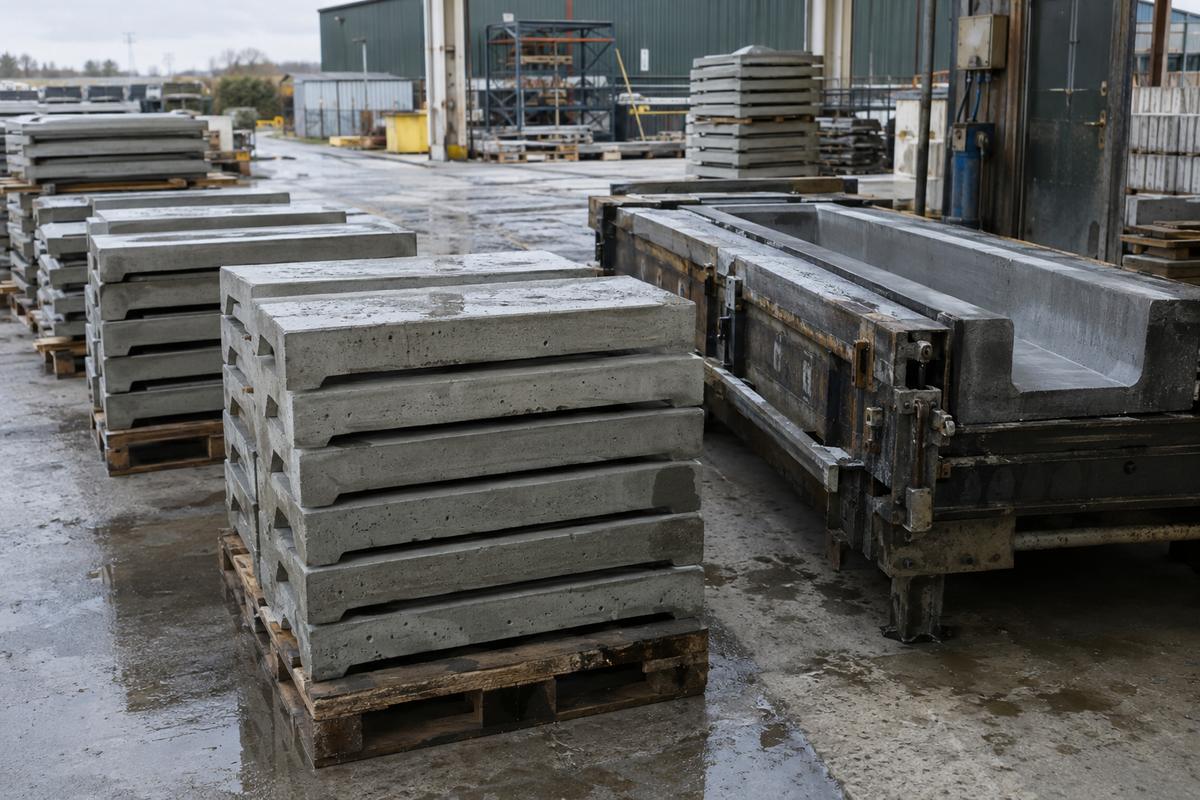
A working precast yard is hard on tooling. Unit moulds have to be built to be dropped, hosed, and rolled between pours without softening.
How the mould stores between uses is part of the design. A unit mould that's built without stacking in mind will get damaged in the store.
The drawing, the pattern and the material spec stay on our file. A replacement mould two years later will match the first one, not a re-interpretation of it.
The choice
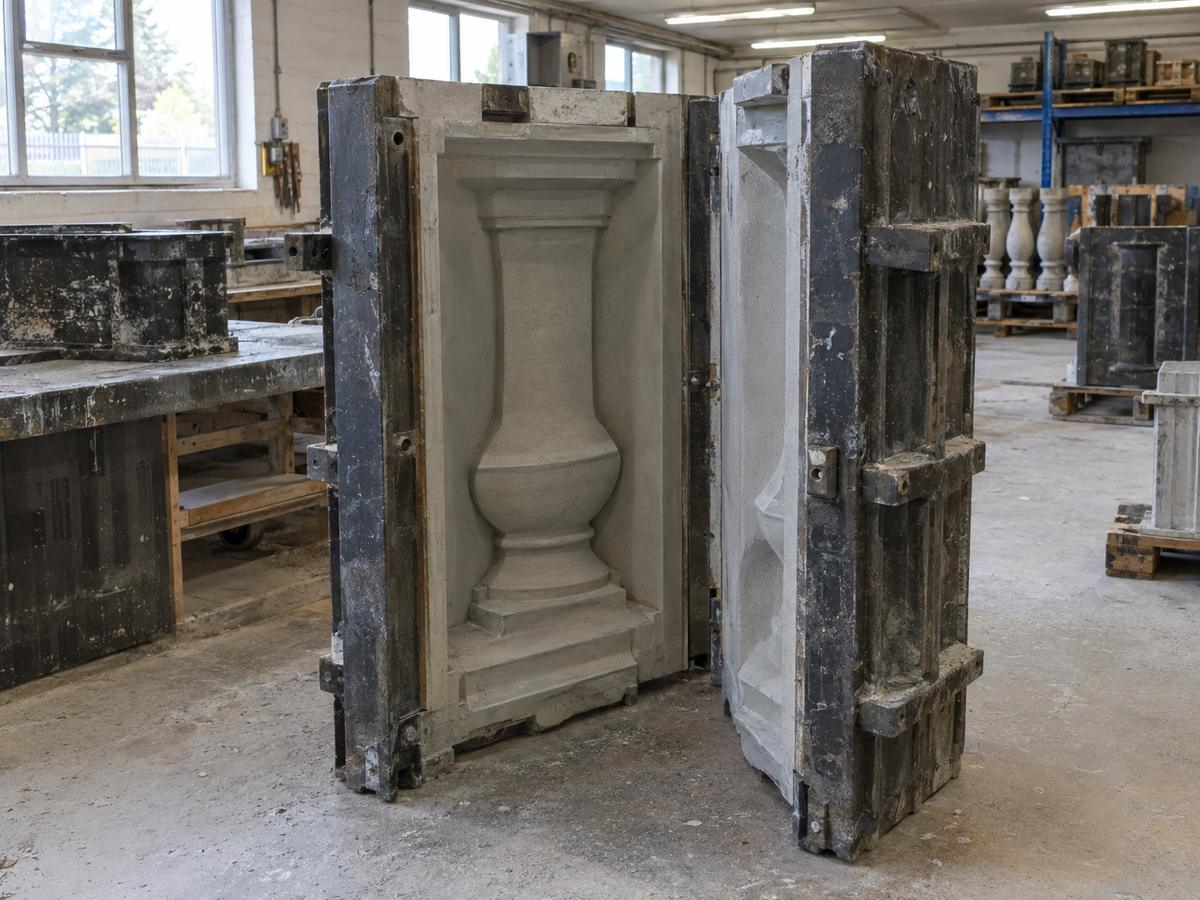
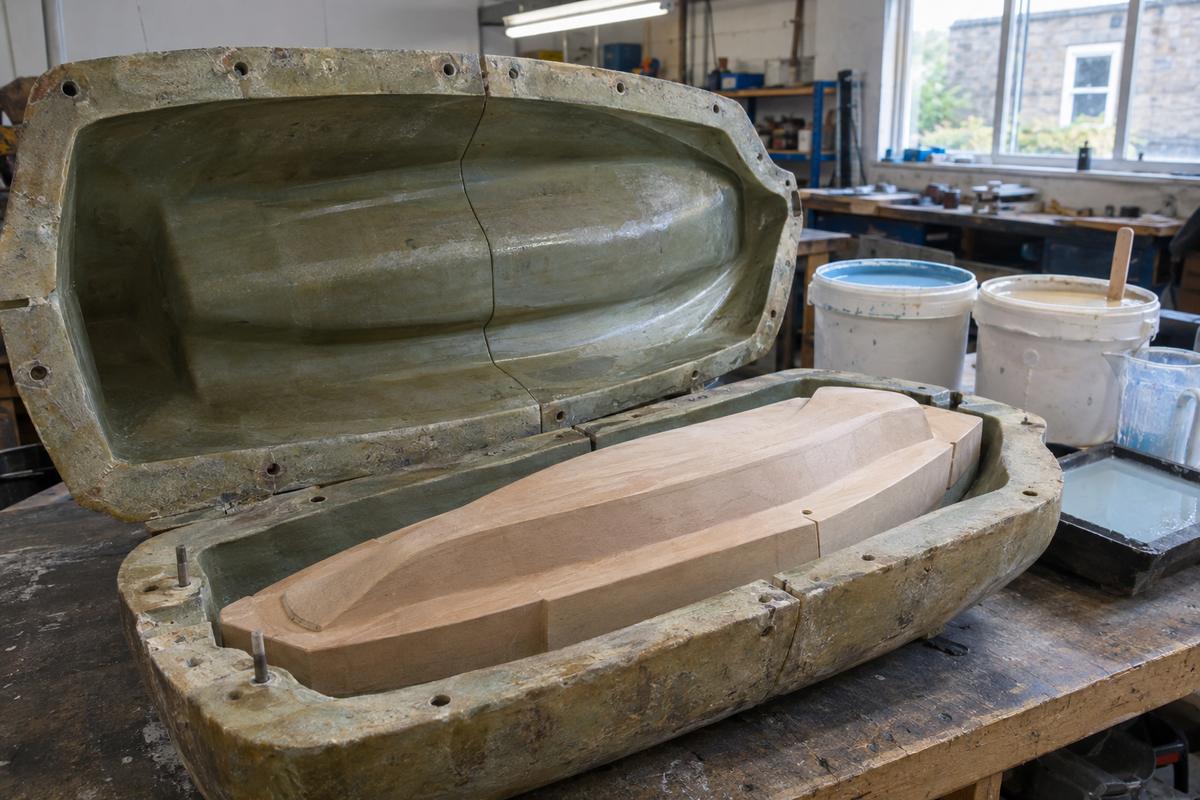
A unit mould starts from a machined, sculpted or scanned pattern. We build the pattern first, get you to sign off on it, then pour the silicone or polyurethane against it. That way the concrete comes out matching a physical reference you've already seen and approved — not a drawing on a screen.
The mould has a mother mould or a backing frame around it. On simple pieces that's a plywood or steel box. On complex geometry it's a rigid GRP or timber shell that holds the elastic mould in the right shape when the concrete goes in.
Draft, split lines, and how the piece lifts off are decided at the pattern stage, not on the bed. If a piece can't be lifted vertically because of an undercut, the mould splits or peels — but that's a design decision, not a discovery.
What we need
A general arrangement, a sketch, or a photograph of the existing piece. Enough to see what shape we're making.
Vibrated, self-compacting, GRC spray, hand-worked. It changes the silicone or polyurethane grade we reach for.
One piece a week, five, twenty. Determines whether one mould is enough or whether you need parallel tools.
Vacuum lifted, hand lifted, rolled out. It affects the split line and where we put the parting.
The honest bit
A unit mould is a bigger up-front cost than a formliner. The trade-off is that it gives you a finished three-dimensional piece rather than a decorated face. For anything you're making in ones or twos, that's not always worth it — a single-use timber and polystyrene mould might do the job.
The economics start to make sense when you're pouring the same shape repeatedly, when the finish matters, and when you're going to want a replacement in a few years. If any two of those are true, a proper unit mould pays for itself well inside its working life.
We'll say if we think you don't need one yet. It costs us a quote to be honest and it saves you a purchase order.
Drill down
Each one has its own page with the detail we'd normally cover on the first call.
Related
Get in touch
One photograph tells us what surface you're chasing, and one line about the mix tells us what silicone or polyurethane will survive it.
Real people, a real workshop
No call centre and no middlemen. When you contact TCI Construction, you speak to the team who design, build and check your mould.


 Thomas LaneManaging Director
 George PrestonDesign & Project Manager
 Kelly BallingerHead of Partnerships
 Jim AndertonProduction Manager
 TheodoreEmployee Welfare