Bidford-on-Avon, Warwickshire. Mon to Fri.01789 224228

For precast yards · Formliner and unit-mould specialists

Silicone and polyurethane tooling for the yard that hoses down at the end of the day.

Formliners sized to your bed and spliced at your panel joint. Unit moulds for balustrades, copings and capstones. Replacements matched to the tool they're replacing. Sensible tooling for yards that live off the pour count, not the marketing.

BedSized
SpliceAt joint
RealPour counts
UKMade

What matters to you

Four things determine whether a formliner is any good in a working yard.

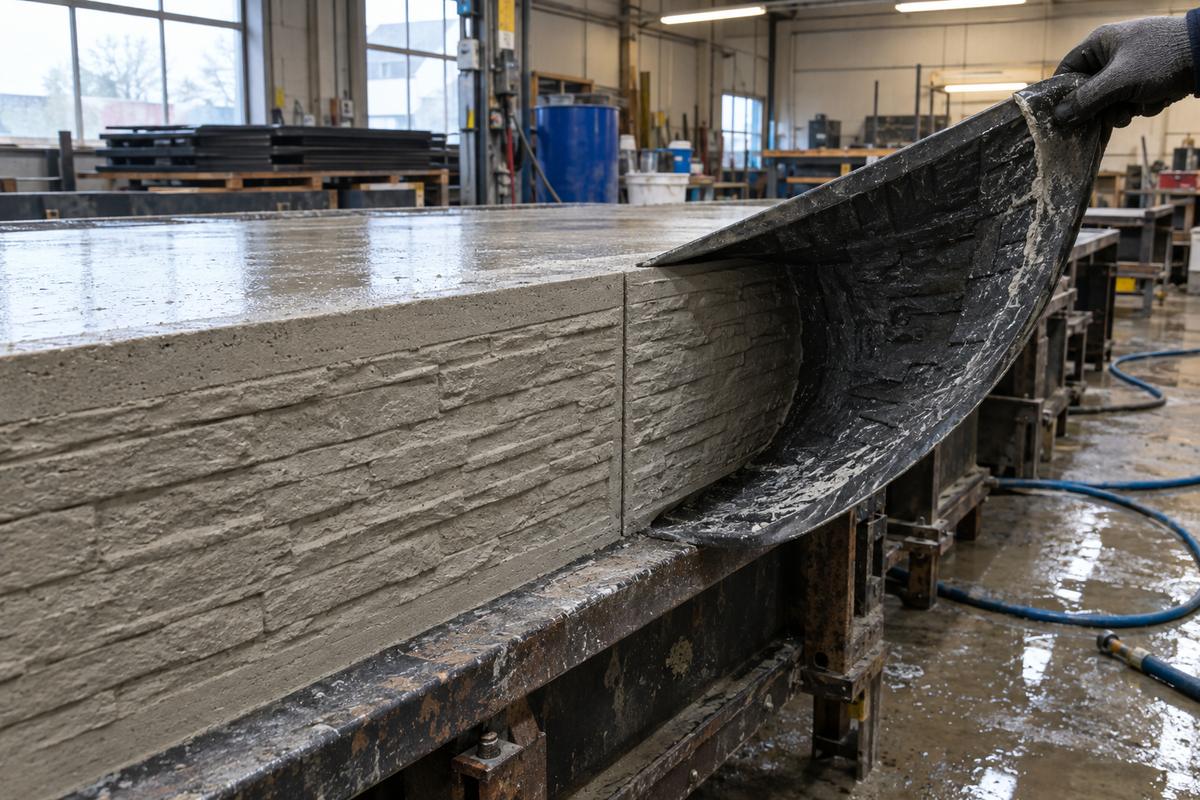
Formliner releasing cleanly from a concrete panel with splice at joint
Clean release and sensible splice placement in the yard

Release comes first. If the tool doesn't come off cleanly every time, the yard hand starts blaming the operator, the release agent, the mix, and eventually the pattern. Usually it's the material grade — over-spec'd for the chemistry, under-spec'd for the pour count, or just plain wrong for the release agent you actually use.

Splice position comes second. A splice that falls in the middle of a panel face reads forever. One that falls on the panel joint is invisible. We put splices on the joint by design, not by luck.

Backing rigidity comes third. A formliner that shifts on the bed under the weight of the pour puts a slight misregistration into every panel. A properly-backed tool doesn't move.

Pour count reality comes fourth. Anyone who quotes you a guaranteed five hundred pours is guessing. We give an honest range based on your mix, your release, and your handling, and we say what shortens it and what extends it.
How your work looks

Three shapes of work precast yards bring us.

01

Formliners for a running programme

The workhorse job. A textured formliner for a specific panel run, spliced at the panel joints, built for the pour count in the programme. Polyurethane in most cases; silicone where the relief has fine detail or undercuts.

02

Unit moulds for a repeat line

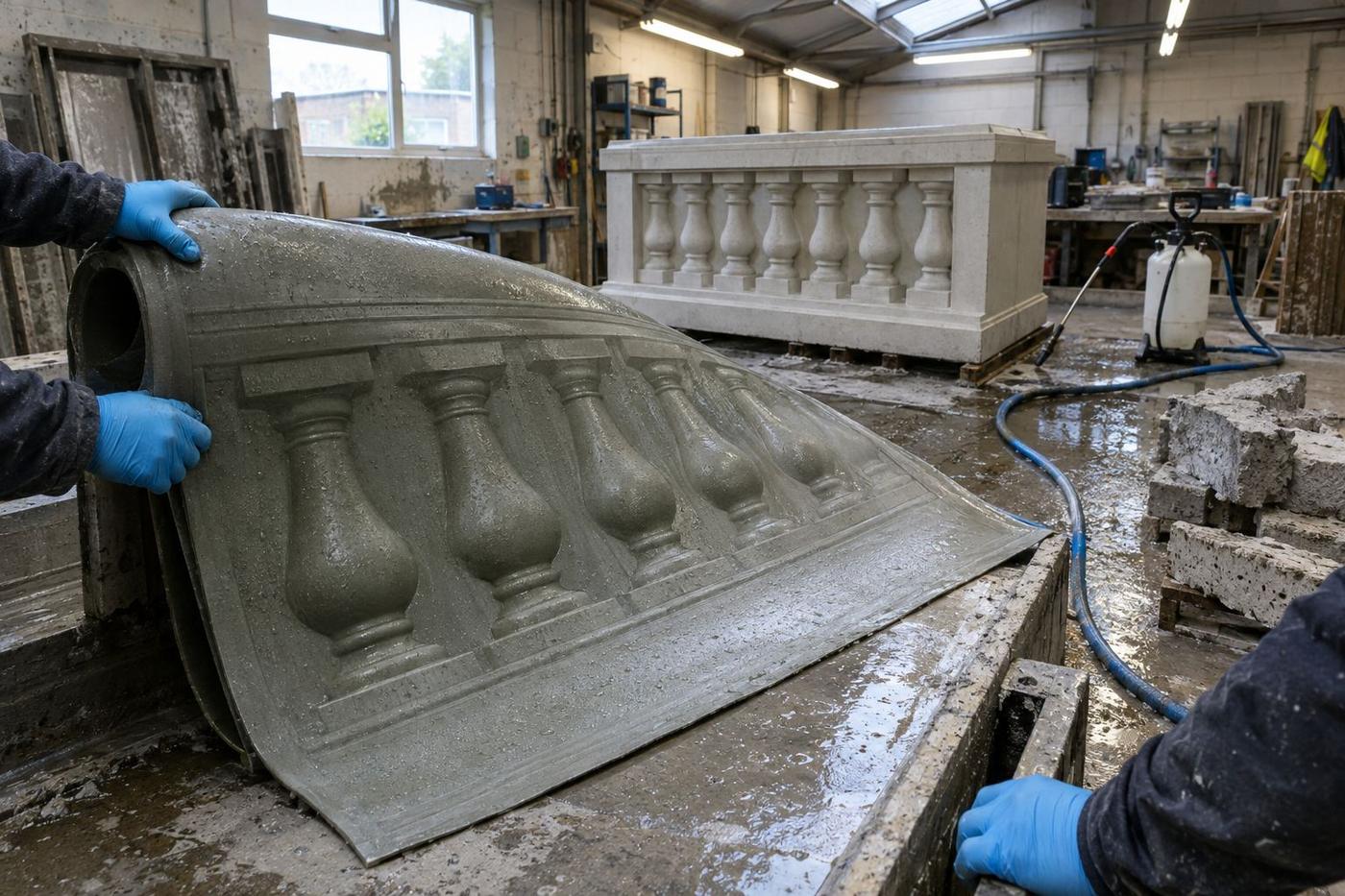
Balustrades, copings, capstones, bench ends. Three-dimensional single-panel tools built to lift off cleanly and stack in the store. Silicone for detail, polyurethane for the workhorse shapes.

03

Replacements for tools reaching end of life

The drawing, the pattern and the material spec stay on our file after the original tool leaves the workshop. When you order a replacement, we build it against the same pattern in the same grade, so the next batch of panels matches the last.

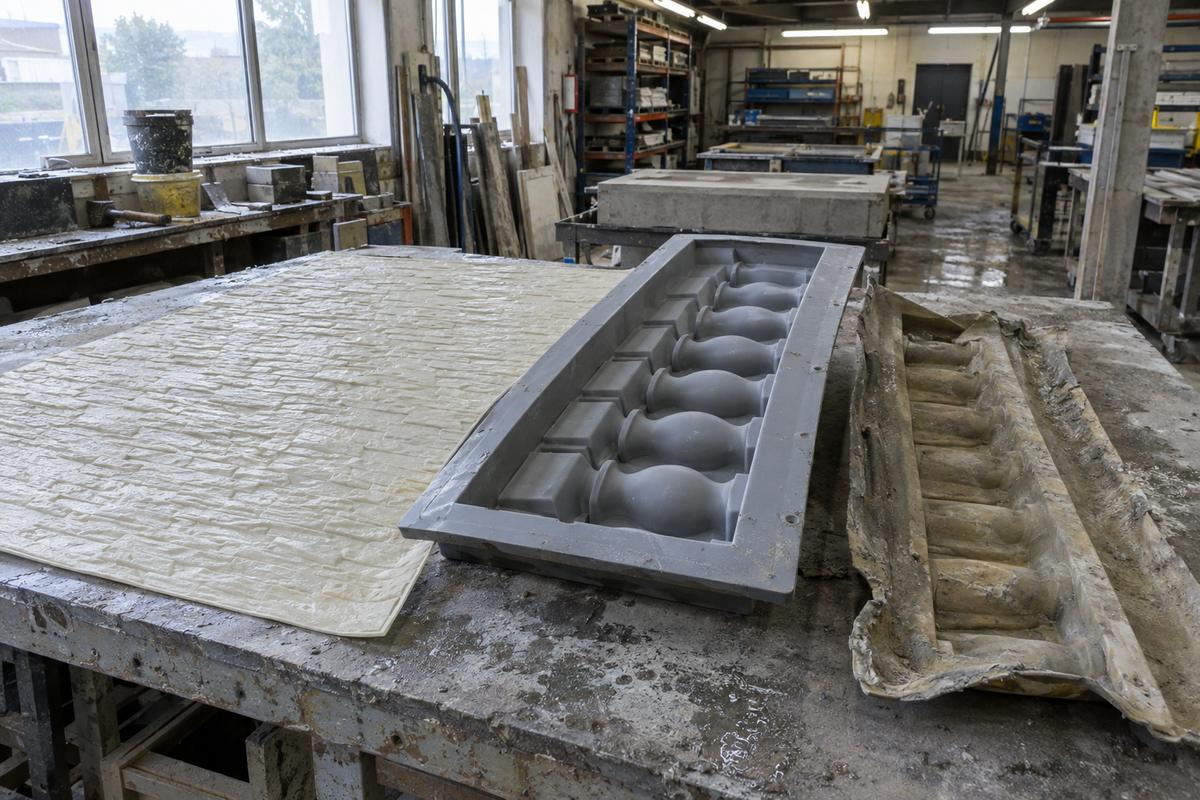
Three types of precast concrete tooling on a factory bench
Different tooling types used in a precast yard

Services that fit

Services this sector reaches for most often.

Silicone & polyurethane formliners

Custom surface tooling for the bed, spliced at your panel joint.

Read more

Precast concrete moulds

Unit moulds for three-dimensional pieces.

Read more

Large-format moulds

Oversized formliners and panel moulds spliced sensibly.

Read more

Replacement formliners

Matched to the tool they're replacing.

Read more

Custom texture and relief

Bespoke reliefs from a photograph, sample or drawing.

Read more

Mould durability and release

Specifying the tool for the pour count you actually need.

Read more

How the first conversation goes

The first call is short.

One photograph of the panel or the reference surface. One line about the mix. Rough pour count. Bed size. That's all the first call needs.

We come back the same working day with a route recommendation (formliner or unit mould), a material shortlist (silicone or polyurethane, which grade), and an honest rough number.

If we think the job needs a different route than what you asked for, we'll say so and explain why. We'd rather lose a quote than sell you tooling that will disappoint you.

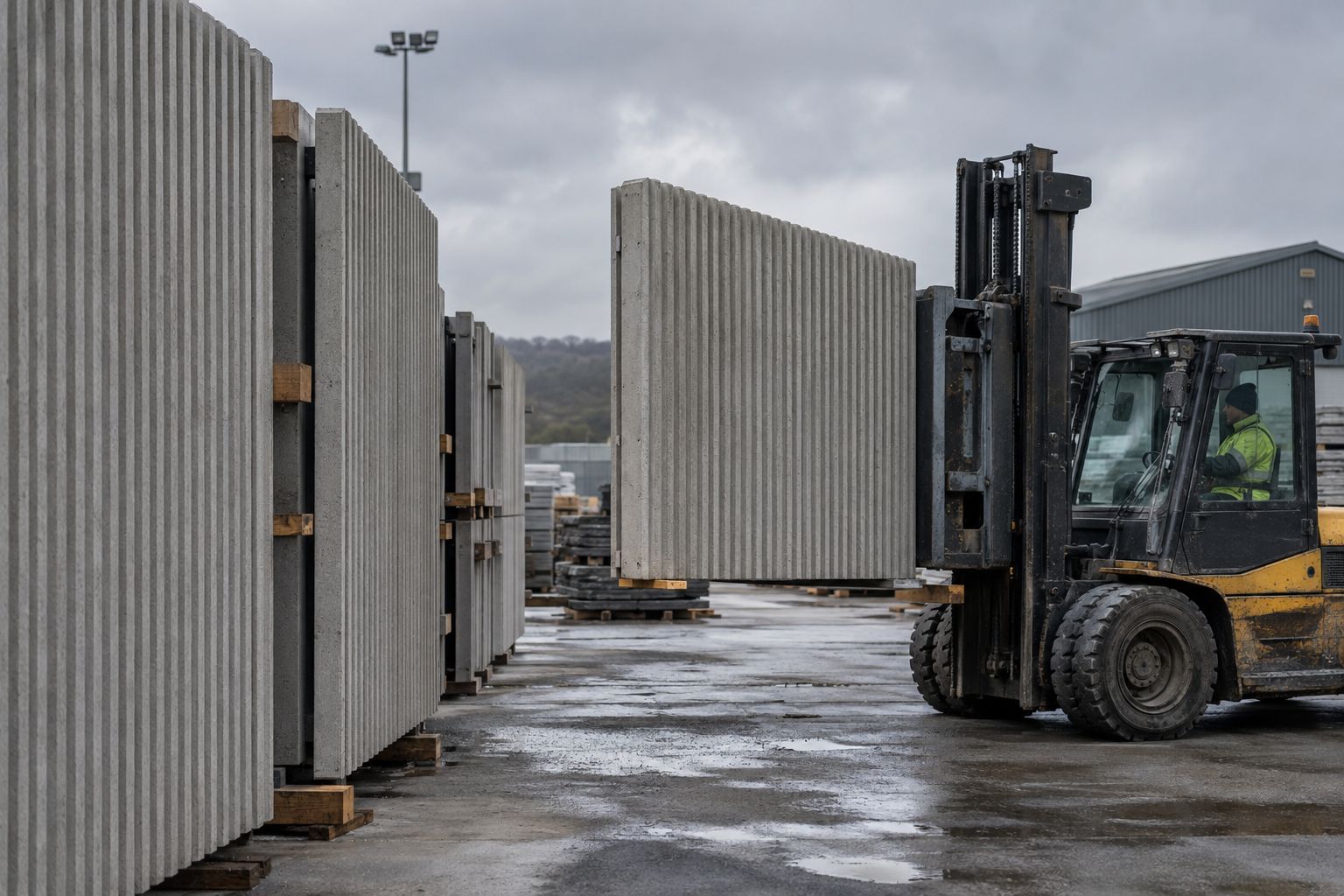
Precast concrete unit being lifted off a silicone unit mould in a working yard.

At a glance

The idea in a picture.

Where the formliner sits

Formwork or mould tableFormliner with the textureRelease agentConcrete takes the texture

Swipe to see the whole diagram

The liner is fixed to the formwork face. When the concrete is struck, the texture stays on the panel and the liner is ready to reuse.

FAQs

Questions we hear from this sector.

How do splice positions work if my panel joint is on a shadow gap?

We put the splice on the shadow gap. That's the ideal splice location — it's already a designed break in the surface, so the splice reads as nothing at all.

Can you match the finish on a formliner we already run?

Yes. Send us a small piece of the existing formliner and we can pattern from it, so the new tool matches the current one across the same programme.

Do you deal directly with our precast bed suppliers?

Yes if that helps. We're comfortable working with your bed supplier on the tool sizing and any fixings that need to sit into the bed.

What happens when a formliner fails mid-programme?

Ring us. If it's early-life failure we'll investigate — usually it's a release regime or mix issue we can help unpick. If it's end-of-life, we can prioritise the replacement.

Do we own the tool once we've paid for it?

Yes. The tool is yours. The drawing, the pattern and the material spec stay on our file so replacements match, but ownership passes to you on payment.

Get in touch

Send us a photograph of the panel or the elevation.

One photograph tells us what surface you're chasing, and one line about the mix tells us what silicone or polyurethane will survive it.

Real people, a real workshop

You deal with the people who make it.

No call centre and no middlemen. When you contact TCI Construction, you speak to the team who design, build and check your mould.

  • A real Warwickshire workshopUnit 15, Waterloo Park, Bidford-on-Avon, Alcester B50 4JG.
  • Real people on the phoneCall the team on 01789 224228, Monday to Friday.
  • The same team on every jobDesign, production and aftercare come from the people you see here.
  • Part of TCI GroupFive specialist brands, one engineering team. Visit TCI Group.
The TCI workshop, with moulds on the bench mid-build.
The TCI design and project office.
  • Thomas LaneManaging Director
  • George PrestonDesign & Project Manager
  • Kelly BallingerHead of Partnerships
  • Jim AndertonProduction Manager
  • TheodoreEmployee Welfare
Meet the team