Carved faces
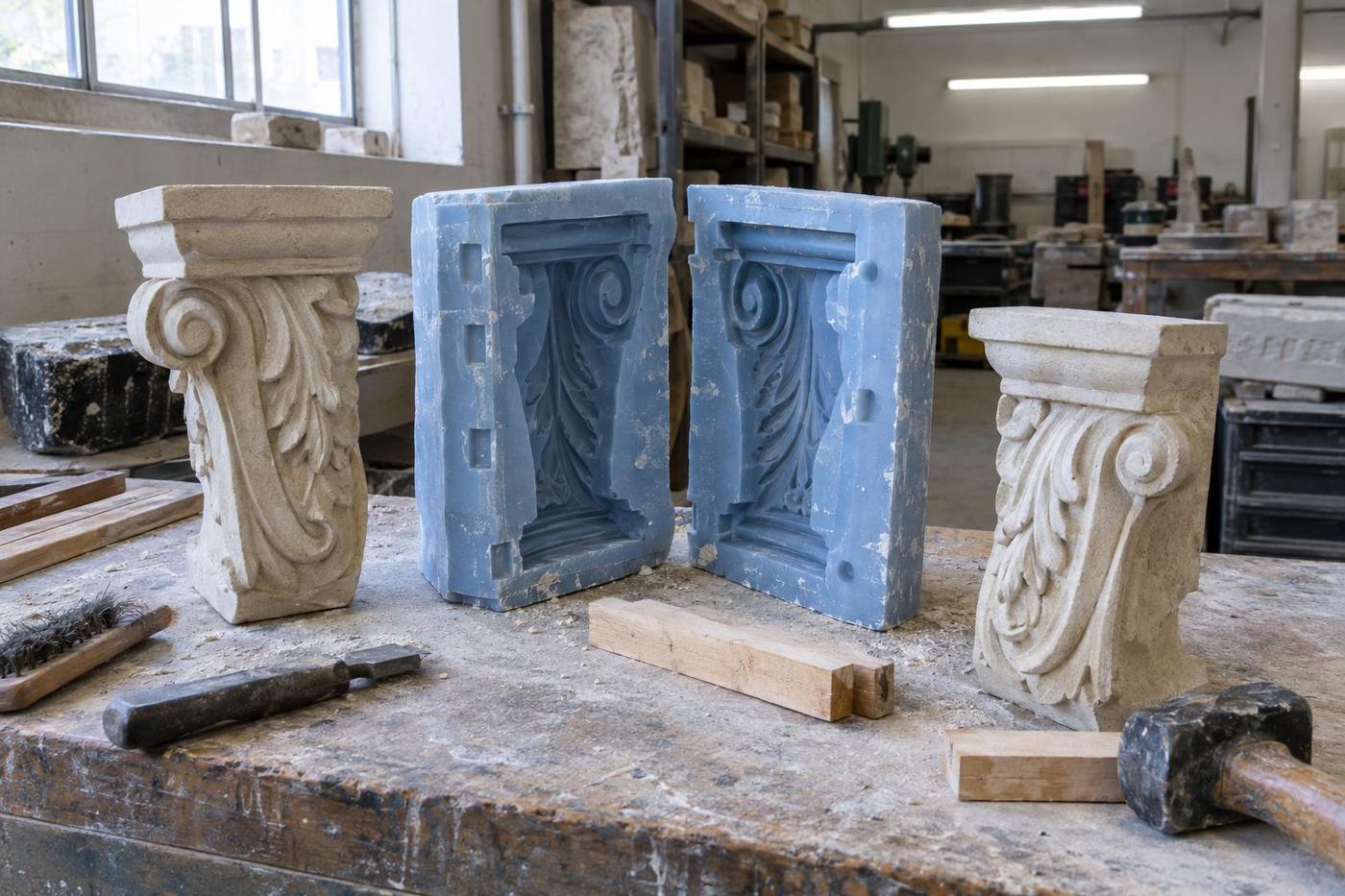
Masks, foliage and scrolls reproduced with tool marks intact.
What we make › Heritage restoration moulds › Keystones and corbels
Heritage restoration moulds · Keystones and corbels
Silicone moulds for carved keystones, corbels, brackets and consoles, so a single surviving feature can be cast again to match the elevation.
Overview
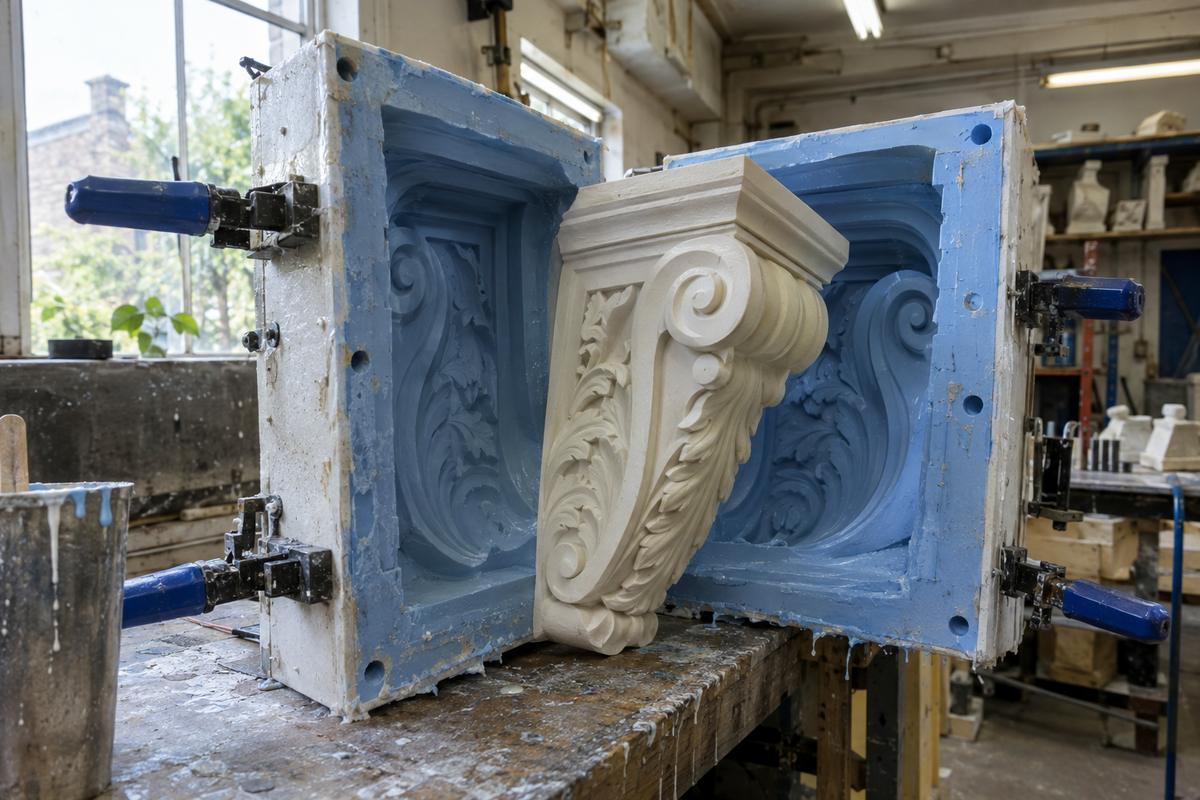
Keystones and corbels are the features people notice when they're missing. They're often carved, weathered and slightly different from one another.
We mould from the best surviving example, or from each one where they differ, and build moulds that release the carving without breaking undercuts.
What sets it apart
Masks, foliage and scrolls reproduced with tool marks intact.
Silicone flexes past carving that a rigid mould couldn't release.
Where each keystone differs, individual moulds per piece.
Mould designed for semi-dry or wet-cast as required.
How we build it
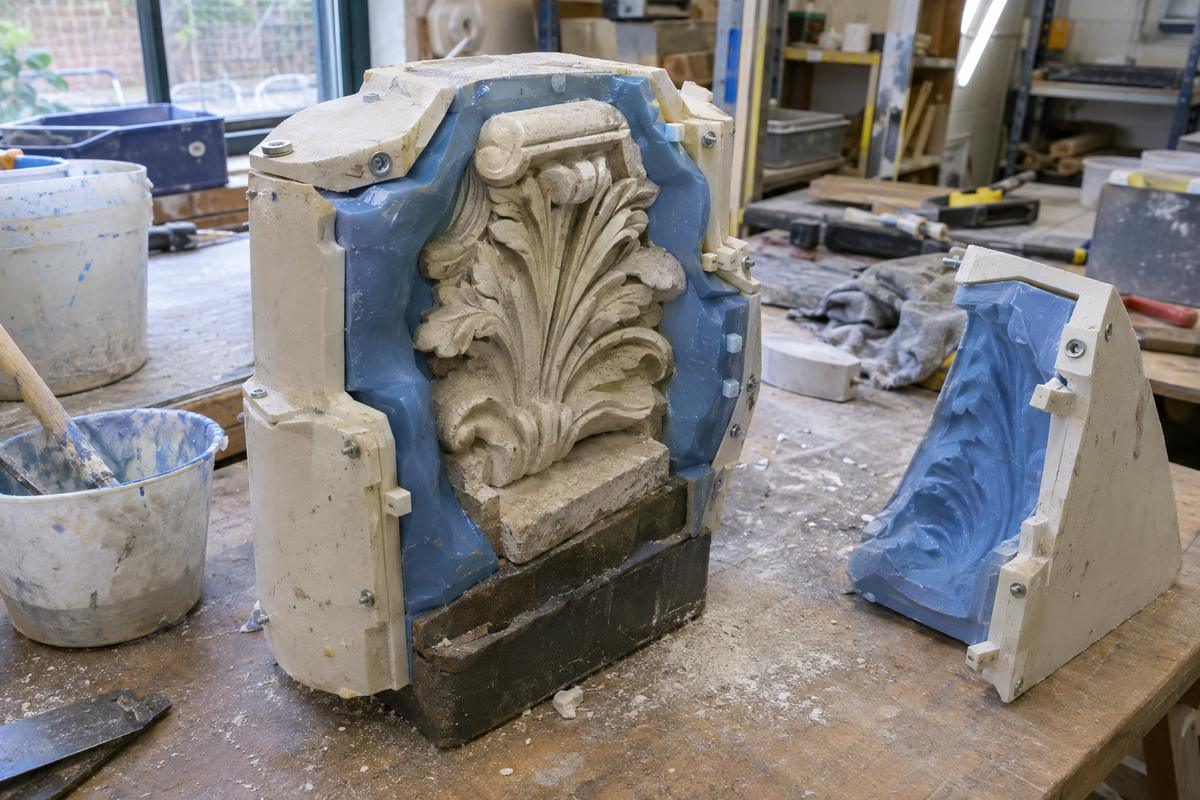
For loose pieces we mould on the bench with a two-part poured silicone and a rigid case. For fixed pieces, in-situ brush-on with a sectional mother mould.
Back faces are designed to suit fixing — dowel holes, flat bedding faces, or a keyed back for mortar.
The honest bit
Heavily eroded carving may need a sculptor's input before moulding. We'll say if the survivor is too far gone to mould directly.
At a glance
How a two-part mould fits together
Swipe to see the whole diagram
FAQs
It's possible with a sculptor and a scan-free route, but fidelity is lower. A physical survivor is always better.
Yes, via scanning and scaling to a new pattern.
In this family
Get in touch
One photograph tells us what surface you're chasing, and one line about the mix tells us what silicone or polyurethane will survive it.
Real people, a real workshop
No call centre and no middlemen. When you contact TCI Construction, you speak to the team who design, build and check your mould.


 Thomas LaneManaging Director
 George PrestonDesign & Project Manager
 Kelly BallingerHead of Partnerships
 Jim AndertonProduction Manager
 TheodoreEmployee Welfare