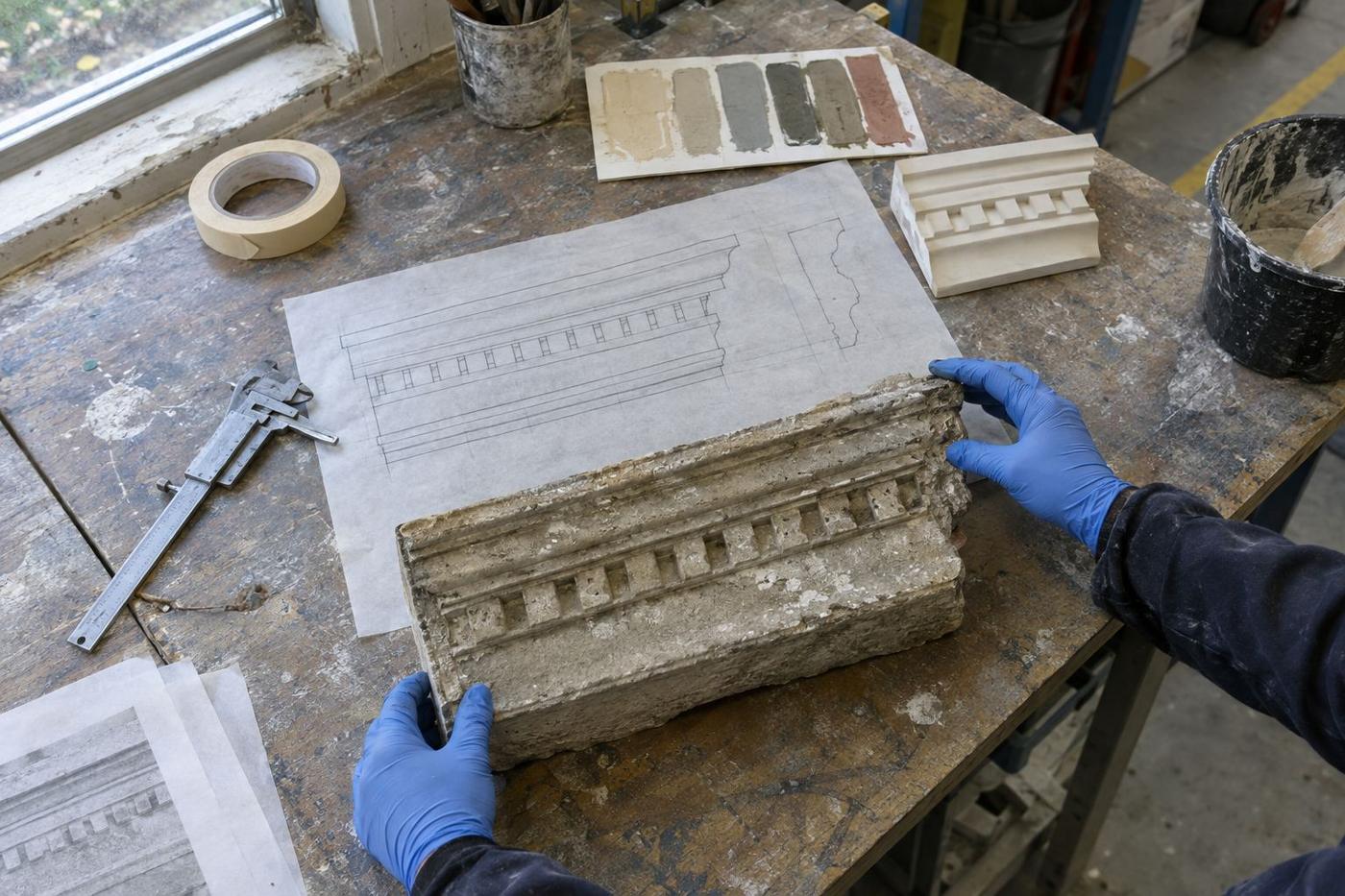
Survey the survivor
Photograph, measure and record condition. Decide whether the survivor can be moulded in situ, removed to the bench, or only recorded by scan.
Knowledge · Heritage guide
Heritage reproduction is mostly planning. Get the methodology agreed early, and the mould-making and casting follow calmly. Leave it late, and every stage becomes a negotiation.
Start here
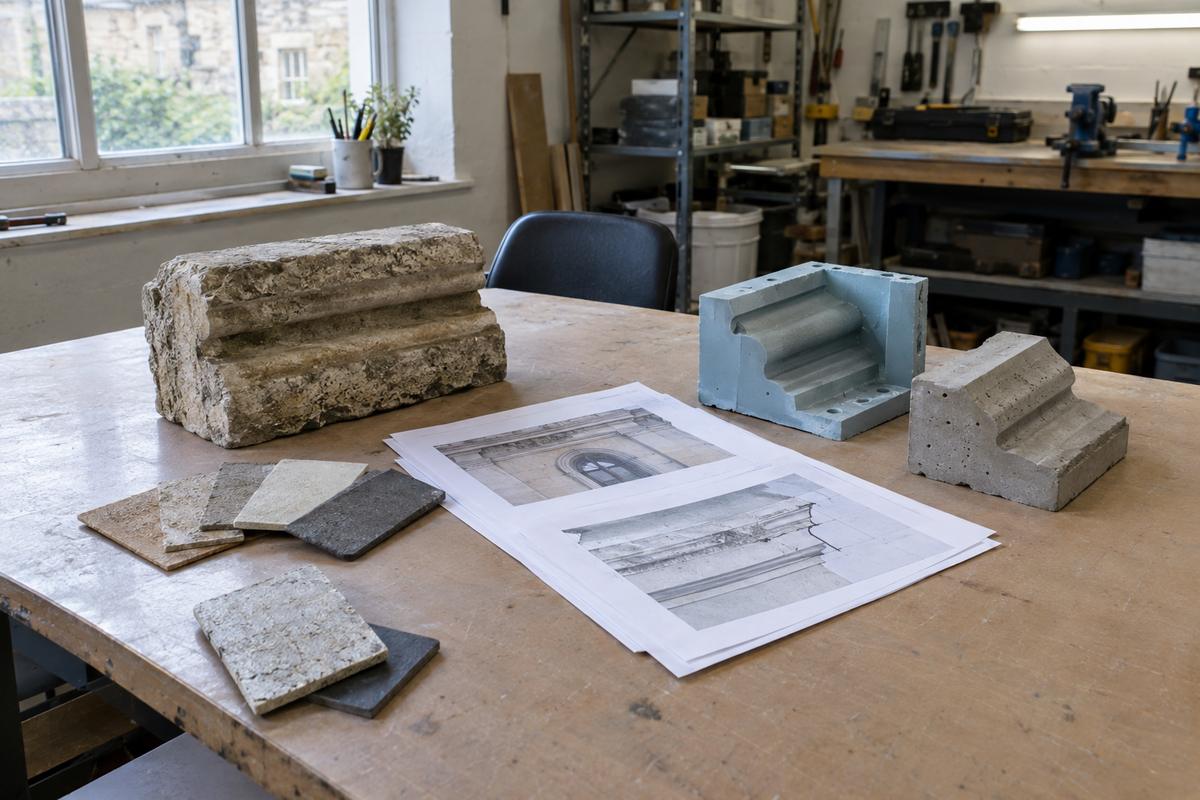
The building owner, the conservation officer, the contractor and the caster. Sometimes an architect or a structural engineer too. Each cares about something different: cost, fidelity, programme, buildability.
The mould-maker's job is to propose a methodology that all four can sign up to — and then do exactly what was agreed.
The sequence
Photograph, measure and record condition. Decide whether the survivor can be moulded in situ, removed to the bench, or only recorded by scan.
Moulding route, any making-good on the mould rather than the original, the casting material and the approval point. One page is enough.
Brush-on silicone in situ with a rigid mother mould, or poured silicone on the bench. The original is left clean, with nothing on it.
Two or three trial blends held against the original in daylight. The conservation officer picks, not the caster.
Cast to the agreed blend, cured in a controlled way, checked against the approved trial.
Labelled, stored and logged against the building so future losses can be cast from the same tool.
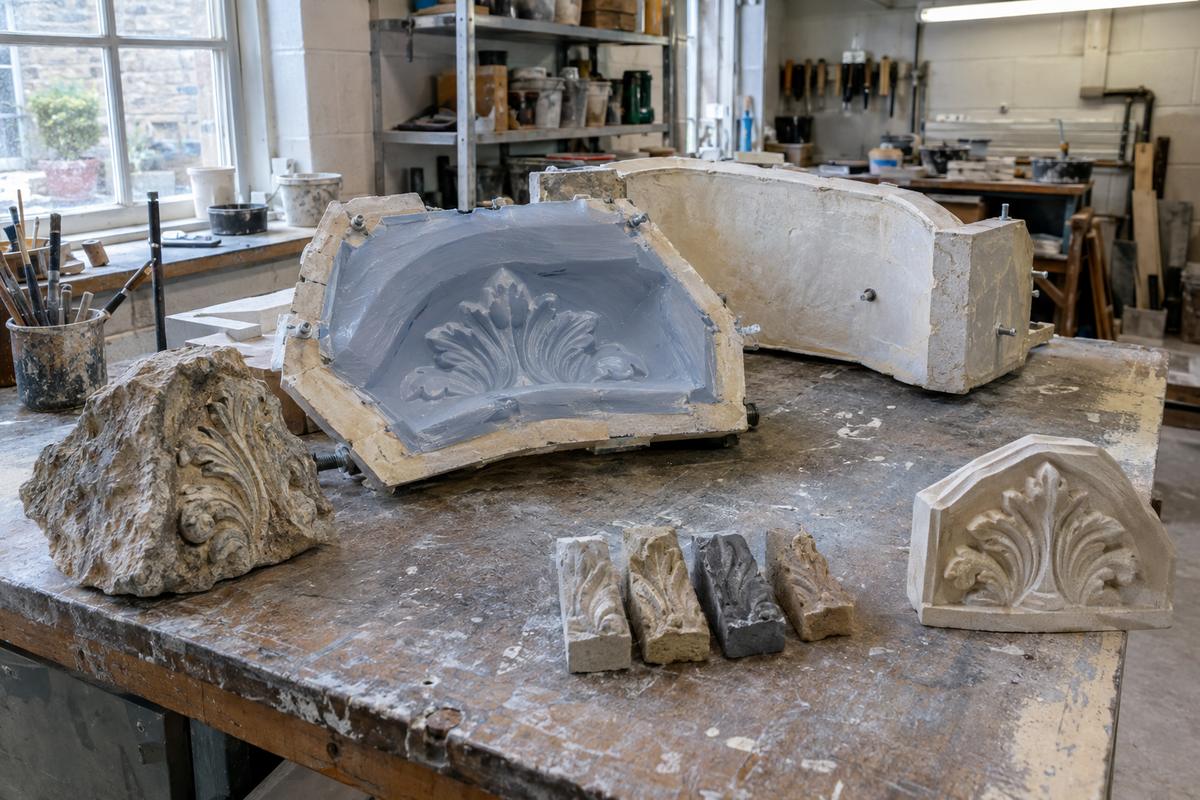
In situ or bench
In situ is right when the original is fixed, fragile or listed in place. It takes longer and is weather-dependent, but the original never moves.
On the bench is right when a loose or salvaged piece is available. We get a better-controlled pour and can mould fully round the piece.
Scan only is right when nothing may touch the surface. We scan, build a pattern, and mould from that. Fidelity is very good but a trained eye can sometimes tell.
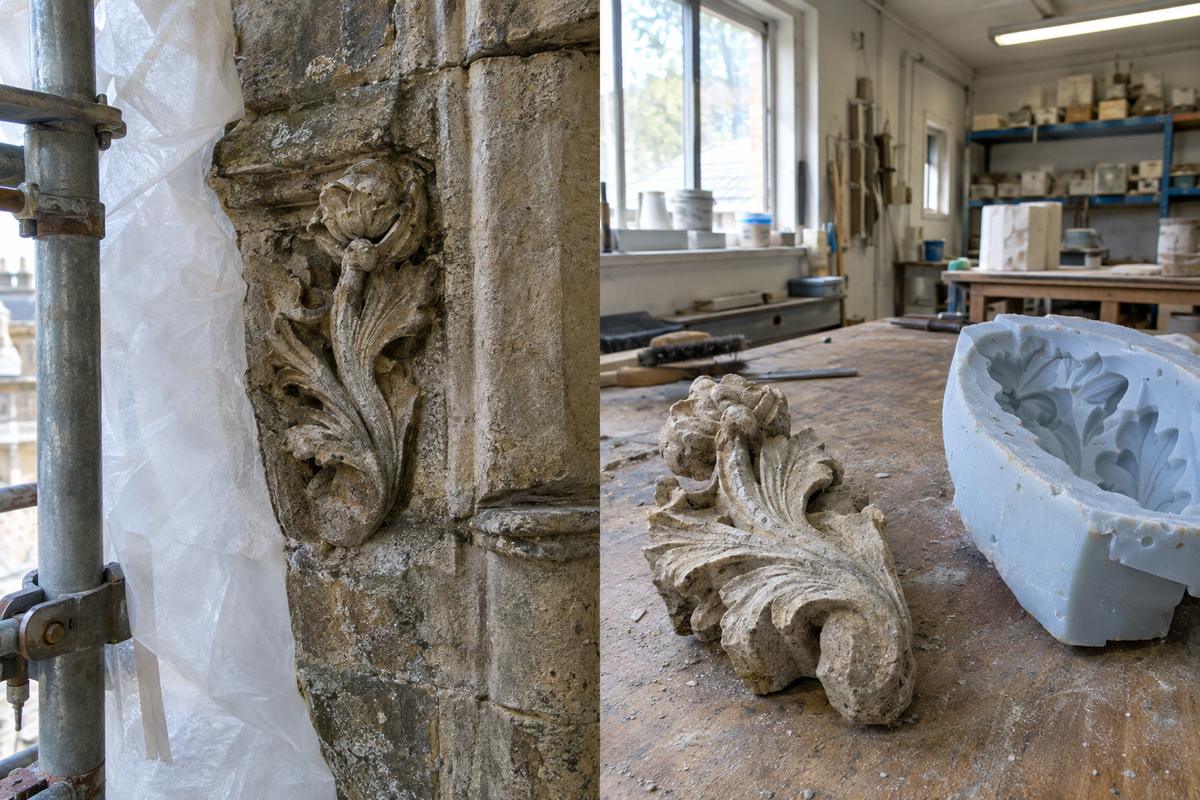
Honest bit
Any competent mould will capture the profile. What makes a reproduction disappear into an elevation is texture, tool marks and colour — and how it weathers over the next decade. That's why we push for trial casts on site, in daylight, rather than approval from photographs.
At a glance
How a two-part mould fits together
Swipe to see the whole diagram
FAQs
It shouldn't. We use a barrier and a silicone chosen for the substrate, and we test on an inconspicuous area first. The methodology will say how the original is protected.
Yes, and conservation teams often prefer it. The decision should be written into the methodology.
As long as it remains usable and you want us to. It's logged against the building.
Get in touch
One photograph tells us what surface you're chasing, and one line about the mix tells us what silicone or polyurethane will survive it.
Real people, a real workshop
No call centre and no middlemen. When you contact TCI Construction, you speak to the team who design, build and check your mould.


 Thomas LaneManaging Director
 George PrestonDesign & Project Manager
 Kelly BallingerHead of Partnerships
 Jim AndertonProduction Manager
 TheodoreEmployee Welfare