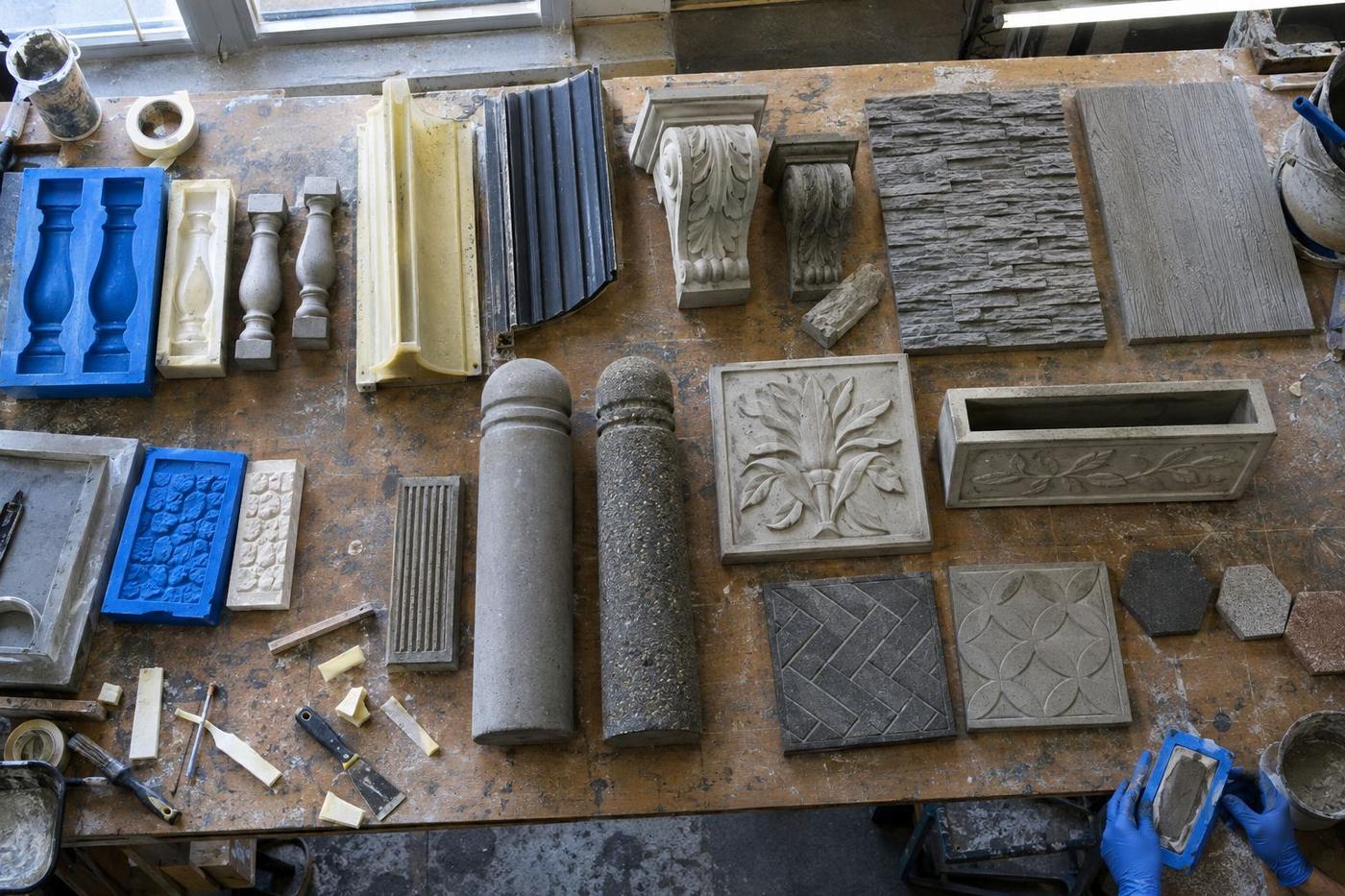
The engineering is consistent. The requirements are not. A precast yard asks how many pulls it gets before the face softens. A conservation architect asks if the replacement will read correctly. A council asks if unit sixty matches unit one.
The work below is real. It is described at sector level rather than by customer name, because a lot of our tooling sits behind other people's brands and elevations and we work under non-disclosure by default.
So you will read "a Midlands precast yard" and "a city council" rather than a project list, and you will not find invented case studies with numbers bolted onto them. Where the group's work is genuinely public, such as roofing and fencing tooling and local-authority projects, we say so plainly. Want a reference in your own sector. Ask, and we will arrange one directly rather than print a logo wall.
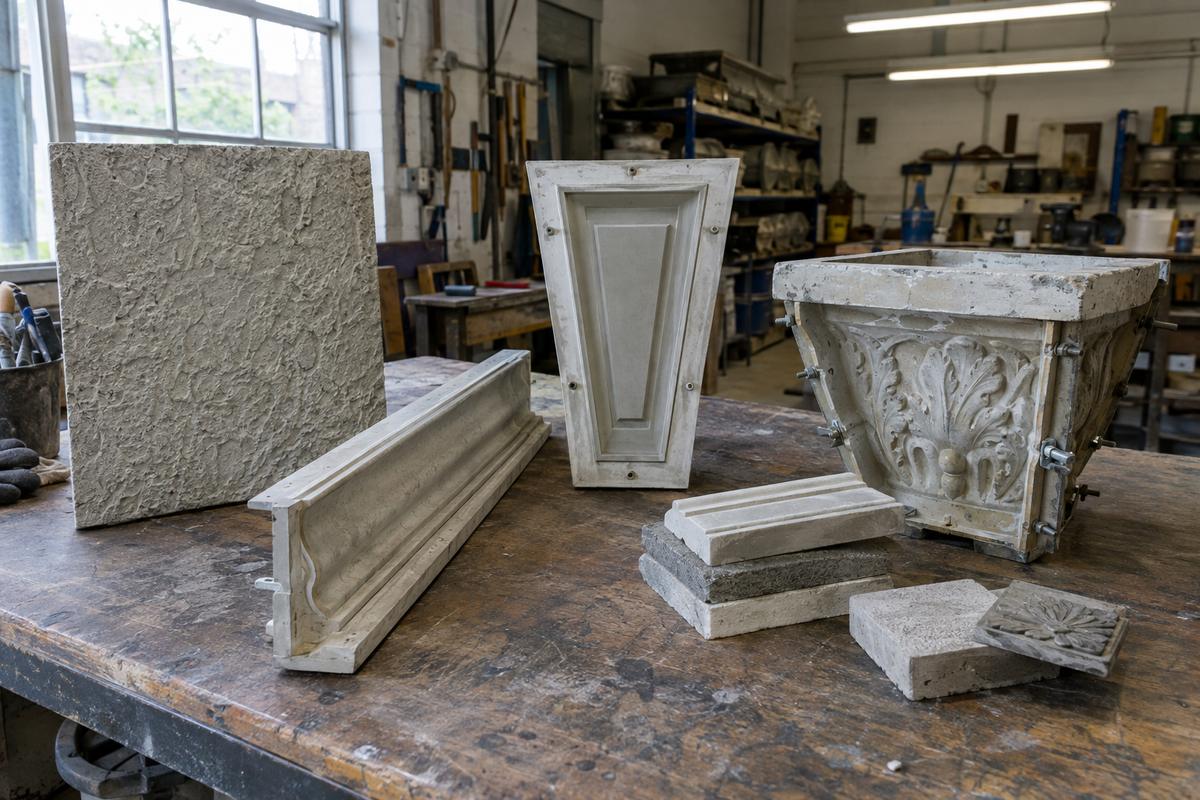
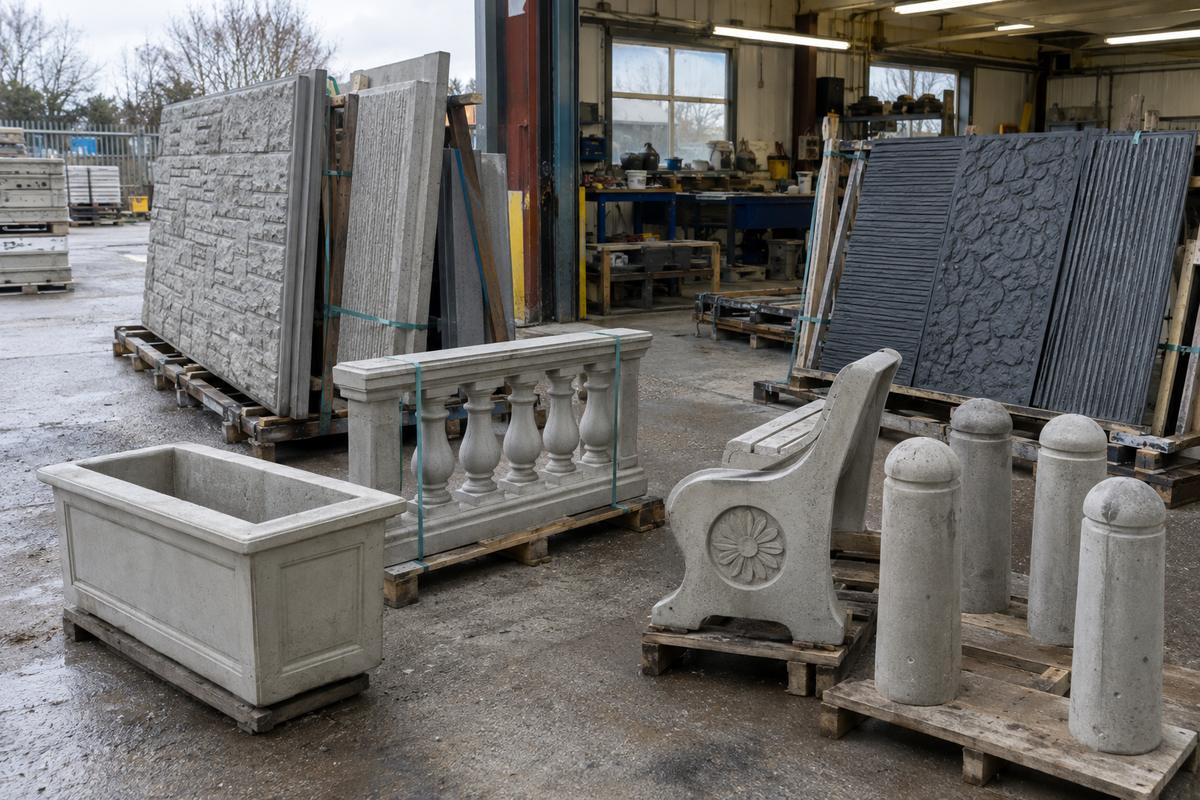
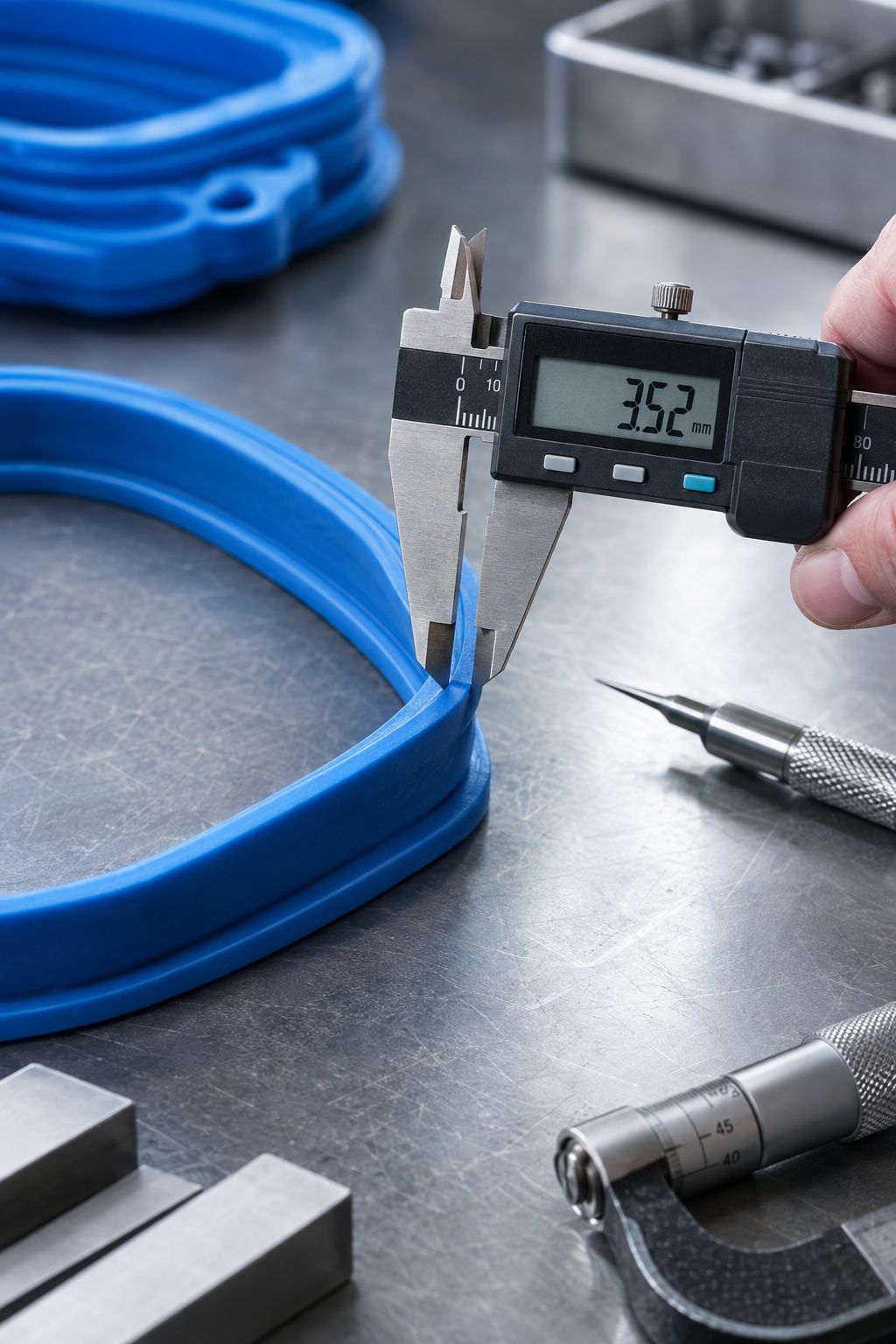
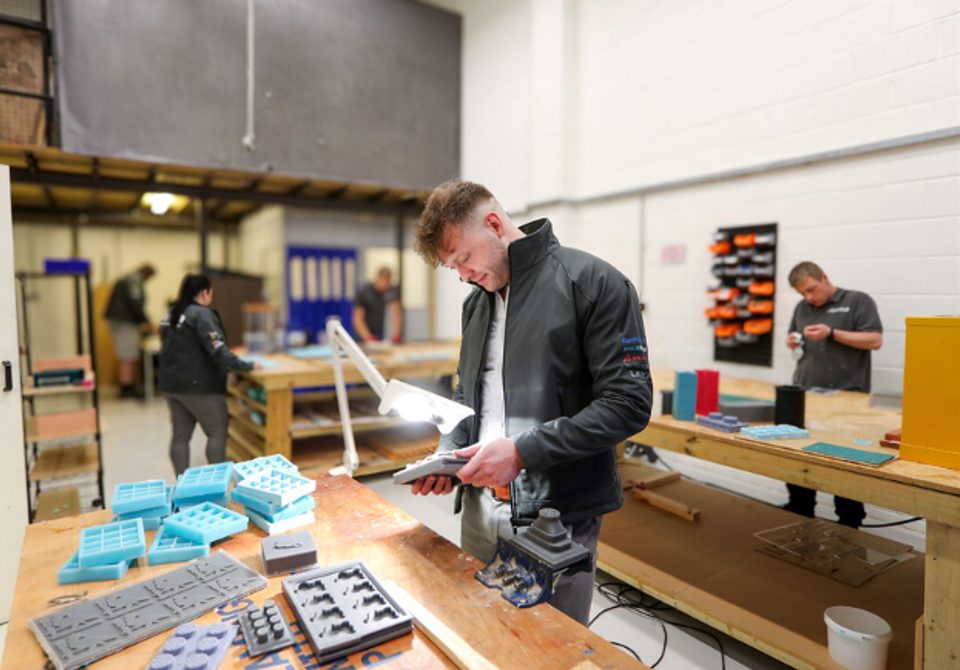
About the pictures. Six pictures on this site are photographs of our own unit at Waterloo Park: workshop.jpg, bench.jpg, parts.jpg, precast.jpg, facility.jpg and theodore.jpg. Every other picture here, including hero.jpg, panels.jpg, formliner.jpg, grc.jpg, restoration.jpg, site.jpg, cad.jpg, tooling.jpg, pour.jpg, press.jpg, print.jpg, inspection.jpg, durometer.jpg and team.jpg, is illustrative: licensed stock or an AI-generated image standing in for a process, a finished elevation or a component we do not hold photography for. No caption claims an illustrative picture was taken here, and nobody in an illustrative picture is a member of our team.
Six kinds of customer, six different conversations.
Precast manufacture
Precast yards
Repeat production of cladding panels, copings, cills, lintels, one-off units. The conversation here is almost entirely about cost per cast, strike time, and how the mould survives being hosed down, stacked, left outside between pours.
Architecture
Facades and cladding
Texture and relief specified by an architect and delivered as a matched liner set, so an elevation reads consistently instead of panel by panel. Artwork arrives as anything from a hand sketch to a 3D file.
GRC
Thin-shell facade units
Hand-lay and spray-up tooling for facade units: cornices, columns, canopies. The rigid backing frame does as much of the work as the silicone face, and curved surfaces need more ribbing than expected.
Conservation
Heritage and restoration
Moulding weathered originals so replacements match, taken in situ wherever the carving can stay on the building. Slower, more careful work, usually with a conservation officer's requirements sitting over the top of ours.
Civic and landscaping
Street furniture and kerbs
Rubber moulds for concrete pavement and kerb units, bollards, planters, benches plus drainage furniture, including tooling delivered for local-authority projects where units sit next to each other and any drift is visible from the pavement.
Building products
Roofing, fencing, components
Roofing tile tooling, fencing moulds and moulded rubber components for building-product manufacturers, where abrasion resistance and cycle time matter far more than fine surface detail.
Which route casts which finish
Match the finish you have drawn to the way it gets moulded.
Specifications describe a finish. Quotations price a moulding route. This is the translation between the two, and it is worth checking before a texture is written into an NBS clause.
Scroll sideways to see the whole diagram.
One row has only a single realistic answer: carved relief on a building has to be moulded by hand where it stands. Everywhere two routes are marked, the choice is settled by how fine the face is against how many pours you need from one liner. Pressed rubber for high-volume kerb and paving moulds is the one route where the work may be placed with a partner factory, and we say so at quotation.
Four jobs with the arithmetic shown
The same liner rate, four completely different answers.
Anonymised by sector. Every figure below is the same division worked at an indicative rate of £350 per square metre of liner, taken from published figures from PERI UK and RECKLI. Put your own rate into the calculator on the solutions page and the answers move with it.
Cost per square metre of finished face, at an indicative £350/m² liner rate
The job
Liner area
Pours
Liner spend
Face cast
Per m² per pour
Single feature elevation, cast once
12 m²
1
£4,200
12 m²
£350.00
Repeated bay across a frame
8 m²
40
£2,800
320 m²
£8.75
Precast works, long production run
6 m²
100
£2,100
600 m²
£3.50
Restoration unit matched from a scan
0.6 m²
1
£210
0.6 m²
£350.00
Liner spend is area multiplied by the rate. The last column is the rate divided by the pours, which is why it is the same for both single-pour jobs whatever they cost. Restoration is the row to treat carefully: the mould material is the small part of that job and the survey, the digital rebuild and the pattern work dominate it, so the £210 is the least useful number on the table.
01
One feature elevation, and no saving at all
A 12 square metre liner casts a single feature panel on a commercial frontage, so the whole £4,200 lands on 12 square metres of face at £350 per square metre. If ten bays later take the same texture, the same liner drops to about £35 per square metre, which is the argument for designing the repeat in early.
02
A repeated bay, 40 pours across a frame
An 8 square metre liner runs the same bay 40 times as the frame goes up. The liner is £2,800 and casts 320 square metres of face, so it is £70 a pour and £8.75 per square metre. At that level the strike sequence matters more than the tooling rate does.
03
Precast works, one liner and 100 pours
A 6 square metre liner in a covered bed, cleaned properly and stored flat, casts 100 units. £2,100 across 600 square metres of face is £3.50 per square metre, small enough that the finish takes over the decision. The sensible move here is a better liner rather than a cheaper one.
04
Restoration, matching an existing profile
A weathered unit is scanned, the lost detail is rebuilt digitally, a pattern is made and a small mould taken from it for one or two pulls. The rubber is a rounding error against the survey and pattern work, so we do not give an indicative figure for this row.
Three jobs, described the way they actually happen.
Anonymised, and without figures we did not measure.
Precast yard
A liner going tacky, blamed on the silicone
A Midlands precast yard was replacing formliners far sooner than expected and had concluded the material was wrong. It was the release agent. A petroleum-based product was slowly swelling the face, which then picked up and tore. Changing the agent and reviewing the wash-down routine dealt with it. The tooling specification barely changed, which is the point: the cheapest fix is often not a new mould at all. Compatibility is covered on silicone and polyurethane mould materials for concrete.
Conservation
A weathered corbel replaced without coming off the building
A carved unit on a listed elevation had eroded on its exposed face and could not be removed. We patch-tested for inhibition, built a hand-made mould on it in situ, then rebuilt the lost detail digitally from a scan. The original never left the building. The method is set out on how each moulding route works on concrete.
Civic and industrial
Roofing, fencing plus city-council tooling
Larger-format moulds supplied to roofing and fencing manufacturers and for a city-council project. The technical problem is rarely the first mould. It is making the tenth mould identical to the first, which is why we retain patterns instead of remaking them and why the backing structure is recorded as carefully as the rubber.
A precast manager, a conservation architect and a fencing manufacturer describe their problems in completely different language. Underneath, it is one question. Will the last unit match the first, and how much labour sits between striking the mould and a unit somebody will accept.
So quotation starts with your process rather than your drawing. Mix design, compaction, curing method, release regime, cleaning, and who strikes the panel: those change the specification far more than the geometry does.
The engineering team is shared, so an enquiry that belongs elsewhere moves across instead of being turned away.
Decorative and small-format casting
Candles, soap, resin homeware, jesmonite, display pieces go to TCI Mouldings, our custom silicone mould shop, the founding division, which shares this workshop and this engineering team.
Where a moulded construction component outgrows mould-by-mould supply, TCI Products takes proven tooling into higher-volume compression and injection moulding. Group-level enquiries start at TCI Group.
One group, four specialisms
TCI Construction is part of TCI Group.
A project that starts as a single restoration mould and turns into a facade programme does not need a new supplier.