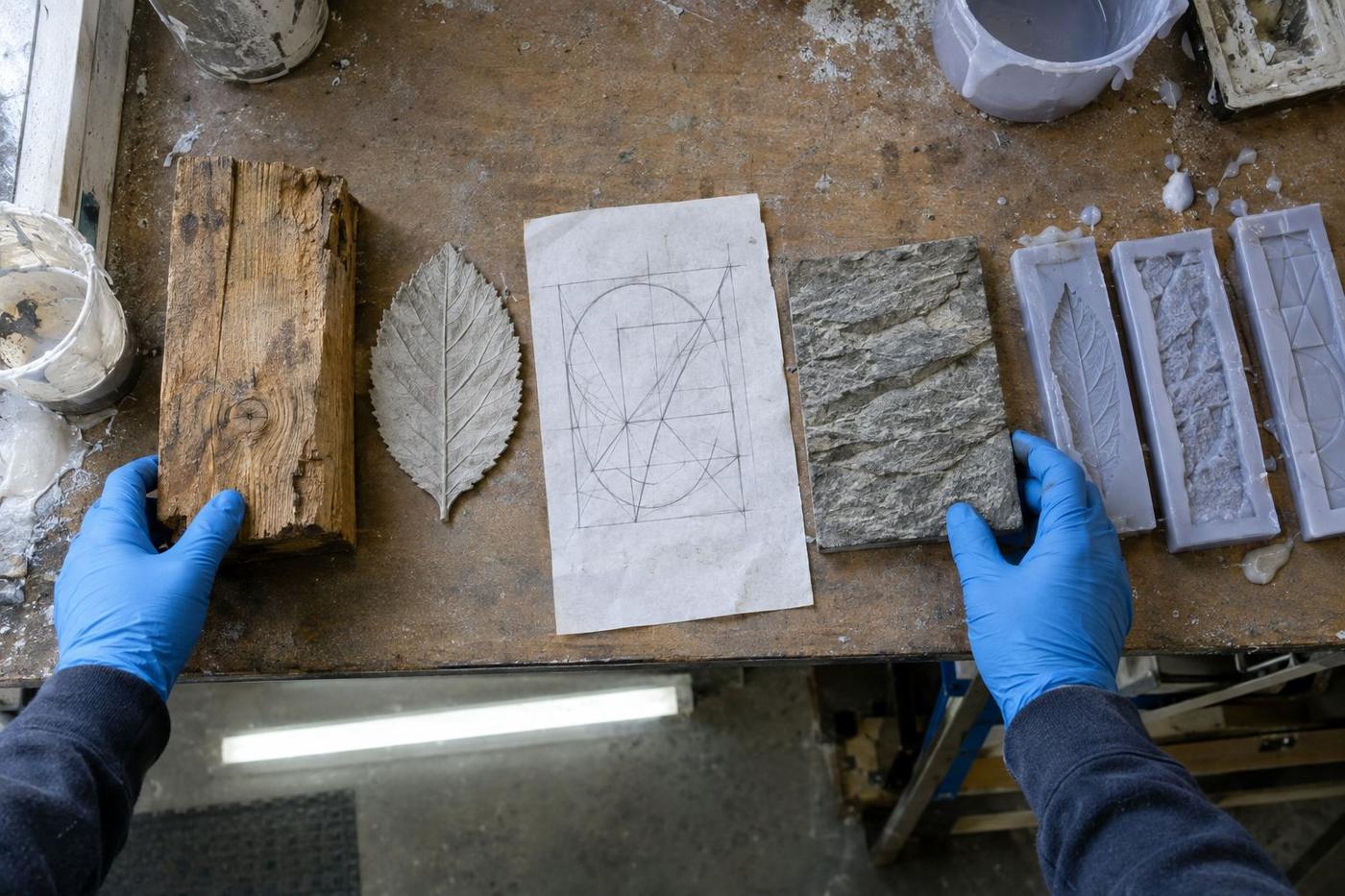
A photograph of a real surface
Timber board from a specific tree, weathered stone, brick from a neighbouring elevation. Silicone captures the surface directly from the reference.
Bespoke · Textures & relief
Rope-effect, leaf relief, timber grain from a specific board, ashlar coursing matched to a neighbouring stone elevation, geometric relief drawn by the architect. Anything you can send us as a photograph, a sample, or a sketch, we can turn into a mould.
When it fits
Timber board from a specific tree, weathered stone, brick from a neighbouring elevation. Silicone captures the surface directly from the reference.
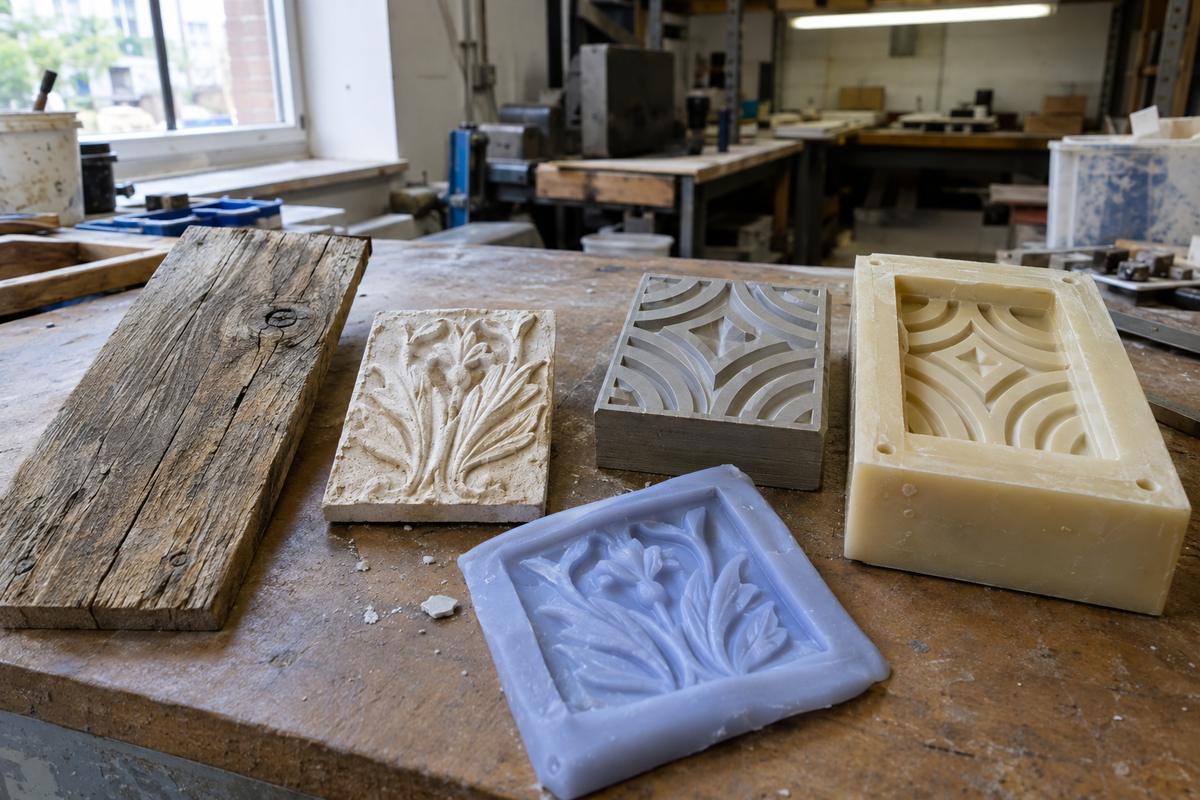
A hand-carved tile, a plaster relief, a machined test piece. We mould from the sample and reproduce it in silicone or polyurethane at scale.
Architect's relief drawing, a hand-sketched pattern, a digital concept. We pattern from the drawing and pour the mould against the pattern.
Sometimes the conversation starts with 'something like a rope-effect but softer'. We can sculpt a pattern to specification, submit it for approval, then mould from it.
The choice
Every bespoke texture goes through a pattern stage. Whether the pattern is machined, sculpted or moulded directly from a physical sample, you see and sign off a physical piece before the mould is poured against it. That way the finished concrete matches something you've held.
For textures based on natural surfaces (timber, stone, brick), we can pattern directly from the reference material. For architect-drawn reliefs, we pattern from the drawing and issue you a photograph or a small cast sample of the pattern before mould stage.
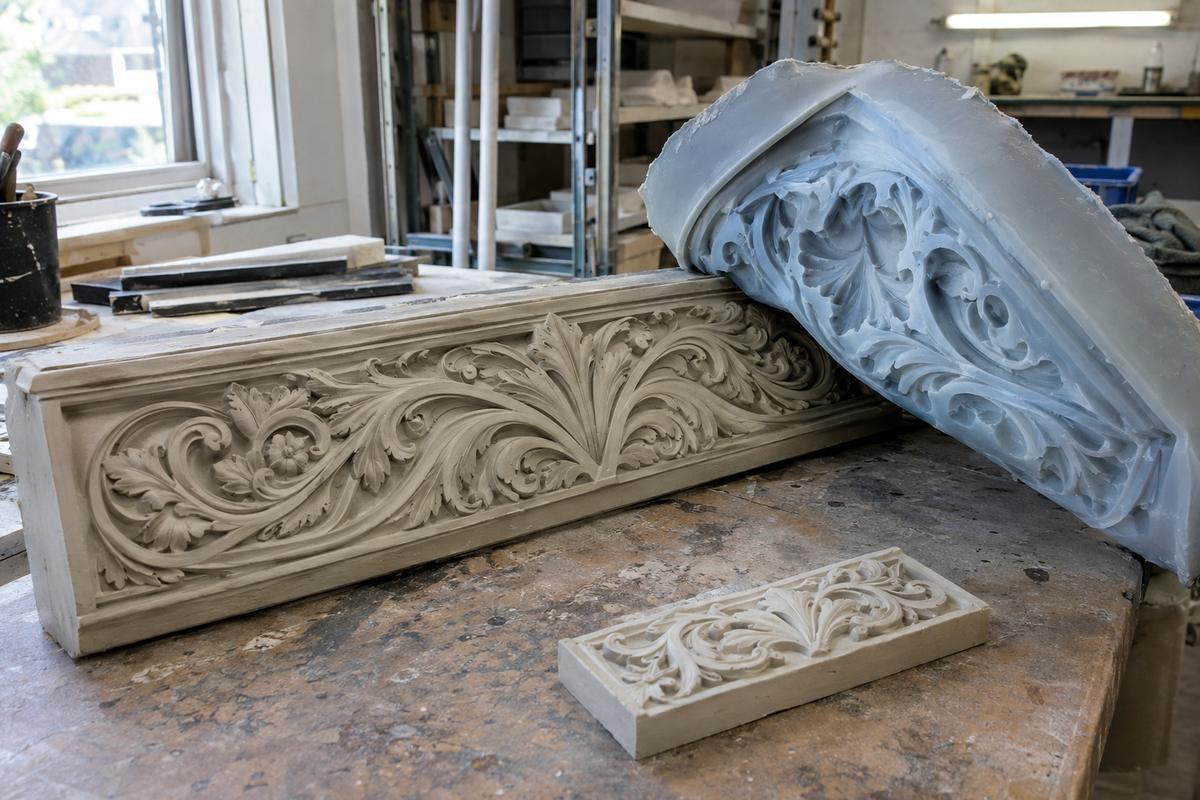
For very fine relief — leaves, script, decorative work — silicone is the material. Polyurethane won't hold the level of detail these need over any real pour count. For simpler bespoke reliefs (grooved, ribbed, geometric), polyurethane is often the workhorse and gives longer life.
What we need
Photograph, sample, drawing. Any of them is enough to start.
The relief looks different at a 100mm formliner scale versus a full-panel scale. We agree the scale before pattern.
Does it repeat, tile, splice? Determines the mould size and splice strategy.
Fine relief needs a fluid enough mix to flow into the detail. We can spec around what you're pouring.
The honest bit
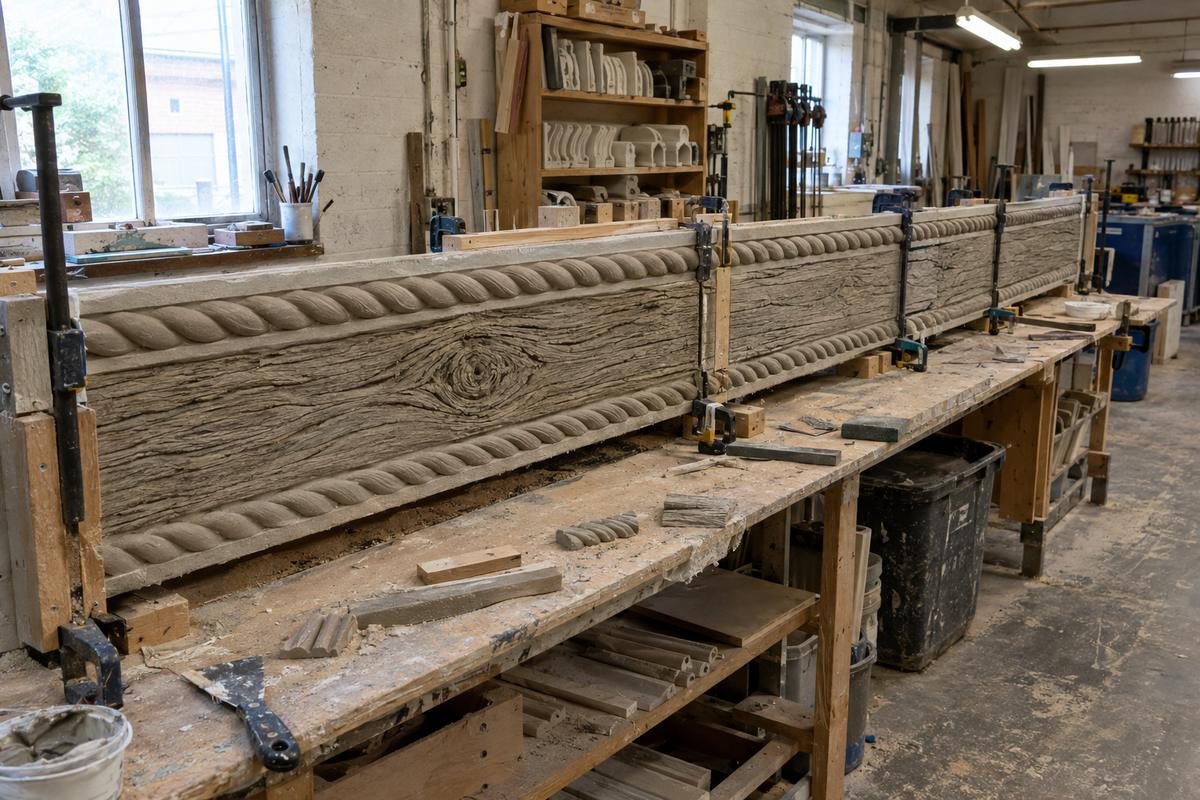
A rope-effect that looks pleasing on a small sample can be miserably difficult at panel scale, because the twist has to continue continuously across the splice. Similarly, a photograph of a piece of weathered oak has a hundred small variations that make it look real — reproducing that at scale across a whole façade means capturing enough of the variation that the panel doesn't look printed.
For fine relief with undercuts (leaves, script, ornament), silicone is essential and pour count will be lower than for straightforward relief. That's the trade-off for the level of detail — a leaf-relief mould won't run five hundred pours, but it will produce faithful reproductions for the pours it does run.
Textures scale in ways that are counterintuitive. A relief that reads beautifully at 100mm sample size can look coarse and heavy at panel scale, or vice versa. We'll issue a sample panel before committing to the full mould, so the scale gets confirmed in the finished concrete.
Drill down
Each one has its own page with the detail we'd normally cover on the first call.
Related
At a glance
From sample to finished cast
Swipe to see the whole diagram
Get in touch
One photograph tells us what surface you're chasing, and one line about the mix tells us what silicone or polyurethane will survive it.
Real people, a real workshop
No call centre and no middlemen. When you contact TCI Construction, you speak to the team who design, build and check your mould.


 Thomas LaneManaging Director
 George PrestonDesign & Project Manager
 Kelly BallingerHead of Partnerships
 Jim AndertonProduction Manager
 TheodoreEmployee Welfare