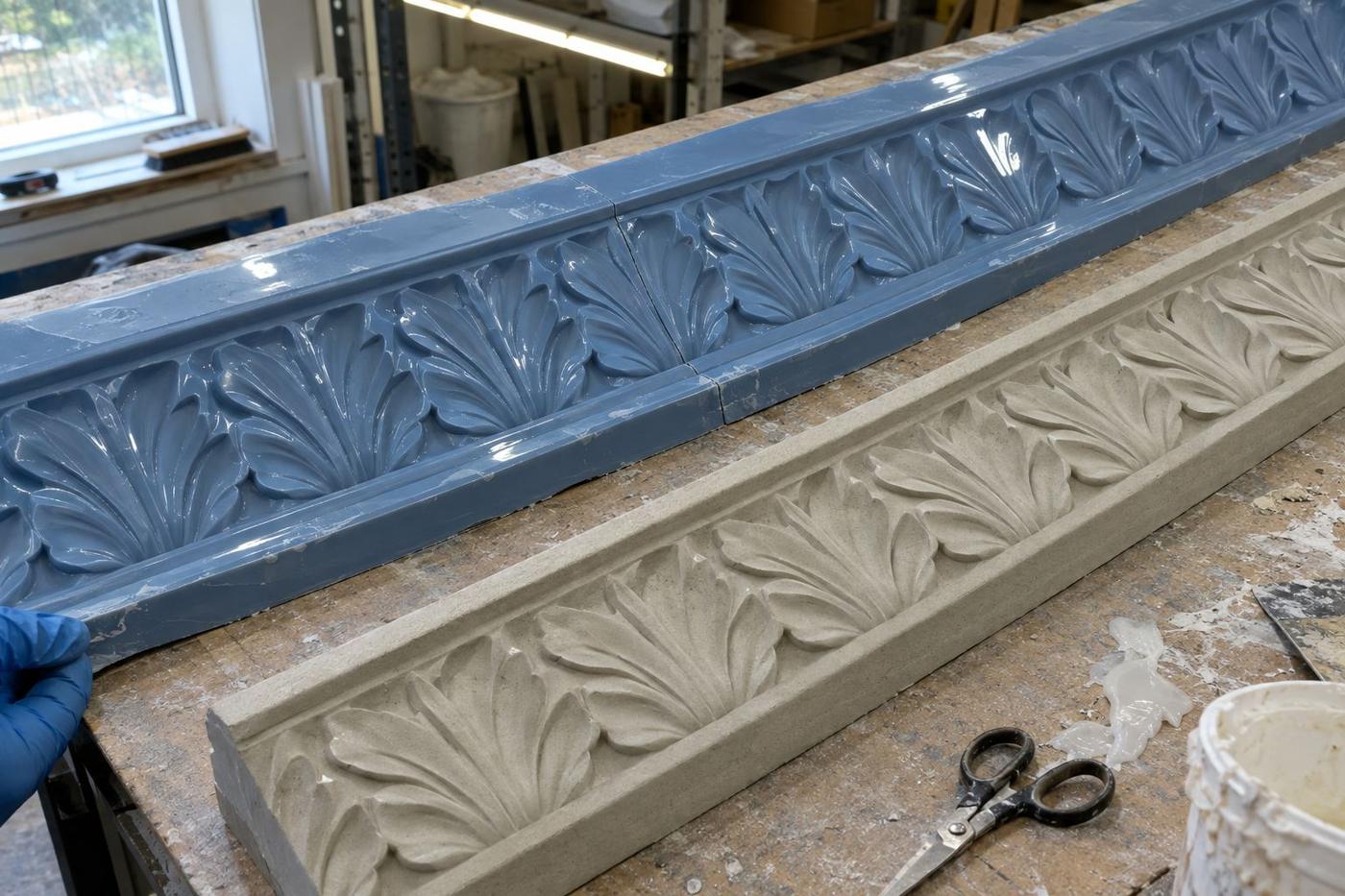
Design conversation with the architect
We proposed adding a shallow shadow gap every 1.8 metres along the cornice, aligned with the panel joints below. Slight change to the visual reading; large improvement in splice-ability.
Project record · Bespoke GRC cornice
Bespoke leaf-relief cornice cast in GRC and running as a continuous band across an elevation. Spliced silicone tooling with joints placed on shadow gaps so the cornice reads unbroken.
The brief
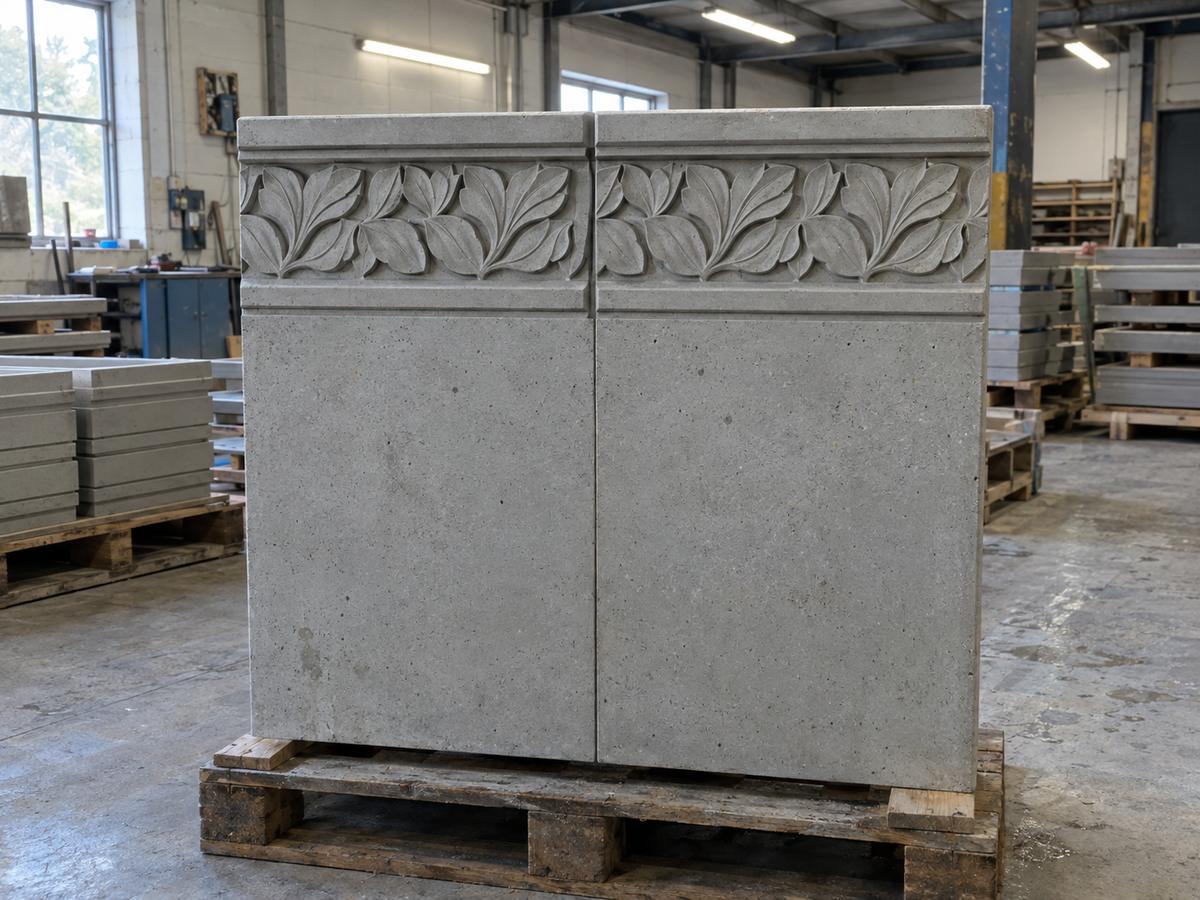
A GRC producer working on a commercial façade had been asked by the architect to develop a leaf-relief cornice as a continuous horizontal band around three sides of the building. The cornice was too long to cast in a single tool. The architect wanted the leaves to read as a continuous, unbroken run.
The problem
The cornice was going to be spliced whether the architect liked it or not — no single tool of that size was going to work. The challenge was placing the splices where they wouldn't read, on a continuous horizontal detail that (by nature) doesn't have obvious break points.
The architect's original drawing had continuous leaf detail from corner to corner. If we spliced anywhere in the middle of the leaves, the splice would read forever. Something had to change on the drawing.
How we solved it
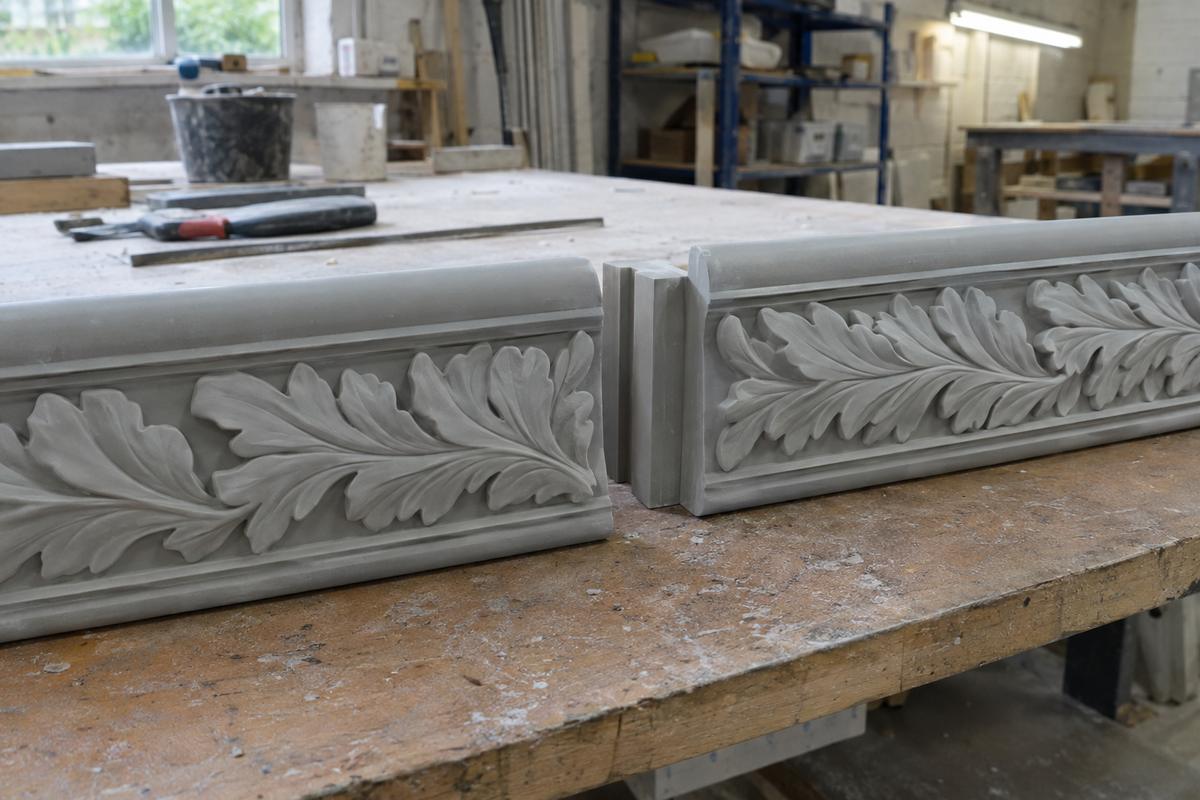
We proposed adding a shallow shadow gap every 1.8 metres along the cornice, aligned with the panel joints below. Slight change to the visual reading; large improvement in splice-ability.
A short sample cast in GRC that included one shadow gap. Reviewed with the architect. Approved — the shadow gap read as a coursing detail rather than as a break.
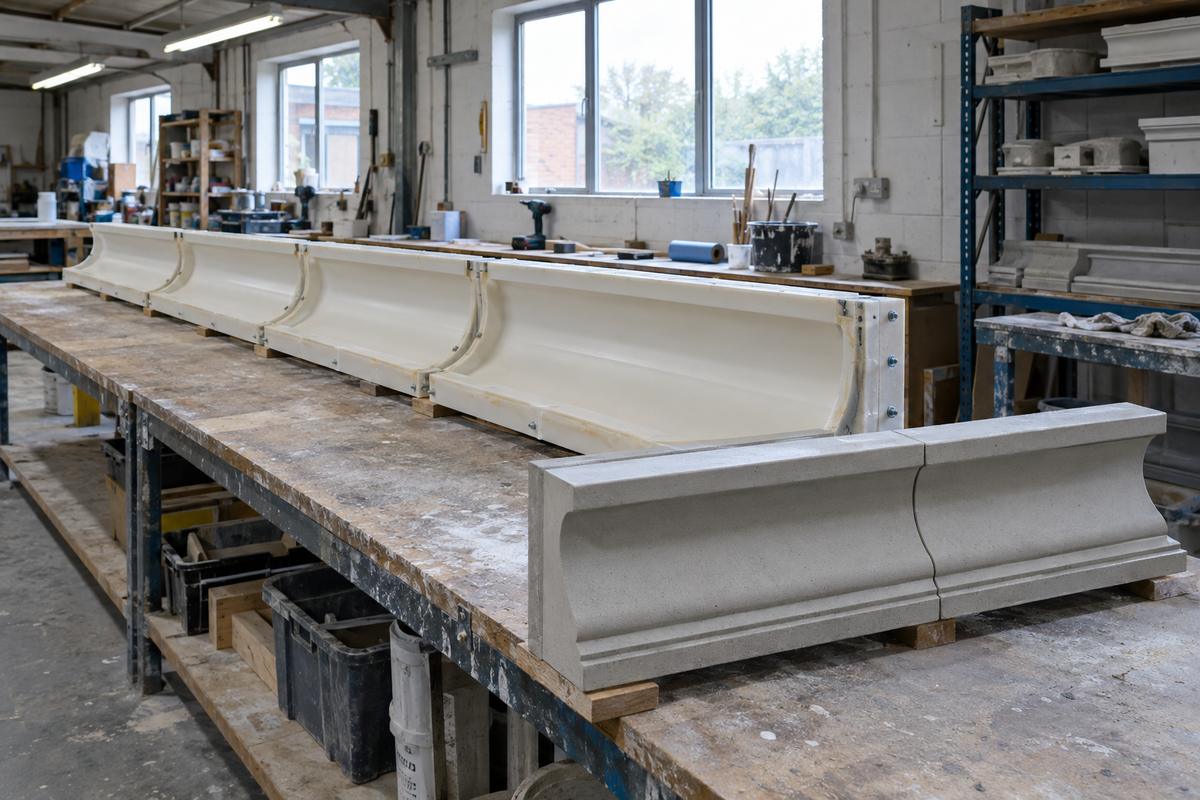
Multi-piece silicone thin-shell tooling built with splice positions co-ordinated to the shadow gaps. Each cornice section 1.8 metres, matching the panel below.
First cornice section cast at the producer's yard with the architect present. Approved on the bed.
The outcome
The full cornice run is now in production. The shadow gaps read as an intentional design detail; the splices are invisible within them. The architect's original vision of a continuous leaf-relief cornice is preserved because the reading of the shadow gap turns out to be quieter than the reading of a butted splice.
Lessons
For any long continuous detail that has to be spliced, an early design conversation about splice-friendly break points is enormously valuable. Small drawing changes at concept stage save major visual compromises at production stage.
Related
Get in touch
One photograph tells us what surface you're chasing, and one line about the mix tells us what silicone or polyurethane will survive it.
Real people, a real workshop
No call centre and no middlemen. When you contact TCI Construction, you speak to the team who design, build and check your mould.


 Thomas LaneManaging Director
 George PrestonDesign & Project Manager
 Kelly BallingerHead of Partnerships
 Jim AndertonProduction Manager
 TheodoreEmployee Welfare