There's no physical piece to mould from
You have a drawing but no existing example. A pattern has to be built before the mould can be poured.
Patterns · Where the mould starts
Pattern making from architectural drawings, physical samples or 3D scans of surviving originals. The pattern is what the mould is poured against — and where the finished piece's accuracy is decided.
When it fits
You have a drawing but no existing example. A pattern has to be built before the mould can be poured.
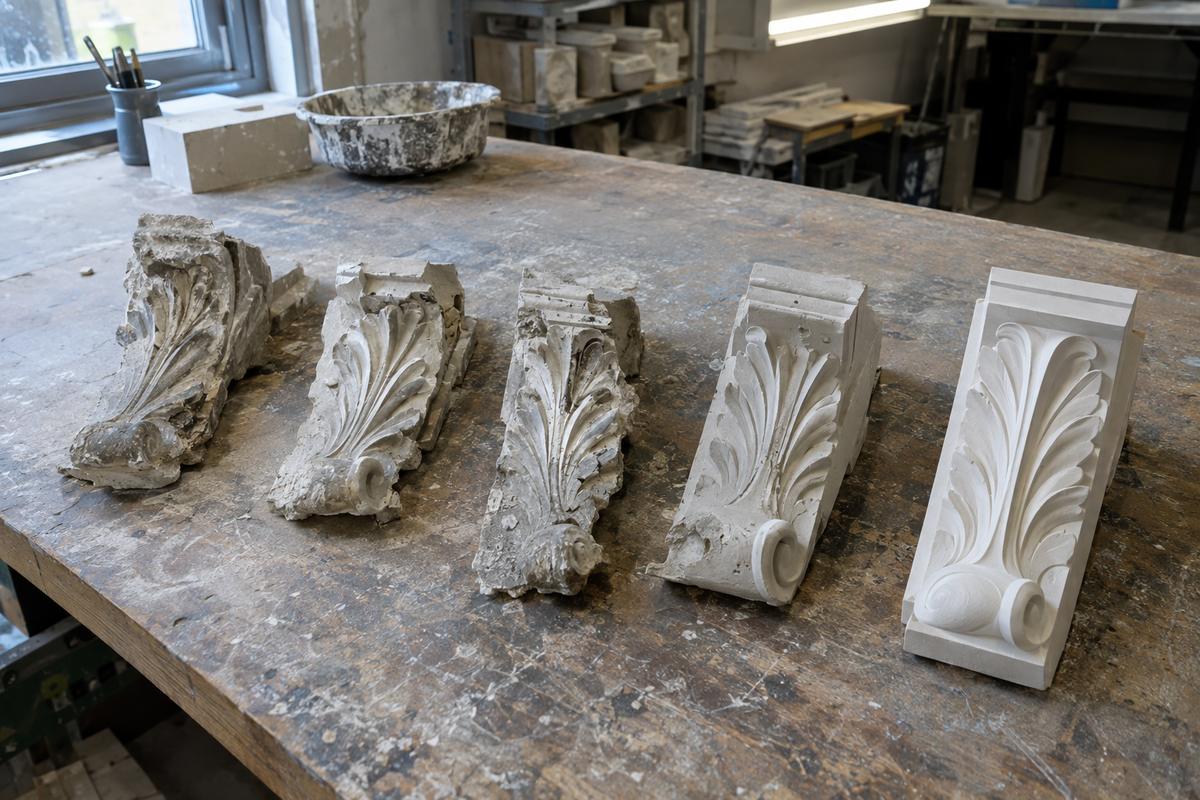
The surviving section has weathered asymmetries, missing details, or damage that has to be corrected before it becomes a pattern for the reproduction.
Three failed sections from three different suppliers, all subtly different. Scanning and averaging gives you a single reference to reproduce.
You want a physical prototype to hold and adjust before committing to a mould. Pattern-making is where that happens.
The choice
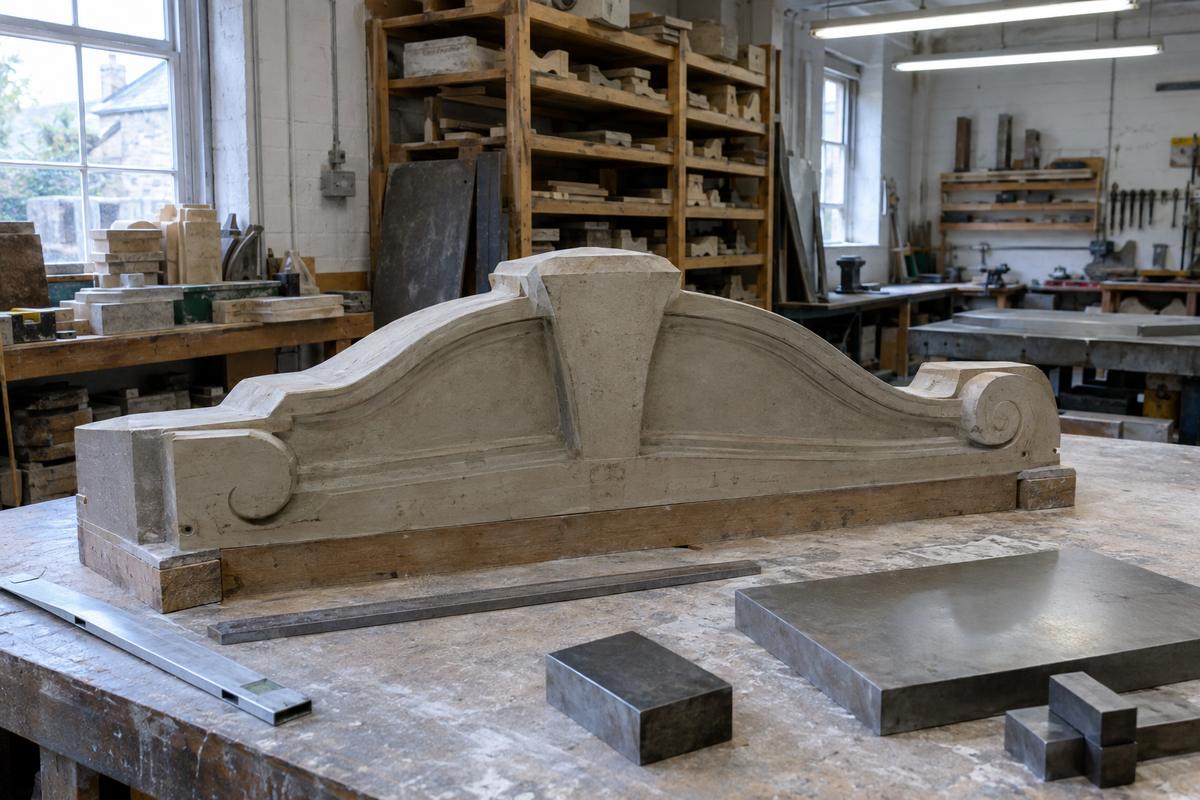
For geometric pieces, we machine the pattern in tooling board or timber to your drawing. That gives you a hard, accurate master that the silicone or polyurethane pours against cleanly, and that stays on file for replacement moulds later.
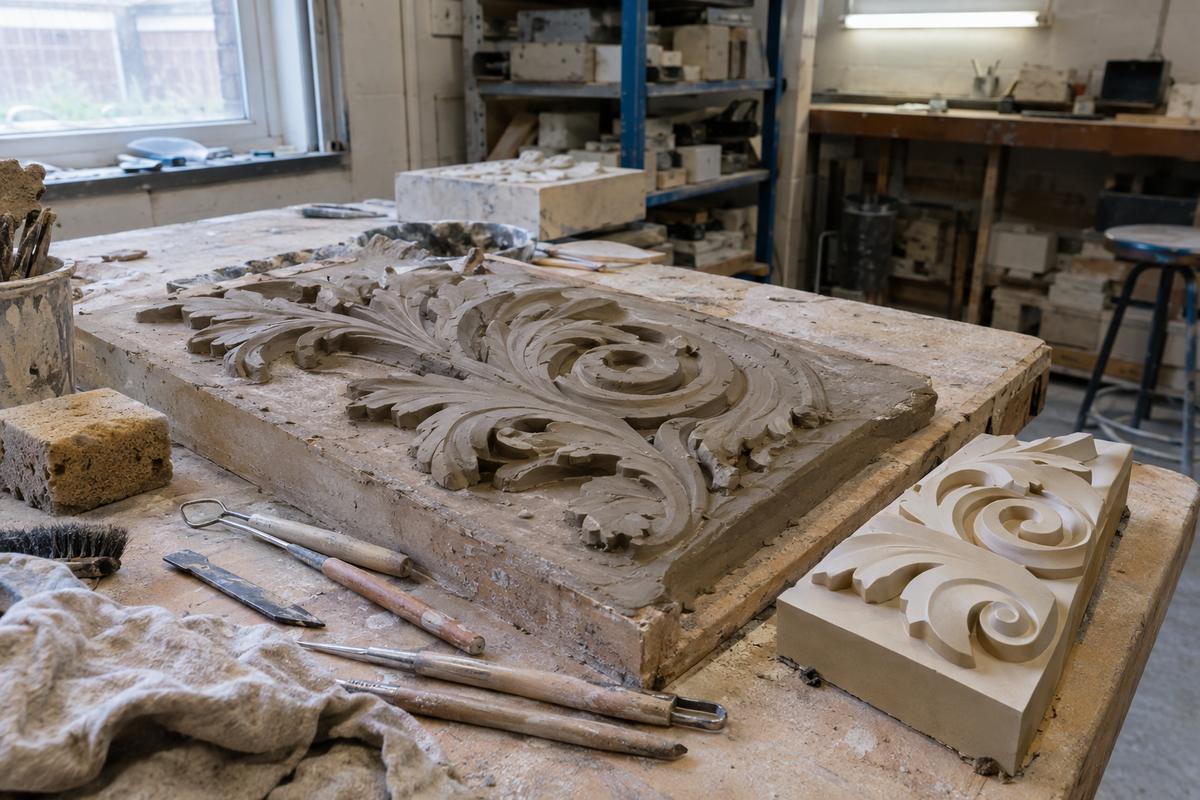
For organic or decorative geometry, we sculpt the pattern by hand from clay, plaster or modelling material. Sculpting is slower than machining but it's the right answer for anything that couldn't have been drawn in the first place — heritage details, natural forms, hand-worked relief.
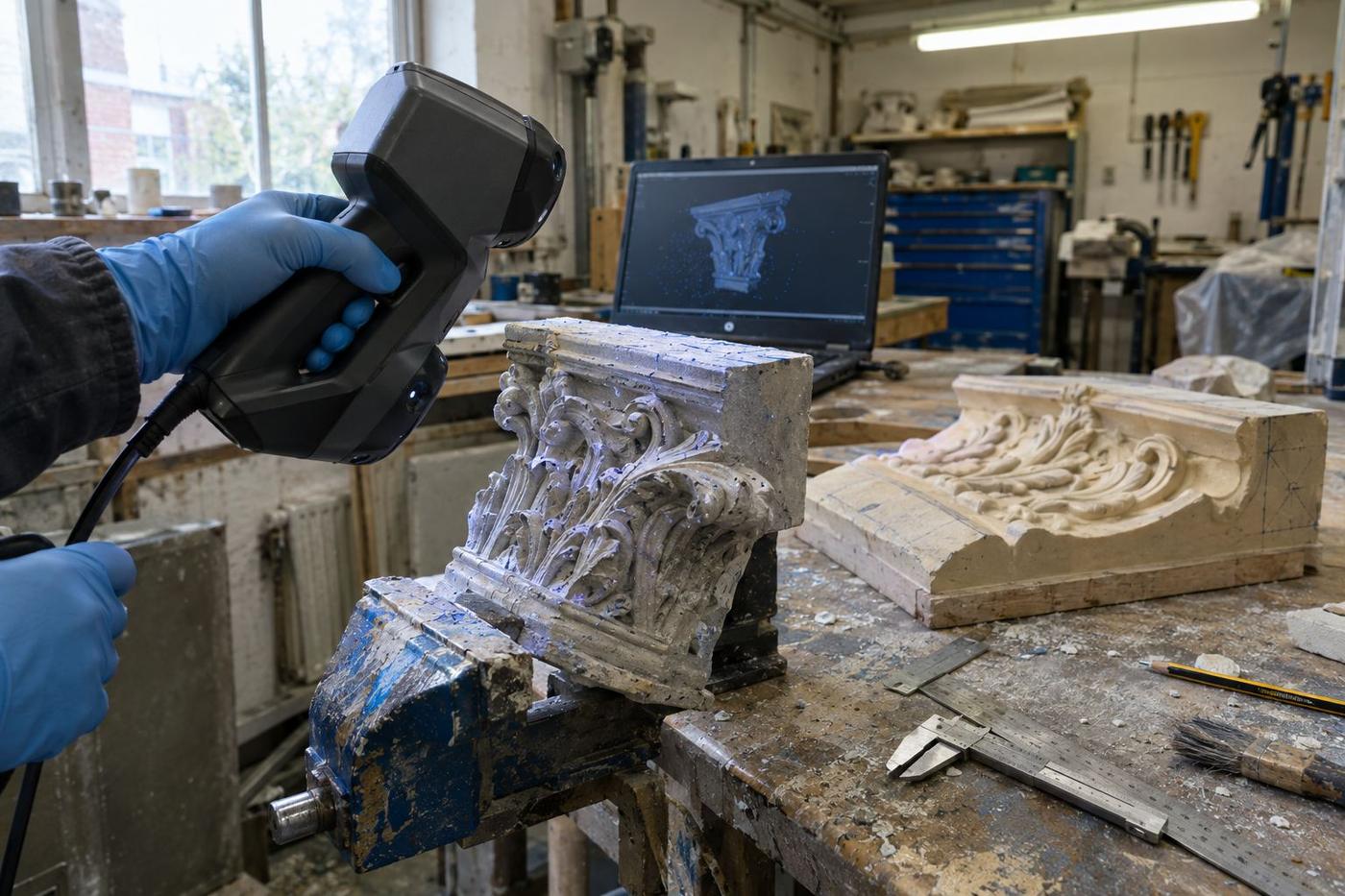
For reproduction of an existing piece, we scan the original in 3D. The scan becomes a digital pattern, which is machined into a physical master. This is the method for heritage jobs where the original is fragile and can't be moulded directly.
What we need
Any of the three is enough to start. All three is ideal.
Structural, decorative, heritage reproduction. Determines the accuracy the pattern needs to hold.
If you might need another mould in five years, we'll build the pattern to last. If it's a one-off, we can save cost with a less durable material.
Not in numbers — in plain terms. Which faces have to meet a neighbouring piece? Which edges have to sit square?
The honest bit
A mould poured against a soft or slightly-out-of-true pattern is a mould that will produce out-of-true castings forever. There is no way to fix a pattern issue at the mould stage. That's why we spend proper time on the pattern before we mix silicone.
3D scanning is not magic. It captures the geometry that the scanner can see. Deep undercuts, tight internal corners and highly reflective surfaces are all harder to scan cleanly than they look. We'll say when the scan needs supplementing with hand measurement.
For sculpted patterns, the pattern-maker's judgement matters as much as the drawing. A hand-sculpted heritage detail is an interpretation, informed by what survived and what the surviving pieces suggest was there originally. We do that interpretation transparently, with you and (where relevant) the conservation officer in the loop.
Drill down
Each one has its own page with the detail we'd normally cover on the first call.
Related
At a glance
How a two-part mould fits together
Swipe to see the whole diagram
Get in touch
One photograph tells us what surface you're chasing, and one line about the mix tells us what silicone or polyurethane will survive it.
Real people, a real workshop
No call centre and no middlemen. When you contact TCI Construction, you speak to the team who design, build and check your mould.


 Thomas LaneManaging Director
 George PrestonDesign & Project Manager
 Kelly BallingerHead of Partnerships
 Jim AndertonProduction Manager
 TheodoreEmployee Welfare