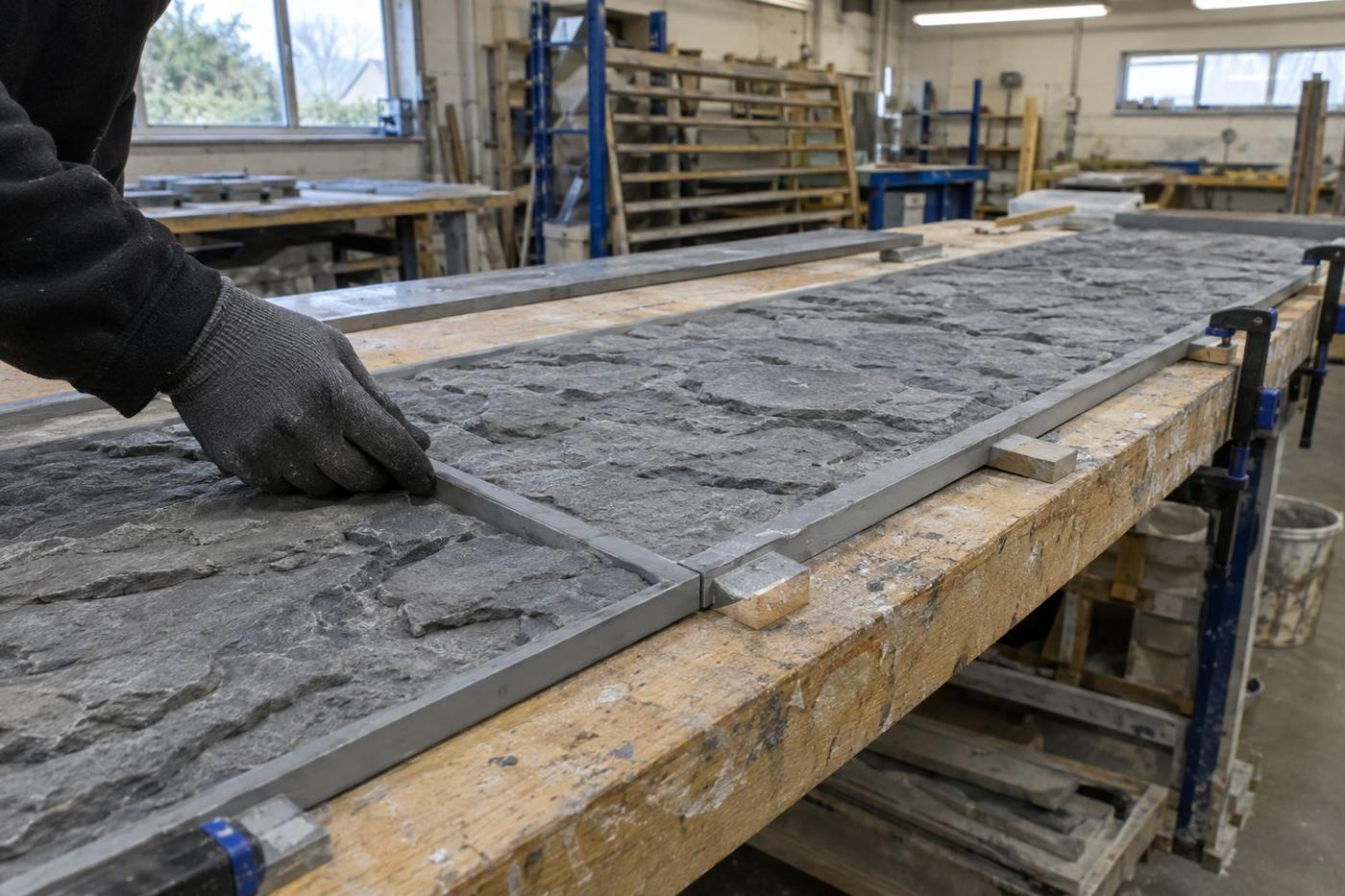
The programme is faster than one tool can pour
Two hundred panels in a quarter isn't feasible off one mould. Parallel tooling is the answer.
Multi-panel · Matched sets
Sets of two, four or twelve moulds built together so every panel across a full elevation matches. Splice positions co-ordinated, textures matched from a single master, release regimes documented per tool.
When it fits
Two hundred panels in a quarter isn't feasible off one mould. Parallel tooling is the answer.
Corner panels, standard bay panels, spandrels — different shapes but the same surface texture. All from the same master.
A programme that runs across two yards needs matched tools at both, or the finishes drift.
Building the set today and knowing you'll need a replacement in three years — we design it into the batch.
The choice
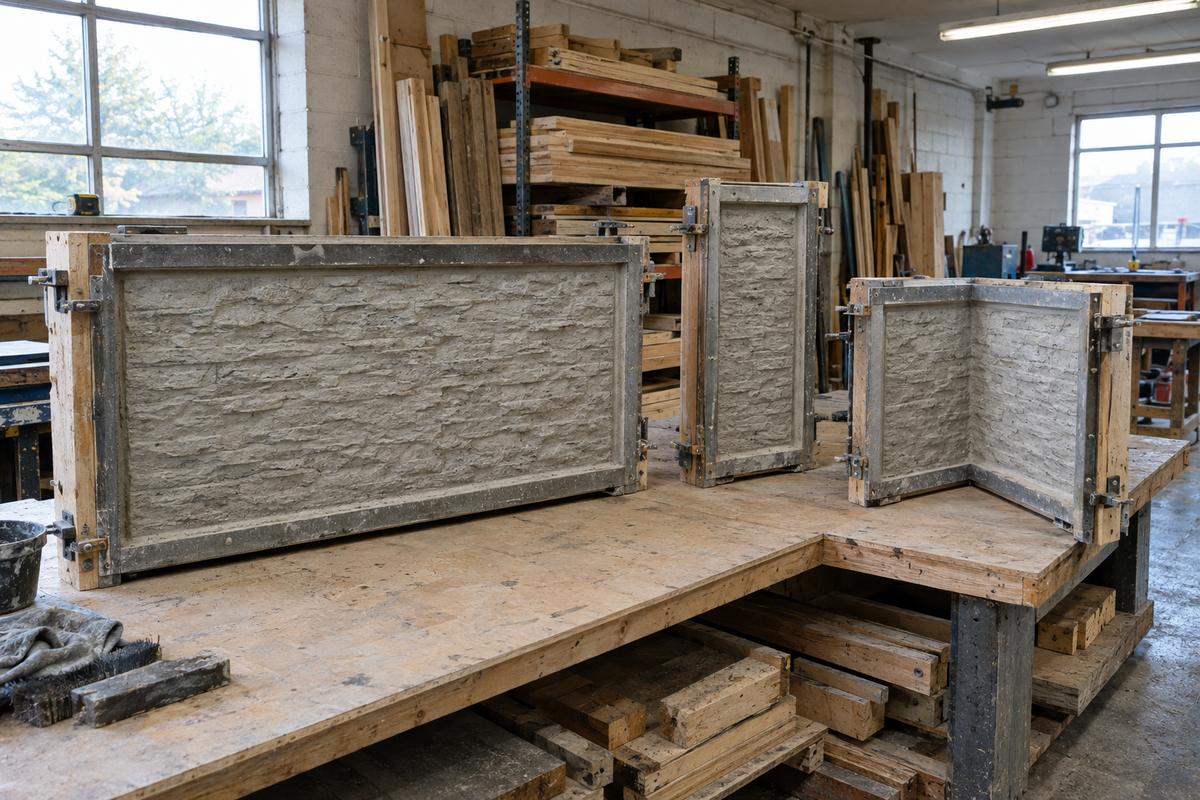
A matched set starts from a single master pattern for the texture. Each mould in the set is poured against the same master (or a durable secondary master taken from it), which is what keeps the texture reading identically across the whole set.
Where the panel geometry varies — a corner condition, a reveal, a return — the tooling for those variants is built as separate moulds, but with the surface texture keyed to the primary master so the finish continues seamlessly.
Every tool in the set gets an identifier, a written material spec and a release note. Yards running the set know which tool is which, and which release regime that particular tool wants. Silicone from different pours ages slightly differently; the paperwork lets us track it.
What we need
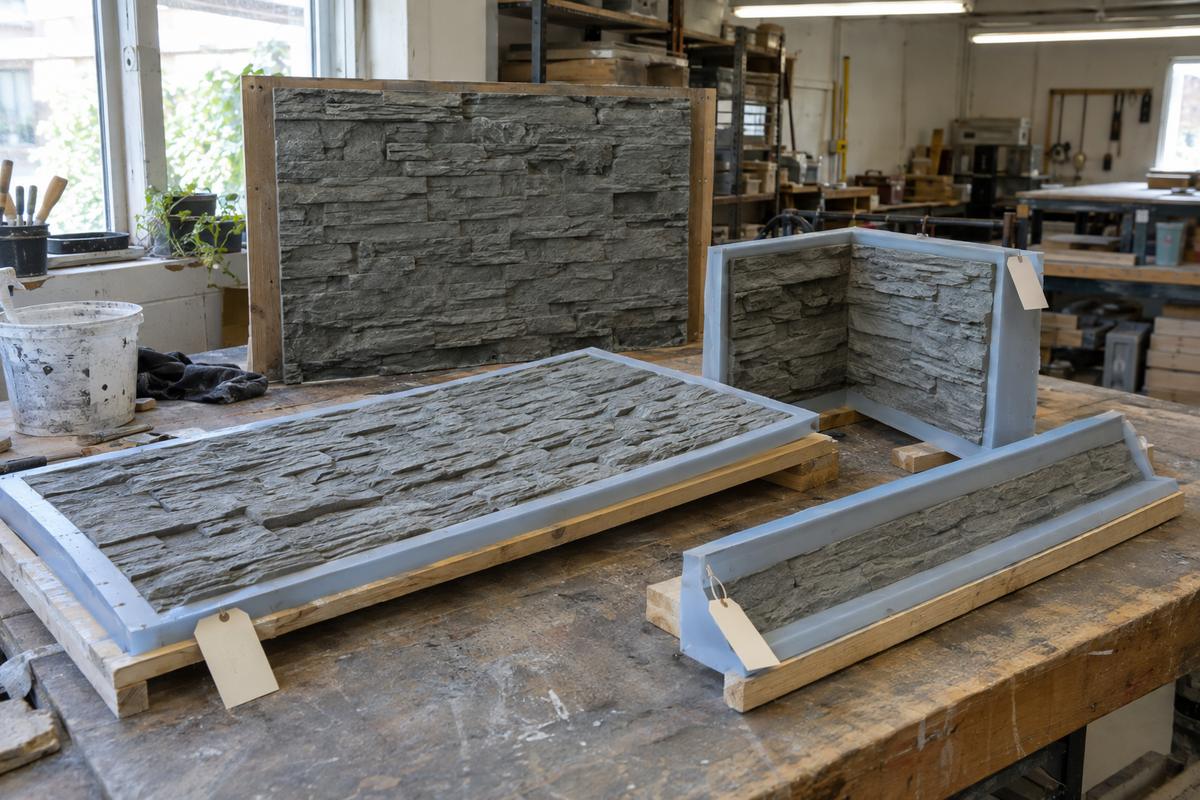
Every panel, its size, its features, its position in the elevation.
When each panel is needed, so we know how many tools have to be running in parallel.
One yard or several. Determines whether tools travel or stay put.
Architect, specifier, main contractor. Determines whether first-off is at your yard or ours.
The honest bit
Multi-panel work has to be designed as a set from the start. Adding a matching tool to a set that was designed as a one-off six months later is possible, but the match is never as tight as if it had been planned in from the beginning.
Silicone from the same batch, poured against the same master, the same way, on the same afternoon, will still exhibit some variation. What good matched sets get right is keeping that variation invisible on the finished panel face, not eliminating it from the tools.
For long programmes, plan the replacement pattern before the last set expires. A pattern that's five years old, stored properly, still reproduces reliably. A pattern that was rushed at end-of-programme when the original was already failing does not.
Drill down
Each one has its own page with the detail we'd normally cover on the first call.
Related
At a glance
Planning liners across a wall
Swipe to see the whole diagram
Get in touch
One photograph tells us what surface you're chasing, and one line about the mix tells us what silicone or polyurethane will survive it.
Real people, a real workshop
No call centre and no middlemen. When you contact TCI Construction, you speak to the team who design, build and check your mould.


 Thomas LaneManaging Director
 George PrestonDesign & Project Manager
 Kelly BallingerHead of Partnerships
 Jim AndertonProduction Manager
 TheodoreEmployee Welfare