
The pieces are studio-scale
Planters, candle holders, bookends, wall tiles, feature vessels. Small enough to demould on a bench, not on a bed.
Decorative concrete · Small-format tooling
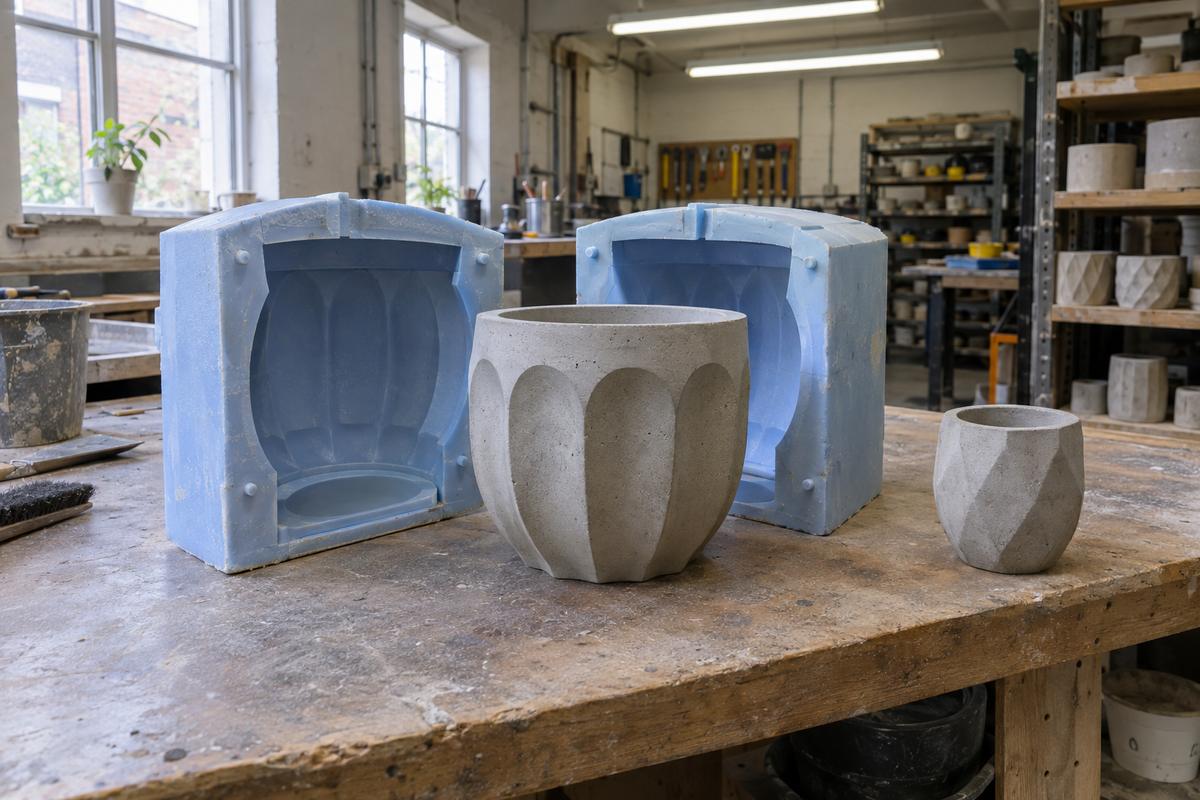
Silicone moulds for planters, vessels, homeware, feature pieces and retail props — small-format tooling for studios and workshops that cast concrete in ones, tens or a few hundred.
When it fits
Planters, candle holders, bookends, wall tiles, feature vessels. Small enough to demould on a bench, not on a bed.
Retail buyers are looking at the surface. A soft arris or a mould seam on the face kills the piece. Silicone captures the finish faithfully.
A single-cast for a one-off feature is one job; a mould that will pour two hundred planters a year is another. Both have a silicone answer.
GRC-inspired thin mixes, pigmented concrete, pastel cements, terrazzo, ashcrete. We know which silicones stay stable against which chemistries.
The choice
Small decorative moulds are usually silicone rather than polyurethane. The pieces are usually small enough that the material cost is manageable, the detail matters more, and silicone is more forgiving of the range of mixes a decorative maker might reach for.
The mould is typically two-part with a designed parting line, or single-piece flexible where the geometry allows it to peel away. For undercuts — pieces wider in the middle than at the top or bottom — silicone's flex is what makes the mould possible at all.
Where the piece has to sit flat on a shelf, we design a flat base into the mould. Where it needs a drainage hole (planters) we can cast one in rather than have you drilling it after — the silicone plug with a rigid stem is the standard trick.

What we need
A drawn concept or a hand-modelled prototype. Either works.
Plain, pigmented, terrazzo, GRC-inspired. Determines silicone grade.
Fifty pieces, five hundred, five thousand. Silicone grade scales with it.
Determines the pour port and the vent locations.
The honest bit
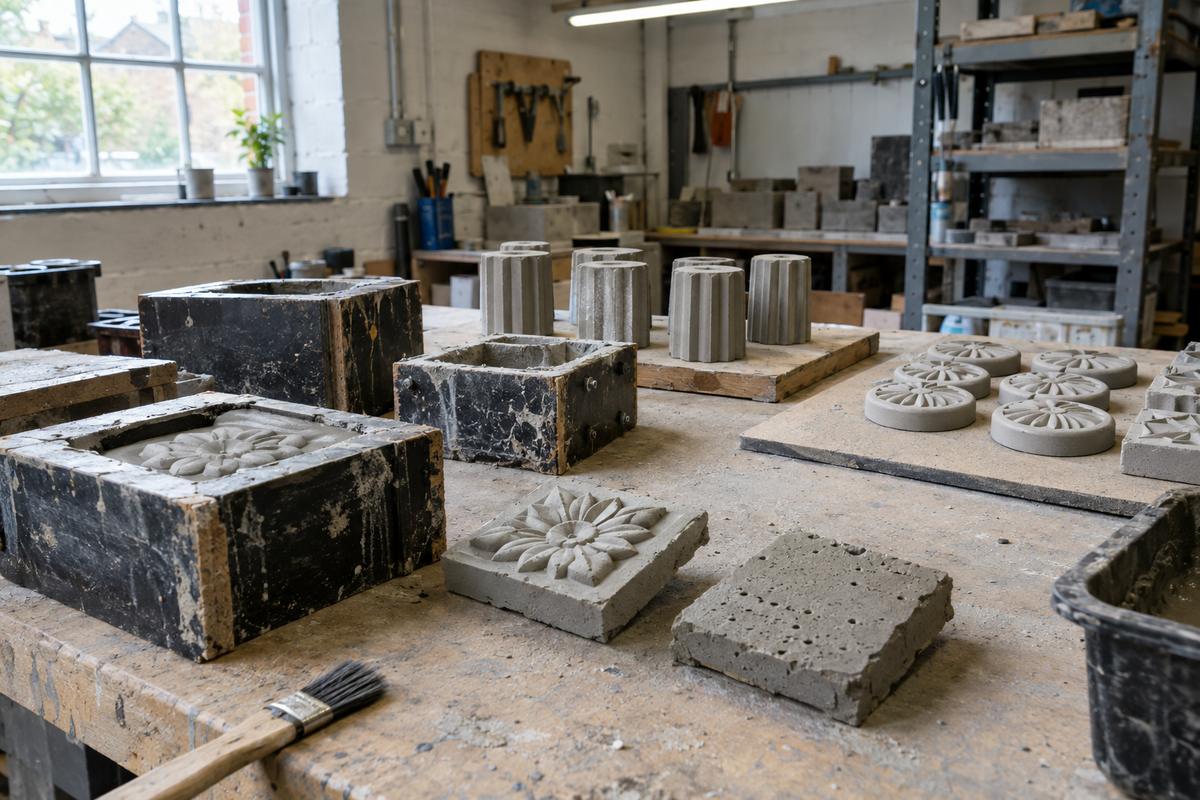
A decorative concrete piece looks simple on a shelf, but the mould is often more delicate than a comparable structural mould. The pieces are small, the finish is scrutinised at arm's length, and any bench dust or trapped air will show as a defect on every casting.
That's why decorative moulds are usually best kept away from a working precast yard. If you're a studio pouring for retail, we'll spec a mould that suits your working conditions. If you're a yard occasionally taking on a decorative piece, we'll flag what will need to change in the release regime for that piece.
Pigmented concrete stresses silicone differently to plain concrete. Some pigments contain chemistry that shortens tool life. We'll ask what you're pigmenting with and, if it's known to be aggressive, we'll spec a grade that stands up to it.
Drill down
Each one has its own page with the detail we'd normally cover on the first call.
Related
At a glance
From sample to finished cast
Swipe to see the whole diagram
Get in touch
One photograph tells us what surface you're chasing, and one line about the mix tells us what silicone or polyurethane will survive it.
Real people, a real workshop
No call centre and no middlemen. When you contact TCI Construction, you speak to the team who design, build and check your mould.


 Thomas LaneManaging Director
 George PrestonDesign & Project Manager
 Kelly BallingerHead of Partnerships
 Jim AndertonProduction Manager
 TheodoreEmployee Welfare