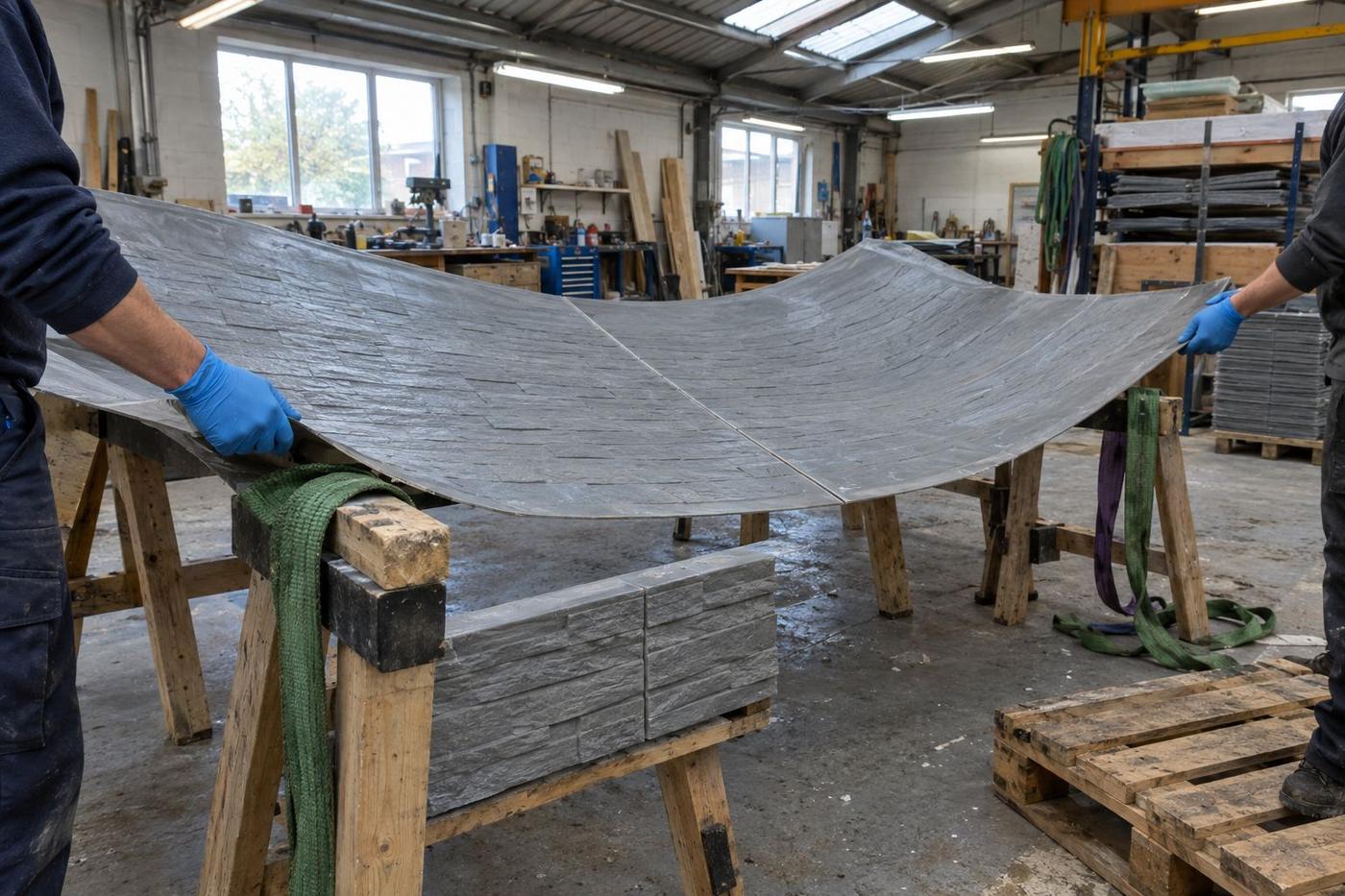
Put splices on the panel joint
The panel joint is already a designed break in the surface. A splice on the joint disappears into it. This is rule one, and everything else is fallback.
Knowledge · Process guide
Panels larger than a standard bed mean spliced tooling. Here's how to plan the splices so they're invisible on the panel, and how to handle a large tool without wrecking it.
Reality
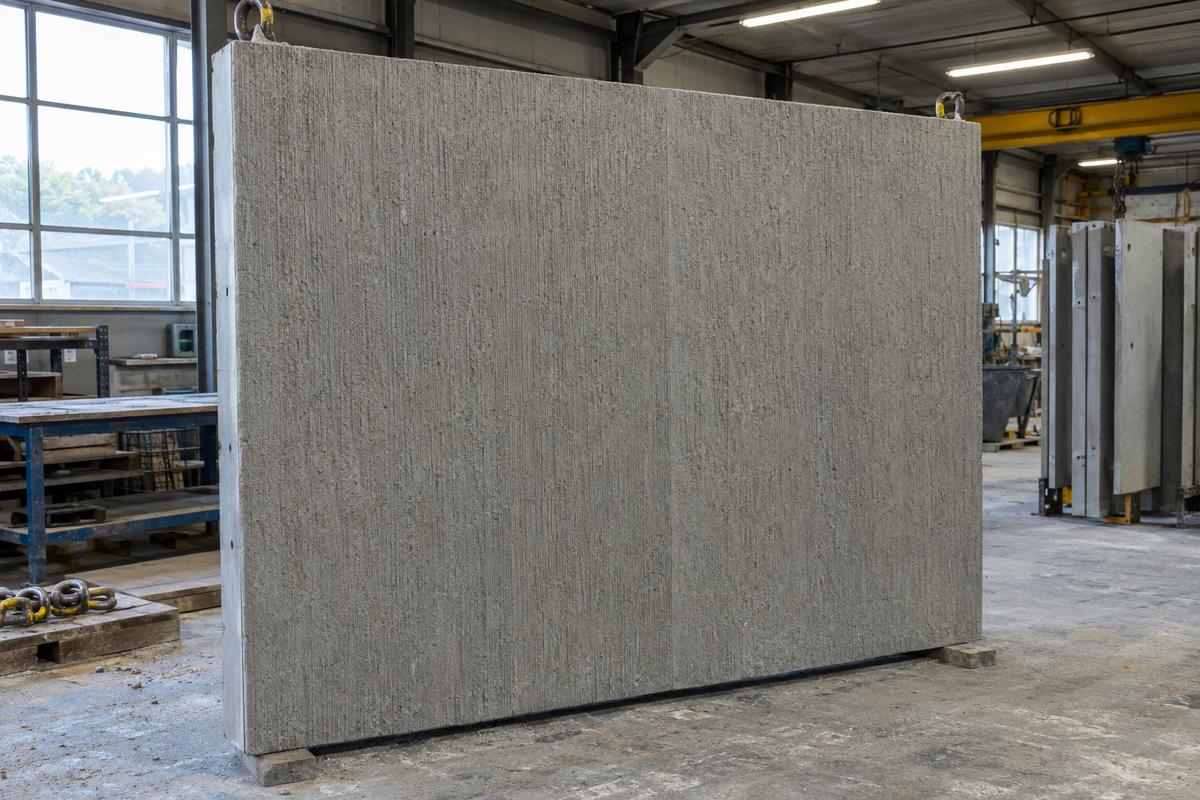
There's a myth that a spliced formliner is inferior to a single-cast tool. Not true. Almost every formliner larger than about 2 by 3 metres is spliced, including tools running on award-winning façades right now. The splice is invisible if it's put where the panel joint already breaks the surface.
The problem isn't splicing per se. The problem is splicing badly — putting a splice in the middle of a panel face, or through a piece of relief, or where the panel joint doesn't line up. This guide walks through how to plan splices so they're never a problem.
Splice planning
The panel joint is already a designed break in the surface. A splice on the joint disappears into it. This is rule one, and everything else is fallback.
If the elevation has continuous panels without expressed joints, put the splice on a shadow gap, coursing line, or expressed horizontal detail. Anywhere the eye already sees a line.
A splice that runs across a piece of ornament reads forever, however well made. Plan the mould layout so splices avoid ornament even if that means unusual formliner shapes.
A straight-line splice reads better than one that follows a complex path. Even if the panel has curved geometry, the splice itself should be straight.
Handling
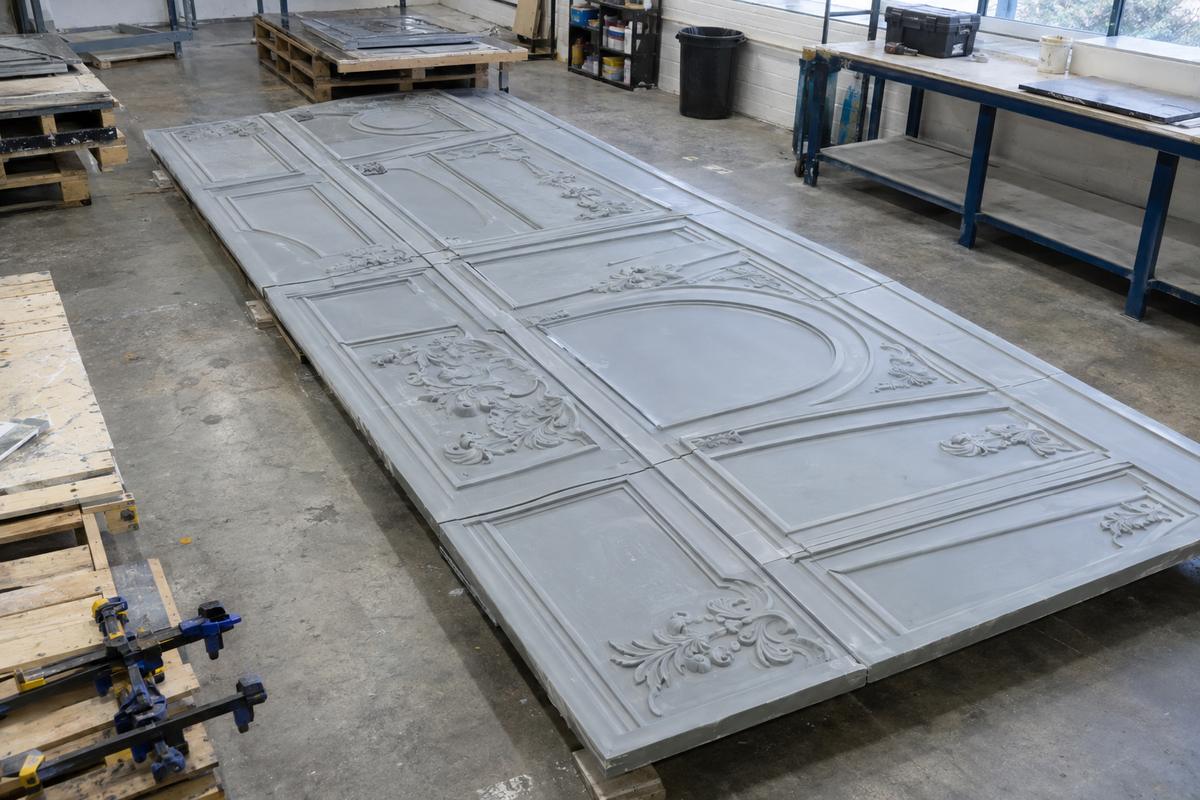
Every large-format tool leaves us with lifting frame or vacuum lifter fixings designed in. Never a case of 'we'll figure it out at the yard.'
Nylon straps around a large silicone or polyurethane formliner tend to distort the mould face over time. Rigid lifting frames spread the load evenly.
A large formliner stored vertically will bow over time. Flat storage on a supported bed keeps the tool geometry true through the programme.
If the tool has to travel across a busy yard between pours, plan the route. Damage in transit is one of the top failure modes on large tools.
Splice construction
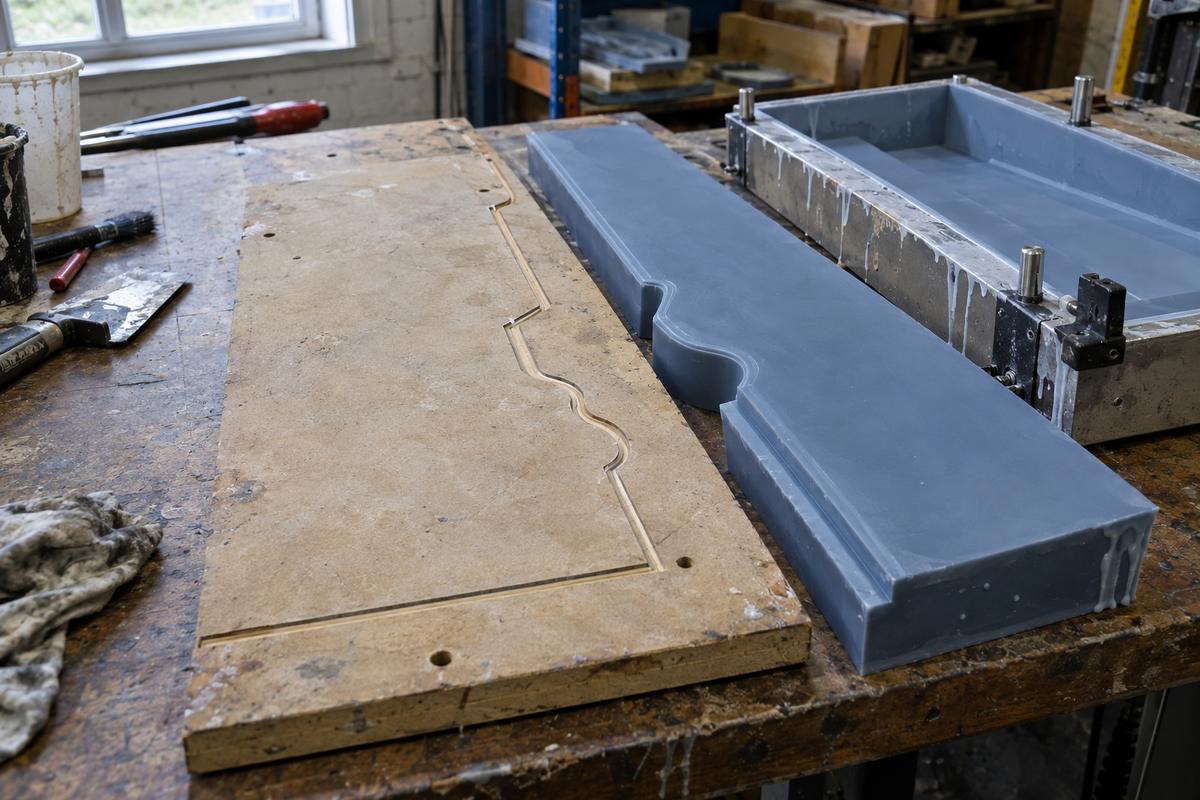
The pattern is single. We build the master pattern as one piece, even if the finished formliner will be several. That way every splice segment comes off the same reference geometry and the splices align perfectly.
The splice line is planned into the pattern. We machine or scribe the splice line into the pattern before pouring the silicone or polyurethane, so the splice edges are crisp and repeatable.
The mother mould is single-piece where possible. A single backing frame holds all the splice segments in registration. Where the tool is too large for that, the backing frame is jointed at the same splice line for consistency.
First-off on the bed proves it. The first pour with the assembled tool is the proof. We attend that first-off wherever the geometry is unusual, because it's easier to fix a splice question with the tool on the bed than in a photograph.
Honest limits
There's no hard limit — we've built tools well past 10 metres in a longest dimension. But past a certain size, the practical limits are handling, transport and yard access rather than moulding.
A 12-metre formliner is a mould, a lifting frame, a low-loader for transport, and a yard team briefed on the plan. If your yard can accept the tool safely, we can build it. If yard access is genuinely limited, splitting the panel design into smaller units may be a better overall answer than pushing to the largest tool.
At a glance
Planning liners across a wall
Swipe to see the whole diagram
FAQs
On a properly planned splice — landed on the panel joint — no. On a badly planned splice, yes forever. We plan them properly, and we won't accept a splice location we think will read.
Only up to the size limits of our silicone or polyurethane pours. Past that, splicing is the honest answer. Anyone claiming truly seamless very-large tools is either using extremely expensive one-off pour rigs or fibbing about how the tool is made.
A little. The pattern work is the same; the splice edge preparation adds a few hours per splice. The overall tool cost is dominated by the raw material area, not the splice count.
We can supply one designed to the tool. It's usually cheaper than trying to lift the tool improperly and damaging it on pour three.
Yes, and we usually do on genuinely large tools. It's part of the price.
Get in touch
One photograph tells us what surface you're chasing, and one line about the mix tells us what silicone or polyurethane will survive it.
Real people, a real workshop
No call centre and no middlemen. When you contact TCI Construction, you speak to the team who design, build and check your mould.


 Thomas LaneManaging Director
 George PrestonDesign & Project Manager
 Kelly BallingerHead of Partnerships
 Jim AndertonProduction Manager
 TheodoreEmployee Welfare