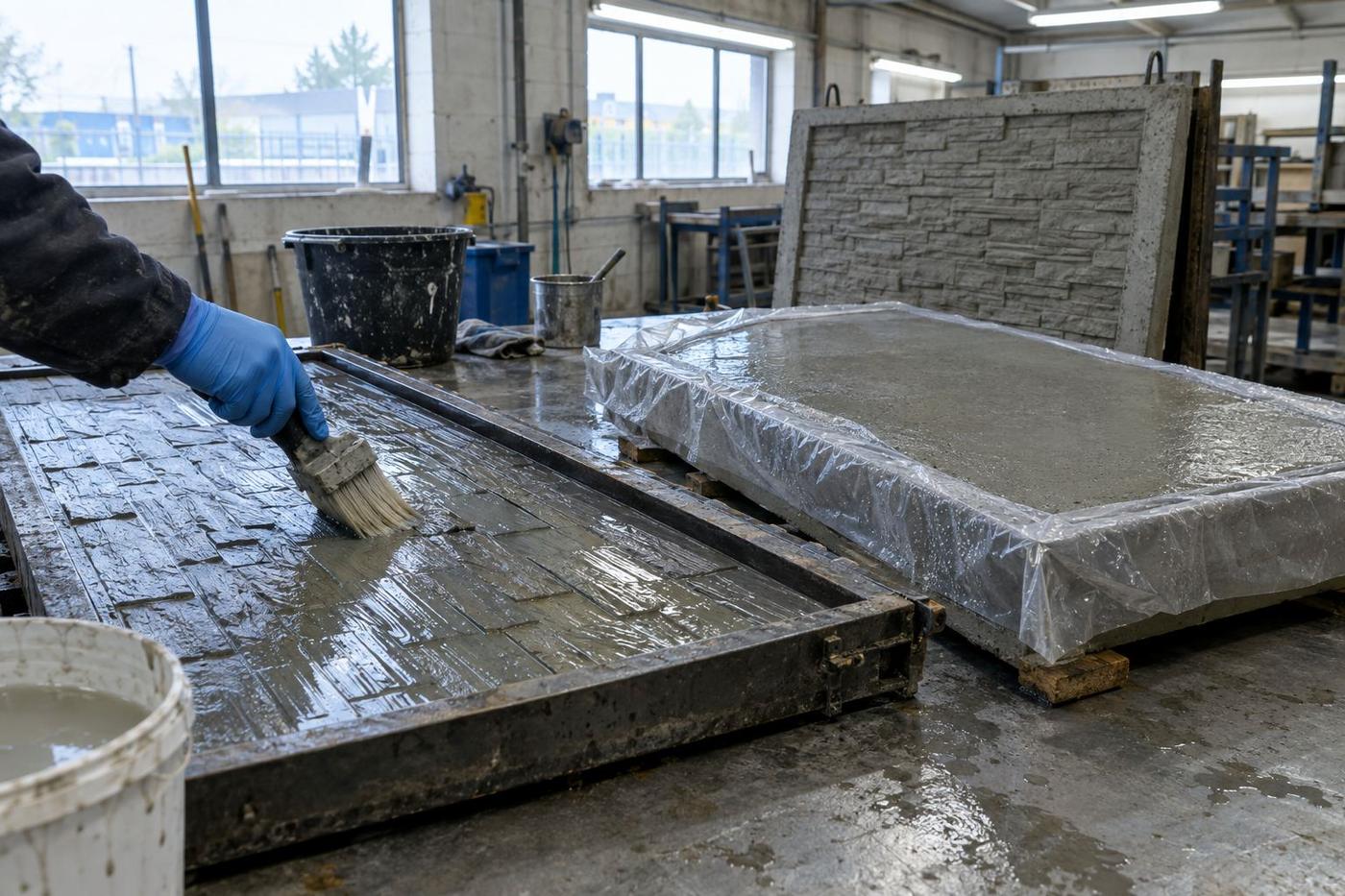
Chemistry of the release agent
Silicone and polyurethane like different releases. Chemically incompatible releases can degrade the tool face; chemically compatible ones extend life. Ask your release supplier and ask us — we'll cross-check.
Knowledge · Process guide
Three things happen between pour and finished panel — release before, curing during, demoulding after. Get all three right and your tool life doubles.
Overview
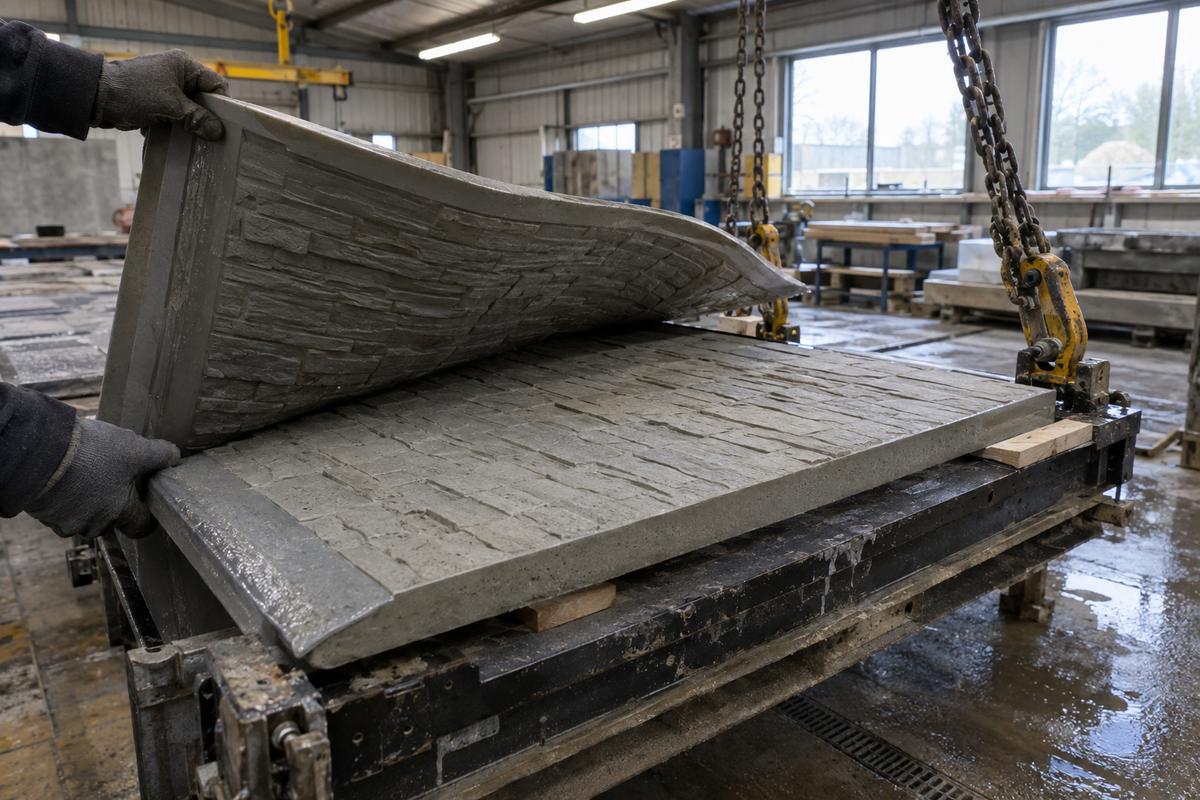
Every precast pour has the same three-step rhythm underneath. Release: the mould is prepared to let the panel come off cleanly. Curing: the concrete sets against the mould in a way that captures the finish without damaging the tool. Demoulding: the panel is lifted or the tool is stripped, cleanly and without stressing either.
Get all three consistently right and your tool life extends noticeably. Get any one of them wrong repeatedly and your tool life halves. This guide walks through each step in plain language.
Release
Silicone and polyurethane like different releases. Chemically incompatible releases can degrade the tool face; chemically compatible ones extend life. Ask your release supplier and ask us — we'll cross-check.
Too thin and the concrete grabs the tool face. Too thick and you get pooling that leaves marks on the finished panel. Consistent thin application, given time to flash off, is the aim.
Release agents need a few minutes to level and adhere to the face. Pouring immediately after spraying tends to wash release into the panel and leave patches of unprotected mould face.
Curing
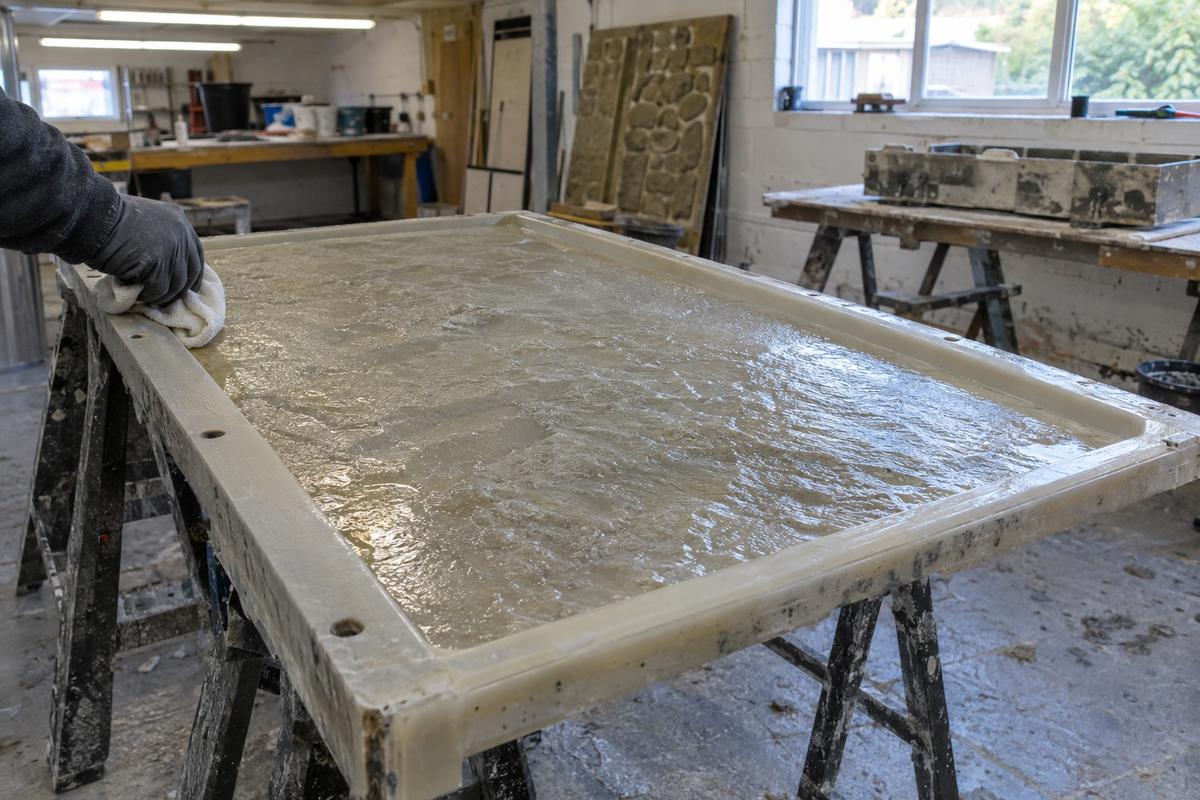
Higher curing temperatures speed the panel but stress the mould. Silicone tolerates higher peaks than polyurethane; both prefer moderate cure temperatures if tool life matters.
Longer time in the tool means slower turnover, but demoulding a green panel risks tearing the tool face. Find the sweet spot for your mix — usually shorter than the panel would strictly allow, but long enough to demould safely.
Steam curing accelerates the panel and shortens tool life. Ambient curing is friendlier to the tool but slower. Many yards run steam on Monday and ambient on Friday and average the two.
Demoulding
Lift the panel, not the tool. Vacuum lifters and dedicated lifting frames put load through the panel, not through the mould face. Prying with a bar under the mould edge damages the tool.
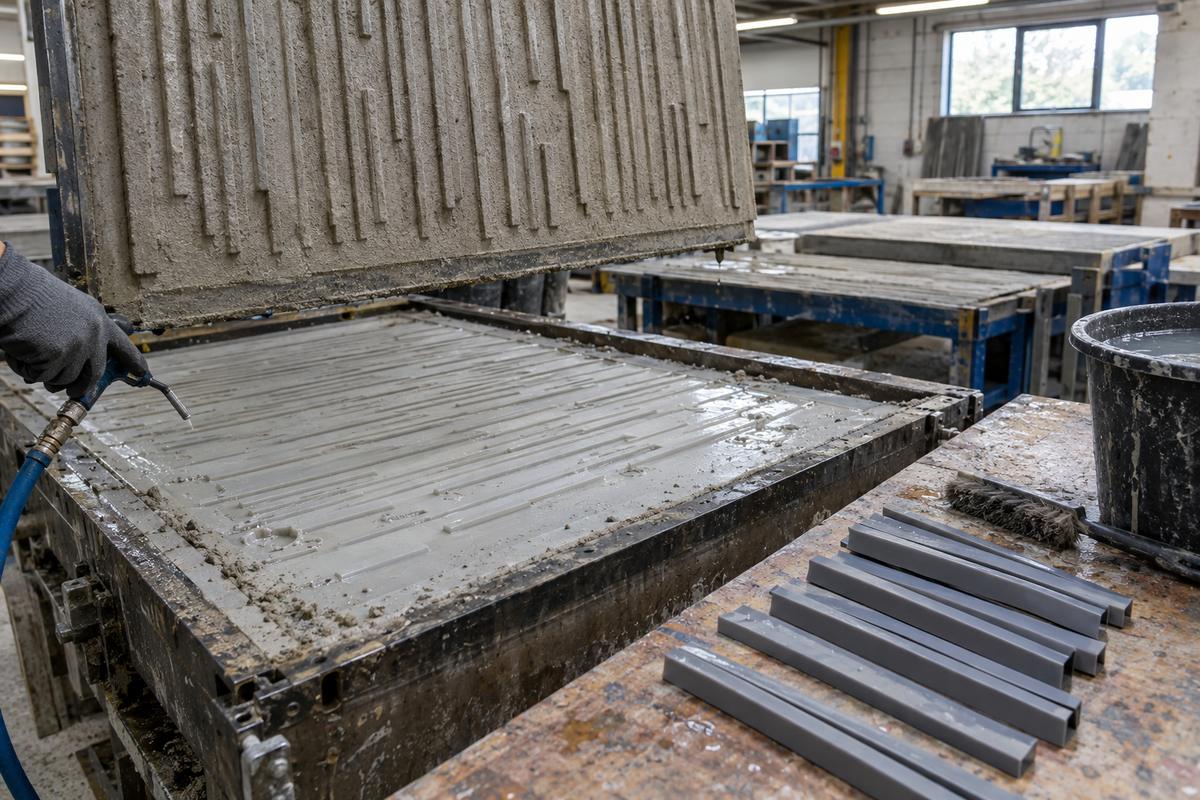
Break the seal gently. A quick puff of compressed air between panel and mould breaks the vacuum and starts the release. Yanking with lifting equipment before the seal breaks is the classic way to tear a formliner corner.
Strip inserts cleanly. If the tool has removable inserts for details or shadow gaps, strip them in sequence — never all at once. Lift out, wipe down, set aside; don't leave concrete-caked inserts in the tool.
Inspect and clean before the next pour. Once the panel is off, cold water rinse, soft brush across the face, quick visual check for damage. Any tears or nicks noted now save trouble at the next demould.
Common mistakes
Using the wrong release because it was cheaper. Applying release once at the start of a shift and running six pours off the same coating. Not letting release flash off before pouring. Steam-curing at temperatures the tool wasn't specified for. Levering under the mould edge with a bar because the vacuum lifter is on the other bed.
Any one of these on a bad day is fine — you get away with it. Any one of them as a regular habit costs you meaningful tool life across a programme.
At a glance
Where the formliner sits
Swipe to see the whole diagram
FAQs
No — we don't sell release. We recommend compatible products and can put you in touch with the supplier if you don't already have a relationship.
Sometimes. Some releases are cross-compatible; some are strongly one-or-the-other. Ask before assuming.
Depends on your mix, your cure temperature, and what the panel is for. We'll give a mould-friendly range in the tool's material spec sheet. Your quality team decides the panel-friendly range.
Reusing release. Applying at the start of the day and running six pours. It halves tool life reliably.
Yes. It's a very productive use of a day — most yards can identify one or two changes that materially extend tool life.
Get in touch
One photograph tells us what surface you're chasing, and one line about the mix tells us what silicone or polyurethane will survive it.
Real people, a real workshop
No call centre and no middlemen. When you contact TCI Construction, you speak to the team who design, build and check your mould.


 Thomas LaneManaging Director
 George PrestonDesign & Project Manager
 Kelly BallingerHead of Partnerships
 Jim AndertonProduction Manager
 TheodoreEmployee Welfare