Tool
Design and cut the tool; sample and groom critical features.
Manufacturing services · Chapter B · Method 09
Molten thermoplastic is injected into a steel or aluminium tool, cooled and ejected. The lowest-cost route per part at scale.
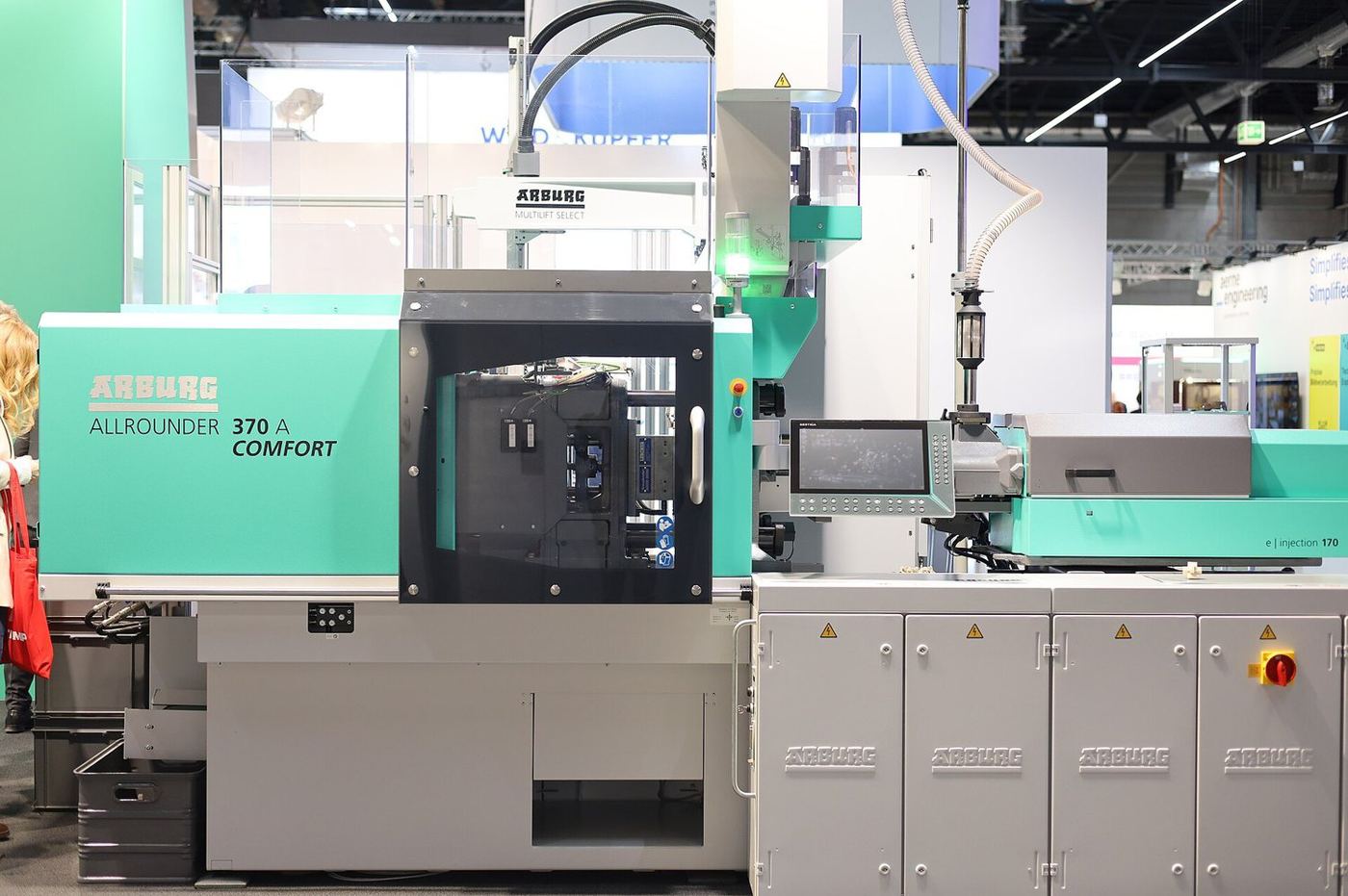
How it works
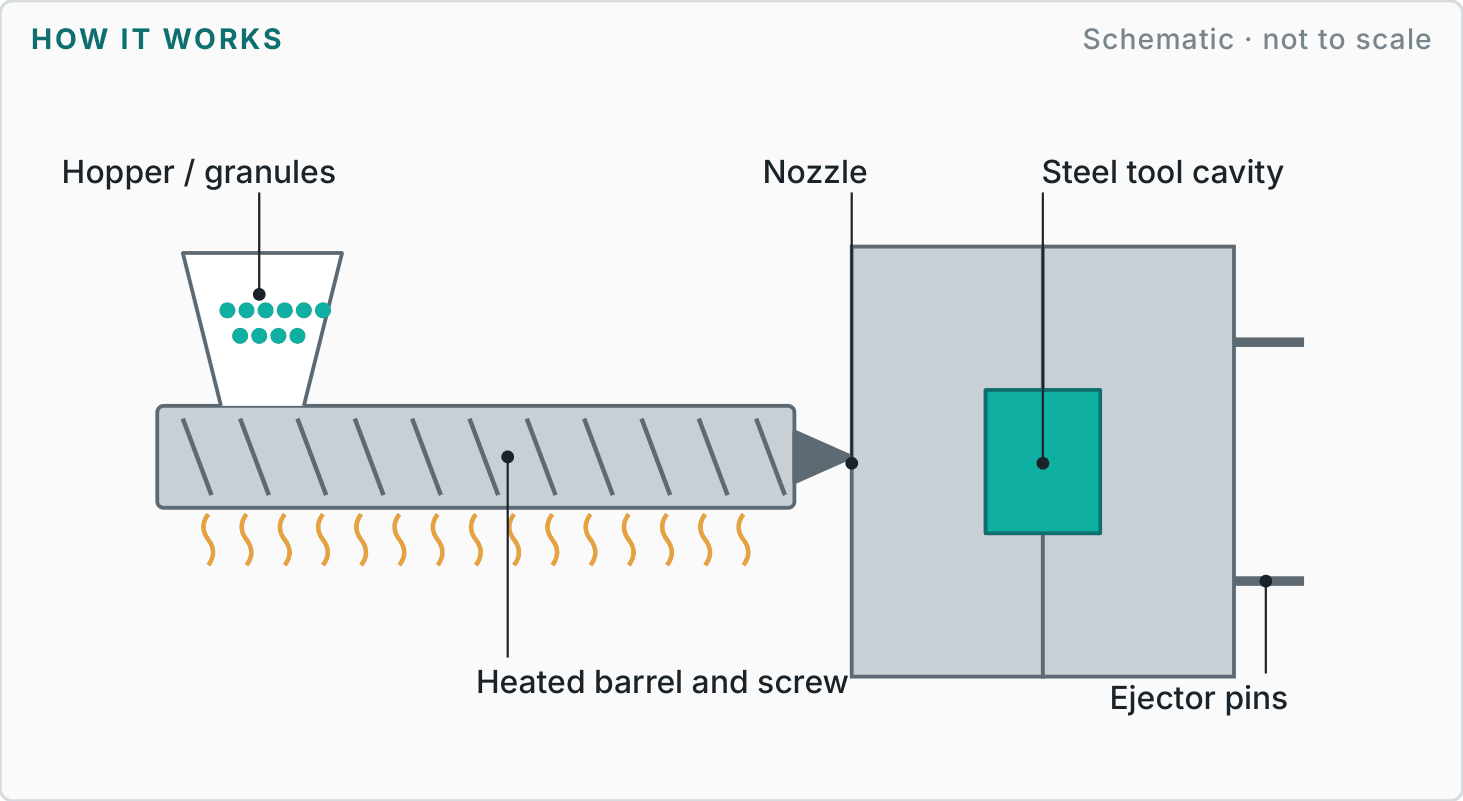
A labelled schematic of the process (not to scale), and the four steps every job goes through.
Design and cut the tool; sample and groom critical features.
Granules are heated and plasticised by the screw.
Melt fills the cavity and is packed as it cools.
The tool opens and ejector pins release the part.
Reference figures
Typical industry values to help you plan. We agree the figures for your part on the drawing.
| Materials | PP, PE, ABS, PC, PC/ABS, nylon (PA6, PA66), POM, PBT, TPE/TPU and filled engineering grades. |
|---|---|
| Finishes | SPI A–D polish classes, VDI 3400 EDM textures and etched textures; colour matching is close, not perfect. |
| Design guidance |
|
| Best suited to | Enclosures, clips, housings, closures and any plastic part needed in volume. |
| Watch-outs | Tool cost and lead time are front-loaded; design changes after tooling are expensive. |
More in chapter B
Next step
Send a sketch, photo, sample or CAD file with your quantity and target date. We will recommend the most sensible route and explain the trade-offs before quoting.
Reference figures are typical published industry values for planning, not a guarantee; final tolerances, materials and finishes are agreed in writing for each project.