Load pot
Place a pre-form of compound in the transfer pot.
Manufacturing services · Chapter A · Method 05
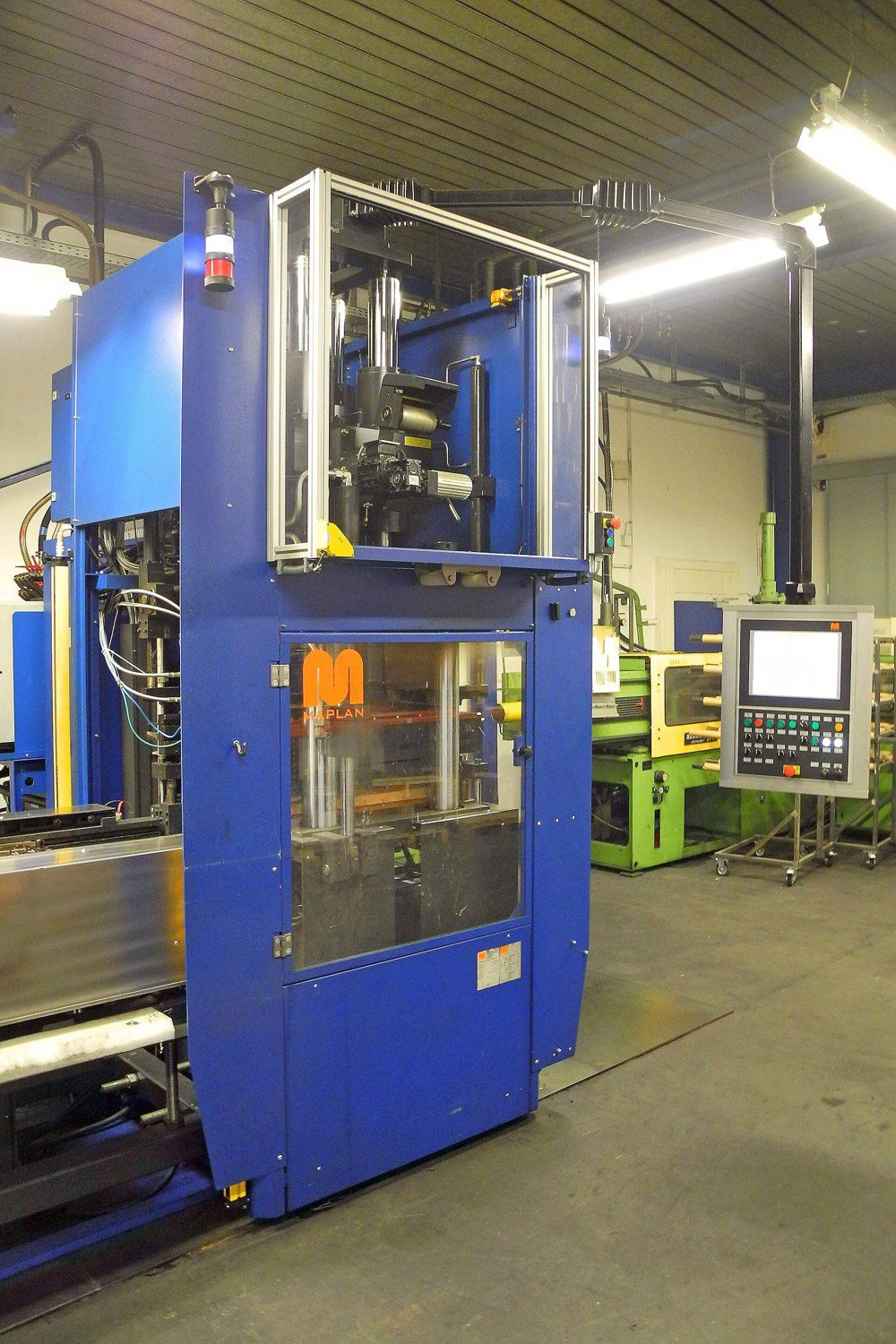
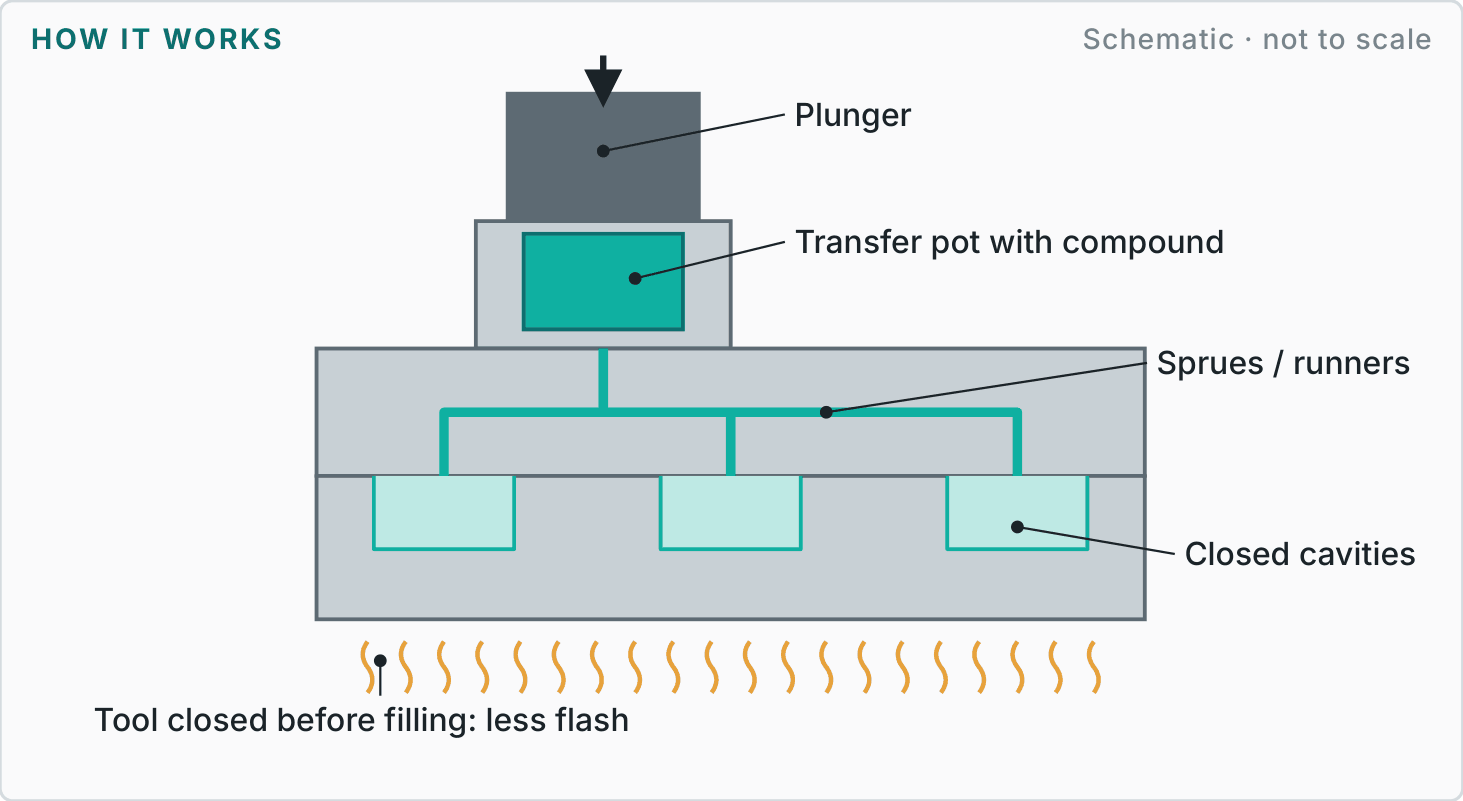
Rubber is loaded into a pot above a closed tool and forced through sprues into the cavities. Better control than compression for multi-cavity tools and parts with inserts.
How it works
A labelled schematic of the process (not to scale), and the four steps every job goes through.
Place a pre-form of compound in the transfer pot.
A plunger pushes the softened rubber through sprues.
Hold heat and pressure until the parts cure.
Open, remove parts and the cull, then deflash.
Reference figures
Typical industry values to help you plan. We agree the figures for your part on the drawing.
| Materials | EPDM, NBR, FKM, natural rubber and HCR silicone; bonding agents for rubber-to-metal parts. |
|---|---|
| Finishes | As tool; minimal flash compared with compression because the tool is closed before filling. |
| Design guidance |
|
| Best suited to | Small precision rubber parts, bonded rubber-to-metal components and multi-cavity seals. |
| Watch-outs | More material waste than compression; tooling is more complex. |
More in chapter A
Next step
Send a sketch, photo, sample or CAD file with your quantity and target date. We will recommend the most sensible route and explain the trade-offs before quoting.
Reference figures are typical published industry values for planning, not a guarantee; final tolerances, materials and finishes are agreed in writing for each project.