Prepare
Clean, bevel and fit up the joint.
Manufacturing services · Chapter G · Method 40
TIG, MIG and spot welding join metal components into frames and fabrications. Weldments combine cut, bent and machined parts into one assembly.
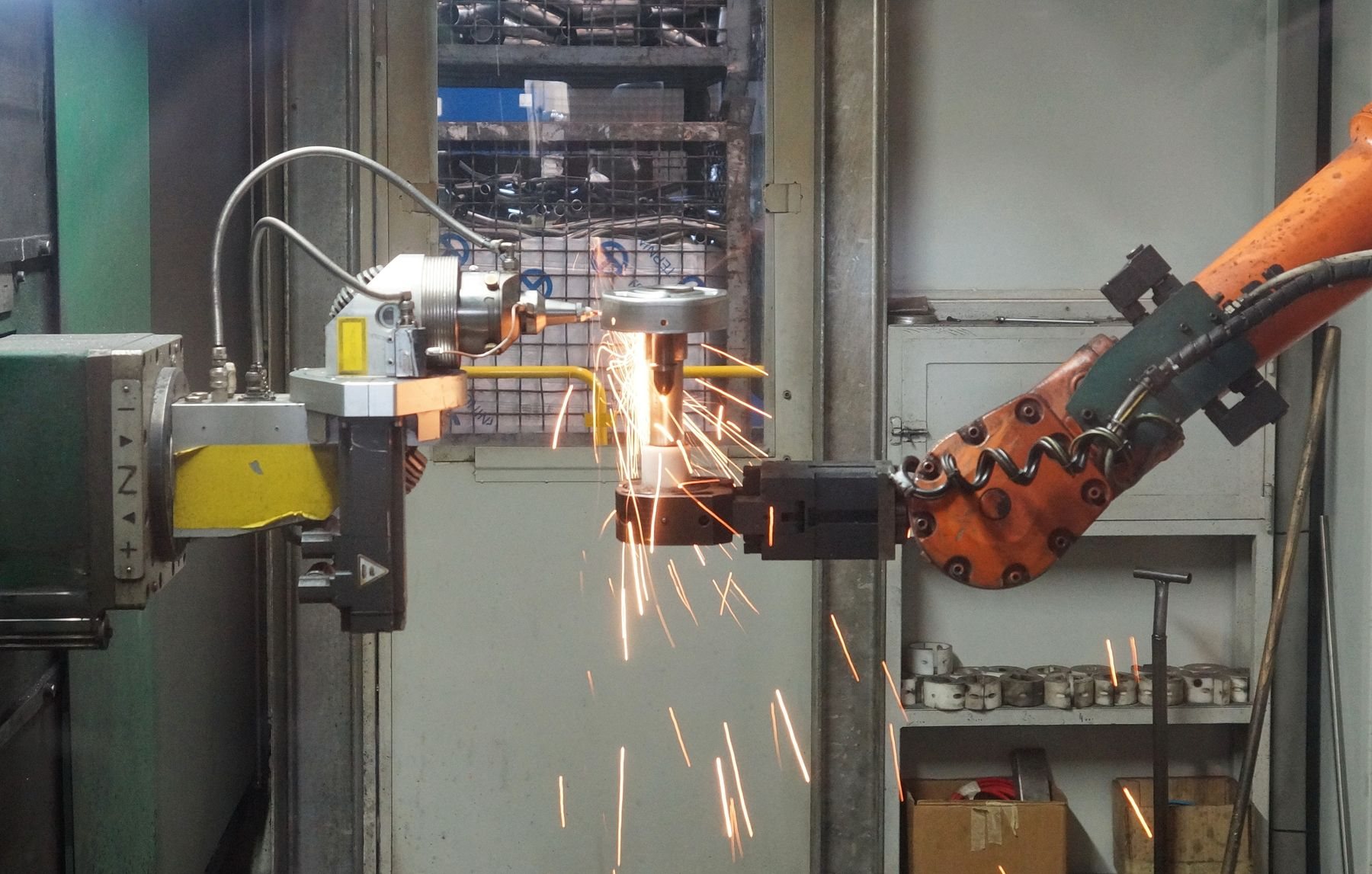
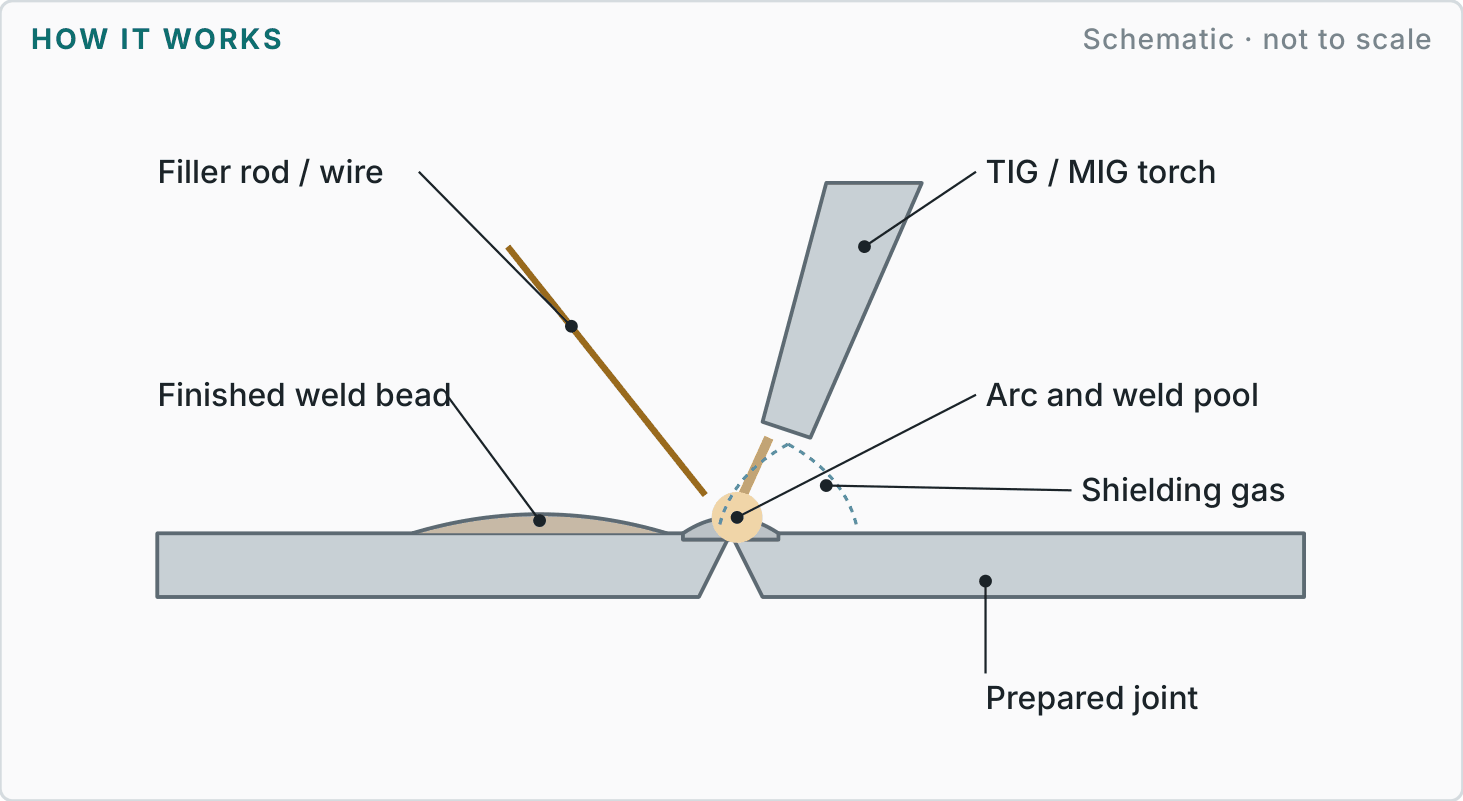
How it works
A labelled schematic of the process (not to scale), and the four steps every job goes through.
Clean, bevel and fit up the joint.
Tack-weld parts in a jig to hold alignment.
Lay full welds to the drawing.
Remove slag, dress and inspect before finishing.
Reference figures
Typical industry values to help you plan. We agree the figures for your part on the drawing.
| Materials | Mild steel, stainless (304, 316), aluminium; food-area stainless frames for mould trays. |
|---|---|
| Finishes | Dressed or ground welds, pickled and passivated stainless, powder coat. |
| Design guidance |
|
| Best suited to | Frames, stands, trolleys, mould-tray frames and guards. |
| Watch-outs | Heat distortion; stainless needs post-weld cleaning to stay corrosion resistant. |
More in chapter G
Next step
Send a sketch, photo, sample or CAD file with your quantity and target date. We will recommend the most sensible route and explain the trade-offs before quoting.
Reference figures are typical published industry values for planning, not a guarantee; final tolerances, materials and finishes are agreed in writing for each project.