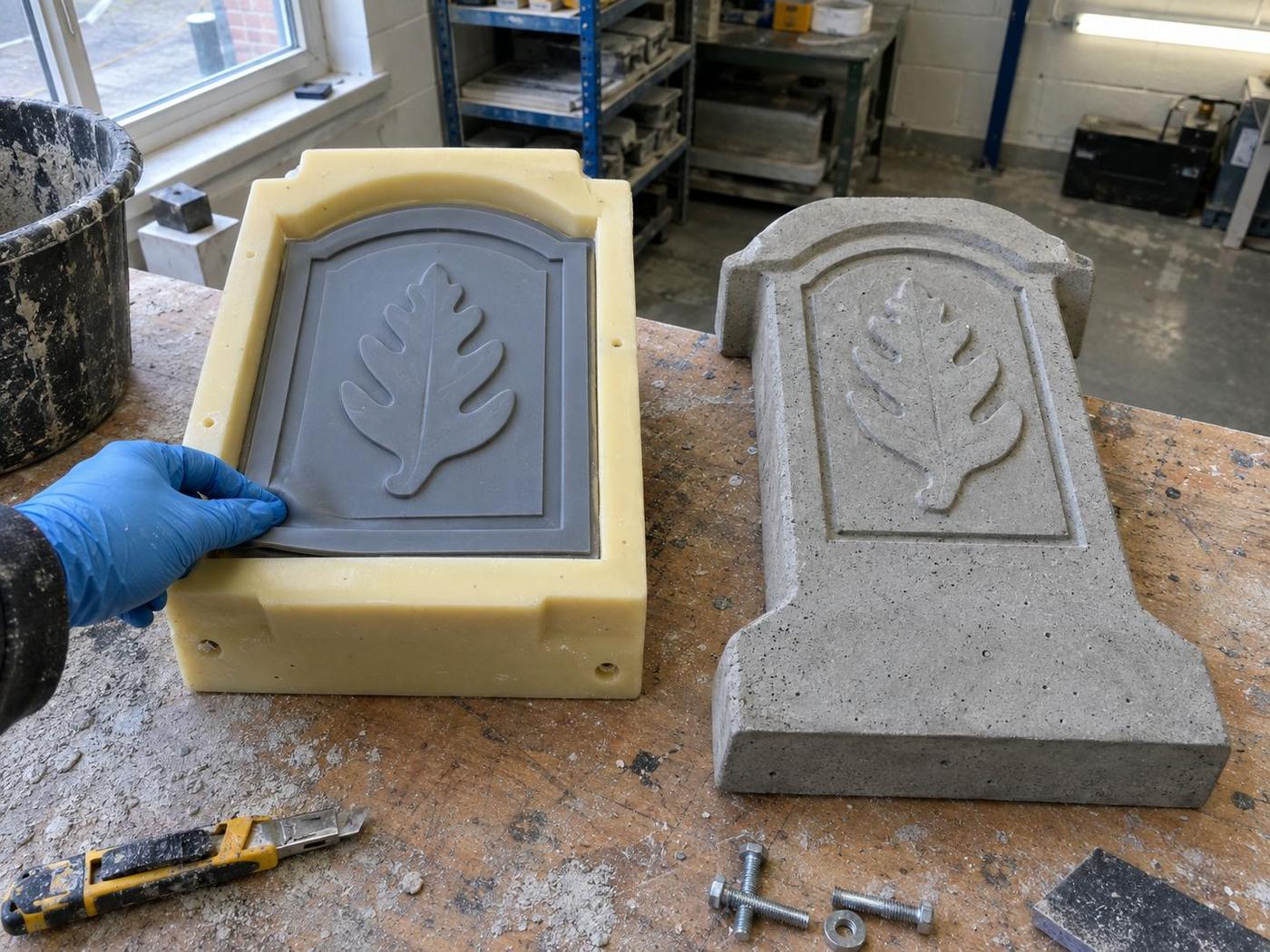
Two-material tool proposal
We proposed a polyurethane surround for the main bench-end shape, with a silicone insert set into it at the logo position, at the correct depth. Best of both materials, minimal cost premium.
Project record · Landscape line tooling
A repeat bench-end line needed formliners that carried the customer's moulded logo without pushing the whole tool into silicone. Two-material tool with a silicone logo insert set into a polyurethane surround.
The brief
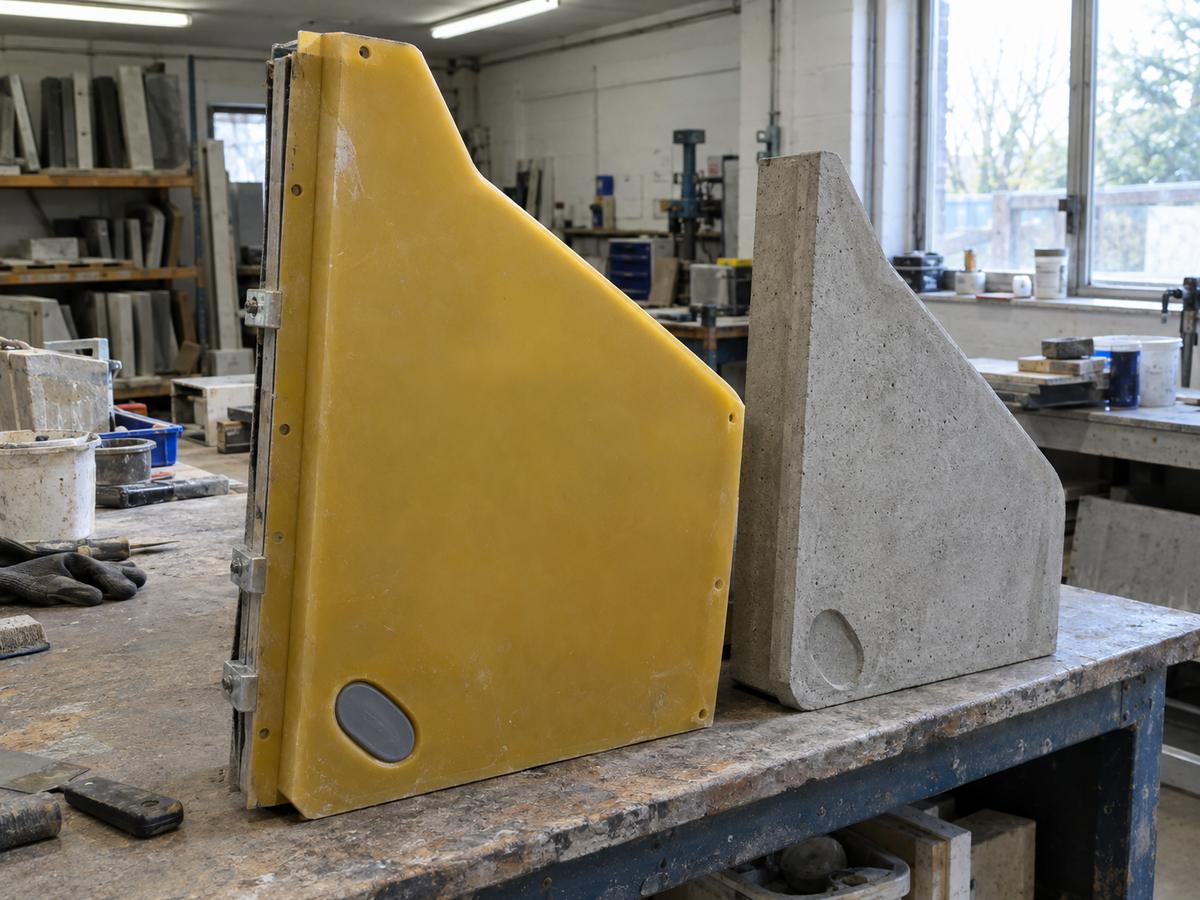
A precast landscape yard in the Midlands wanted to add a bench-end line to their standard catalogue. The end panel needed to carry the customer's logo cast into it, in a small oval panel bottom-right. The yard team was set up to run polyurethane formliners; they hadn't run silicone before and didn't want the whole bench-end tool to be silicone.
The problem
The main bench-end shape didn't need silicone. It was a shallow rectangular relief with a chamfered edge, well within polyurethane territory, and it would run high volumes in a rough yard with regular vacuum-lifting.
The logo, though, was small, fine and included small serifs and a raised bar underneath. It really did need silicone to read cleanly across a full run. Casting the whole bench-end tool in silicone would have roughly doubled the tool cost and put the yard team in unfamiliar handling territory.
How we solved it
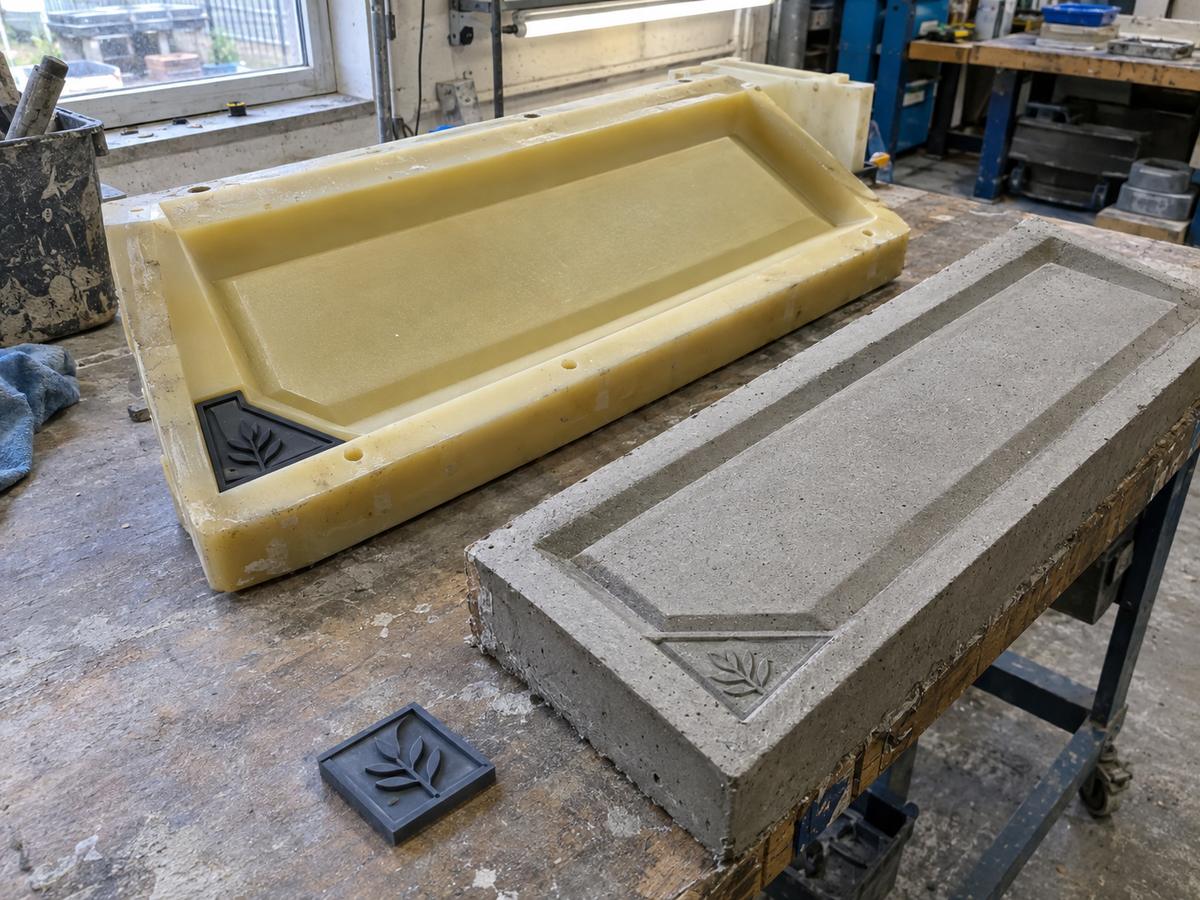
We proposed a polyurethane surround for the main bench-end shape, with a silicone insert set into it at the logo position, at the correct depth. Best of both materials, minimal cost premium.
The master pattern was built with the logo as a removable module, so the same bench-end tool could be built with different logos for different customers later if needed.
One trial bench-end cast in the yard's standard OPC mix, inspected against the logo artwork. Slight adjustment to the logo relief depth to improve release, then a second trial to confirm.
Two-page technical sheet covering polyurethane surround, silicone insert, cross-compatible release agent, and what to do if the insert loosens in service.
The outcome
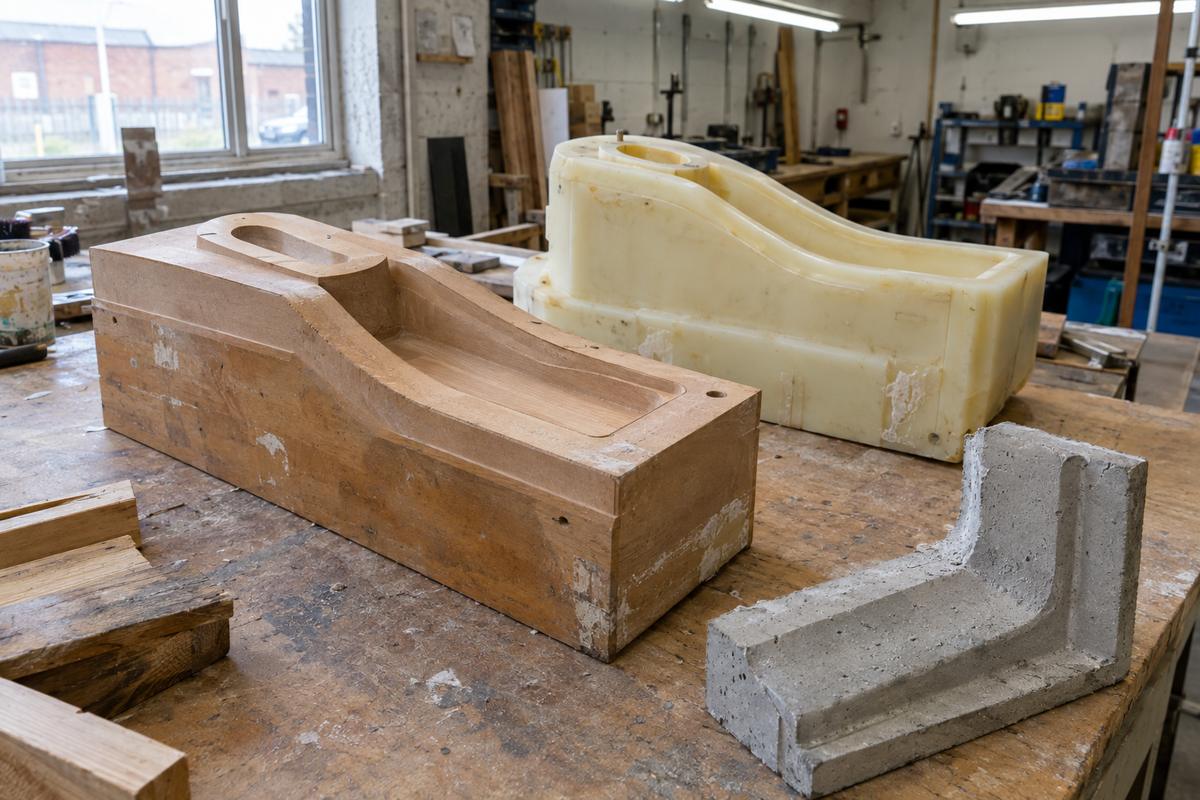
The bench-end line has been running through the yard for months without incident. The silicone logo insert is holding sharp against the polyurethane surround; the yard team is comfortable with the two-material handling. When the customer's logo changes (as customer logos do), we swap the insert without rebuilding the whole tool.
Lessons
For any concrete tool where fine detail is confined to a small area of the panel, the two-material route is almost always cheaper than casting the whole tool in silicone. If you're being quoted an all-silicone tool for a piece that's 90% simple relief, ask whether an insert route would work.
At a glance
Where the formliner sits
Swipe to see the whole diagram
Get in touch
One photograph tells us what surface you're chasing, and one line about the mix tells us what silicone or polyurethane will survive it.
Real people, a real workshop
No call centre and no middlemen. When you contact TCI Construction, you speak to the team who design, build and check your mould.


 Thomas LaneManaging Director
 George PrestonDesign & Project Manager
 Kelly BallingerHead of Partnerships
 Jim AndertonProduction Manager
 TheodoreEmployee Welfare