Project
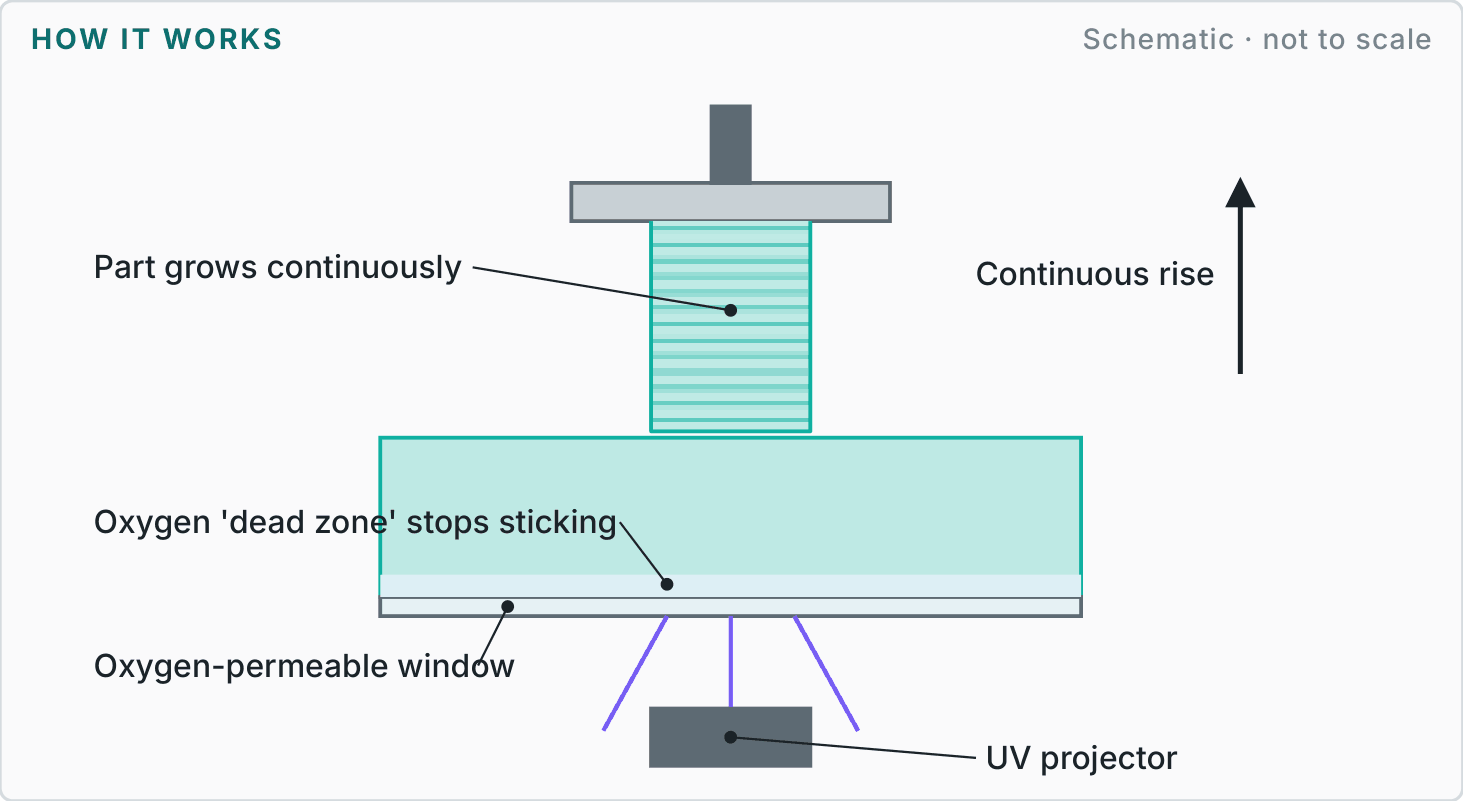
UV images are projected up through the window.
Manufacturing services · Chapter F · Method 37
Digital Light Synthesis projects UV images through an oxygen-permeable window into resin, growing parts continuously. Then a thermal bake develops engineering properties.
How it works
A labelled schematic of the process (not to scale), and the four steps every job goes through.
UV images are projected up through the window.
The platform rises continuously as resin cures.
Excess resin is removed.
A thermal cure gives final mechanical properties.
Reference figures
Typical industry values to help you plan. We agree the figures for your part on the drawing.
| Materials | Rigid polyurethanes, elastomeric PU (EPU), epoxy (EPX), cyanate ester and silicone (SIL) resins. |
|---|---|
| Finishes | Smooth as printed; support bumps on supported faces. |
| Design guidance |
|
| Best suited to | Lattice cushioning, elastomeric parts, housings and production runs. |
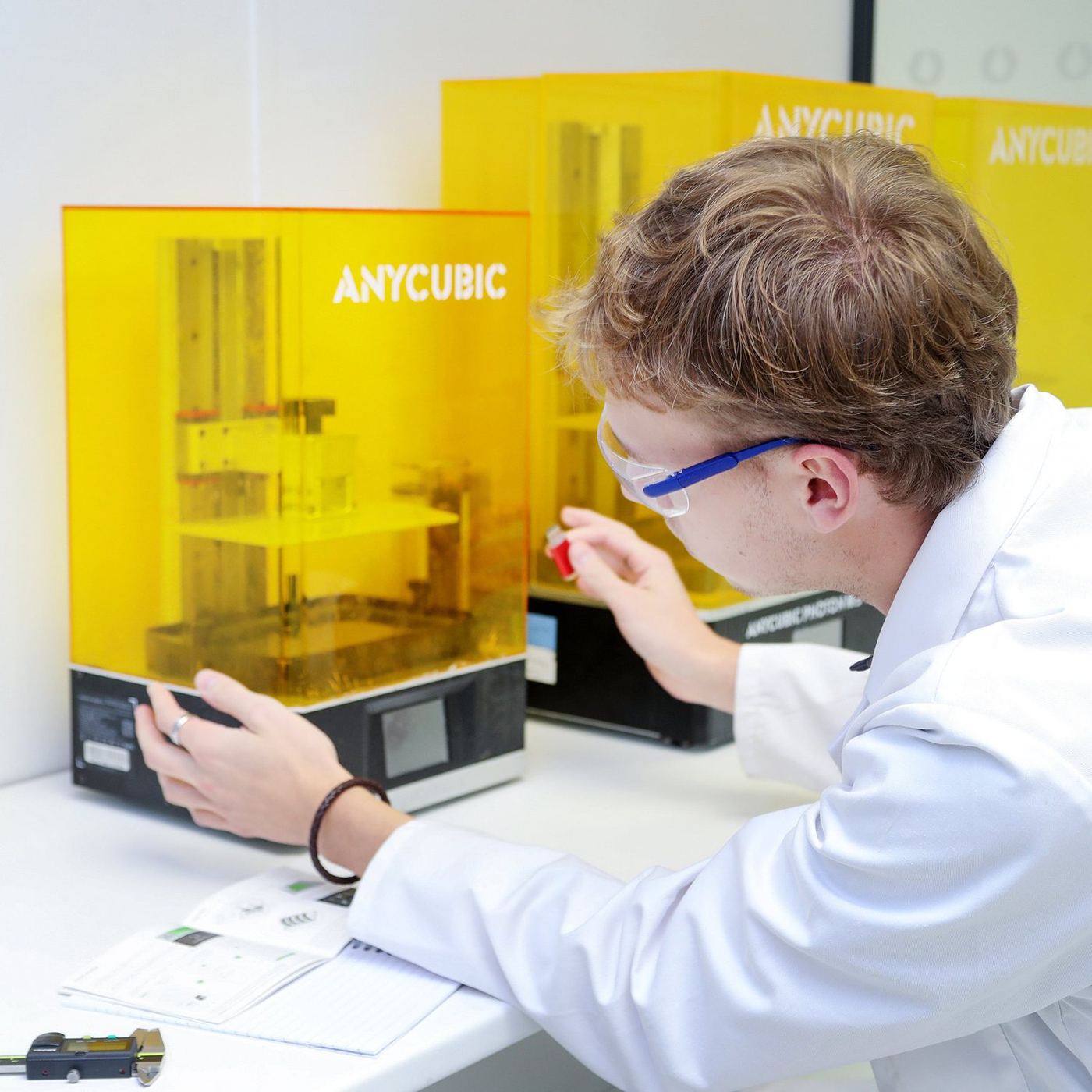
| Watch-outs | Proprietary resins and equipment. Representative photo shows vat photopolymer printing, the principle DLS builds on. |
More in chapter F
Next step
Send a sketch, photo, sample or CAD file with your quantity and target date. We will recommend the most sensible route and explain the trade-offs before quoting.
Reference figures are typical published industry values for planning, not a guarantee; final tolerances, materials and finishes are agreed in writing for each project.