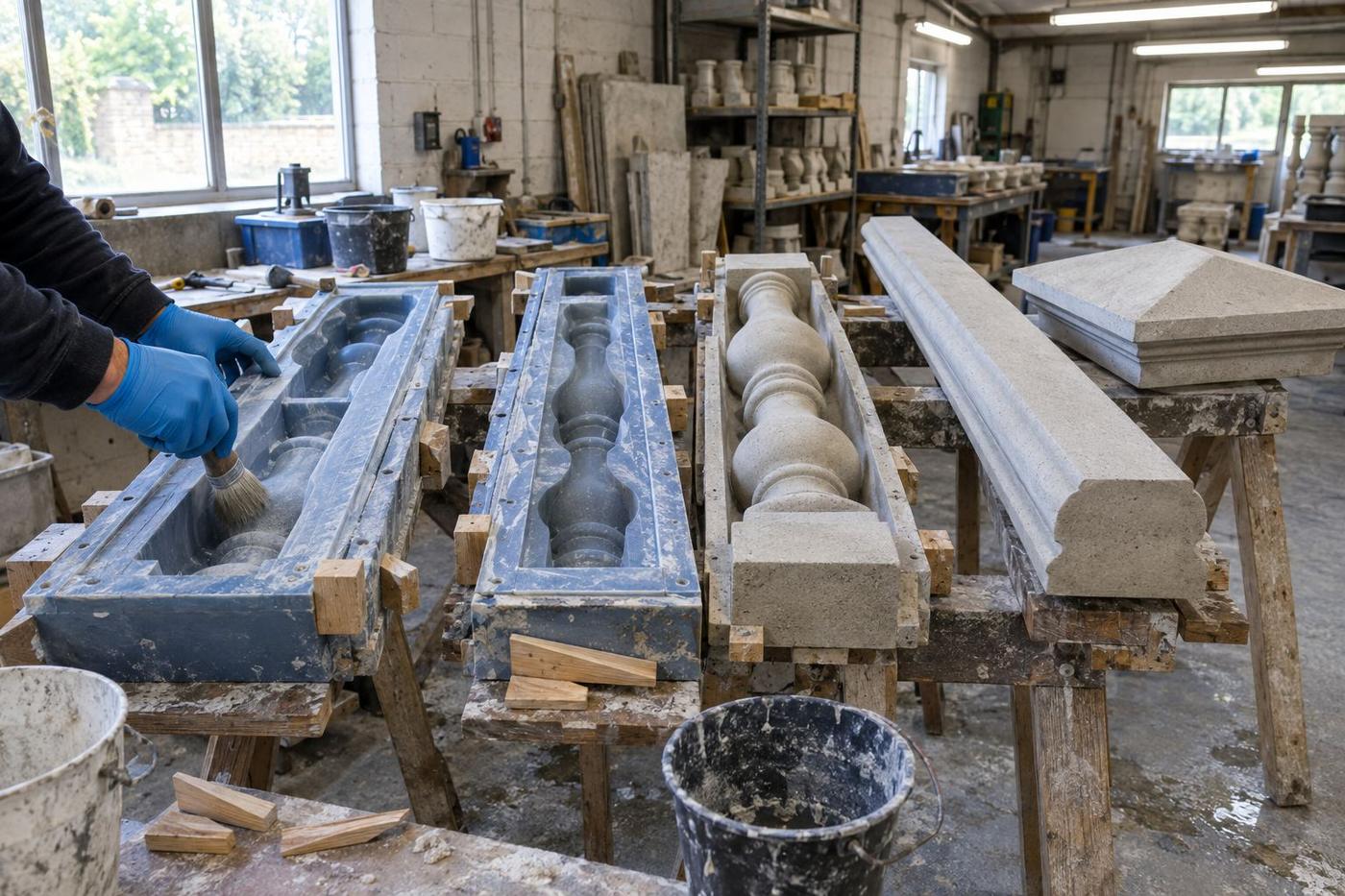
Balusters
Split moulds with seams on the least visible line.
What we make › Cast stone moulds › Balustrade moulds
Cast stone moulds · Balustrade moulds
Moulds for balusters, handrails, bottom rails, plinths and pier caps — period profiles matched or new designs developed with your architect.
Overview
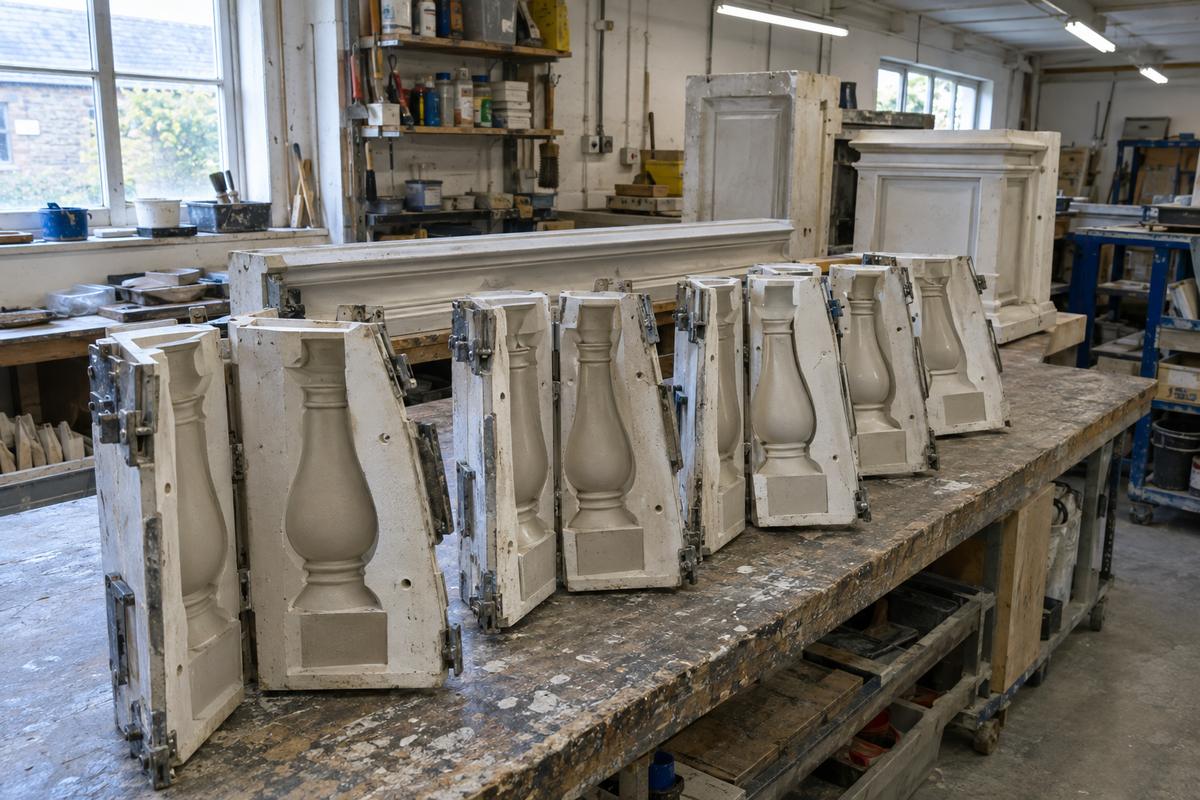
Balustrades are repetitive by nature: dozens of identical balusters, runs of rail. The moulds have to be quick to strip and consistent every time.
Balusters are cast in split moulds; rails and plinths in open or two-part moulds depending on the profile.
What sets it apart
Split moulds with seams on the least visible line.
Top and bottom rails with drips and mortices.
The pieces that finish a run.
Profiles from existing balusters.
How we build it
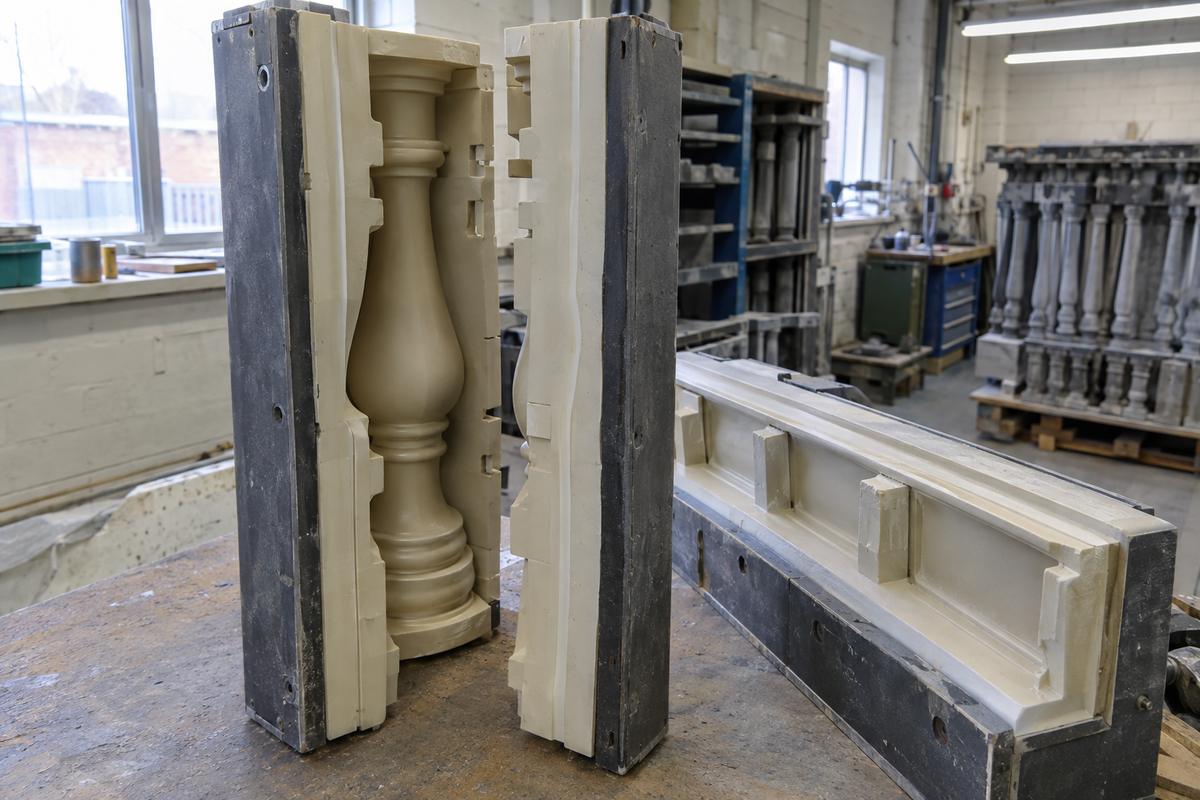
Baluster moulds are keyed split moulds in a rigid case, designed for quick repeated stripping.
Rail moulds include mortice formers so balusters locate without drilling.
The honest bit
Balusters are small but numerous. For a large run we'll suggest a set of moulds so the caster isn't waiting on cure.
At a glance
How a two-part mould fits together
Swipe to see the whole diagram
From sample to finished cast
Swipe to see the whole diagram
FAQs
Enough to suit your daily output and cure time — we'll help work it out.
Yes, from a sample.
In this family
Get in touch
One photograph tells us what surface you're chasing, and one line about the mix tells us what silicone or polyurethane will survive it.
Real people, a real workshop
No call centre and no middlemen. When you contact TCI Construction, you speak to the team who design, build and check your mould.


 Thomas LaneManaging Director
 George PrestonDesign & Project Manager
 Kelly BallingerHead of Partnerships
 Jim AndertonProduction Manager
 TheodoreEmployee Welfare