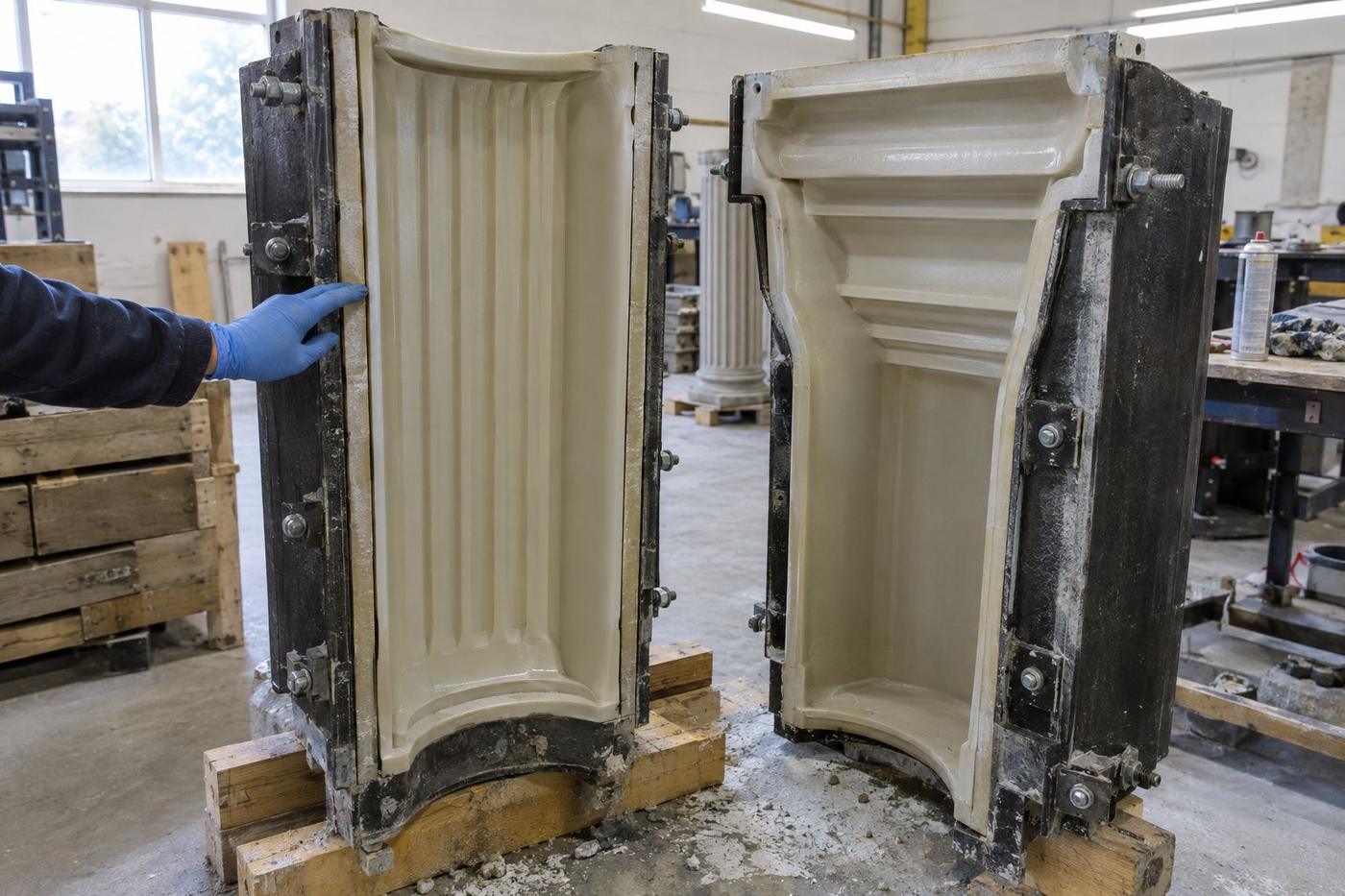
Fluted and reeded shafts
Silicone captures fluting crisply and releases without chipping the arrises.
What we make › Precast concrete moulds › Column and pier moulds
Precast concrete moulds · Column and pier moulds
Plain, fluted and tapered columns, pier caps and pilasters. Split moulds with hidden seams and a rigid jacket so the shaft comes out true.
Overview
Columns show every flaw. A seam in the wrong place, a slight oval, a soft arris on a flute — all of it reads from across the street.
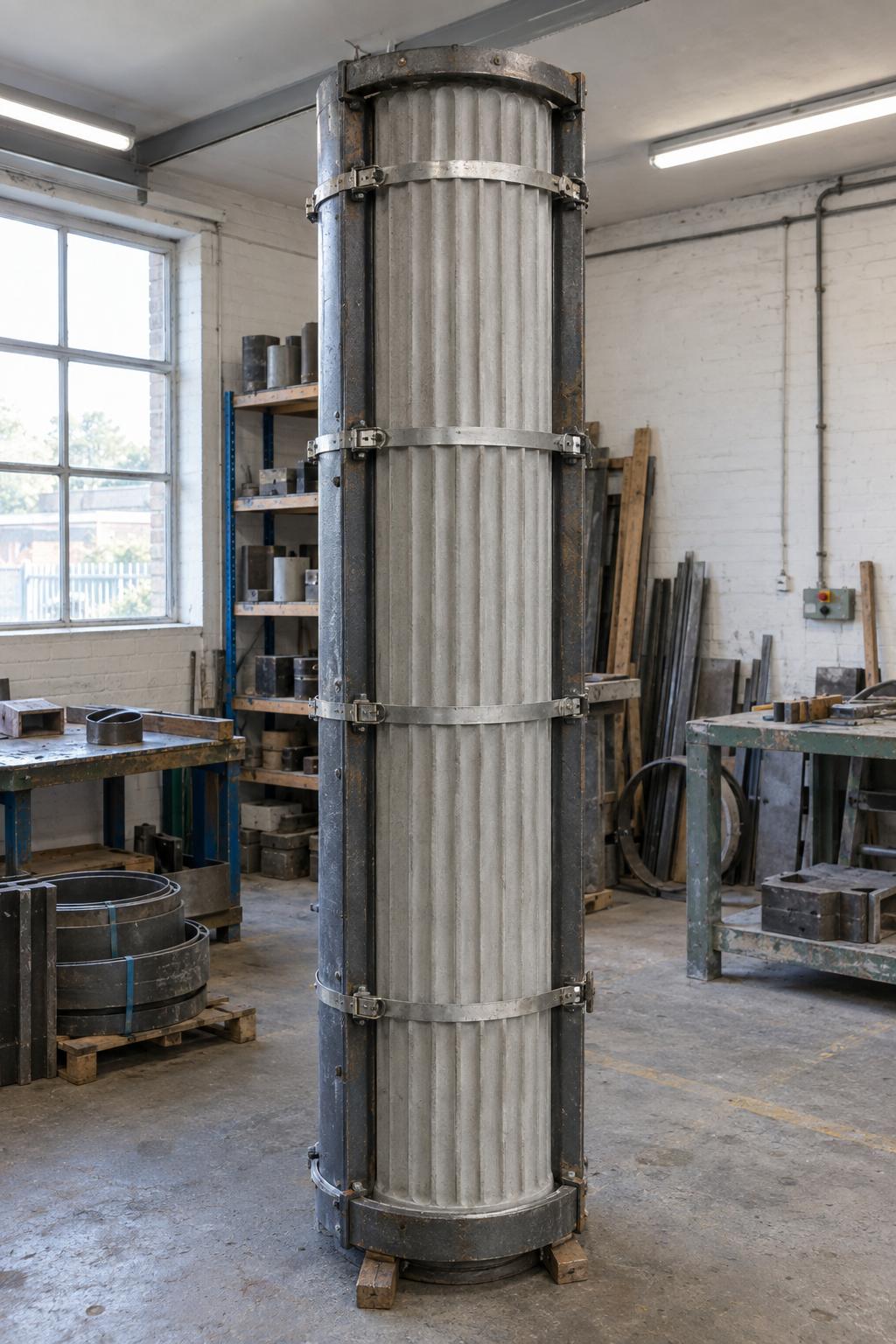
We build column moulds as split elastomer liners in a rigid jacket, with the seams placed on the least visible line or on a flute arris where they can be dressed out.
What sets it apart
Silicone captures fluting crisply and releases without chipping the arrises.
Classical tapers modelled on the pattern so every shaft matches.
Separate tools for decorative capitals, cast and fixed to the shaft.
Square and half-round versions for boundary walls and elevations.
How we build it
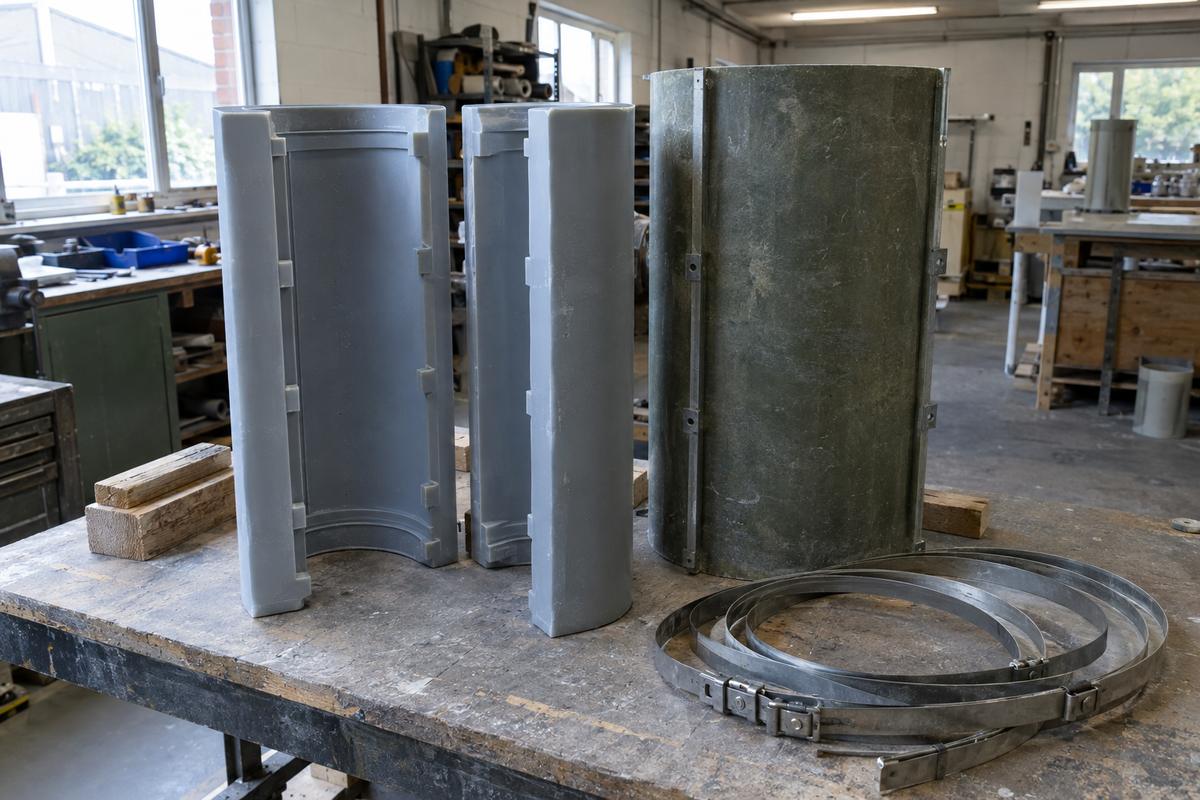
The pattern is turned, machined or sculpted depending on the profile. The elastomer liner is split along the chosen seam lines and keyed so the halves register exactly.
A rigid GRP or steel jacket holds the liner round under the pour pressure. For tall columns, the jacket is banded and the pour is planned in lifts.
Capitals with deep undercut are usually separate silicone moulds, cast and fixed afterwards.
The honest bit
A tall column is a heavy pour. We'll ask about your lifting, vibration and whether you cast vertically or on its side, because it changes the whole tool design.
At a glance
From sample to finished cast
Swipe to see the whole diagram
FAQs
Yes, from a squeeze, a profile gauge or a scan.
Yes, with a removable core designed into the tool.
In this family
Get in touch
One photograph tells us what surface you're chasing, and one line about the mix tells us what silicone or polyurethane will survive it.
Real people, a real workshop
No call centre and no middlemen. When you contact TCI Construction, you speak to the team who design, build and check your mould.


 Thomas LaneManaging Director
 George PrestonDesign & Project Manager
 Kelly BallingerHead of Partnerships
 Jim AndertonProduction Manager
 TheodoreEmployee Welfare