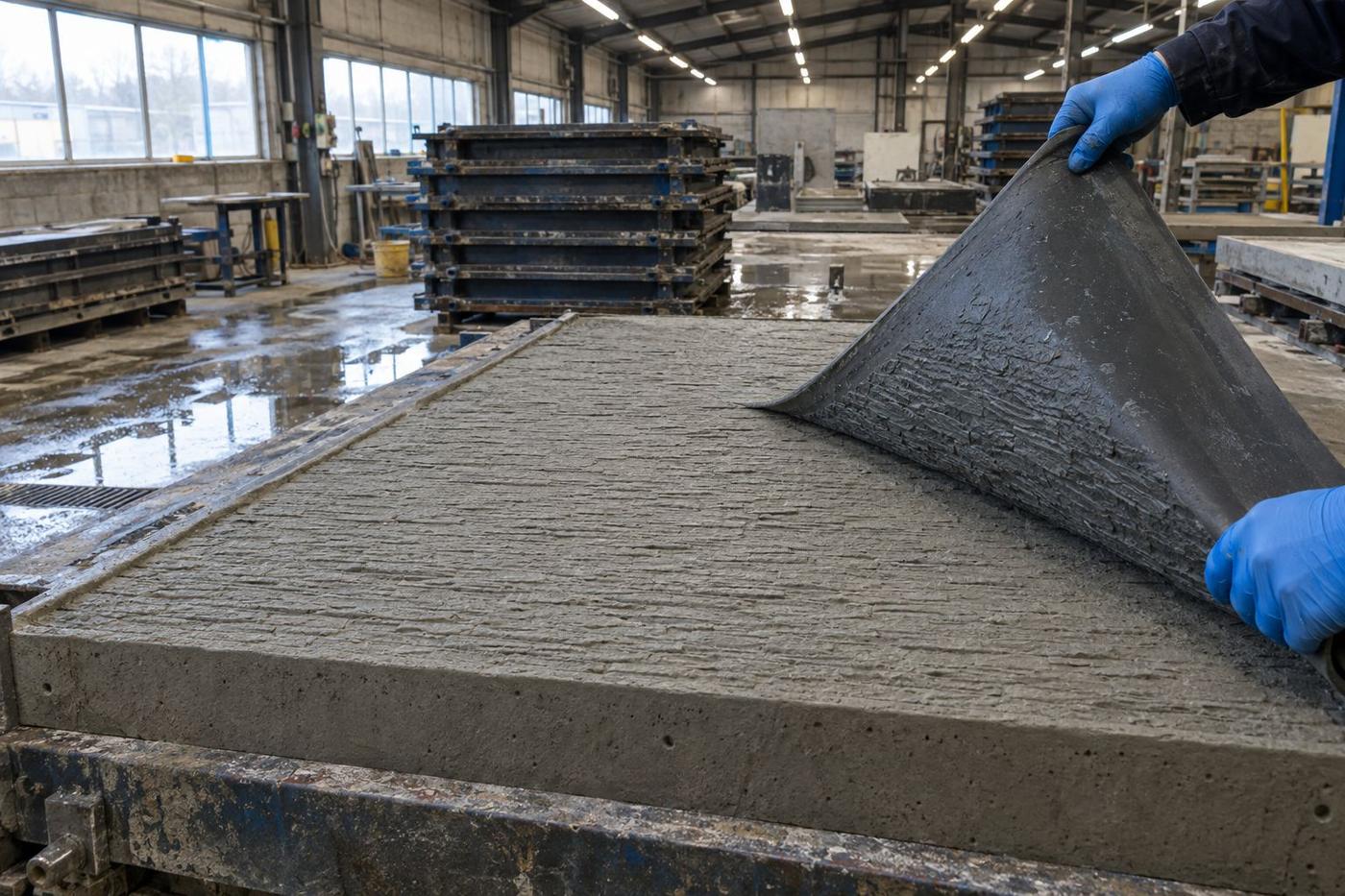
Deeper relief
Rope, ashlar, deep rib, carved stone — textures a rigid liner can't release.
What we make › Silicone & polyurethane formliners › Elastomeric formliners
Silicone & polyurethane formliners · Elastomeric formliners
Polyurethane and silicone formliners flex off the panel, capture fine relief and survive repeat use. The workhorse of architectural precast, specified to your mix and pour count.
Overview
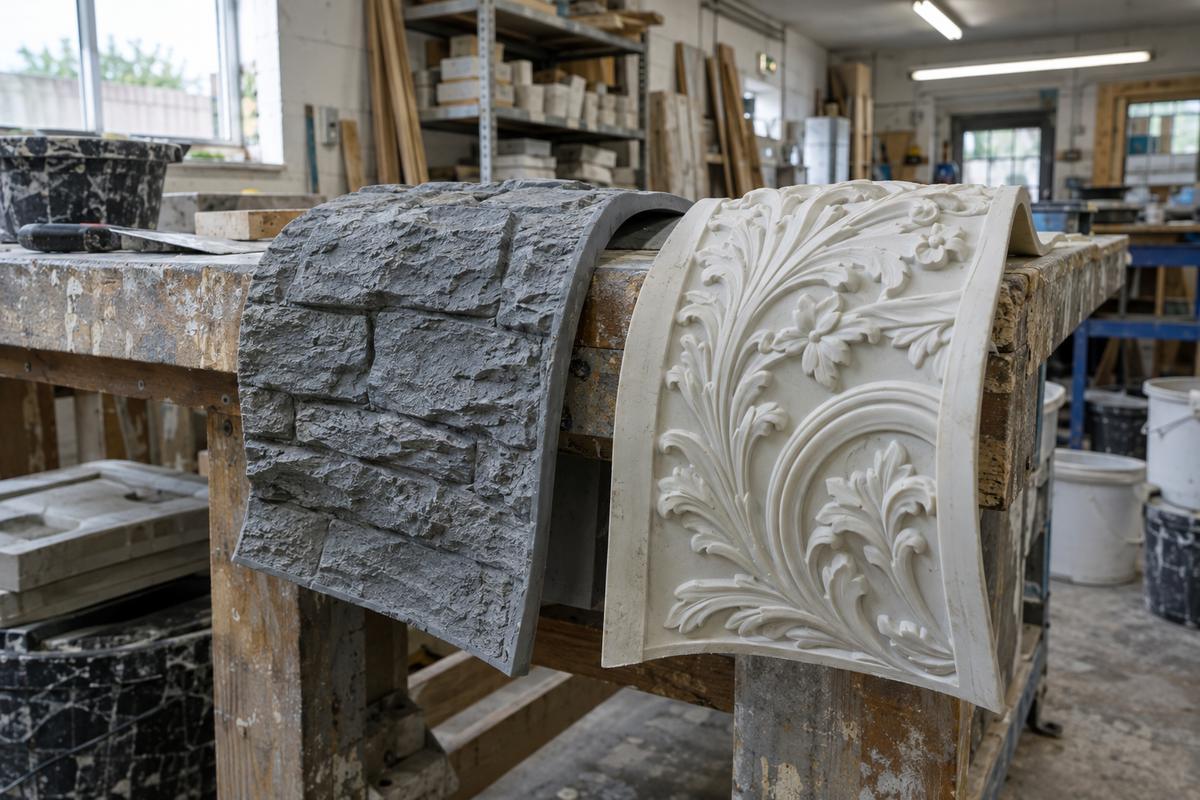
Elastomeric liners are poured rather than formed. The elastomer reproduces the master pattern exactly and flexes to release, so relief can be deeper, sharper and include mild undercut.
Most of the liners we make are elastomeric: polyurethane for the workhorse textures, silicone for fine detail and heritage reliefs.
What sets it apart
Rope, ashlar, deep rib, carved stone — textures a rigid liner can't release.
Well-handled elastomeric liners run into three figures of pours on normal programmes.
Flex lets the liner release small undercuts without a split.
Cuts and edge damage can often be repaired in the workshop.
How we build it
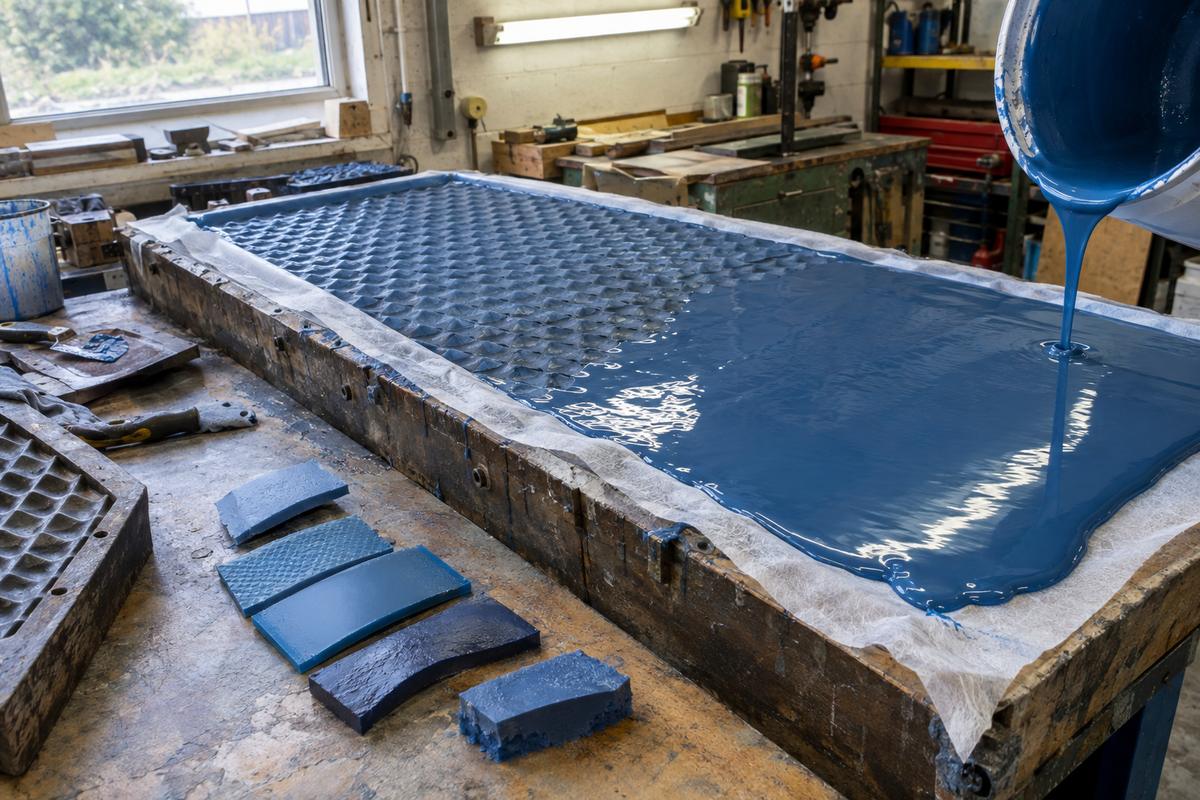
The master pattern is machined, sculpted or scanned, then the elastomer is poured against it. For large liners we pour onto a backing sheet or fabric scrim so the liner stays dimensionally stable on the bed.
We choose the hardness to suit the relief: firmer for shallow texture that has to lie flat, softer for relief that has to flex off deep detail.
Every liner leaves with a material spec and handling note so the yard knows how to clean, store and release it.
The honest bit
Elastomeric liners cost more up front than plastic. They make sense when you need the texture to hold over a real programme — and they're a poor use of money for a single panel with simple board-mark.
At a glance
Where the formliner sits
Swipe to see the whole diagram
From sample to finished cast
Swipe to see the whole diagram
FAQs
Polyurethane for most textures; silicone for fine detail, undercut or aggressive mixes. Our materials page explains the trade-off.
Flat, clean, dry and out of direct sun. The handling note covers it.
Often, yes. Send photographs and we'll say whether it's worth it.
In this family
Get in touch
One photograph tells us what surface you're chasing, and one line about the mix tells us what silicone or polyurethane will survive it.
Real people, a real workshop
No call centre and no middlemen. When you contact TCI Construction, you speak to the team who design, build and check your mould.


 Thomas LaneManaging Director
 George PrestonDesign & Project Manager
 Kelly BallingerHead of Partnerships
 Jim AndertonProduction Manager
 TheodoreEmployee Welfare